
November Weed Watch: Stop the Smotherers Before Summer
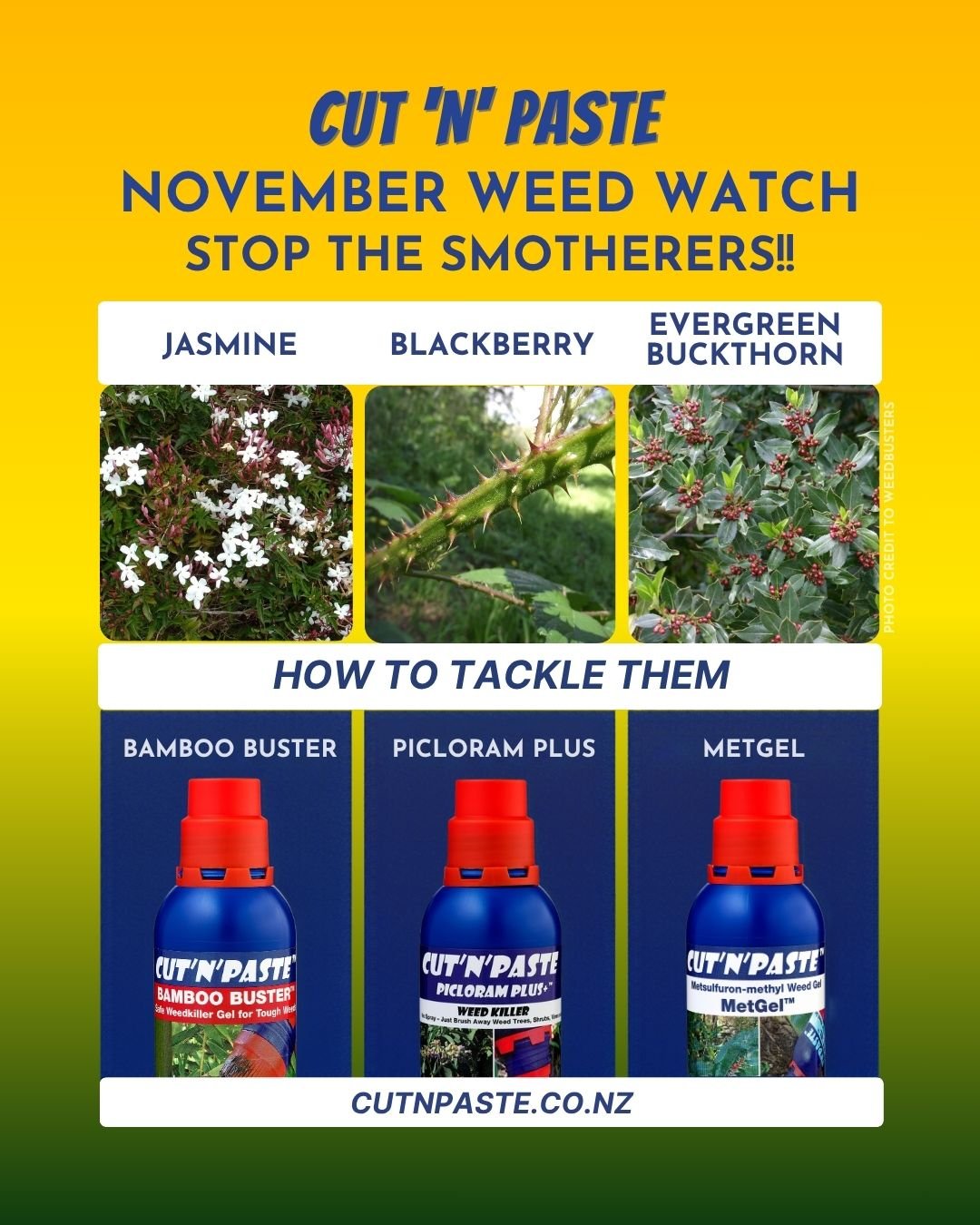
November is when the garden really takes off, especially with the warming weather – and a few nice drizzly days to boost the growth of all the weeds. The smotherers are climbing, the brambles are flowering and the berry-bearers are getting ready to feed the birds over summer. Our feathered friends will be happy, but our native plants are the ones that quietly suffer as they have to compete with the rampant weeds.
Stop these weedy smothers now, while they’re establishing themselves for another summer. While they are busting with growth, they’re also absorbing nutrients – so this is a great time to apply weed gel that’ll go straight down to the roots. Don’t wait until January – if you do, you’ll be dealing with this season’s seeds as well as the weed plants.
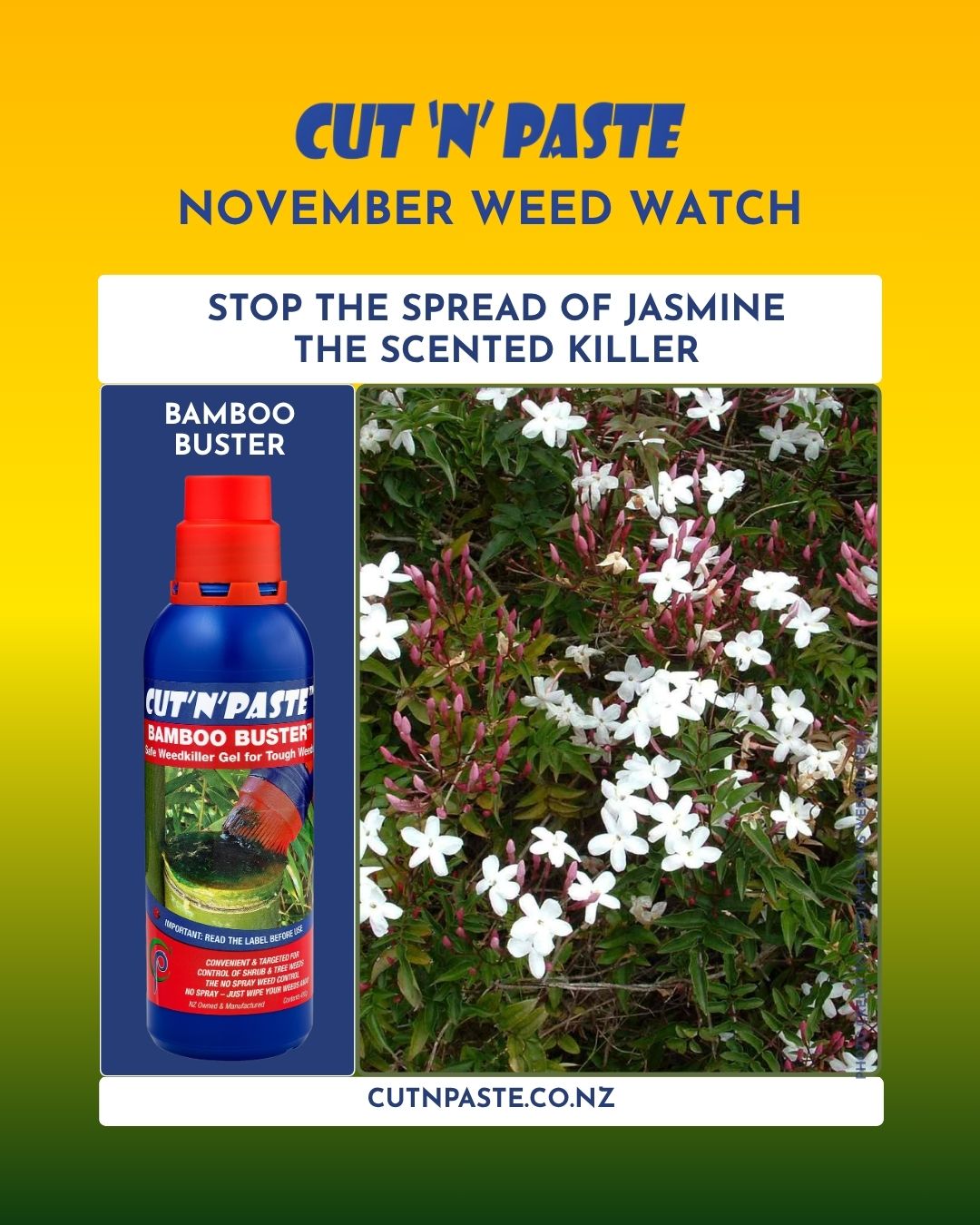
Jasmine – The Scented Killer
(Jasminum polyanthum)
There’s no denying the beautiful scent of Chinese jasmine. It smells lovely and looks pretty, but it doesn’t know when to stop. It climbs over fences, hedges and trees, smothering the bush and sending runners under paths and houses. It’s one of the biggest weed problems around the North island right now.
- Spot It: A twining vine with leaves split into 5–7 pointed leaflets, and clusters of pink buds opening to white, strongly scented flowers through late winter and spring.
- Which Gel? Bamboo Buster or MetGel. Tangled through plants you want to keep, use Glimax.
- How: Cut each vine near the ground and paste the rooted end within 15 seconds. Leave the top growth to die in place – don’t pull it down.
- Careful: Don’t confuse it with star jasmine (Trachelospermum jasminoides), which has simple, glossy leaves and isn’t the problem.
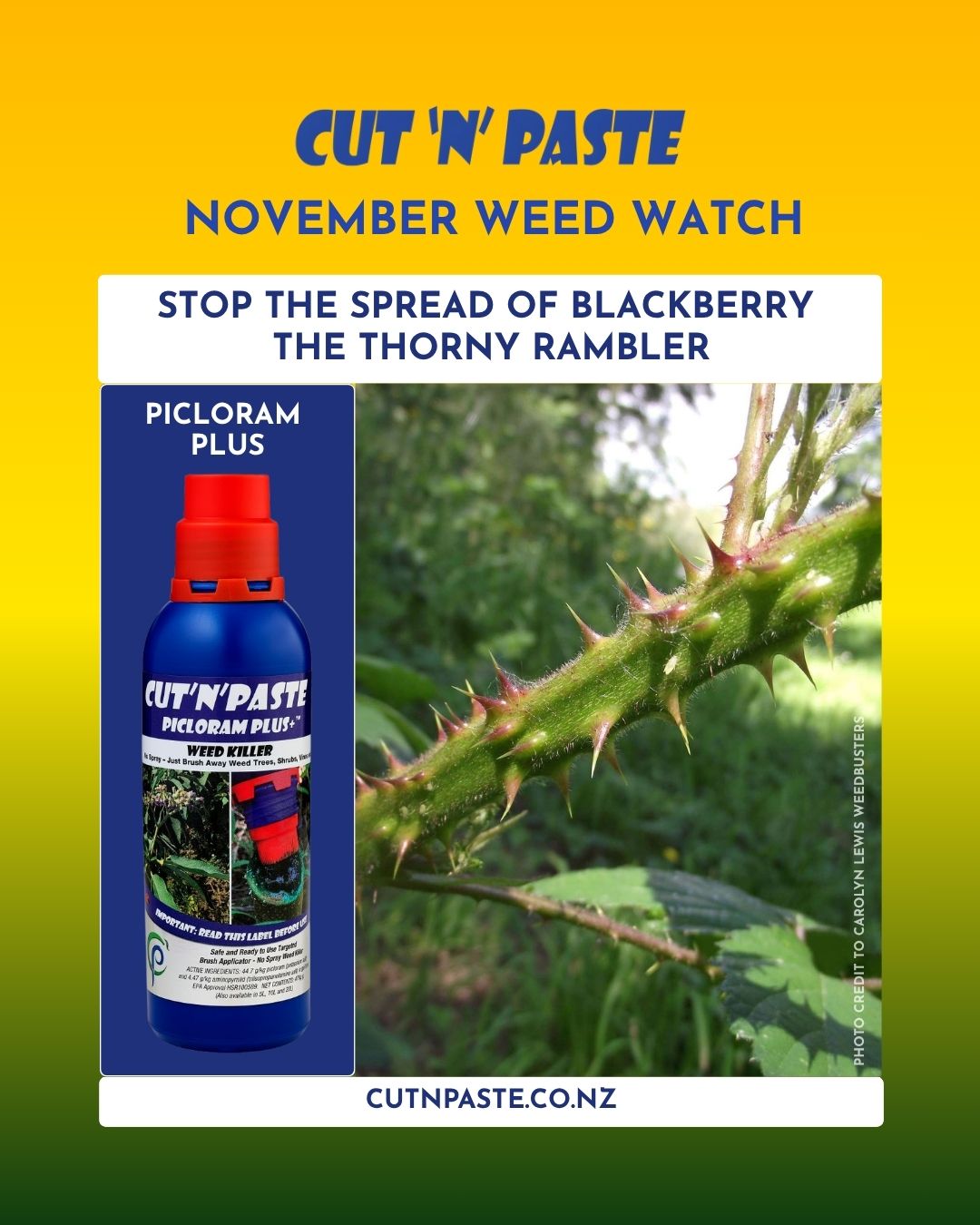
Blackberry – The Thorny Rambler
(Rubus fruticosus agg.)
Blackberry has an almost romantic reputation because of its so called ‘free fruit’. The reality is though, it’s an aggressive spreader, forming prickly, impenetrable thickets along stream banks, bush edges and paddocks, forcing native plants to compete – and often lose. It starts flowering in November and every berry that follows, becomes a juicy treat that few people eat – but birds feast upon – duly dropping the seeds far and wide, inadvertently creating even more problematic infestations.
- Spot It: Arching, prickly canes, leaves of 3–5 toothed leaflets, and white to pink flowers from late spring, followed by the berries.
- Which Gel? Picloram Plus+. Near water or plants you want to keep, use Bamboo Buster.
- How: Cut the canes at the base and paste the crown within 15 seconds. Hang cut canes off the ground so the tips can’t take root.
- Careful: Leave our native bush lawyer (tātarāmoa, Rubus species) alone – it climbs into trees rather than forming dense thickets.
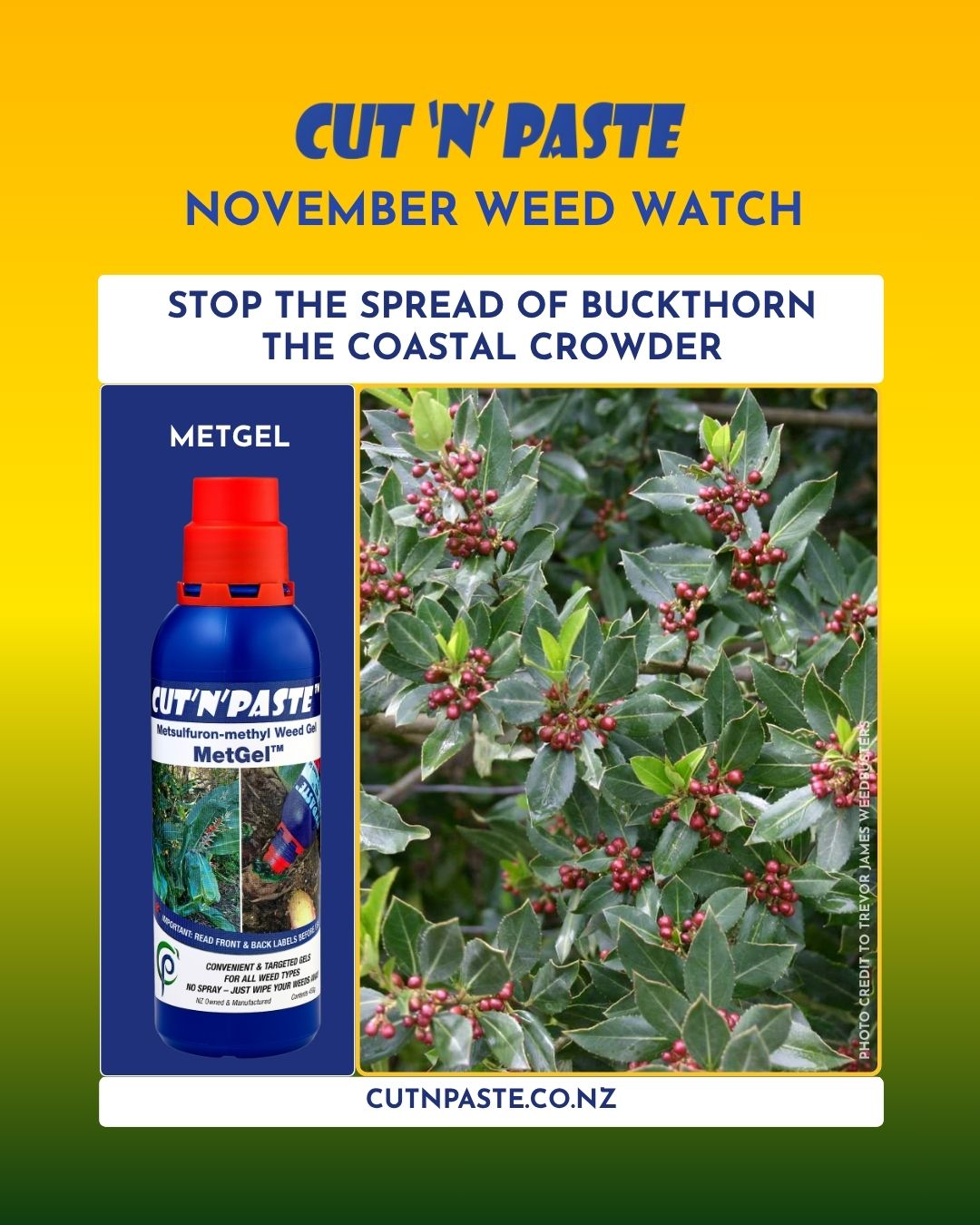
Evergreen Buckthorn – The Coastal Crowder
(Rhamnus alaternus)
Rhamnus is a tough old hedge plant that’s escaped onto our coasts and Gulf islands. Female plants are setting berries now, and our tweety bird friends once again, carry the seeds into the bush over summer. They have a feast, we have to clean up the mess. But if you reduce the weedy shrubs now, there will be less work later.
- Spot It: An evergreen shrub with glossy, leathery oval leaves and angular, hairy, purplish young shoots. Small berries ripen from red to black on female plants.
- Which Gel? MetGel or Picloram Plus+. Near water or plants you want to keep, use Bamboo Buster.
- How: Cut stems low and paste the stump within 15 seconds. For bigger trunks, Drill and Fill.
- Careful: It looks a lot like native coprosma – check for the purplish, hairy shoots before you cut. On the Gulf islands, report it to Auckland Council.
Your November Cheat Sheet
| Weed | Best Gel | Method |
|---|---|---|
| Jasmine | Bamboo Buster or MetGel | Cut n paste the rooted end, leave top to die |
| Blackberry | Picloram Plus+ | Cut n paste the crown |
| Evergreen Buckthorn | MetGel (or Picloram Plus+) | Cut n paste the stump, or Drill and Fill |
| Near native / prized plants | Glimax | As above |
| Near waterways | Bamboo Buster | As above |
NOTE: view our weed directory for safety and best practice usage tips. Always read the label and use as directed.
Quick Late-Spring Tips
- Pick a dry spell so rain doesn’t wash the gel off.
- Be quick – paste within 15 seconds of cutting, before the stump seals.
- Treat before the berries – fruit this summer means seedlings next year.
- Mind the drip line – keep Picloram and MetGel away from roots of plants you value and away from water.
Grab your Cut’n’Paste, head outside, and stop the smotherers before summer!
Need to Identify a Different Weed?
Not sure what’s growing in your garden? Our Cut’n’Paste Weed Directory is your field guide to New Zealand’s most common (and uncommon) weeds.
Pro Tip: Bookmark the Weed Directory on your phone to identify a weed on the spot and find the right gel. Remember to wear gloves and follow the instructions on the label.