Moth Plant Competition – Winners Announced :: Find Out


Holly (Ilex aquifolium)
Home » Help » Weed Directory
The Christmas hedge that escaped the garden
Holly (Ilex aquifolium), also called English or European holly, came to New Zealand from Europe as an ornamental and hedging plant. Its spiky, glossy leaves and bright red winter berries made it a favourite for hedges, farm boundaries and Christmas decorations, but it didn't take long (early 1900s) for it to go wild and become a menace.
The problem as is usually the case - is the berries! Birds eat them and drop the seeds into nearby bush, plantation forest and hedgerows, far from the original plant. Once established, holly is slow to go: it sends up new shoots from its roots and its lower branches take root where they touch the ground. Over time a single plant becomes a dense, prickly thicket that casts deep shade, and native seedlings can't grow underneath it. The Department of Conservation lists holly as an environmental weed.
The good news is that Cut'n'Paste Weed Gels kills holly at the roots, whether it's a single tree, a stand in the bush or an old hedge you've decided to replace.
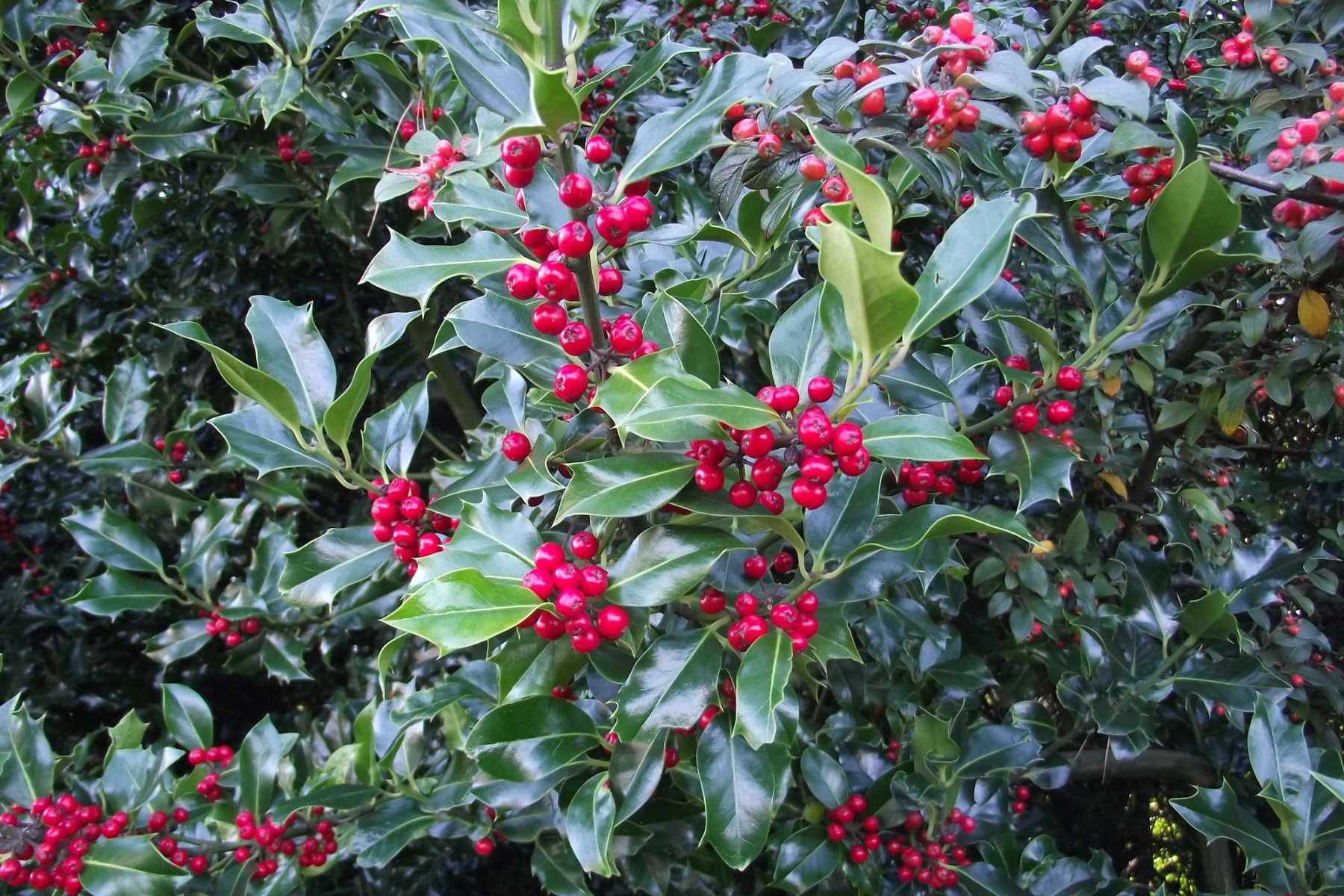
Holly is easiest to spot in winter, when the female plants carry their red berries, but the prickly, glossy leaves give it away all year round.
- The Plant: An evergreen, densely branched shrub or small tree, usually up to about 12 metres tall. Old garden specimens can grow much larger.
- The Leaves: Thick, leathery and very glossy dark green on top, paler underneath, roughly 3–10cm long and arranged alternately along the stem. The edges are the trademark wavy / spiky, with a sharp spine at each point. Leaves high on older trees are sometimes smooth-edged, but leaves on vigorous new shoots are almost always prickly. Very young seedlings start with a few small, rounded leaves before the spiky ones appear.
- The Flowers: Small, white and four-petalled, in clusters along the stems from October to November. They’re easy to miss.
- The Berries: Round, bright red and around 6–10mm across, ripening in winter. Male and female flowers grow on separate plants, so only female plants carry berries.
- The Thickets: Look for clumps of young holly growing up through bush or along a hedgerow near an older plant. These are suckers from the roots or branches that have rooted where they touched the ground.
- Lookalikes: Chinese holly (Ilex cornuta) has thick, almost rectangular leaves and berries in summer, and is often grown in a variegated form. Variegated and smooth-leaved garden forms of English holly are common in gardens but haven’t been recorded growing wild. Our native mountain holly (hakeke, Olearia ilicifolia) also has spiky-edged leaves, but they’re long and narrow, and it has fluffy white daisy flowers and no berries.
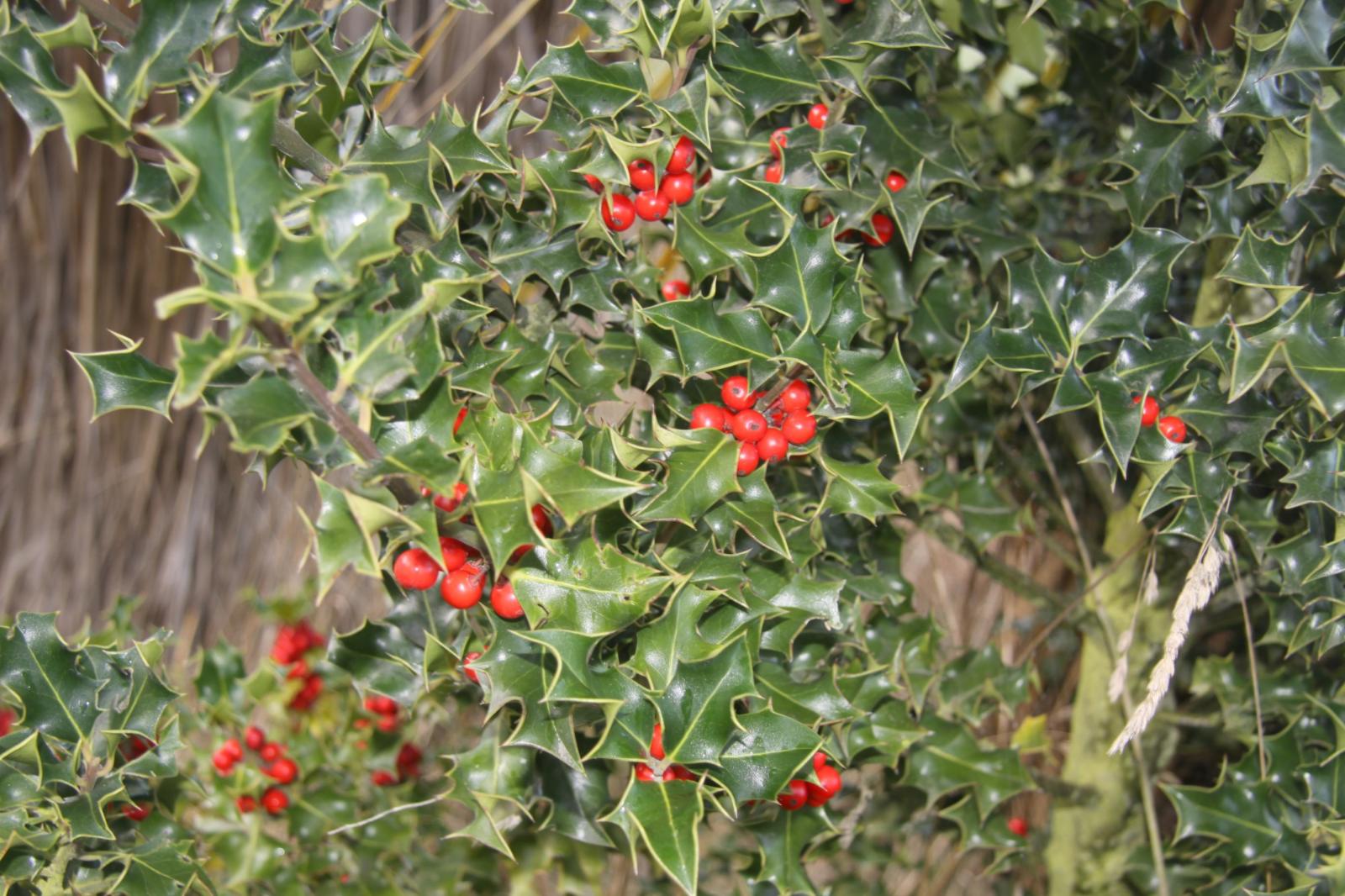
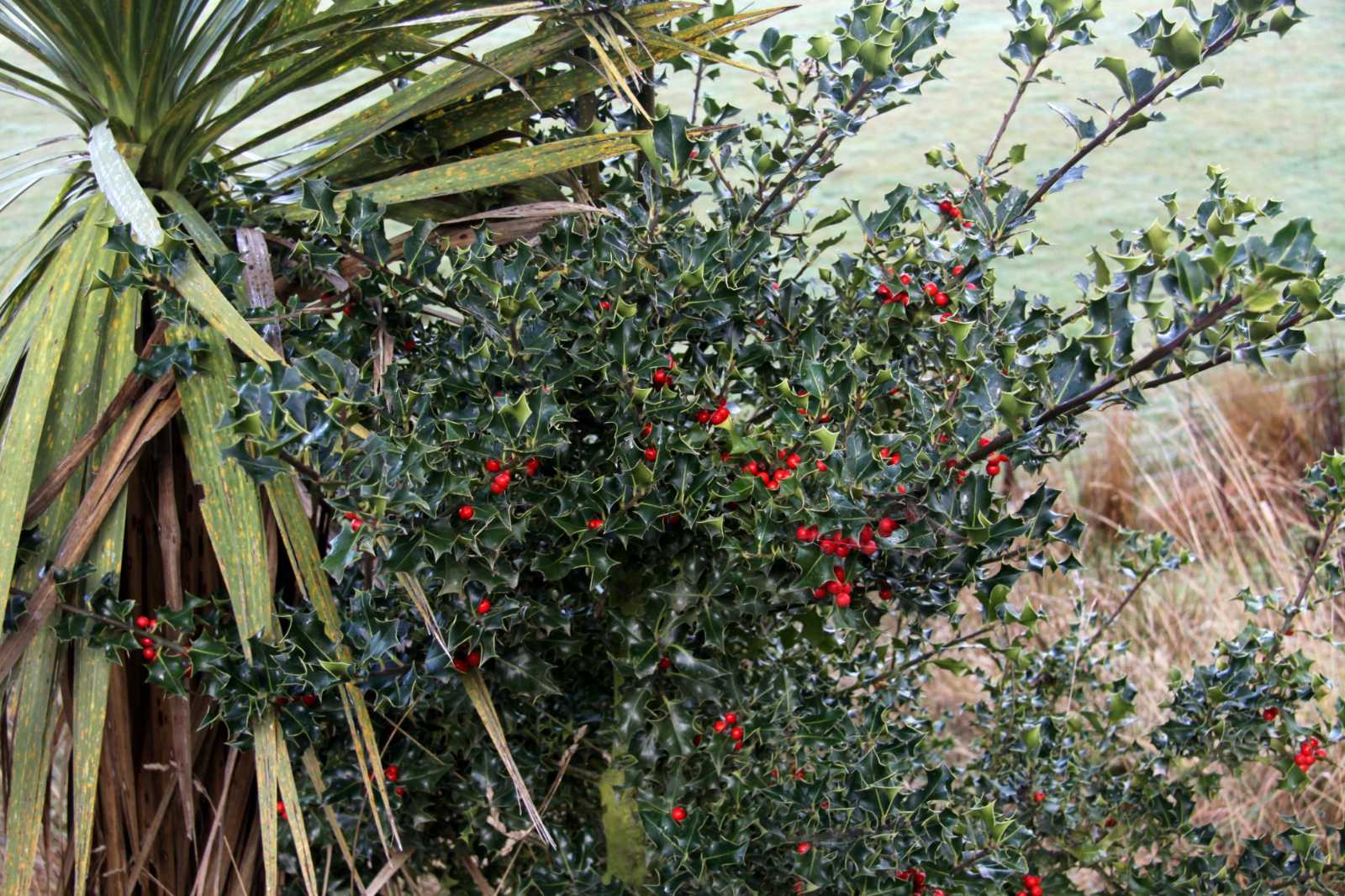
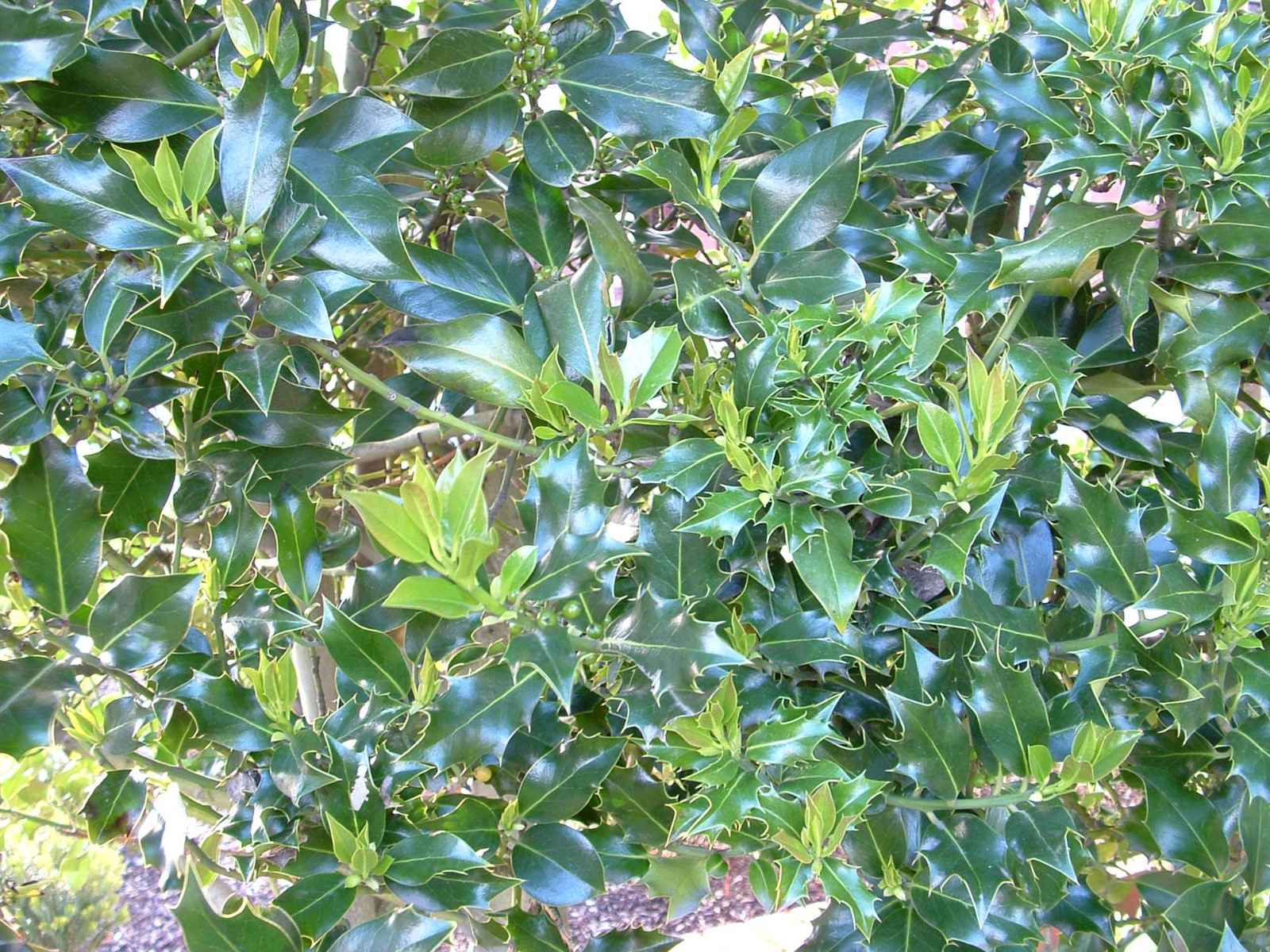
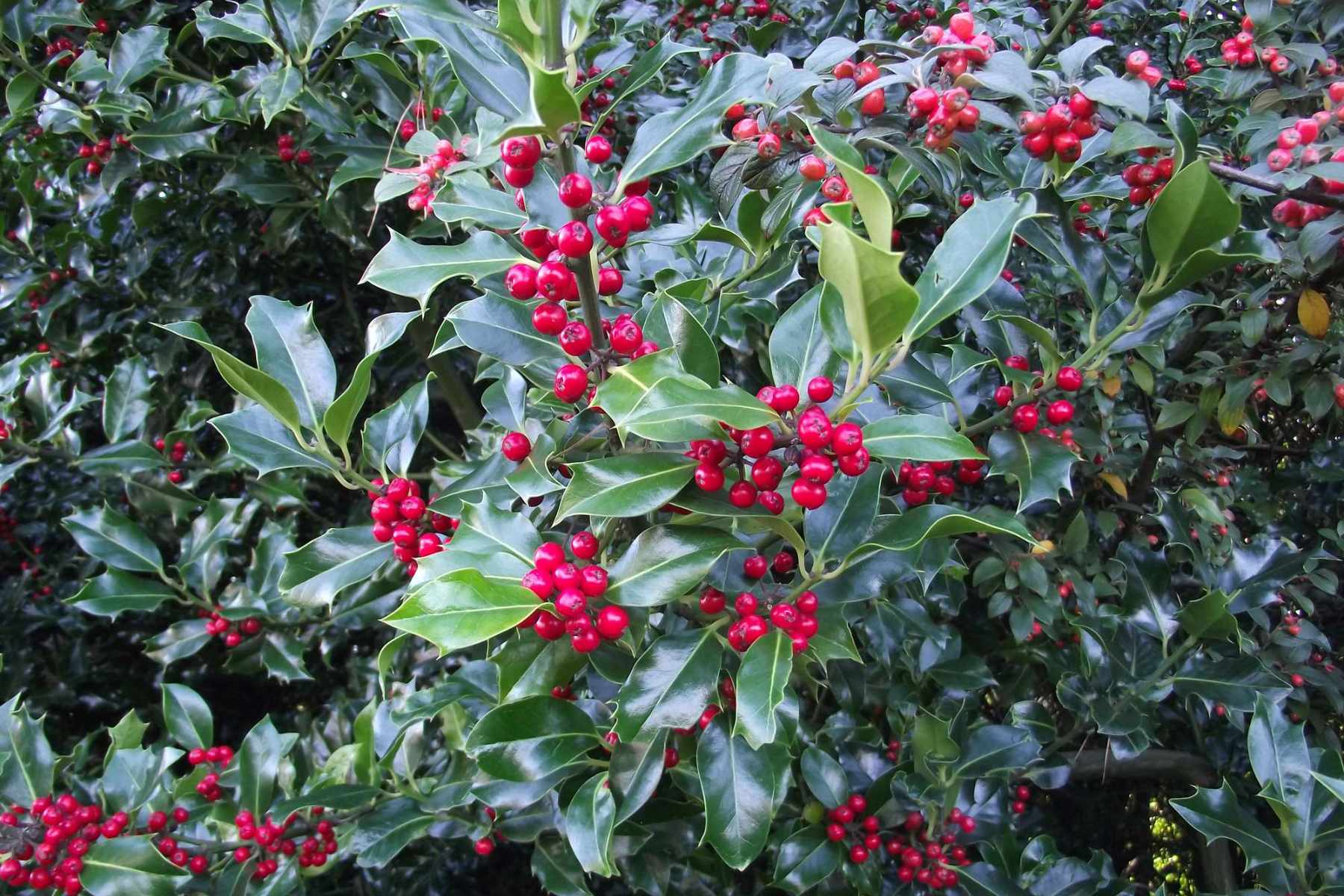
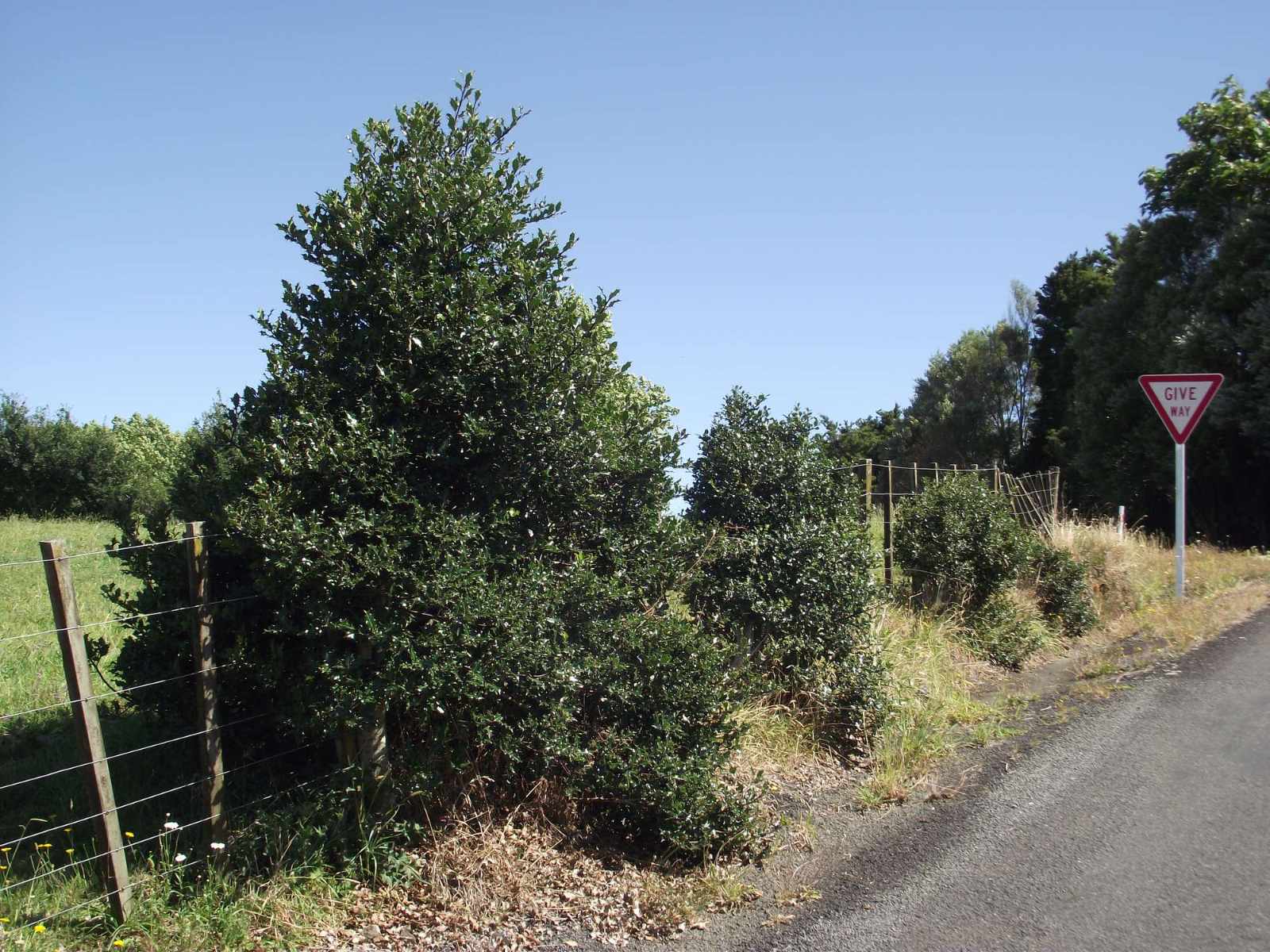
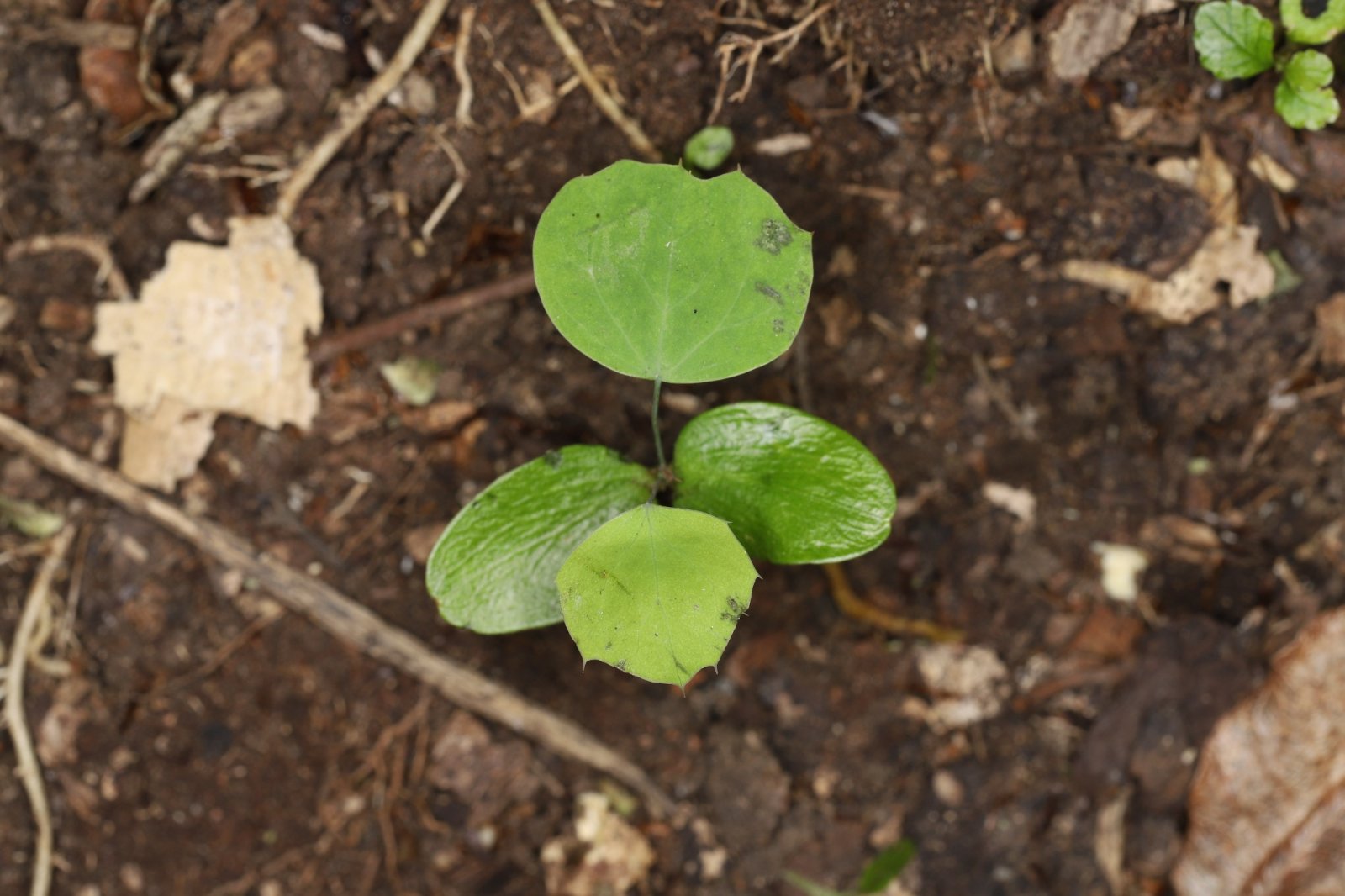
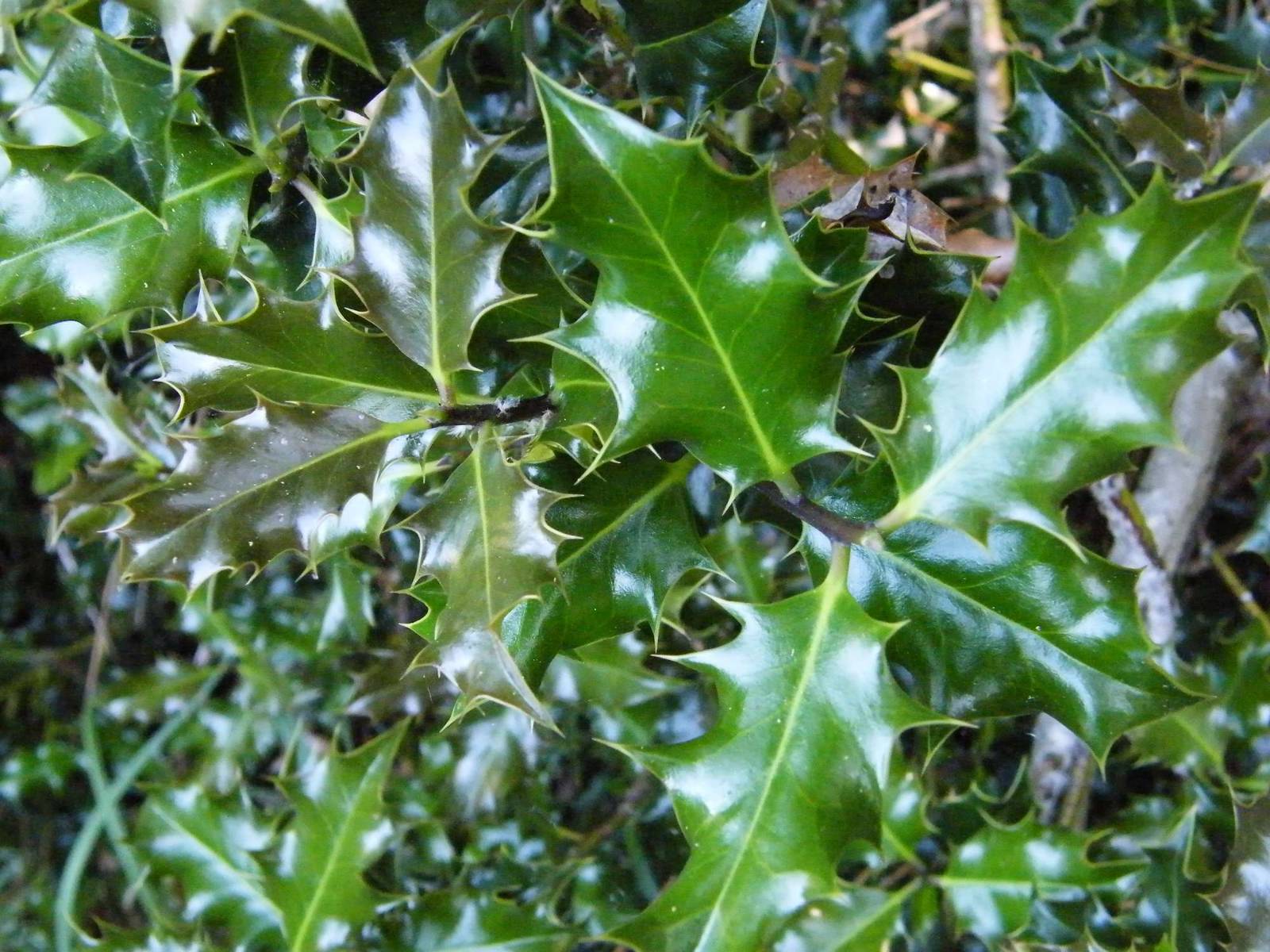
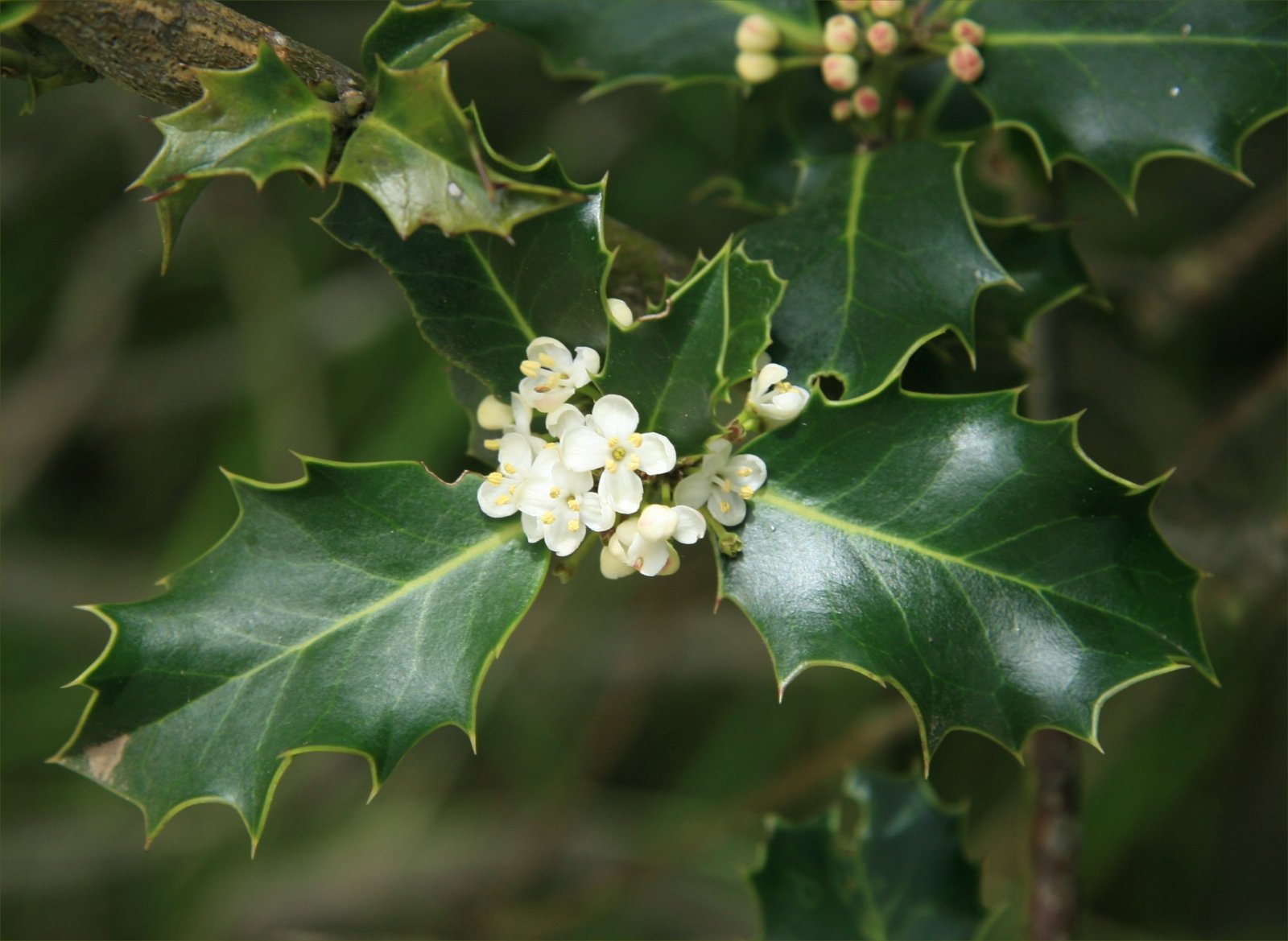
With thanks to Weedbusters for permission to use their photos. Images courtesy of weedbusters.org.nz and photographers Trevor James and Carolyn Lewis.
For more on holly in your region, visit Environment Canterbury or Hawke’s Bay Regional Council.
Holly is tough and long-lived, and if you just cut it down or trim it back it will resprout from the stump and roots. Treat every stem with gel so the roots die too. You can treat holly at any time of year.
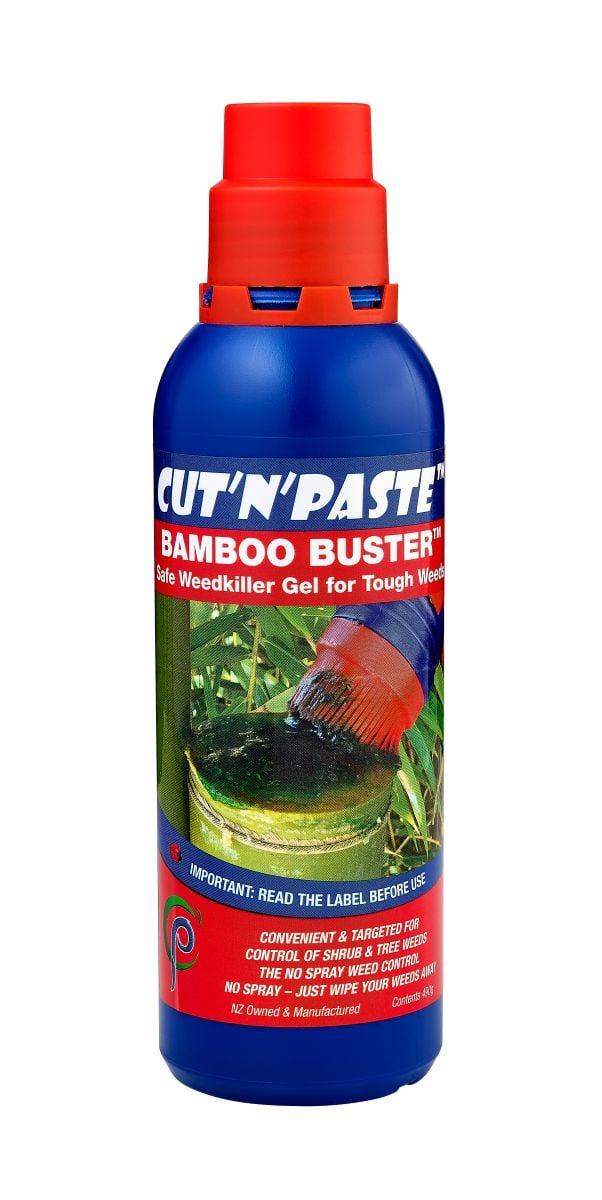
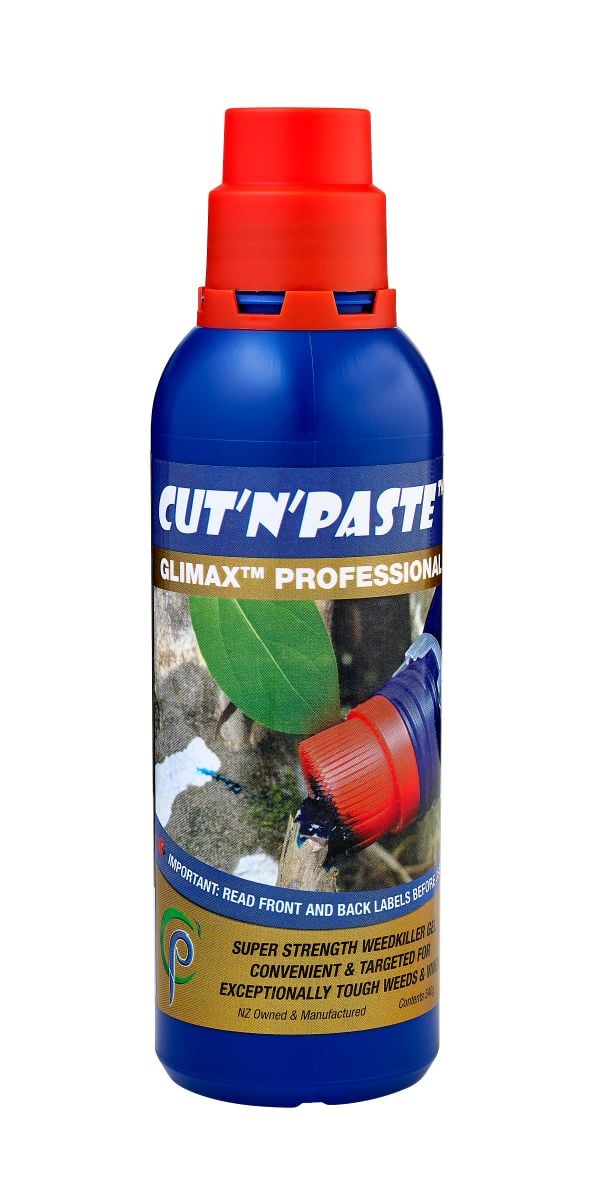
Product Suggestions: Bamboo Buster, Glimax Professional, Picloram Plus+ – see below.
Dealing With Holly
Method 1: Cut and Paste (Best for Hedges, Shrubs and Small Trees)
- Cut Low and Level: Using loppers or a pruning saw, cut each stem as close to the ground as you can, with a flat cut so the gel sits on the wood.
- Paste Straight Away: Within 15 seconds of cutting, spread a thick 3–5mm layer of gel over the whole cut surface, especially the ring of live wood just inside the bark.
- Every Stem Counts: Holly hedges and thickets are often made up of many stems, some joined at the roots. Cut and paste every one, including the thin ones.
- Mind the Prickles: Holly leaves are sharp. Wear thick gloves and long sleeves when handling the cut branches.
Method 2: Drill and Fill (Best for Larger Trees)
- Drill: Using a 10mm drill bit, drill holes angled downwards into the sapwood about every 8–10cm around the base of the trunk.
- Fill: Squeeze gel into each hole straight away, before the wood starts to seal.
- Leave It Standing: Leave the tree in place until it’s completely dead, then cut it down. This gives the gel time to work through the whole root system.
Method 3: Hand-Pulling (Seedlings)
Pull seedlings and small plants by hand, taking as much of the root as possible. They come out most easily after rain.
Disposal: Don’t compost or dump holly prunings, especially branches carrying berries. Take them to a green waste facility or refuse transfer station.
Follow-Up: Check every few months for regrowth and new seedlings, and treat them while they’re small. Where you can, find and deal with the berry-bearing plant that’s seeding the area.
Recommended Products for Holly
Option 1: Bamboo Buster Weed Gel is our top pick for holly hedges and garden plants, and for anywhere near (but not in) waterways.
Option 2: For larger trees and holly growing in bush beside native trees, use Glimax Professional.
Option 3: In open ground, away from trees and plants you want to keep, Picloram Plus+ Weed Gel is a strong alternative for stubborn stumps.
- Option 1: Bamboo Buster (Recommended)
Our double-strength glyphosate gel, and the best fit for a hedge in a garden.- Targeted Kill: Works on the treated plant and its roots.
- No Soil Residual: Breaks down in the soil once it’s done its job, so it suits hedges next to garden beds and lawns.
- Option 2: Glimax Professional (Larger trees and bush)
Our maximum-strength glyphosate gel for big trunks and established stands.- Two Methods, One Gel: Works for Drill and Fill on standing trees and for pasting cut stumps.
- Beside Natives: Our pick for holly that has invaded native bush. Keep it away from water, and use Bamboo Buster there instead.
- Option 3: Picloram Plus+ (Open ground)
A strong choice for holly in paddocks, along fence lines and on roadsides.- Stump Stopper: Drives deep into the roots to stop resprouting.
- Soil Residual: Stays active in the surrounding soil, so keep it well clear of plants you want to keep.
Important Notes:
- ⚠️ Safety Warning: MetGel and Picloram / Picloram Plus+ have significantly more residual soil activity than the glyphosate gels, and can move through ground moisture. MetGel has a soil half-life of roughly 30–90 days, and Picloram roughly 2–6 months, perhaps longer in clay soils. Do not use either near desirable non-target plants, within the root zone of prized trees, or around waterways and wetlands.
- When using MetGel or Picloram, never apply it inside the drip line (canopy edge) of prized trees or broadleaf garden plants. On flat ground, keep a 3 to 5-metre safety buffer. On sloping ground where the weed is uphill from desirable species, extend that buffer to 5 to 10 metres.
- Weeds often grow along streams and in gullies. If you’re working near waterways, use Bamboo Buster. Do not allow any weed gel to enter the water.
- Only treat weeds / target plants / trees that are on your property, or that you have permission to treat. Be aware that some species might have protection status or have a notable status, or be a designated scheduled tree under the district plan – if in doubt, check with your local council.
- Safety First: Wear gloves and protective clothing and observe all safety protocols, especially when using machinery, chainsaws and other tools.
- When using any herbicide ensure you READ THE LABEL THOROUGHLY, and follow all instructions and directions for the purchase, use and storage of the product.
- If in doubt, seek professional advice.
- Regional Rules: Holly isn’t a banned or notifiable plant in New Zealand, and you can still buy it at garden centres. It is on the Department of Conservation’s list of environmental weeds, and some councils, including Environment Canterbury, encourage landowners to remove it. Check with your local council for the rules and support in your area.
- Poisonous Berries: Most parts of holly are poisonous, especially the red berries. That’s one more reason to take it out where children or stock play and graze.
- Some Holly Is Heritage: A few very old holly trees are protected. One in Nelson’s Isel Park, planted around 1858, is on the New Zealand Tree Register as a notable tree. If a large old holly is on a heritage property or in a park, check before you treat it.
- Don’t Spread It: Birds do most of the spreading, but berry-laden prunings dumped over a fence or in the bush start new infestations too. Never dump holly cuttings.
- Plant This Instead: If you’re replacing a holly hedge, kōhūhū (Pittosporum tenuifolium) makes a dense, fast-growing native hedge that takes clipping well. If you love the spiky-leaf look, native mountain holly (hakeke, Olearia ilicifolia) has holly-like leaves and white daisy flowers in summer, and it won’t take over the bush.
- Don’t Plant It: If you’re choosing a hedge or a Christmas-themed plant, pick a native or another lower-risk option.
References, Credits & Further Reading
- Weedbusters – Holly (with thanks to Weedbusters for the use of their photos)
- Environment Canterbury – European holly
- Hawke’s Bay Regional Council – Holly
- New Zealand Plant Conservation Network – Ilex aquifolium
- Flora of New Zealand Vol. IV (Manaaki Whenua – Landcare Research)
- APWT – Holly weed fact sheet
- New Zealand Tree Register – Isel Park holly