Moth Plant Competition – Winners Announced :: Find Out


White Poplar (Populus alba)
Home » Help » Weed Directory
A silvery shade tree that never stops suckering
White poplar (Populus alba), also known as silver poplar, was brought to New Zealand from Europe and western Asia as an ornamental and shelter tree. Its leaves flash silvery-white in the wind, which made it a popular pick for farm shelterbelts, parks and riverbanks. The trouble is, it doesn’t stay where it was planted.
White poplar is a relentless root-sucker. New shoots spring up from its spreading roots, sometimes 30 metres or more from the parent trunk, and over time a single tree becomes a dense grove of clones. These thickets shade out native plants, dry out damp hollows and push roots into streams and drains. It turns up along rivers, coastal dunes, roadsides and rough pasture, and has formed large stands in parts of the eastern South Island. The Department of Conservation now lists it as an environmental weed.
The catch is that cutting a white poplar down usually makes things worse, because the roots respond with a flush of new suckers. The good news is that Cut’n’Paste Weed Gels can kill it, roots and all, if you treat the tree while it’s still standing.
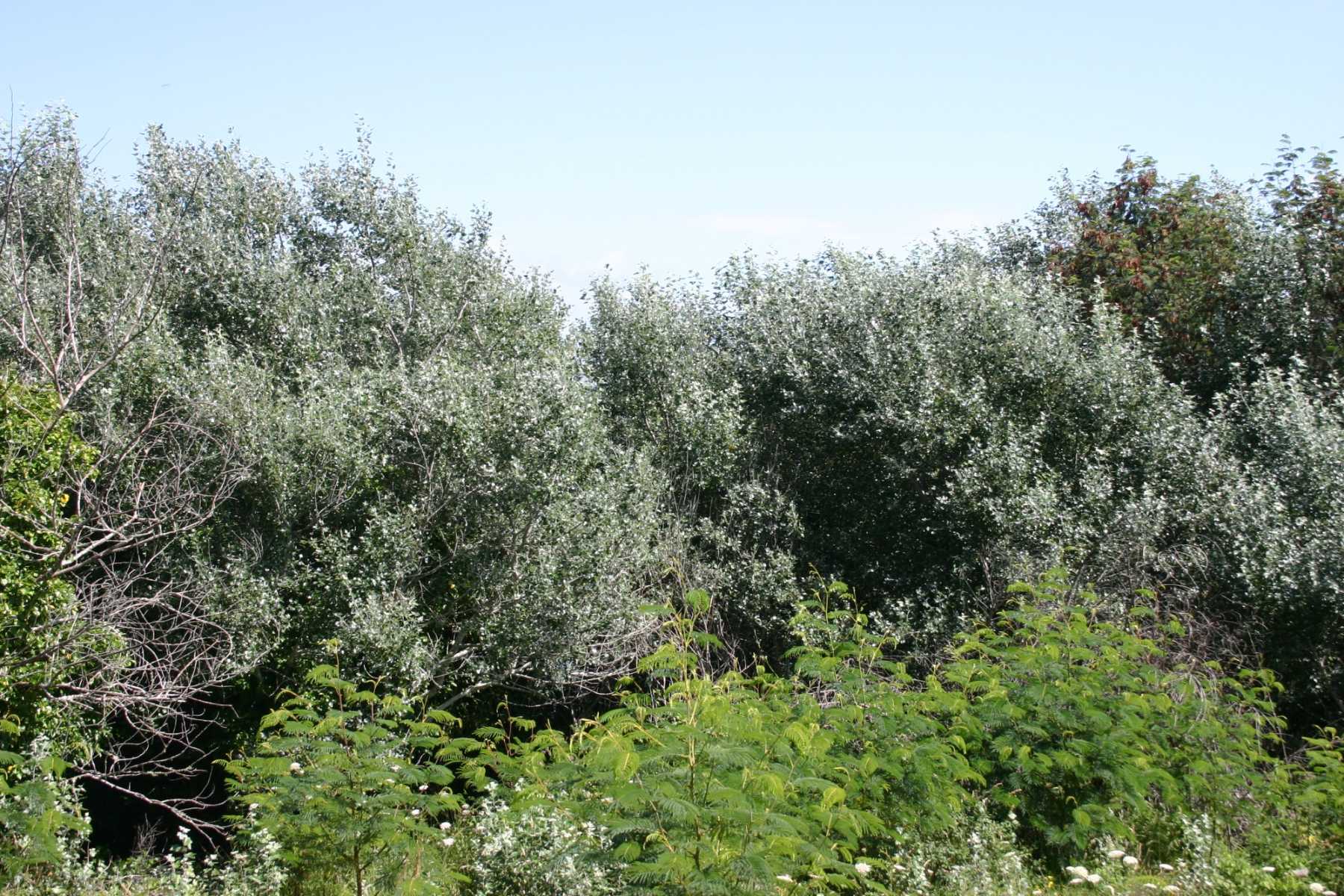
White poplar is easiest to recognise from spring through autumn, while it’s in leaf. Look for the bright white undersides of the leaves, which give the whole tree a silvery shimmer on a breezy day.
- The Tree: A deciduous tree that can reach around 25 metres, usually with a broad, spreading crown. Mature trees are often surrounded by a ring of younger suckers.
- The Bark: Grey and fairly smooth on younger trunks, becoming shallowly furrowed as the tree ages.
- The Leaves: Arranged alternately along the stem, glossy dark green on top and covered in thick white felt underneath. On vigorous shoots and suckers the leaves are larger and maple-like, with three to five lobes. On older branches they’re smaller, rounder and coarsely toothed.
- The Shoots and Buds: Young twigs and buds are coated in white fuzz, but they aren’t sticky.
- The Catkins and Fluff: Drooping catkins up to about 8cm long appear in September. In October the seed capsules split and release clouds of white, cotton-like fluff that can look like a snowfall. Trees here don’t produce viable seed, so it’s the roots, not the fluff, that do the spreading.
- The Suckers: Clusters of young stems popping up through lawns, paddocks, paths and even cracks in the pavement near a mature tree are a sure sign.
- Lookalikes: The lobed leaves can be mistaken for a maple, but maple leaves grow in opposite pairs and aren’t white underneath. Grey poplar (a white poplar hybrid) is very similar, with greyer, less deeply lobed leaves. It suckers in the same way and can be treated the same way.
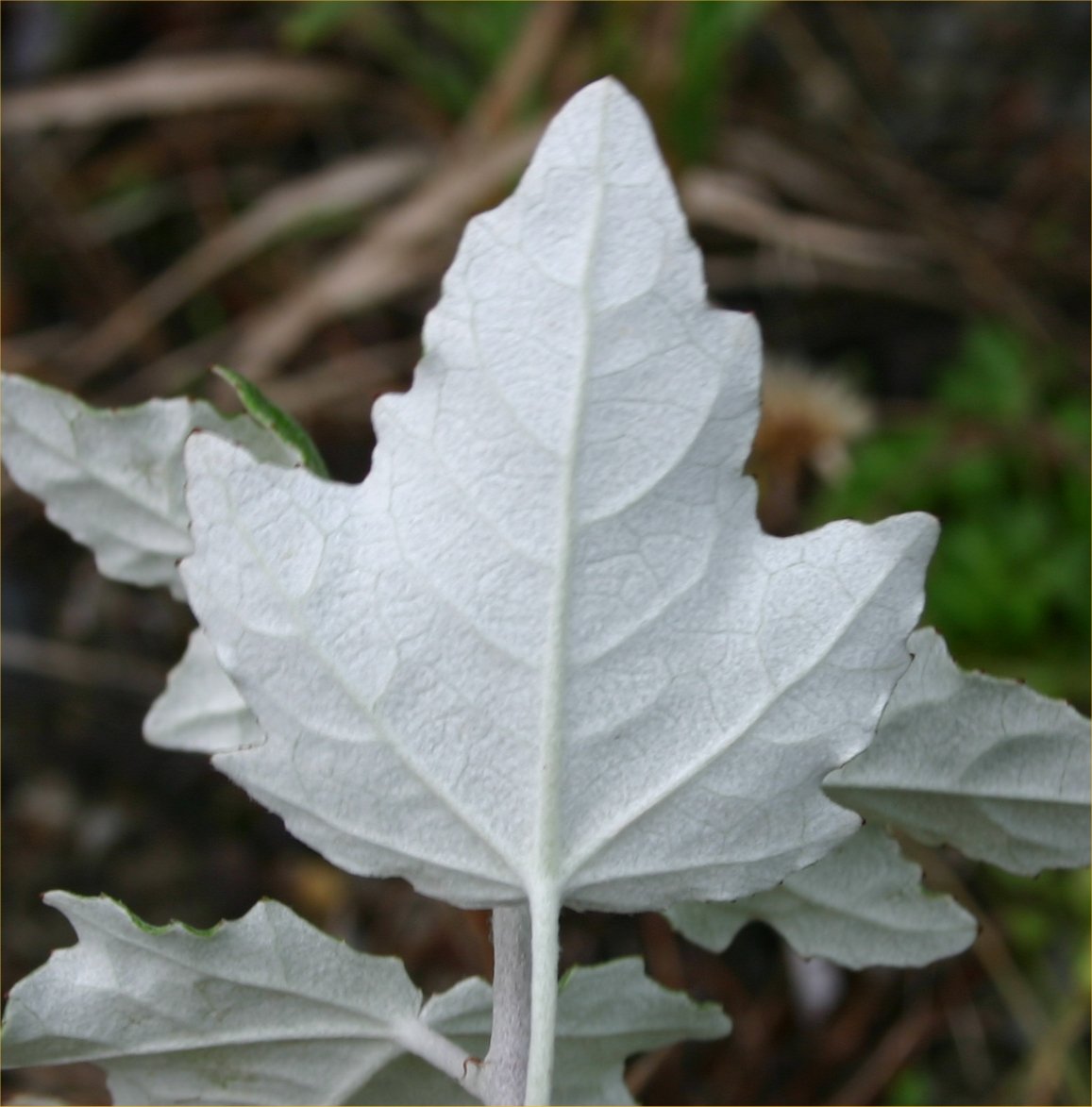
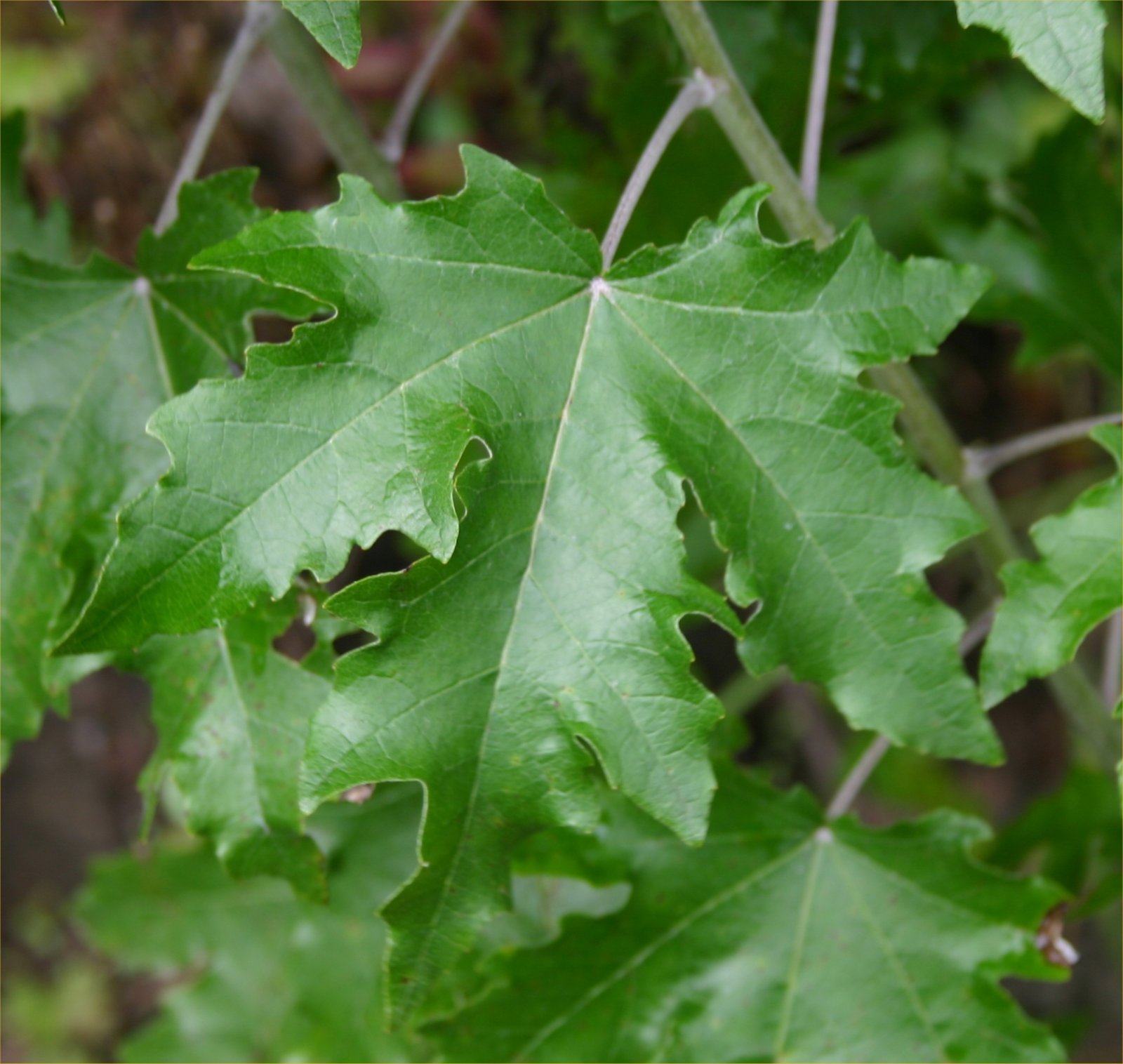
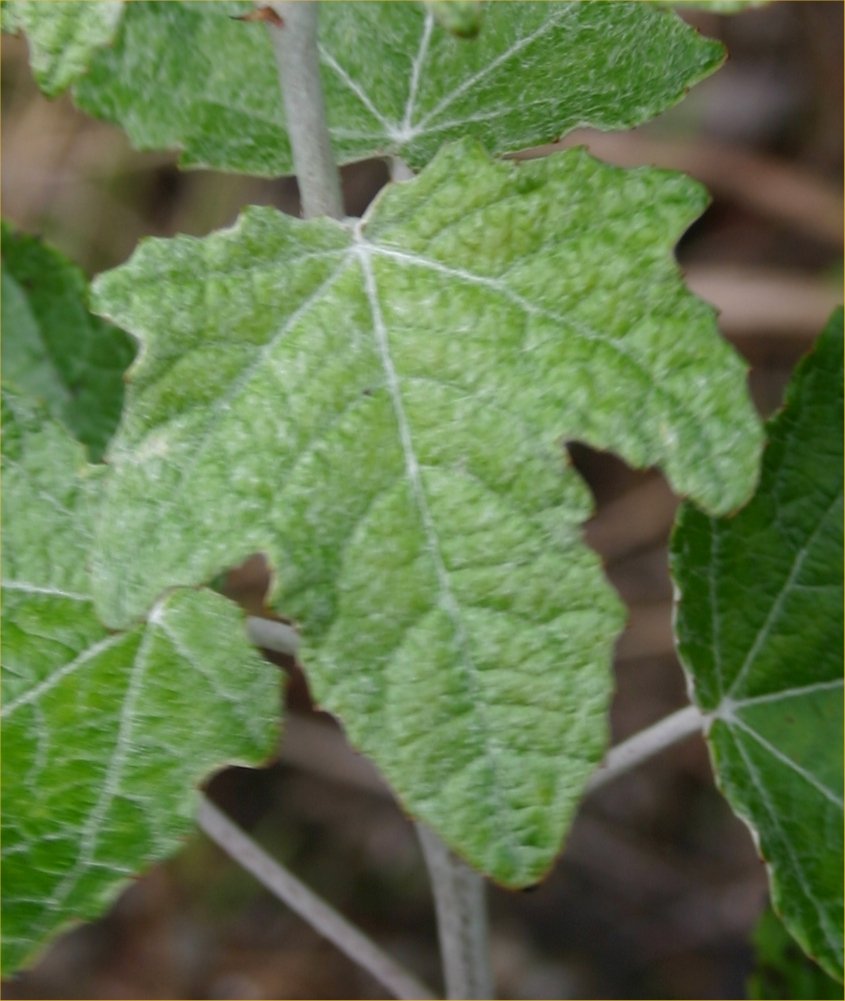
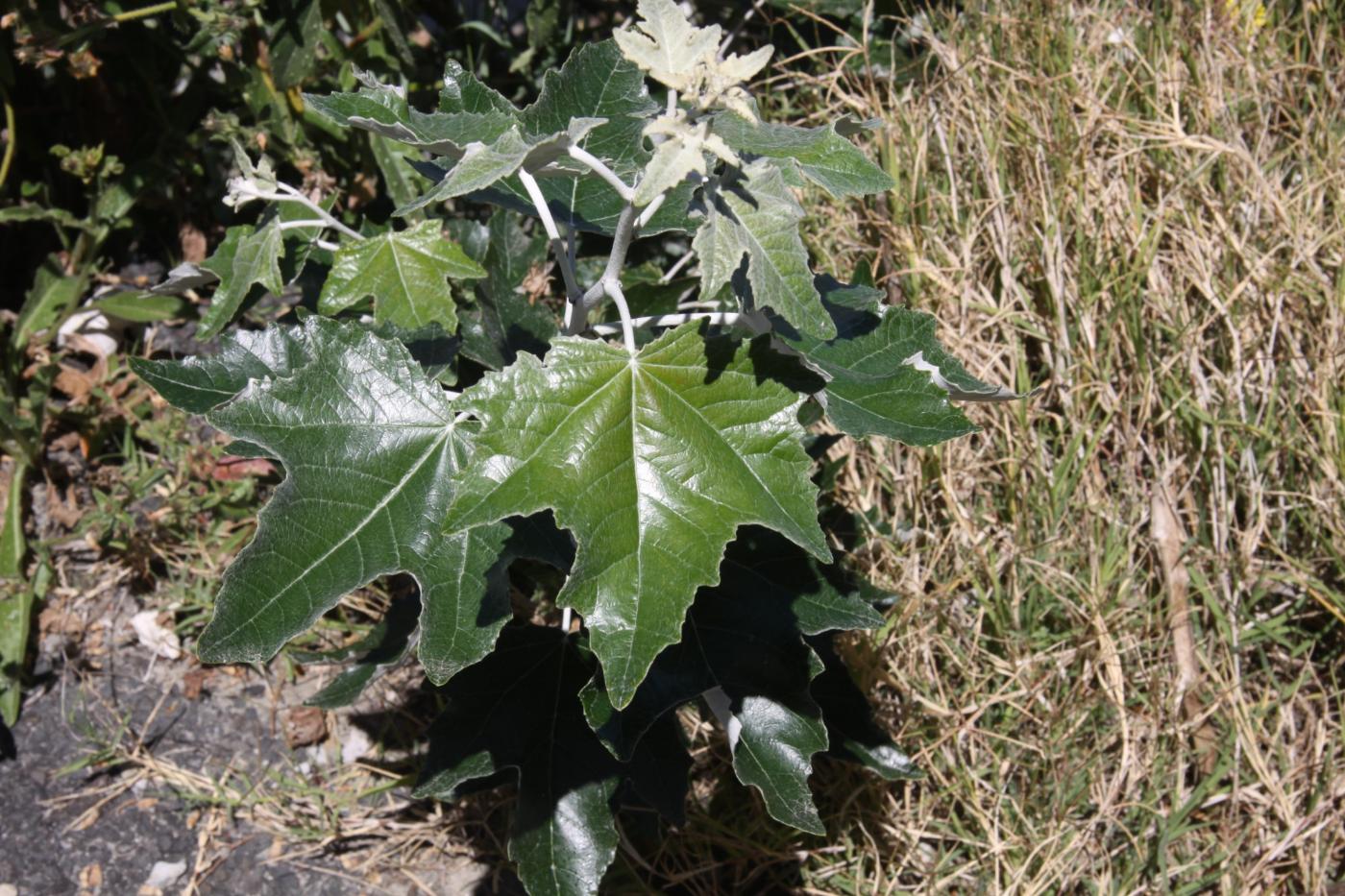
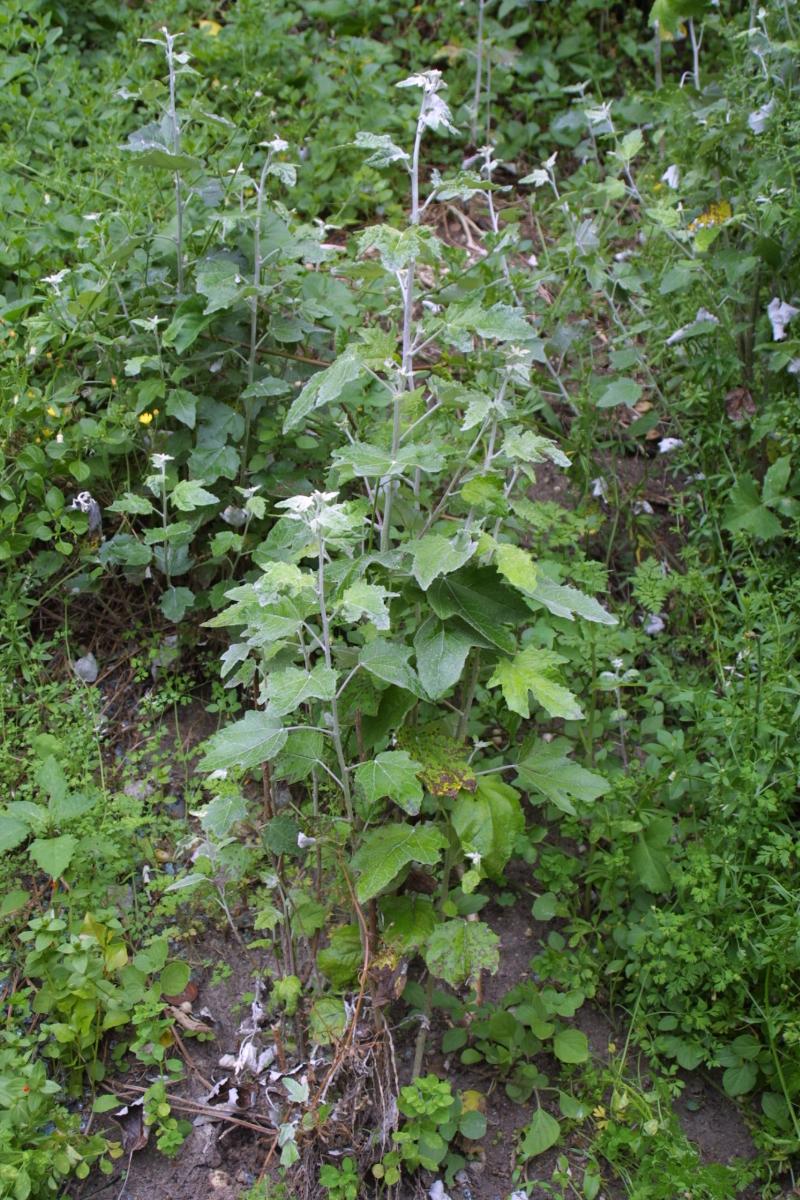
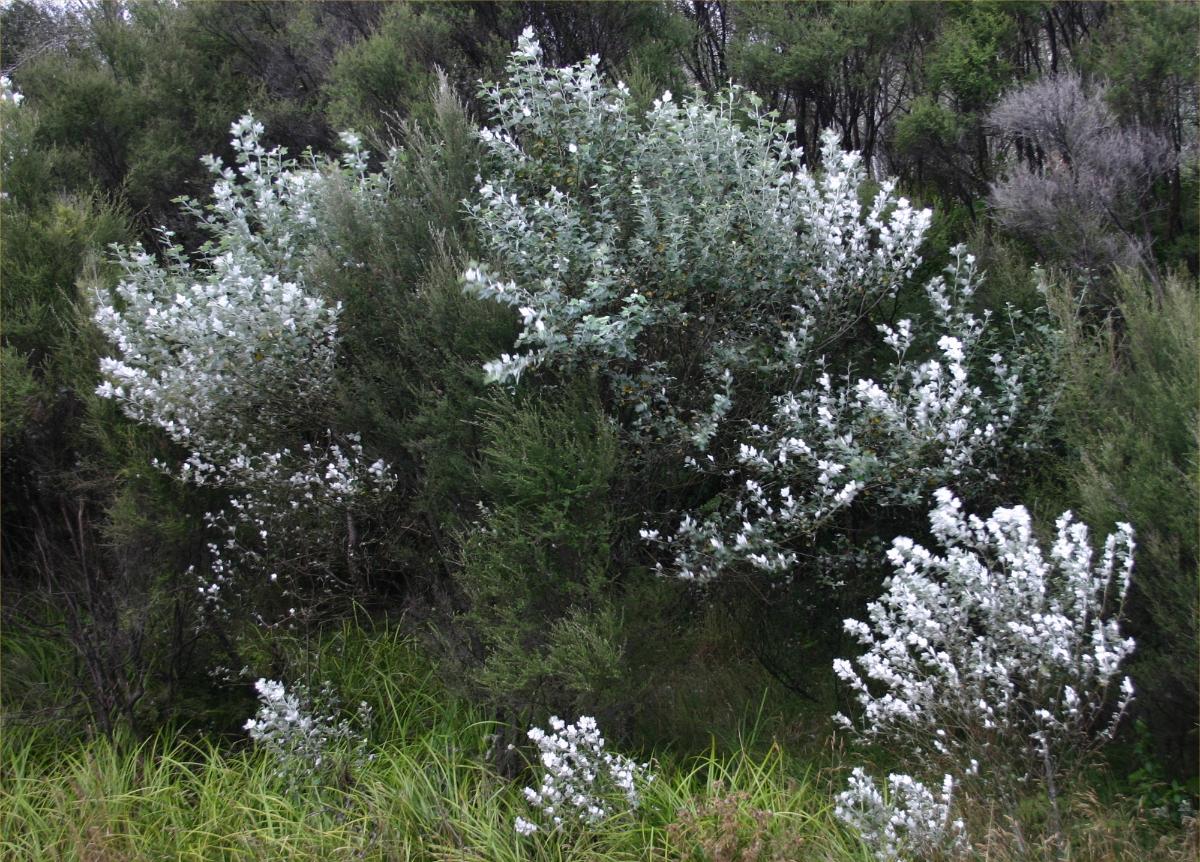
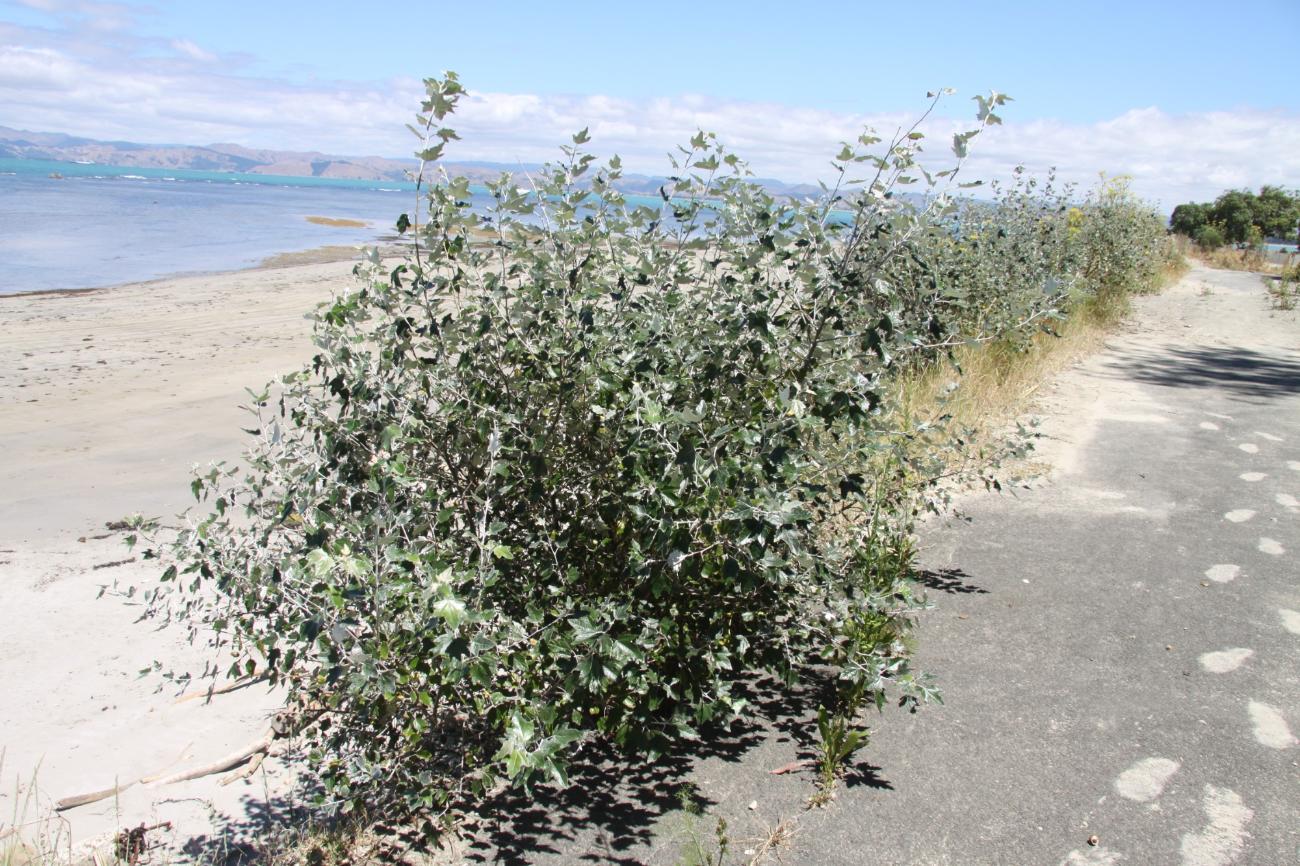
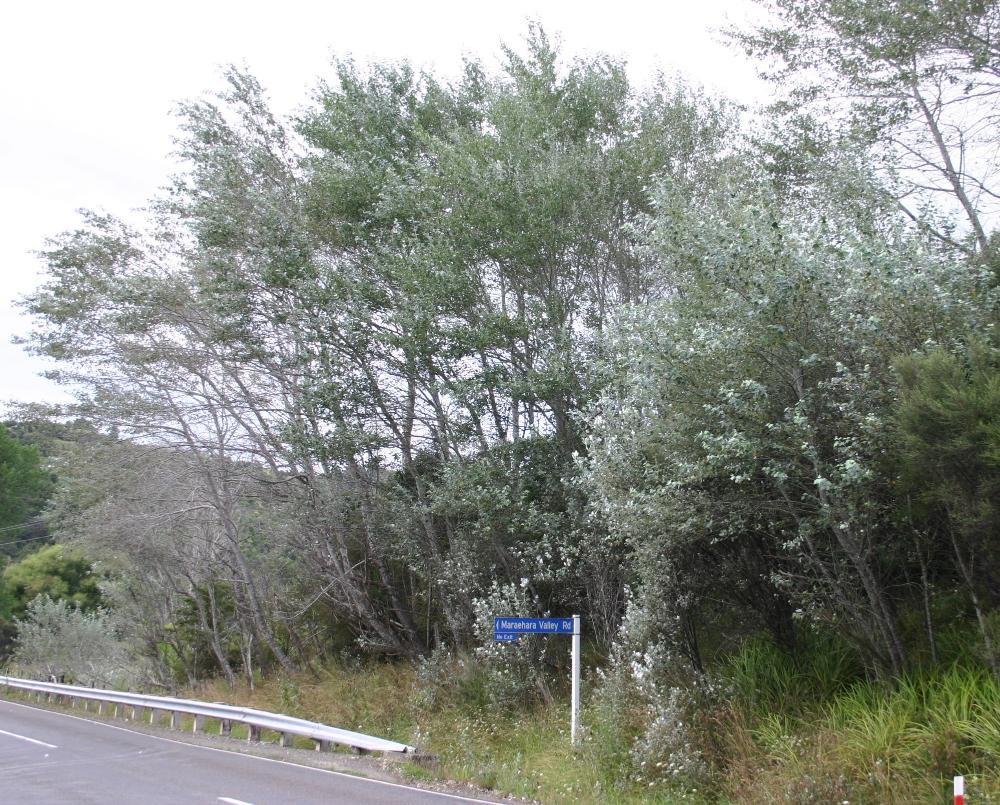
Images courtesy of weedbusters.org.nz and photographer Trevor James.
For more on white poplar in your region, visit Auckland Council or Hawke’s Bay Regional Council.
White poplar fights back hard. If you fell a tree or slash the suckers without treating them, the roots answer with a flush of new shoots and you can end up with a bigger problem than you started with. Kill the tree while it’s standing, let it die completely, then remove it. For best results, treat white poplar from summer into early autumn, while it’s in full leaf and drawing sugars down into its roots. Product Suggestions: MetGel, Picloram Plus+, Bamboo Buster – see below.
Dealing With White Poplar
Method 1: Drill and Fill or Stem-Frilling (Best for Medium to Large Trees)
- Drill and Fill: Using a 10mm drill bit, drill holes angled downwards into the sapwood every 10cm around the base of the trunk. Squeeze gel generously into each hole straight away, before the wood starts to seal.
- Alternatively, Stem-Frilling: Use an axe or chisel to cut downward frills through the bark and into the sapwood, spaced evenly around the base of the trunk, without joining them into a full ring. Fill each frill with gel straight away.
- Leave It Standing: Don’t fell the tree until it’s completely dead. This can take a full season or more, and it gives the gel time to work through the whole root system.
Method 2: Cut and Paste (Best for Suckers and Small Trees)
- The Level Base Cut: Using loppers or a pruning saw, cut each stem flat and level, as close to the ground as practical, so the gel sits on the wood rather than running off.
- Paste Immediately: Within 15 seconds of cutting, apply a thick 3–5mm layer of gel across the whole cut surface, paying extra attention to the outer ring just inside the bark.
- Treat Every Stem: In a sucker patch, the stems are usually all joined underground. Treat every stem you cut, not just the biggest ones.
Method 3: Digging Out (Small, Isolated Suckers)
Small suckers can be dug out, but take as much root as you can, as any root left behind can resprout. Take all the material to a green waste facility or landfill rather than composting it or dumping it.
Follow-Up: Check treated areas every three to four months and treat any new suckers while they’re small. Keep going until no new shoots appear.
Recommended Products for White Poplar
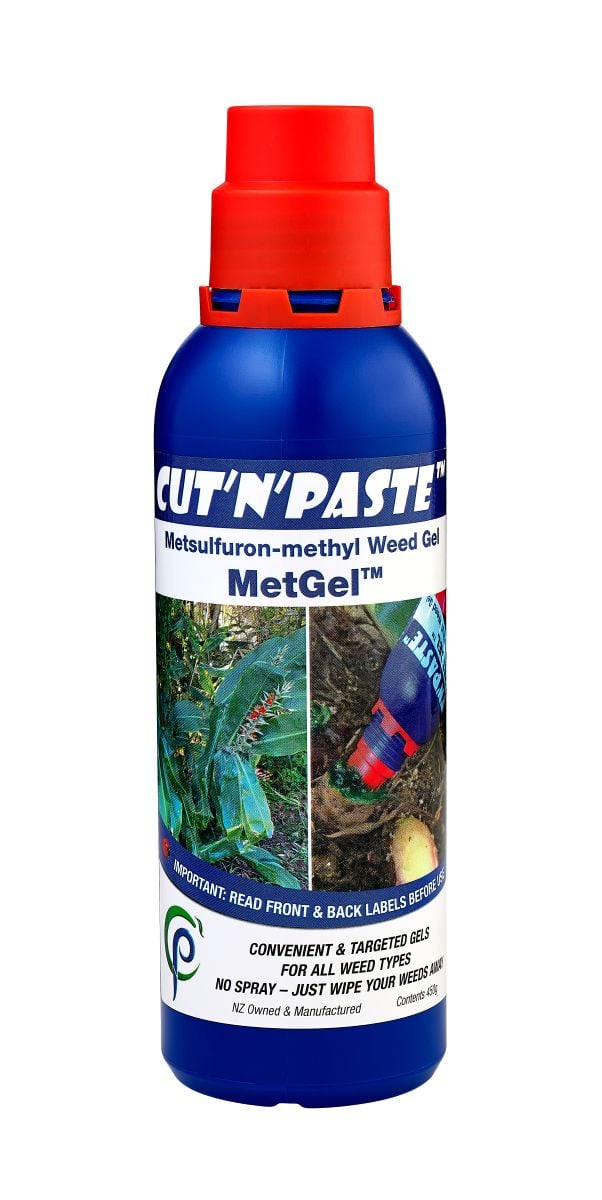
Option 1: MetGel is our top pick for white poplar, for both Drill and Fill and Cut and Paste on stumps.
Option 2: Where you are in open ground – away from trees you want to keep – you can also use Picloram Plus+ Weed Gel as a strong alternative.
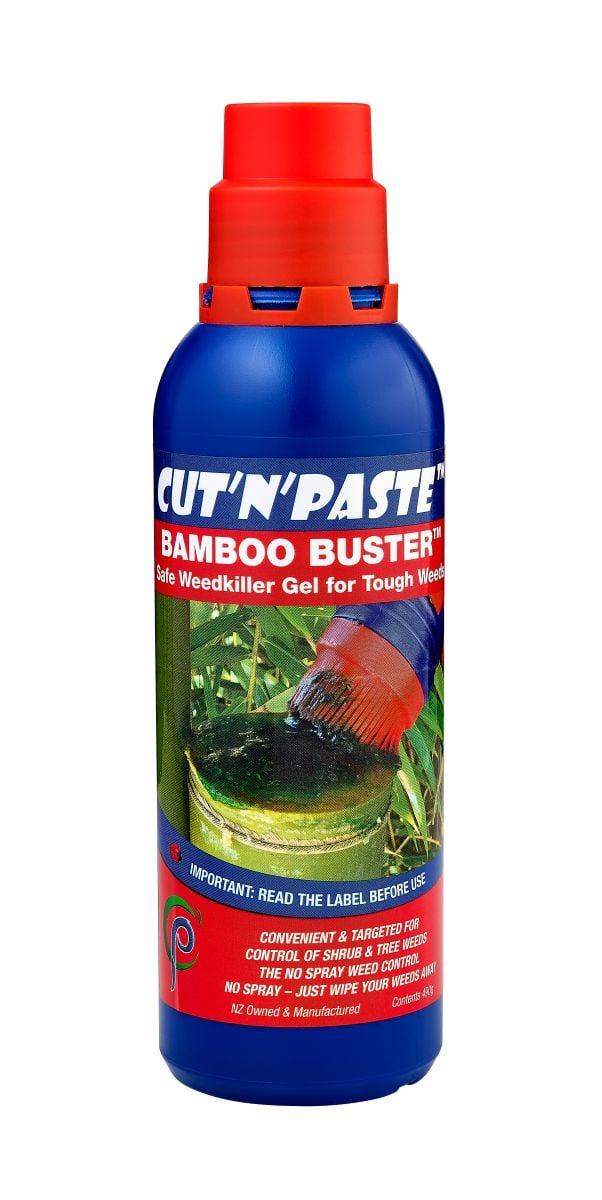
Option 3: If you’re working near (but not in) waterways, we recommend our glyphosate-based, double strength Bamboo Buster Weed Gel.
- Option 1: MetGel (Recommended)
Our metsulfuron gel, and the active ingredient councils point to for white poplar.- Root Reach: Travels down into the shared root system that feeds the suckers.
- Two Methods, One Gel: Works for Drill and Fill on standing trees and for pasting freshly cut suckers.
- Option 2: Picloram Plus+ (Open ground)
A strong choice for white poplar in paddocks, along fence lines and on roadsides.- Stump Stopper: Drives deep into the roots to stop resprouting.
- Soil Residual: Stays active in the surrounding soil to knock back nearby suckers.
- Option 3: Bamboo Buster (Near waterways)
White poplar often grows on stream and river banks, and this is our pick for those spots.- Targeted Kill: Works on the treated tree and its roots.
- No Soil Residual: Breaks down in the soil once it’s done its job.
What the councils say: Auckland Council recommends a metsulfuron gel on freshly cut stems and drilling standing trees with metsulfuron, which is exactly where MetGel fits. It also advises against felling first, as the tree will just resprout, and suggests getting an arborist in for trees over 4 metres. When drilling large trees, keep well clear of paths, buildings and property, as dead poplars can drop limbs or fall without warning.
Important Notes:
- ⚠️ Safety Warning: MetGel and Picloram / Picloram Plus+ have significantly more residual soil activity than the glyphosate gels, and can move through ground moisture. MetGel has a soil half-life of roughly 30–90 days, and Picloram roughly 2–6 months, perhaps longer in clay soils. Do not use either near desirable non-target plants, within the root zone of prized trees, or around waterways and wetlands.
- When using MetGel or Picloram, never apply it inside the drip line (canopy edge) of prized trees or broadleaf garden plants. On flat ground, keep a 3 to 5-metre safety buffer. On sloping ground where the weed is uphill from desirable species, extend that buffer to 5 to 10 metres.
- Weeds often grow along streams and in gullies. If you’re working near waterways, use Bamboo Buster. Do not allow any weed gel to enter the water.
- Only treat weeds / target plants / trees that are on your property, or that you have permission to treat. Be aware that some species might have protection status or have a notable status, or be a designated scheduled tree under the district plan – if in doubt, check with your local council.
- Safety First: Wear gloves and protective clothing and observe all safety protocols, especially when using machinery, chainsaws and other tools.
- When using any herbicide ensure you READ THE LABEL THOROUGHLY, and follow all instructions and directions for the purchase, use and storage of the product.
- If in doubt, seek professional advice.
- Regional Rules: White poplar isn’t a declared pest in most regions, including Auckland, but it is on the Department of Conservation’s 2024 list of environmental weeds. Check with your local council for current rules and support in your area.
- Don’t Move It: White poplar spreads when roots travel in soil, fill or garden waste. Never dump prunings or roots, and be careful moving soil from around a stand.
- Stick With the Follow-Up: Suckers can keep appearing for a year or more after the parent tree dies. Regular checks are what finish the job.
- Other Poplars: White poplar belongs to the willow family, Salicaceae (say “sal-ih-KAY-see-ee”), along with the other poplars growing wild in New Zealand. You may come across grey poplar (Populus × canescens), Lombardy poplar (Populus nigra), necklace poplar (Populus deltoides), Canadian poplar (Populus × canadensis), western balsam poplar or cottonwood (Populus trichocarpa), balm of Gilead poplar (Populus × gileadensis) and Yunnan poplar (Populus yunnanensis). Lombardy poplar is the one most people know: the tall, narrow, column-shaped tree lining roads and farm shelterbelts. Many poplars are planted deliberately for shelter and erosion control, so check before removing them. Where you do want one gone, the methods above apply.
- Plant This Instead: Once the poplar is gone, plant densely so the ground is shaded and new suckers struggle. Two natives that suit the same open, often damp sites are mānatu (lowland ribbonwood, Plagianthus regius), a fast-growing deciduous tree that’s well suited to riverbanks, and houhere (lacebark, Hoheria), which grows quickly and puts on a show of white flowers in late summer.
- Don’t Plant It: If you want a shelter or shade tree, choose a native or a lower-risk alternative.
References, Credits & Further Reading