
Battling Wilding Pines: Identification & Cut’n’Paste Control Guide
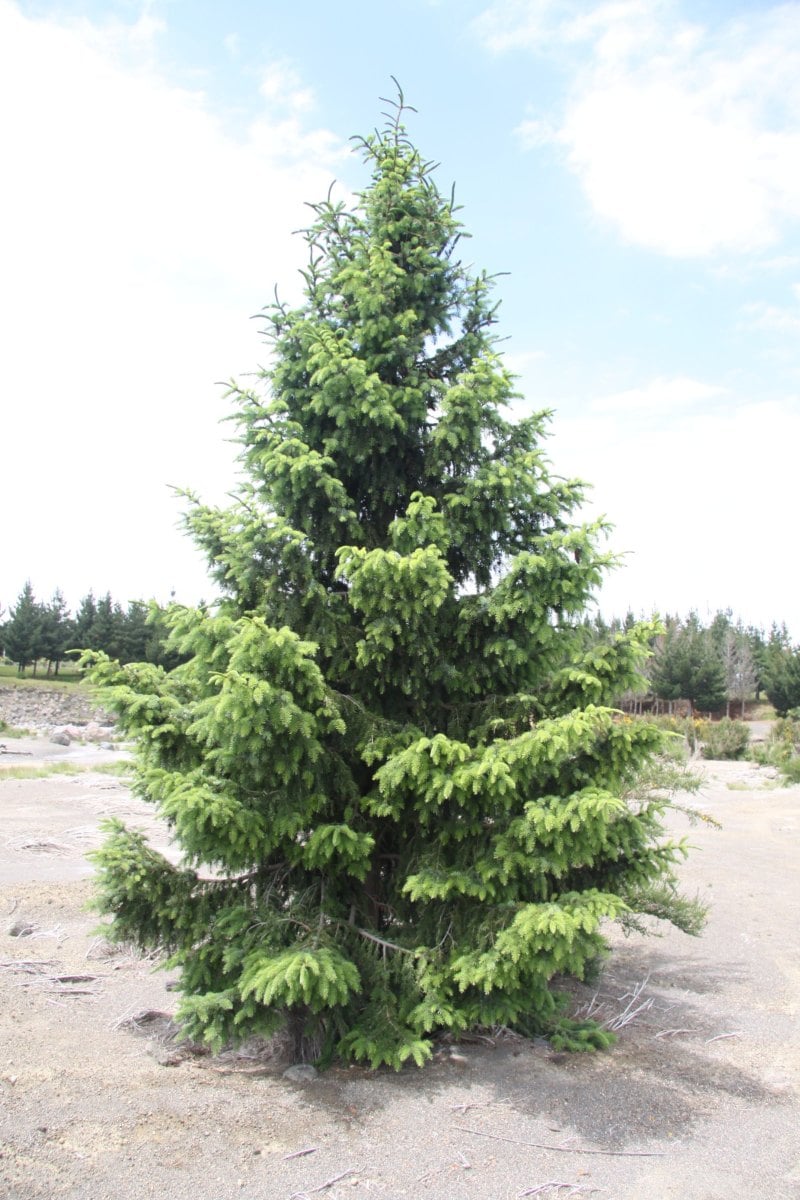
Seemed like a good idea at the time! That statement is so true of Pine trees, originally introduced in the 19th and 20th centuries to New Zealand for fast timber, erosion control, and shelterbelts. These trees have become a huge part of the land and industry here – but according to DOC “When conifer cones mature on the tree, they open to release masses of wind-blown seeds. These seeds travel kilometres downwind and need no special conditions to take root and grow.” These are now widely referred to as “wilding pines” or “wilding conifers”.
Wilding pines & conifers are basically those that have “gone rogue” – spreading across hundreds of kilometers. As they rapidly reproduce and multiply, they have become one of the single greatest threats to New Zealand’s iconic high country, native grasslands, forests, reserves and delicate catchments.
They are arguably a fire hazard and a blight on the landscape. Left unchecked, wilding pines transform open tussocklands and native bush into dense, water-draining monocultures. Unlike commercial or managed forestry plantations, wildings rarely hold timber value due to their unpredictable growth, uneven spacing, and irregular wood quality.
The Wilding Pine Threat: Key Species & Distribution
Common Wilding Pine Species:
Species (Common Name) | Botanical Name | Needle Group | Spreading Threat |
|---|---|---|---|
Pinus contorta | 2 Needles (Short) | Extreme | |
Pseudotsuga menziesii | Single Needles | Extreme | |
Scots Pine | Pinus sylvestris | 2 Needles (Short) | High |
Mountain Pine | Pinus uncinata | 2 Needles (Short) | High |
Dwarf Mountain Pine | Pinus mugo | 2 Needles (Short) | High |
Corsican Pine (Black) | Pinus nigra | 2 Needles (Med/Long) | High |
European Larch | Larix decidua | Cluster Needles | High |
Japanese Larch | Larix kaempferi | Cluster Needles | High |
Ponderosa Pine | Pinus ponderosa | 3 Needles | High / Medium |
Maritime Pine | Pinus pinaster | 2 Needles (Med/Long) | High (Lowlands) / Low (High Country) |
Radiata Pine (Monterey) | Pinus radiata | 3 Needles | High (Lowlands) / Low/Medium (High Country) |
Bishop Pine | Pinus muricata | 2 Needles (Med/Long) | Medium |
Mexican Weeping Pine | Pinus patula | 3 Needles | Medium |
Silver Fir | Abies alba | Single Needles | Low / Medium |
Sitka Spruce | Picea sitchensis | Single Needles | Low / Medium |
Jack Pine | Pinus banksiana | 2 Needles (Short) | Low / Medium |
Eastern White Pine | Pinus strobus | 5 Needles | Medium / Low |
Western White Pine | Pinus monticola | 5 Needles | Medium / Low |
Deodar Cedar | Cedrus deodara | Cluster Needles | Low / Medium |
Invaded Habitats & Quick Stats:
- Vulnerable Ecosystems: High country tussocklands, alpine herb fields, native bush margins, geothermal sites, coastal dunes, braided riverbeds, reserve margins – and more.
- Origins: Northern Hemisphere (North America and Europe).
- The Scale: The National Wilding Conifer Control Programme estimates up to 7.5 million hectares are at risk of invasion, with a potential economic cost of NZD$4.6 billion due to impacts on primary production, biodiversity, hydro generation, and irrigation water storage.
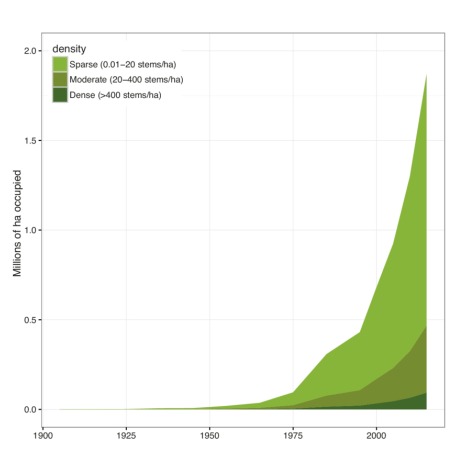
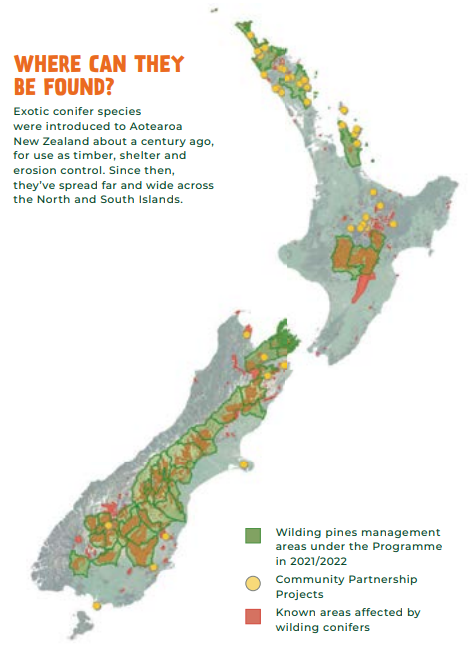
Wilding infestations since 1900 based on spread and density estimates by DOC based on published and unpublished data. (Strategy, pg. 11, 2014) Source: Ministry for Primary Industries and licensed by MPI for re-use under the Creative Commons Attribution 4.0 International licence . Wilding Pine locations courtesy of https://wildingpinenetwork.org.nz/
New Zealand’s Wilding Pine Control Programme
Wilding conifers are one of New Zealand’s greatest ecological threats, taking over native ecosystems and farmland. To combat their spread, central and local government agencies, landowners, and community groups work together under a unified national effort.
Over the last 10 years, MPI has been working alongside other industries and landowners to tackle this issue. Here’s some information taken from the MPI website.
1. Who’s Leading the Programme?
Established in 2016 to coordinate nationwide management, the National Wilding Conifer Control Programme is led by Biosecurity New Zealand (part of the Ministry for Primary Industries / MPI). MPI directs strategy and policy, working alongside agencies like DOC, LINZ, and NZDF, as well as regional councils and the Wilding Pine Network. Local control operations are delivered through regional councils, contractors, landowners and community trusts.
2. Government & Partner Funding
Since 2016, the government has allocated NZD$175 million through MPI, supported by an ongoing $10 million annual baseline established in July 2024. Programme partners have contributed an additional $38 million+ (see who is involved), including $13.35 million from the International Visitor Levy between 2023 and 2026. Countless unrecorded hours of control work are also carried out annually by farmers, foresters, and volunteers.
3. Latest Budget
In Budget 2026, the government announced an extra $79 million over three years (2026/27–2028/29), boosting total programme funding for that three-year period to $109 million. This expansion supports ongoing work and targets high-priority areas like Wānaka and Branch Leatham.
4. What’s Being Achieved?
- 75% Coverage: Roughly three-quarters of known infestation areas nationally have received at least one round of control work since 2016.
- Transitioning Areas: Successful clearing and follow-up seedling removal are enabling the first management areas to transition to long-term local care.
- Strong ROI: Independent economic analysis estimates a return of $20 to $34 in benefits for every dollar invested.
5. The Ongoing Challenge
Despite major progress, over 1 million hectares of infested land remain untreated. Because seeds remain viable in the soil for years, sustained follow-up control is essential to prevent wildings from retaking cleared land.
What You Can Do?
You can take out wilding pines on your own property to stop them spreading seeds to neighbouring land, work with your local council, or, if you are a contractor, work with your customers to devise a plan. Always seek professional assessment and direction, or contact us if you need additional advice.
How to Identify Wilding Pines
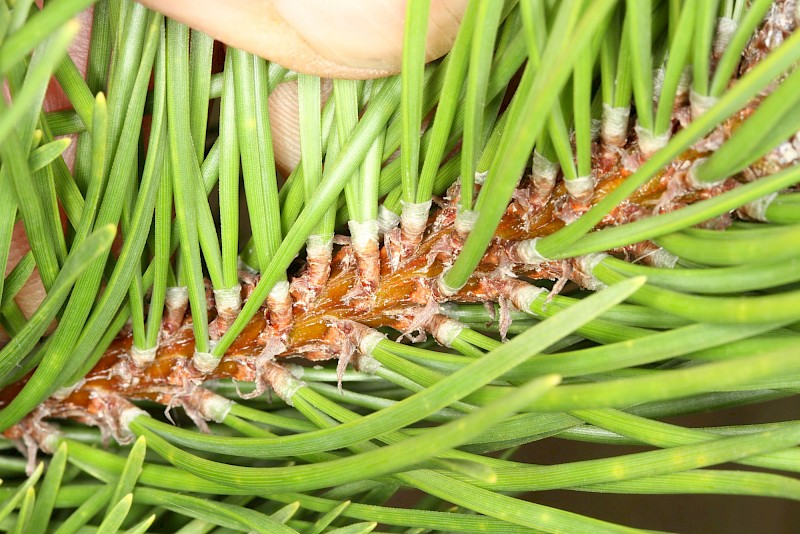
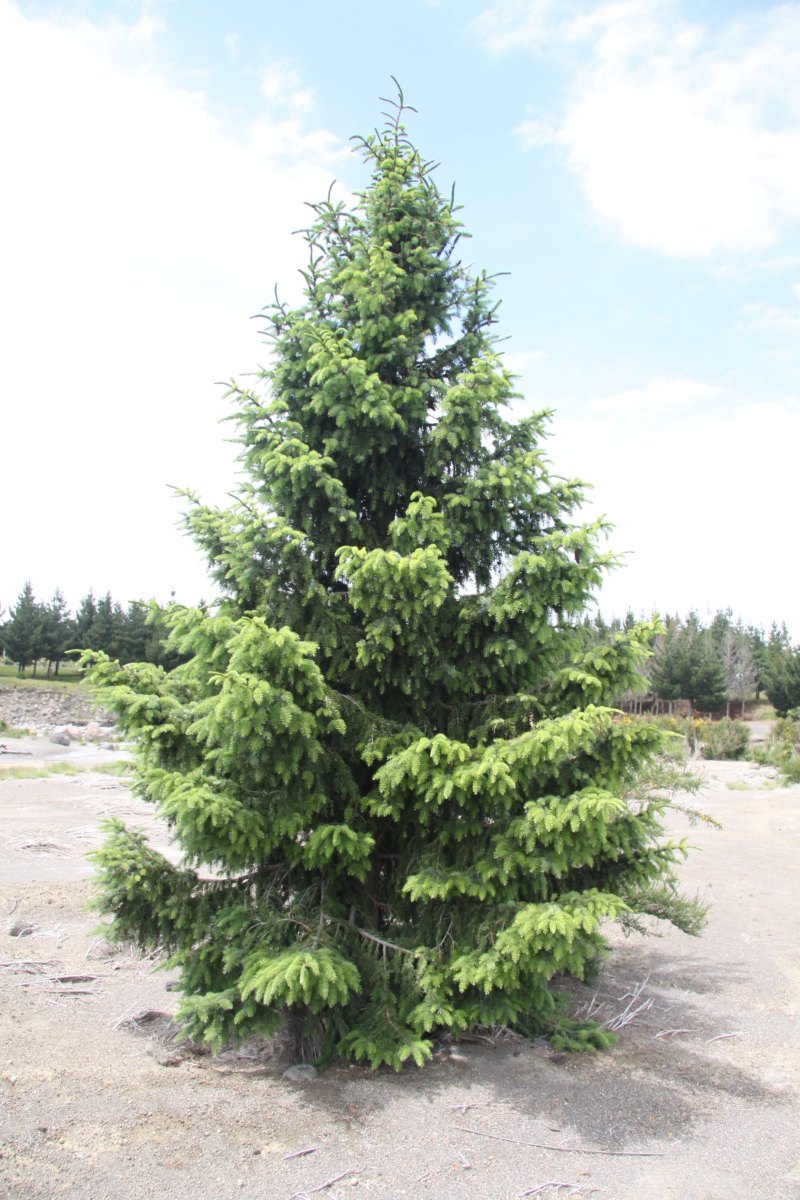
Wilding pines range from low, bushy multi-stemmed shrubs to towering timber trees over 40 metres tall.
| Feature | Identification Details |
| Foliage | Evergreen, needle-like leaves attached to woody twigs, arranged in clusters of 2, 3, or 5 (depending on the species). |
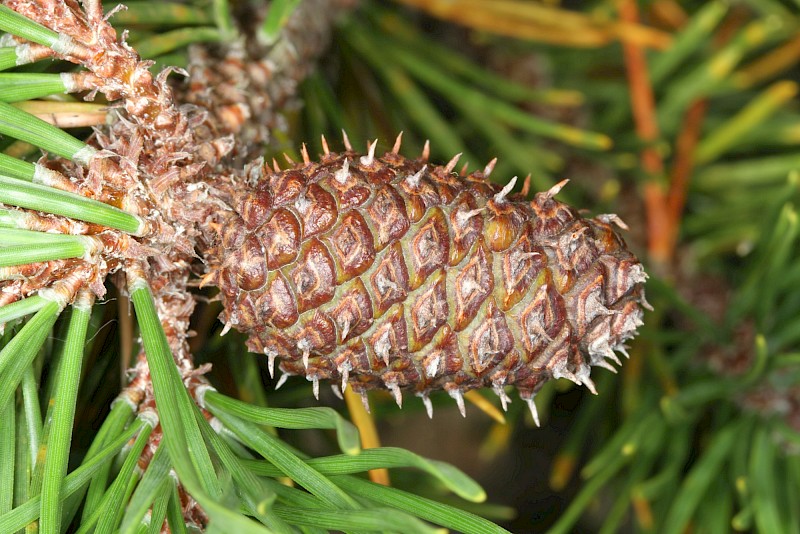
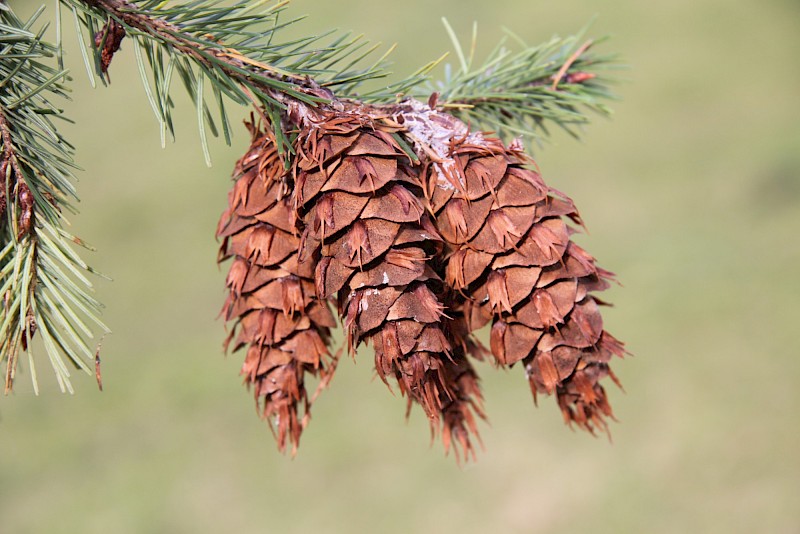
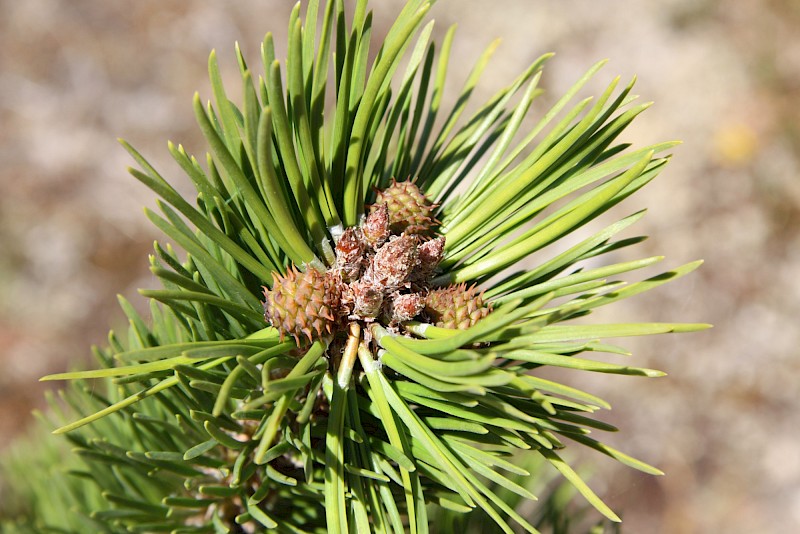
| Cones & Seeds | Hard, woody cones housing light, winged seeds designed to drift several kilometres downwind. |
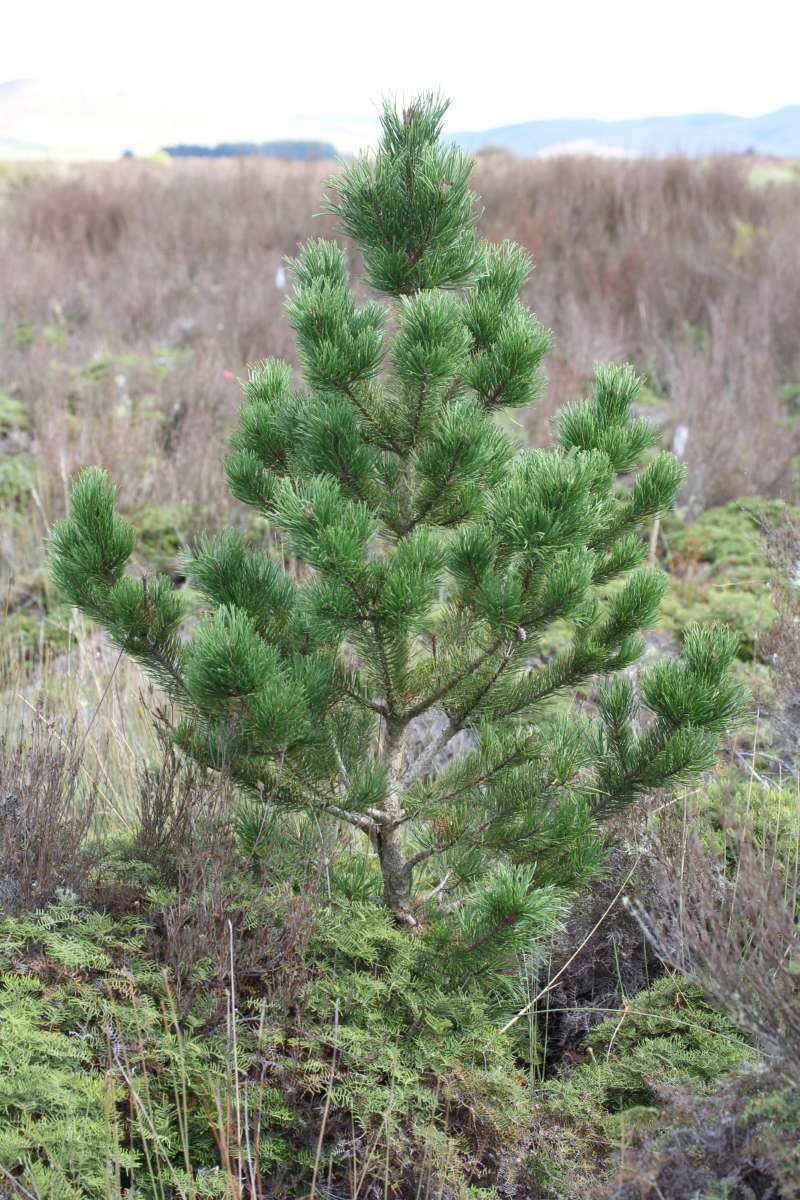
| Growth Forms | Ranges from dense, low-growing shrubs (P. mugo) to massive, upright forest trees (Pseudotsuga menziesii). |
For additional image details of what to look for, check the Wilding Pine Quick ID Guide from the Wilding Pine Network – or check out our weed directory.
🛑 Cautionary Identification Note
Watch Out for our Native ‘Pines’! Don’t treat the wrong species! See the following on nzpcn.org.nz to id them.
New Zealand native trees like Kahikatea (White Pine or Dacrycarpus dacrydioides), and Rimu (Red Pine or Dacrydium cupressinum), and Matai (Black Pine or Prumnopitys taxifolia) are endemic podocarps, not exotic invasives. Always verify needle and growth structure before treating! (Norfolk Pine is also an exotic ornamental, not technically a wilding pine and do not produce airborne seeds that pose the ecological threat that true wilding conifers do).
Choosing the Right Cut ‘n’ Paste Herbicide Gel
Field research shows that spring / summer applications tend to yield the highest kill rates – however many reports suggest that treatment any time of the year is fine (ideally during a dry spell). Choose your gel based on species and surrounding environmental sensitivity, along with the determined Application Method (see following section for Application Techniques).
Situation / Species | Recommended Gel | Why It Works |
|---|---|---|
Near Waterways, Natives, or Unknown Species | Cut Stump or Drill & Fill | Safer around waterways and desirable roots; zero soil movement; effective across all tested pine species. |
Maritime (P. pinaster) or | Cut Stump or Drill & Fill | Glyphosate is the best herbicide for these species. |
Open Ground: | Cut Stump: | Picloram and Glyphosate deliver an immediate, heavy-duty root kill to prevent stump survival, drawing down into the root system right at the ground level. |
Pine Infestation with Mixed Bulbs / Rhizomes / and other broad leaf weeds | Cut Stump: | Knocks back stubborn woody regrowth alongside target rhizomatous weeds. Dual-Action Ground Cover Control: Picloram Plus+ knocks back tough woody regrowth (gorse, broom, blackberry) alongside pine stumps. MetGel provides superior translocation through dense rhizomes, bulbs, and creeping vines carpeting the pine understory. |
Why Picloram Plus Works Well for Wilding Pines & Conifers
Cut ‘n’ Paste Picloram Plus pairs heavy-duty picloram with aminopyralid to deliver double-action root translocation and soil residual control – rapidly destroying susceptible wilding pine stumps while suppressing surrounding gorse, broom, and weed regrowth in a single application.
- Knocks Out Pine Regrowth & Competitors: Wilding pine cut-stumps are often surrounded by gorse, broom, or blackberry understorey. The added aminopyralid sharpens root-system uptake across these accompanying woody weeds, while the picloram destroys the pine root system.
- Dual-Action Translocation: Aminopyralid boosts the speed and depth of systemic herbicide movement, ensuring faster translocational kill down into the root collar of larger pine stumps and frilled trunks.
- Seedling Suppression (Soil Residual): The picloram component remains active in the topsoil for 1–3 months, preventing newly dropped or windblown pine seeds from germinating directly around the cleared stump site.
- No spray / no drift – target the weeds not yourself or your neighbours.

Picloram Plus + Weed Gel
From $36.56 ($31.79 ex GST)
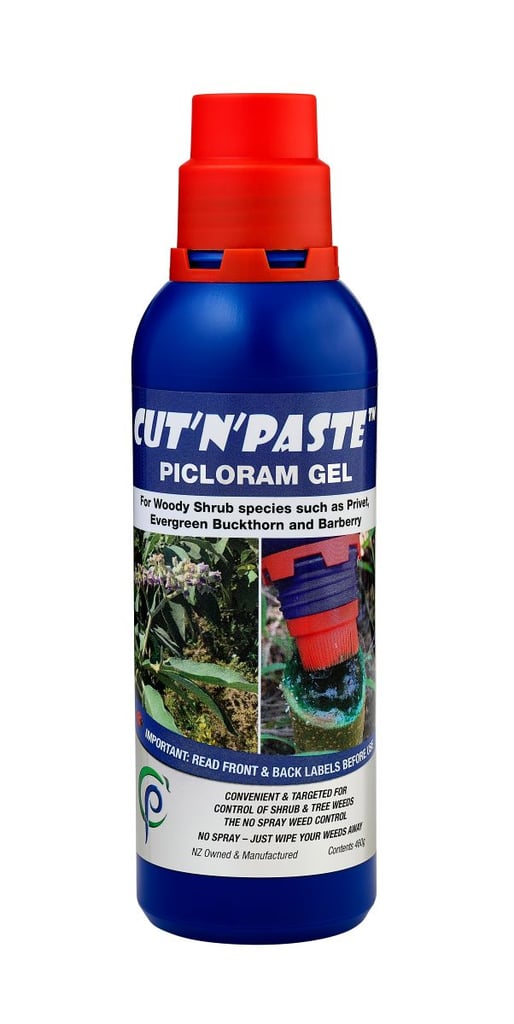
Picloram Weed Gel
From $33.55 ($29.17 ex GST)
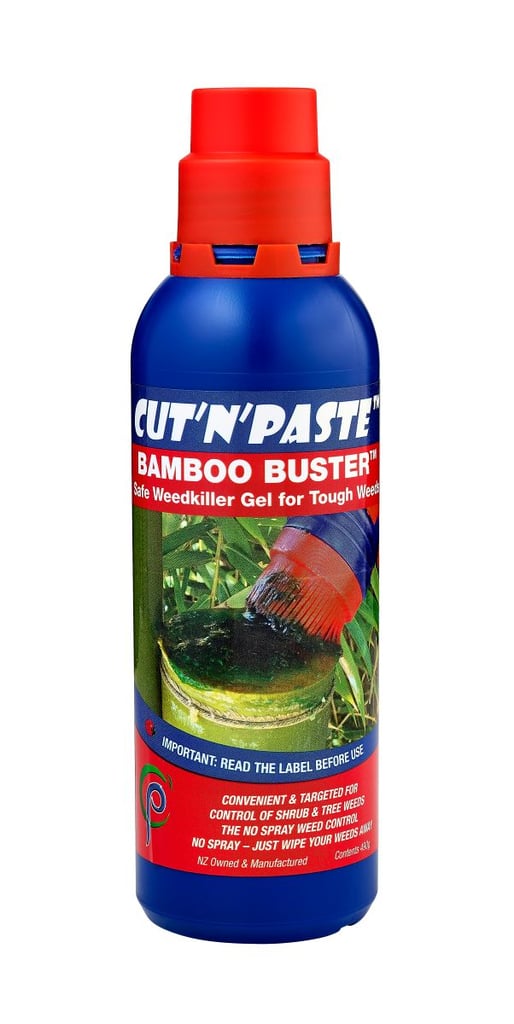
Bamboo Buster Weed Gel
From $35.12 ($30.54 ex GST)
Action & Application Techniques: Step-by-Step
Before treating, evaluate your site’s terrain and weather patterns so that you can plan control work effectively. Identify sensitive risks – such as nearby waterways, food crops, livestock, or native habitats that could be impacted by vehicle access or herbicidal use. Also investigate surrounding properties for upwind seed trees that could re-infest your cleared land.
Method 1: Hand pull or dig seedlings out
This can be an effective and quick method for tiny seedlings. Care must be taken to correctly identify them. Once located and identified, hand-pull tiny seedlings when the soil is damp. Where there are seedlings, look carefully for nearby saplings and mature trees and apply systematic herbicide treatment for complete kill rates, using method 2 and / or 3.
Method 2: Cut Stump (Saplings & Small-to-Medium Trees)
MPI has released a ‘Cut Stump’ guide here.
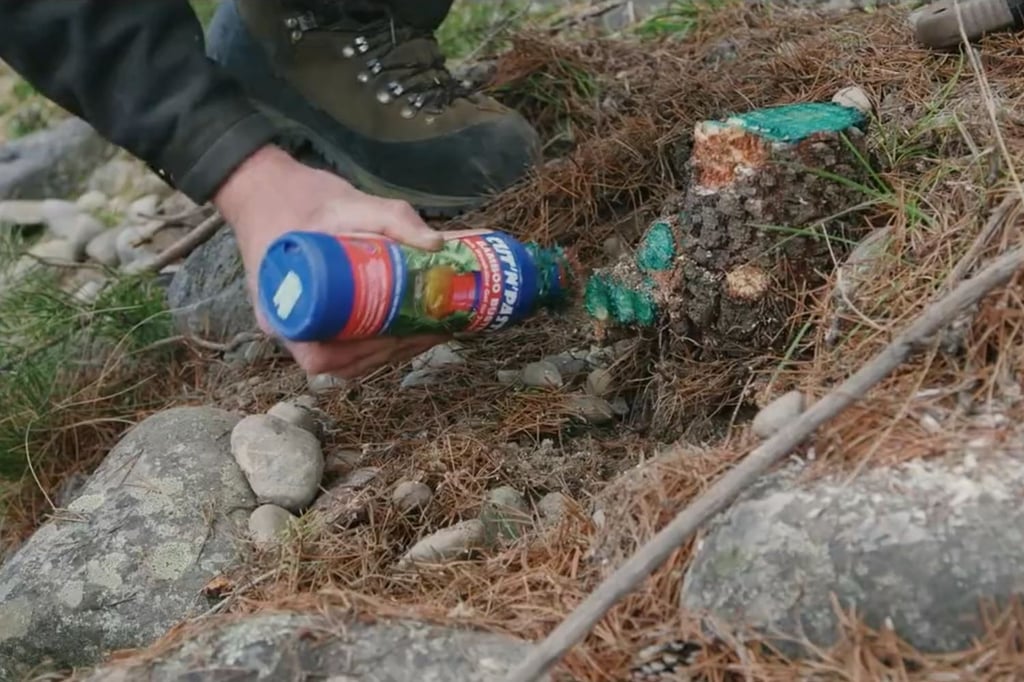
- Cut Low: Cut the tree as close to the ground as possible using loppers, a hand saw, or a chainsaw.
- Cut Below All Green Foliage: Crucial step! Ensure your cut is below every single green needle and branch. Any foliage left underneath the cut line will allow the stump to resprout.
- Paste Immediately: Within 15 seconds of making the cut, apply your chosen Cut ‘n’ Paste gel liberally across the entire freshly cut stump surface to draw herbicide straight into the root system.
Method 3: Drill & Fill (Large Standing Trees)
For trees too large or hazardous to fell manually:
- Drill or Axe Notch: Drill downward-sloping holes spaced 8–10 cm apart around the trunk’s circumference, or create deep, ringbarking axe cuts (frilling) through the bark into the active sapwood.
- Fill Immediately: Fill the drilled holes or coat the fresh axe cuts thoroughly with Cut ‘n’ Paste gel. The vascular system will translocate the herbicide throughout the tree, killing it where it stands – without the need for heavy equipment.
Long-Term Management & Follow-Up Strategy
Wilding control is an ongoing commitment. Stopping re-infestation requires a strategic multi-year plan:
- Target Upwind “Takeoffs” First: Prioritise seed-bearing parent trees upwind or at high elevations. Stopping windborne seed distribution prevents cleared land from being constantly re-contaminated.
- 3 to 6 Months Post-Treatment: Inspect standing treated trees for needle browning and yellowing. Re-apply gel to any missed stems or green regrowth on cut stumps.
- 12 Months (Annual Spring Sweep): Walk the cleared site every spring or early summer to hand-pull new wind-blown seedlings while roots are shallow.
- 3 to 5 Year Maintenance Schedule: Wilding pines take 5 to 8 years to reach seed-bearing maturity. Carrying out a thorough site sweep every 3 to 5 years guarantees no new sapling will ever mature enough to release cones.
Important Notes:

Soil Residual Risk: MetGel, Picloram, and Picloram Plus+ have significant residual soil activity lasting anywhere from 6 to 12 months or more. Do not use them near desirable non-target plants, within the root zone of prized trees, or near waterways and wetlands.
Safer Alternatives for Sensitive Areas: When working near waterways, wetlands, or prized native root zones – or if you’re not sure – use our glyphosate-based gels: Cut ‘n’ Paste double-strength Bamboo Buster or Glimax Professional. Both formulas seal the cut stump, and glyphosate binds tightly to soil particles with very low risk of soil-residual movement.
Safety Buffers & Driplines: Never apply MetGel or Picloram / Picloram Plus+ inside the drip line (canopy edge) of desirable trees or broadleaf plants:
- Flat Ground: Maintain a 3 to 5-metre safety buffer between target weeds and desirable plants.
- Sloping Ground: If treating uphill from desirable species, extend the buffer to 5 to 10 metres to account for soil water movement during heavy rain.
Picloram Plus+ aminopyralid Safety Notices: For additional safety notes on Picloram Plus+, please see this article.
Boundary & Environmental Safety:
Always ensure you are working within safe boundaries and that any herbicide application will not affect neighbouring landowners, non-target root zones, or shared waterways / wetlands.
Safety First:
Always wear appropriate PPE, observe all safety protocols, especially when using machinery, chainsaws and other tools. Follow product labels carefully concerning the purchase, storage and usage of the product. Check if you need to consult local authority or GROWSAFE requirements when applying herbicides commercially.
The information provided in this article is for general guidance only. If you have any specific questions please contact us, or seek expert / professional advice.
More Information
For the full details of what to look for, check out our weed directory.
Reference & Further Reading Links (external)
- National Wilding Conifer Control Programme (Biosecurity NZ / MPI) Official home of NZ’s national eradication strategy, offering comprehensive background on economic impacts, ecological threats, and regional management initiatives.
- National Wilding Pines Good Practice Guides Includes detailed operational standards for cut-stump treatment, ring-barking, and drill-and-inject methods across different species.
- Environment Canterbury (ECAN) Wilding Pine Handbook A practical landholder handbook combining regional pest management rules, species identification, and recommended herbicide choices.
- Wilding Pine Network NZ – Research & Field Studies The Wilding Pine Network supports community-led wilding conifer control efforts. Visit their website to find a community group in your area. Access to field trial data (including MBIE and Scion research) on species-specific herbicide effectiveness, soil residuals, and seasonal application timing.
- Weedbusters NZ: Wilding Pines Identification & Control Community biosecurity guidance for identifying specific pine species and applying safe cut-and-paste gel techniques around native bush and waterways.
- Department of Conservation: Maps, data and information from DOC, the NZ government agency.
Images reproduced with permission from https://www.weedbusters.org.nz/