
Spring Weed Watch: Knock Out Woody Weeds Early

Spring is here at last! Delightful sounds of the thrush returning to the skies – but uh oh, what’s the spring scent in the air….. Yes – it’s the spring weed growth! In particular the Privet flowers are starting to bud and soon, the sneezing will begin.
As the days continue to warm up and the light returns to the evenings, the invasive woody trees and stubborn shrubs are all gearing up for growth. While these plants push hard to sprout fresh foliage and flowers, their root systems are actively drawing in water and nutrients – making now a great time for targeted herbicide control.
Clearing invasive woody weeds right now stops root systems from expanding, prevents stump coppicing, and breaks the seed cycle before spring flowers turn into summer seed heads.
Double the Knockdown: Cut ’n’ Paste Picloram Plus+
For stubborn woody species, standard cutting is often only half the battle. Without targeted root treatment, most woody invaders treat a haircut as an invitation to send up dozens of fresh, aggressive shoots.
Our Cut ’n’ Paste Picloram Plus+ Gel pairs two heavy-hitting active ingredients—Picloram (44.7 g/kg) and Aminopyralid (4.47 g/kg)—to deliver superior, dual-action control
Wilding Pines & Conifers
(Pinus species & Douglas Fir)
Wilding pines are self-sown invasive conifers that smother native high country, alter fragile ecosystems, and drain vital groundwater. Left unchecked, they turn open tussocklands and native bush margins into dense, water-draining monocultures. Their light, winged seeds travel miles on high winds, creating massive fire hazards. National eradication programmes are now underway, and Cut ‘n’ Paste is proud to stand alongside DOC, councils, contractors, farmers, landowners, and all concerned citizens across the country who are battling wilding pines.
- Identification: Look for upright or bushy evergreen trees with needle-like leaves in clusters of 2, 3, or 5. In spring, look out for fresh, bright green growth tips and hard, woody cones.
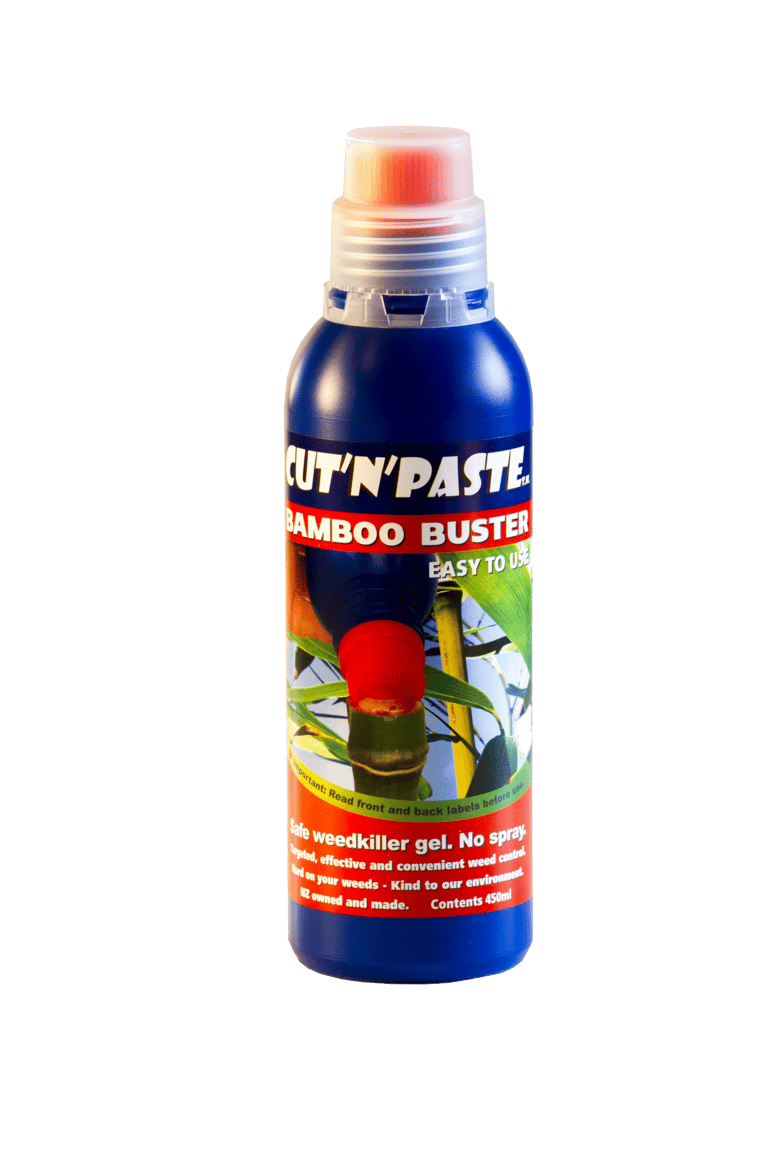
- Which Weed Gel? Use Picloram Plus+ (or Picloram Gel) on open ground for double-action root control. For Maritime or Corsican Pines, or when working near native tree roots and waterways, choose Bamboo Buster or Glimax Professional.
- The Pro Technique:
- Method 1 (Cut Stump): Saw the stem as low to the ground as possible. Within 15 seconds of cutting, coat the entire stump face liberally with gel.
- Method 2 (Drill & Inject / Frilling): For large standing trees, drill downward-sloping holes spaced 8–10 cm apart around the trunk, or make overlapping axe cuts through the bark into the sapwood, and fill/coat immediately with gel.


Privet
(Ligustrum sinense & Ligustrum lucidum)
Privet is an aggressive invasive tree that threatens both our natural ecosystems and human health. It forms dense, light-blocking thickets that starve native undergrowth, preventing native seedlings from germinating. In spring and summer, its heavy perfume and heavy flowering trigger severe seasonal allergies, asthma, and respiratory distress for many people.
- Spring Identification: Look for glossy green leaves arranged opposite each other along stems, accompanied by large, spraying clusters of tiny, white, heavily scented flowers. Chinese Privet grows as a multi-stemmed shrub, while Tree Privet grows into a large tree up to 15 meters tall.
- Which Weed Gel? Use Picloram Plus+ for maximum root translocation to prevent vigorous stump coppicing. Near prized plants or native roots or next to waterways, opt for Glimax Professional or Bamboo Buster.
- The Pro Technique:
- Method 1 (Cut Stump): Saw main stems off low to the ground. Within 15 seconds, apply a 3–5 mm layer of gel across the cut face, making sure to coat the outer cambium ring (just inside the bark). Scrape and paste any exposed surface lateral roots to prevent side-suckering.
- Method 2 (Drill & Inject / Frilling): For large Tree Privet, drill downward holes spaced 8–10 cm apart or frill the trunk with an axe, pasting immediately to destroy the root plate without felling the tree right away.
Woody Shrubs
(Boneseed, Cotoneaster, Hawthorn & Barberry and other woody weeds)
Take up the fight against woody shrubs like Boneseed, Cotoneaster, Hawthorn, Barberry, and others! The bird-dispersed berries from these nasties are a nightmare for our coastal cliffs, bush margins, and scrubland. They grow into dense thickets that crowd out native vegetation and alter delicate ecosystems.
- Identification: Look for bright spring flowering (such as Boneseed’s yellow daisy-like blooms, or yellow Gorse flowers, orange Barberry and pink Hawthorn along coastal edges and bush margins, or residual berry clusters on dense, woody branches along fence lines.
- Which Weed Gel? Use Picloram Plus+ to ensure deep translocation through tough, woody root collars that would otherwise resprout. If you are near prized plants or native roots or next to waterways, it’s safer to go for Glimax Professional or Bamboo Buster.
- The Pro Technique:
- Method 1 (Cut Stump): Cut mature woody trunks low to the ground and immediately apply Picloram Plus+ gel to the stump for a long-lasting kill. Treating them in early spring stops berries from setting and prevents birds from spreading seeds across your property.
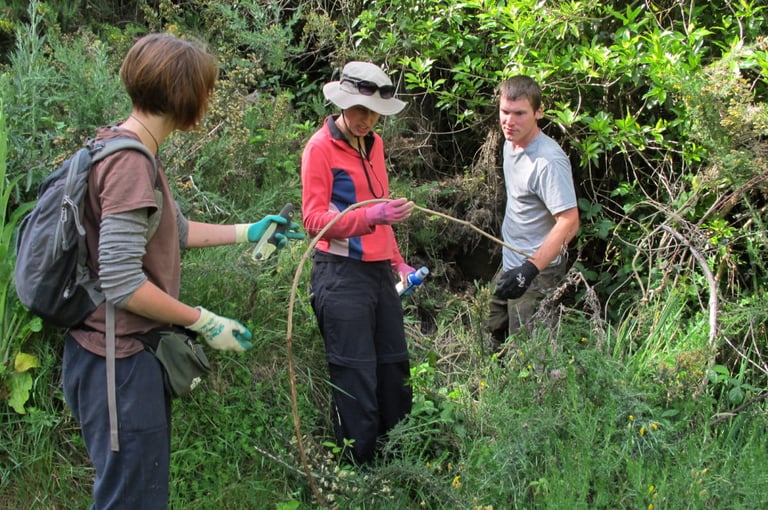
- Method 2: The Glove Smear – For dense patches of Hawthorn, Cotoneaster, or Blackberry where the stems are too small, slender, or tangled to make clean individual cuts, use the glove-smear technique (beware of thorns!):
- Prepare Your Hands: Put on a pair of strong chemical-resistant / cut proof nitrile safety gloves.
- Apply Gel: Squeeze a generous dollop of weed gel directly onto your gloved palm.
- Smear Upward: Grab the live stems and foliage, pulling your hand upward through the leaves and green stems. The plant will absorb the herbicide through its foliage and vascular tissue, driving the active ingredient deep down into the root network.
- Alternatively if you can’t wipe along the stems and branches, just smear on the leaves.
- Method 1 (Cut Stump): Cut mature woody trunks low to the ground and immediately apply Picloram Plus+ gel to the stump for a long-lasting kill. Treating them in early spring stops berries from setting and prevents birds from spreading seeds across your property.


Need to Identify a Different Weed?
Not sure what’s growing in your garden or facing a particularly stubborn invader not listed above? We’ve got you covered. Our comprehensive Cut’n’Paste Weed Directory is your ultimate field guide to identifying and eliminating New Zealand’s most common (and uncommon) weeds.
Pro Tip: Keep our Cut’n’Paste Weed Directory bookmarked on your phone! It’s the easiest way to identify a weed on the spot, choose the perfect gel for the job, and find the exact “plan of attack” needed to clear it out for good.
Remember to wear gloves and follow the instructions on the label.