Moth Plant Competition – Winners Announced :: Find Out


Japanese cherry (Prunus serrulata)
Home » Help » Weed Directory
Pretty in Spring, a Problem All Year Round
Japanese cherry (Prunus serrulata), also called Japanese hill cherry or flowering cherry, is one of New Zealand’s best-loved spring trees. It has been planted for decades in gardens, parks and along streets for its clouds of white and pink blossom. It looks stunning in spring and one could be fooled into thinking it's a harmless beauty - but it’s also escaping! Birds eat the small fruit and drop the seed into bush, scrub and stream banks, and the trees spread further underground by sending up suckers from their roots.
Once it gets going in the wild, Japanese cherry grows fast and casts heavy shade, crowding out smaller native plants and changing the make-up of regenerating bush. It’s now listed as a pest plant across the entire Auckland region, including the Hauraki Gulf islands, and it turns up as a "Wilding Prunus" in other parts of the country, including Canterbury.
The good news is you can easily control Japanese cherry trees with Cut’n’Paste Weed Gels, as long as you deal with the suckers as well as the main trunk.
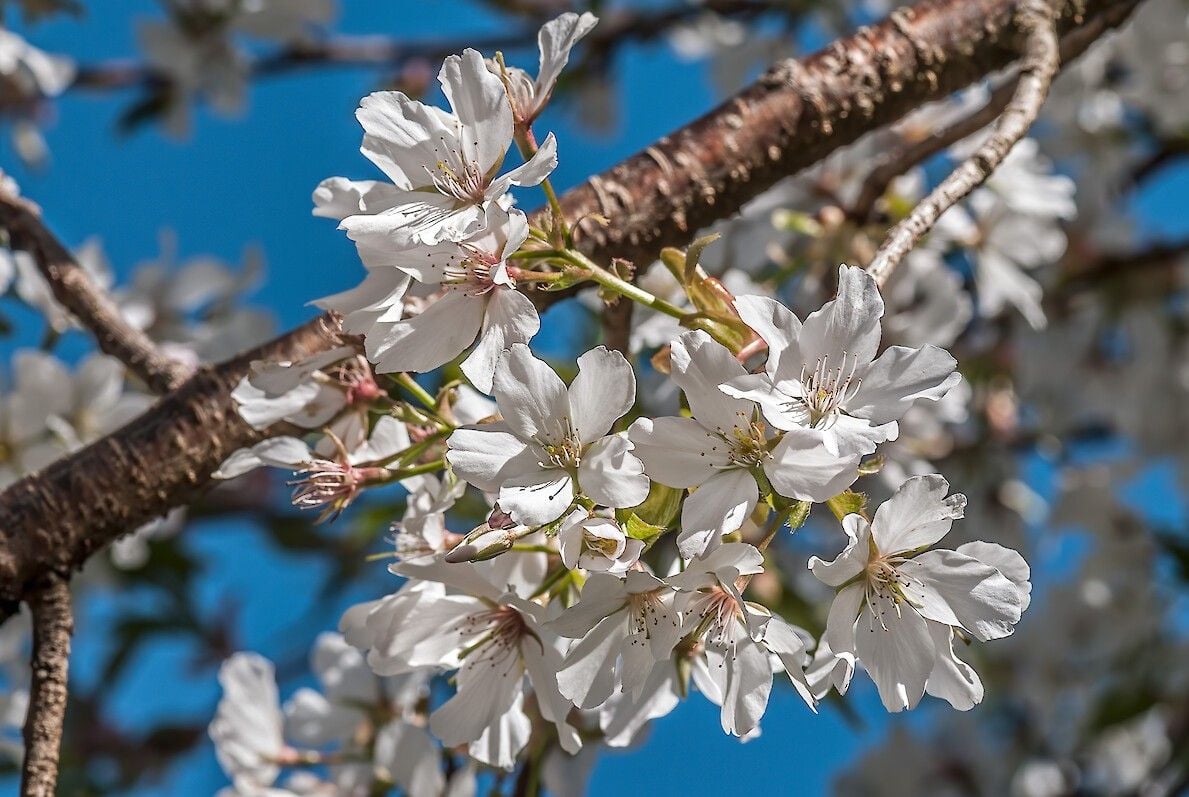
Japanese cherry is easiest to spot in spring, when it’s in full blossom, and wilding trees often stand out against native bush at that time of year.
- The Tree: A deciduous tree up to 12 metres tall, often with a spreading, vase-shaped crown. The bark is smooth and shiny, usually reddish-brown to grey, with distinctive horizontal bands across it.
- The Leaves: Oval leaves up to 13cm long, ending in a long, drawn-out tip. The edges are lined with fine, sharp, bristle-pointed teeth. Young stems and branches have a silky sheen.
- The Flowers: Clusters of white to deep pink blossom in spring, either single or fluffy and double-flowered depending on the variety.
- The Fruit: Small red cherries, ripening to black, up to 15mm across. Many garden varieties fruit only lightly, but wild trees grown from seed usually fruit well.
- The Suckers: Look for young shoots coming up from the roots around the base of the tree or some distance from it. These can grow into new trees.
- Lookalikes: Taiwan cherry (Prunus campanulata) flowers in late winter, with drooping, bell-shaped, magenta to deep red flowers. Japanese cherry flowers later, in spring, and its blossoms open flat. Cherry plum flowers earlier still, has spiny branches and produces round yellow, red or purple plums.
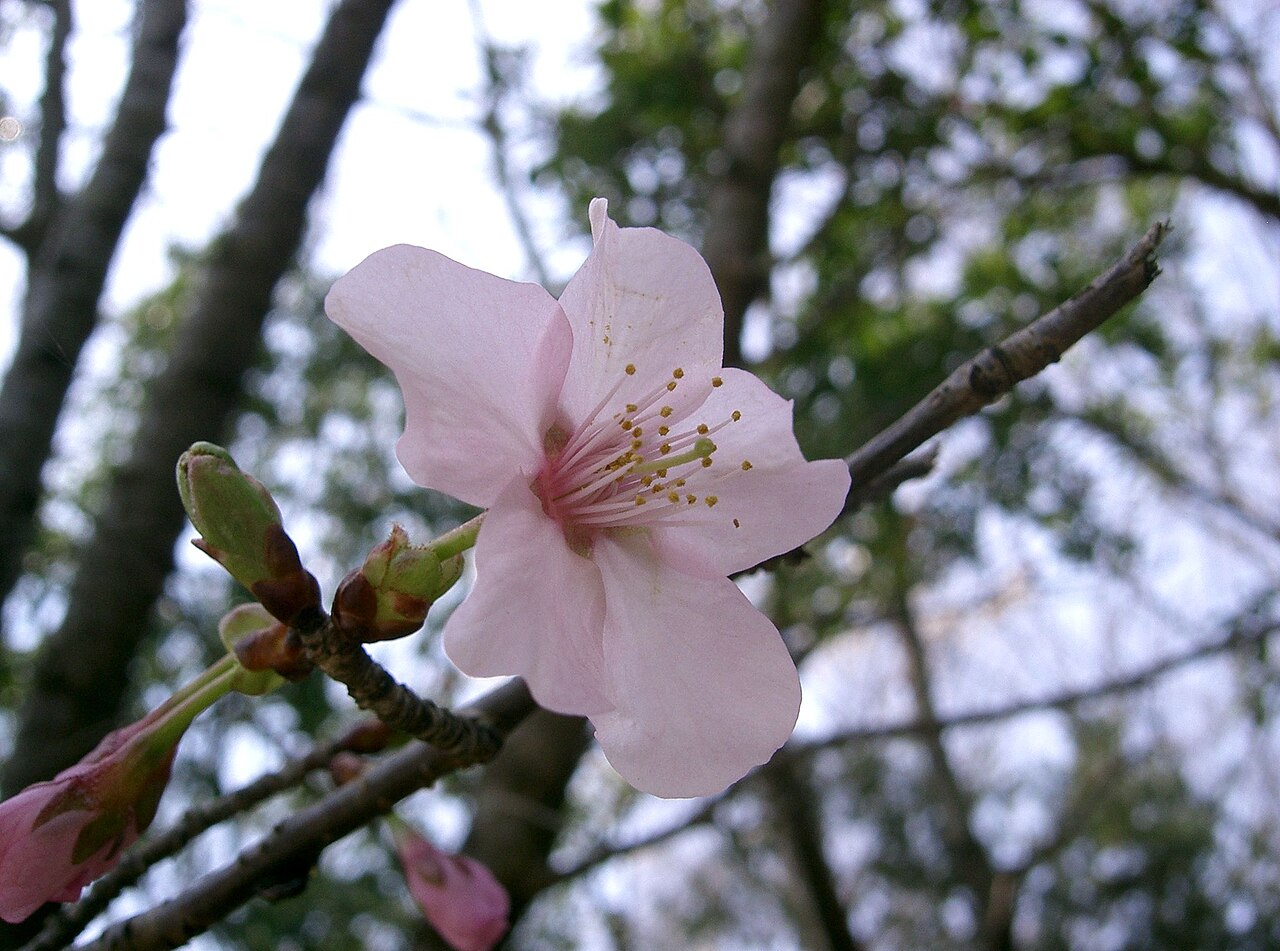
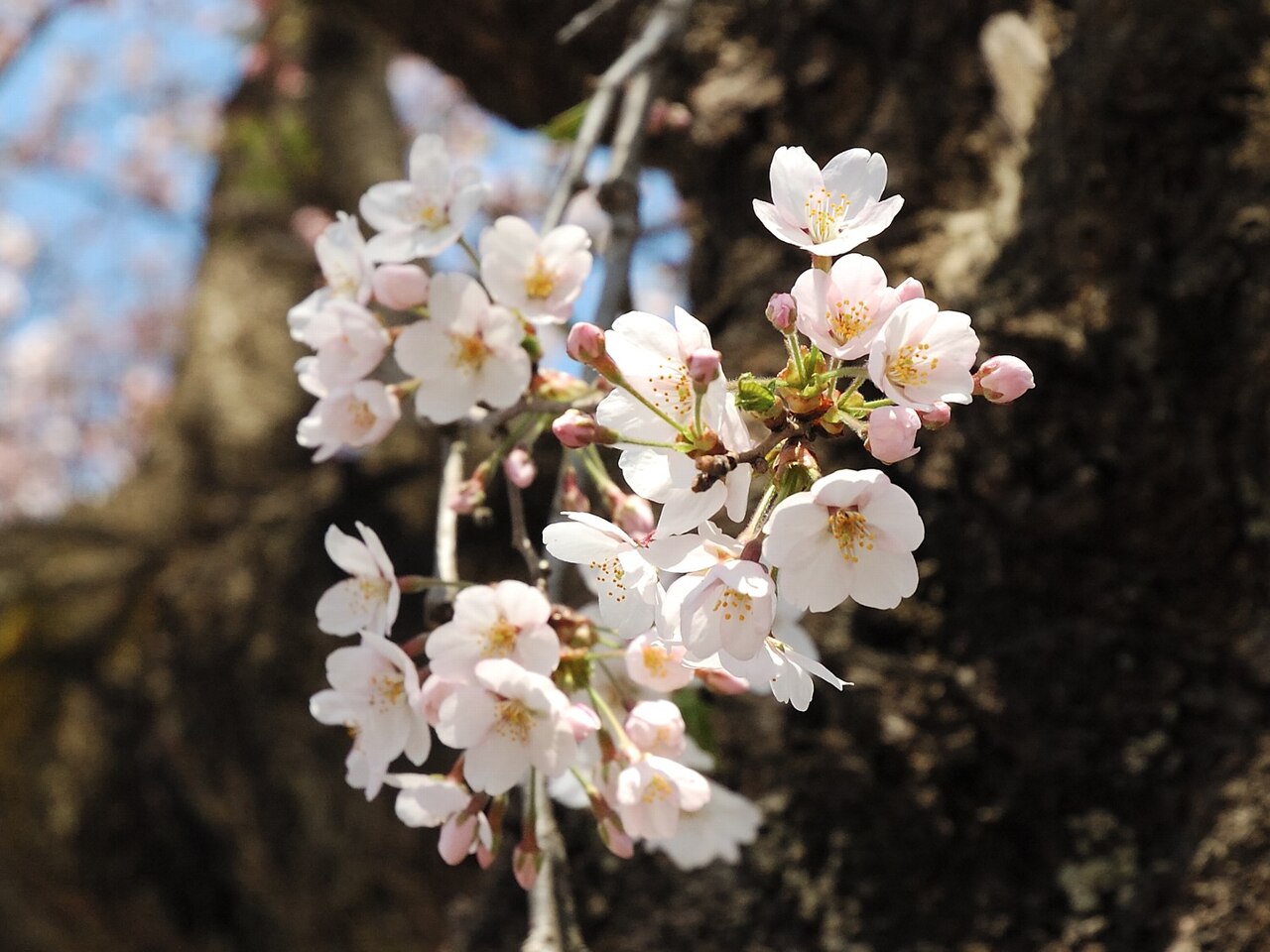
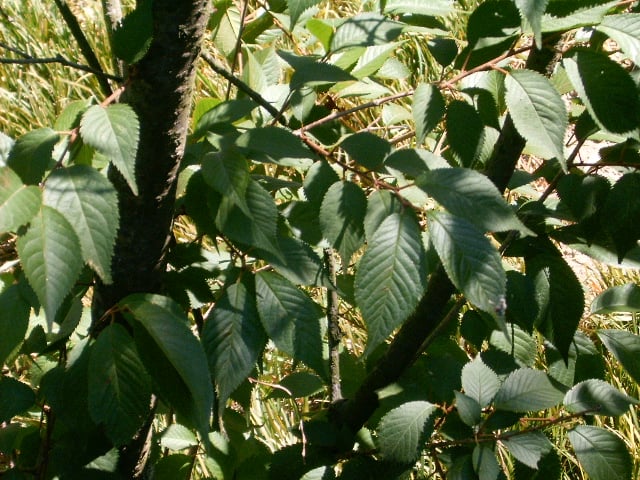
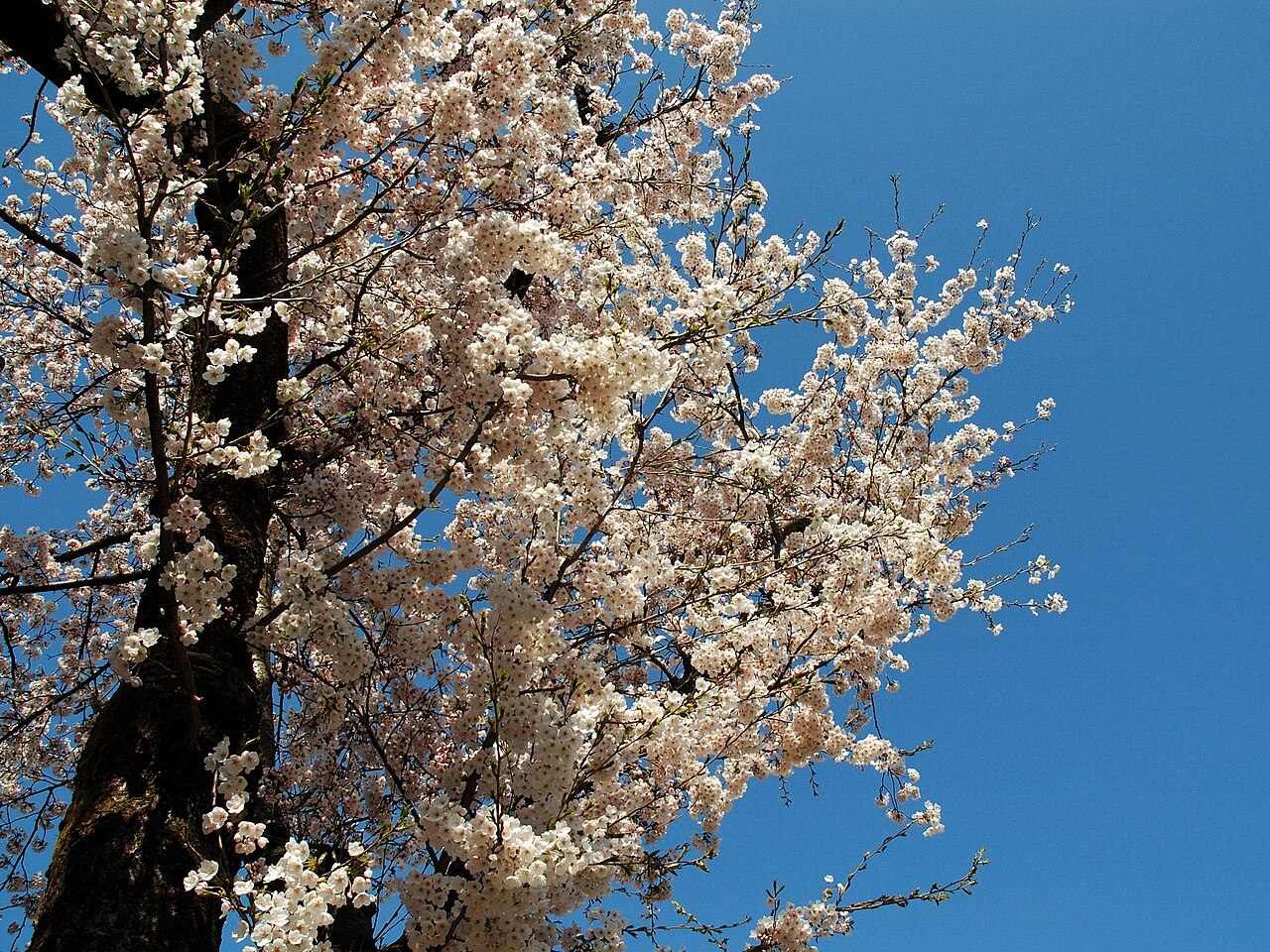
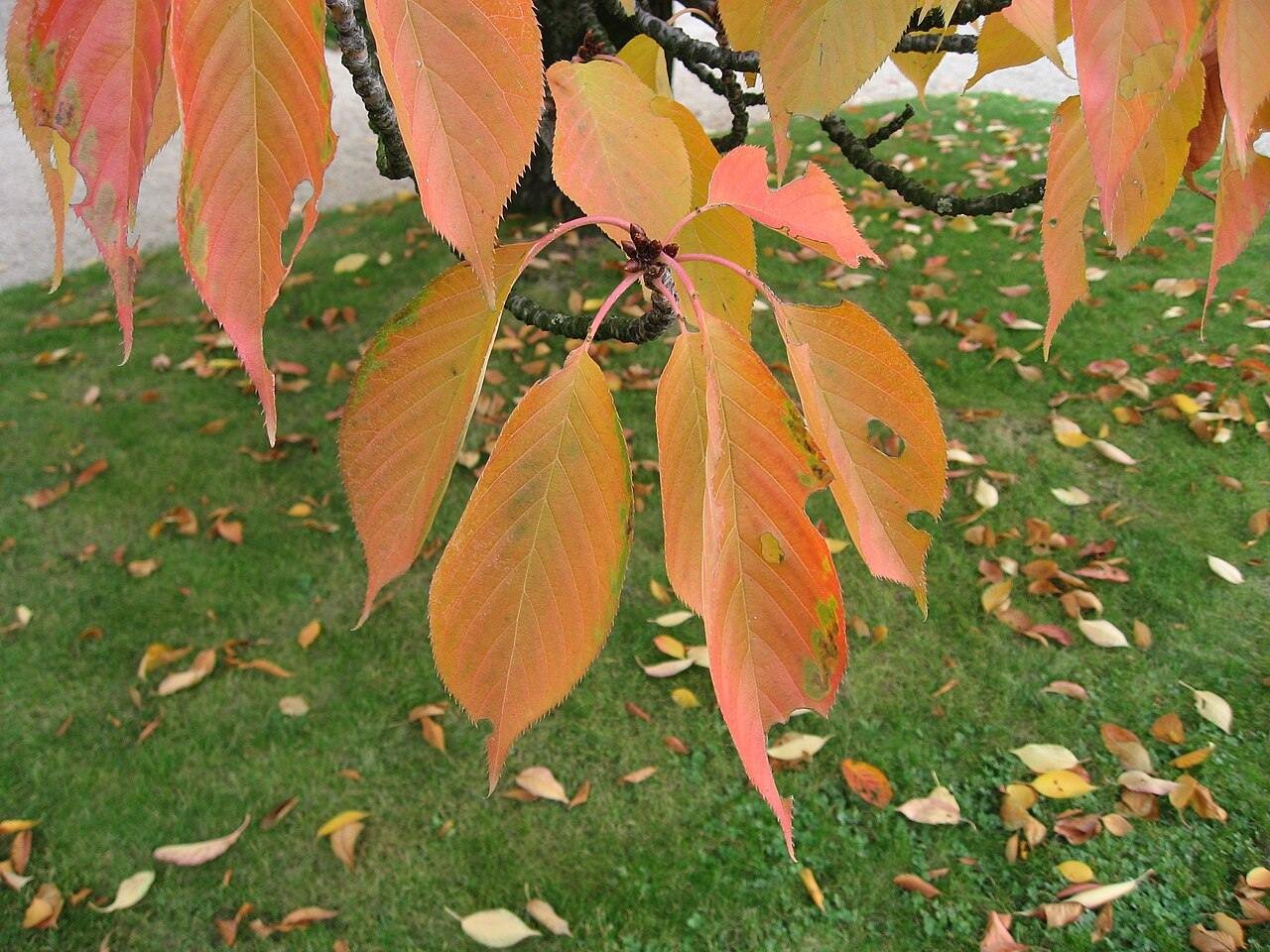
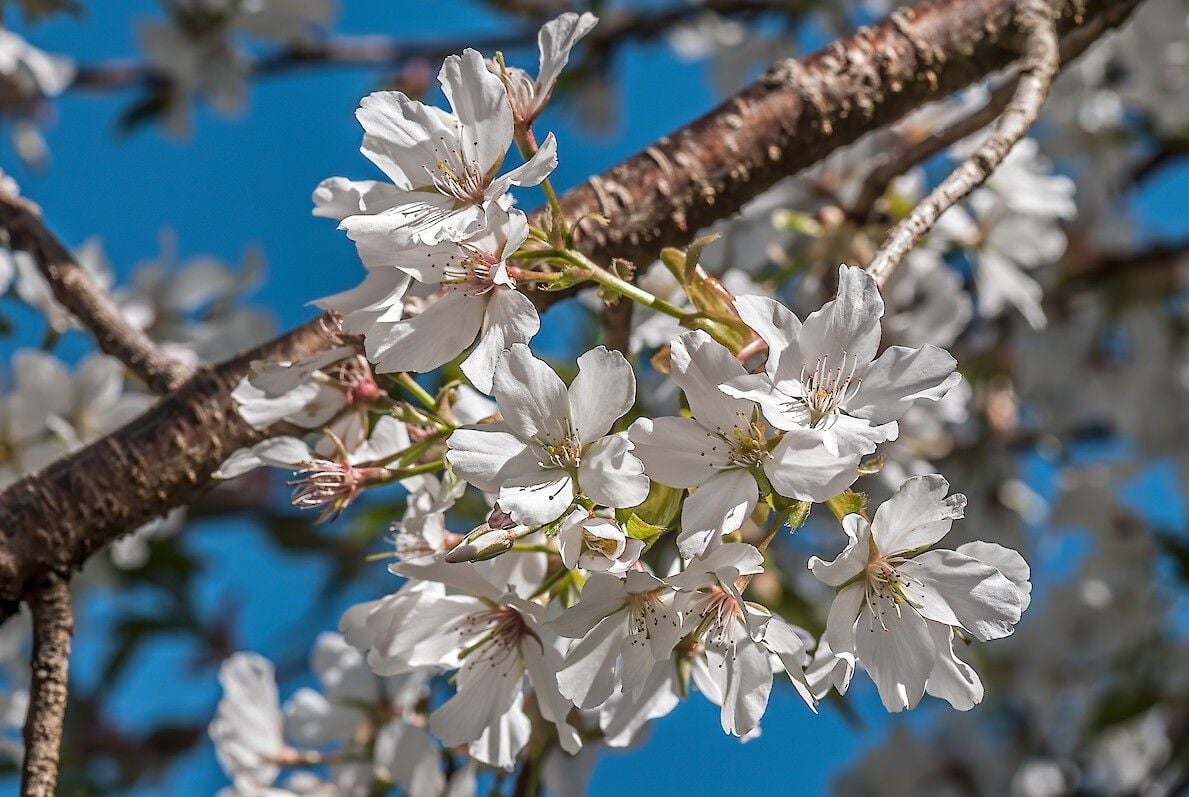
Photos courtesy of Jeremy R. Rolfe via NZPCN, CC BY 4.0; and via Wikimedia Commons: Kropsoq (2) and KENPEI, CC BY-SA 3.0; Liné1, CC BY 2.5; and Manuel Anastácio, CC BY 2.0.

Japanese cherry is a sucker-spreader. If you chop it down without treating it, the stump and roots will regrow, throwing up a crop of new shoots, sometimes several metres away from the original tree. The best bet to guarantee a kill is to get the gel on straight away so it travels down into the root system and stops the suckering at the source.
There are THREE methods you can use – see below for the recommended Weed Gels.
Method 1: Drill and Fill (Best for Medium to Large Trees)
- Drill: Using a 10mm drill bit, drill holes angled downwards into the sapwood every 10cm around the base of the trunk.
- Gel Immediately: Squeeze gel generously into each hole straight away, before the wood starts to seal.
- Leave It Standing: Let the tree die off completely before you drop it. Leaving it standing gives the gel time to work right down into the roots and suckers. Beware of falling limbs as it dies.
Method 2: The Level Base Cut (Best for Saplings, Small – Medium Trees and Suckers)
- The Cut: Using loppers or a pruning saw (or carefully with a chainsaw), cut each stem flat and level, as close to the ground as practical, so the gel sits on the wood rather than running off.
- Paste Immediately: Within 15 seconds of cutting, apply a thick 3–5mm layer of gel across the whole cut surface. Pay extra attention to the outer ring just inside the bark, which carries sap down to the roots.
- Treat the Suckers: Cut and paste any suckers around the tree the same way.
Method 3: Hand Pulling (Seedlings)
Young seedlings can be pulled out by hand, roots and all, especially after rain when the soil is soft.
Recommended Products for Japanese Cherry
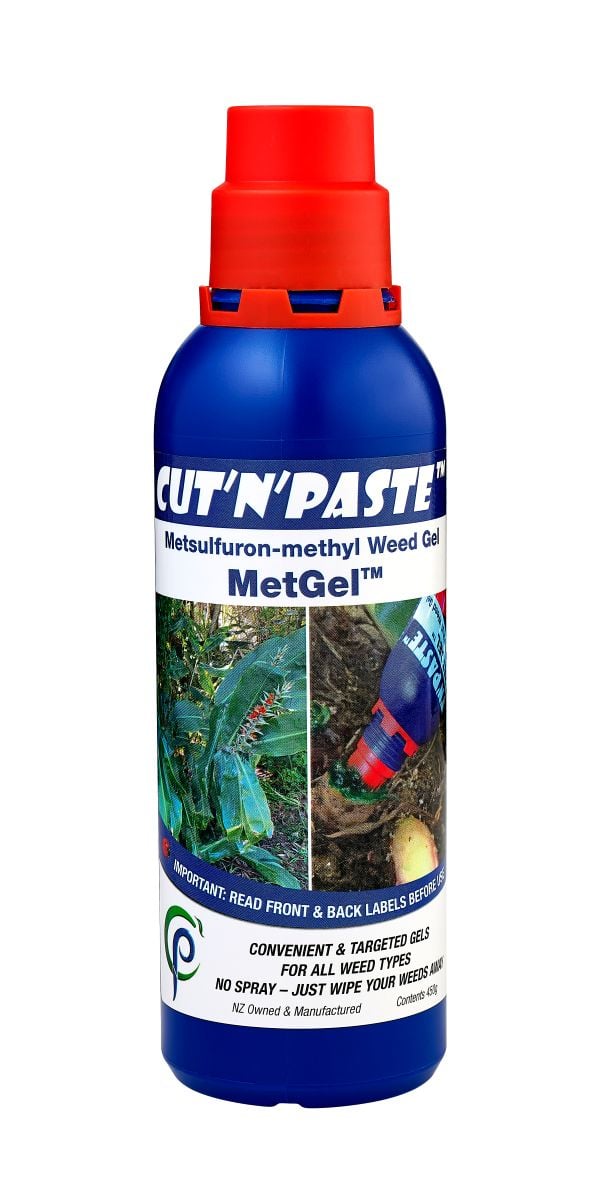
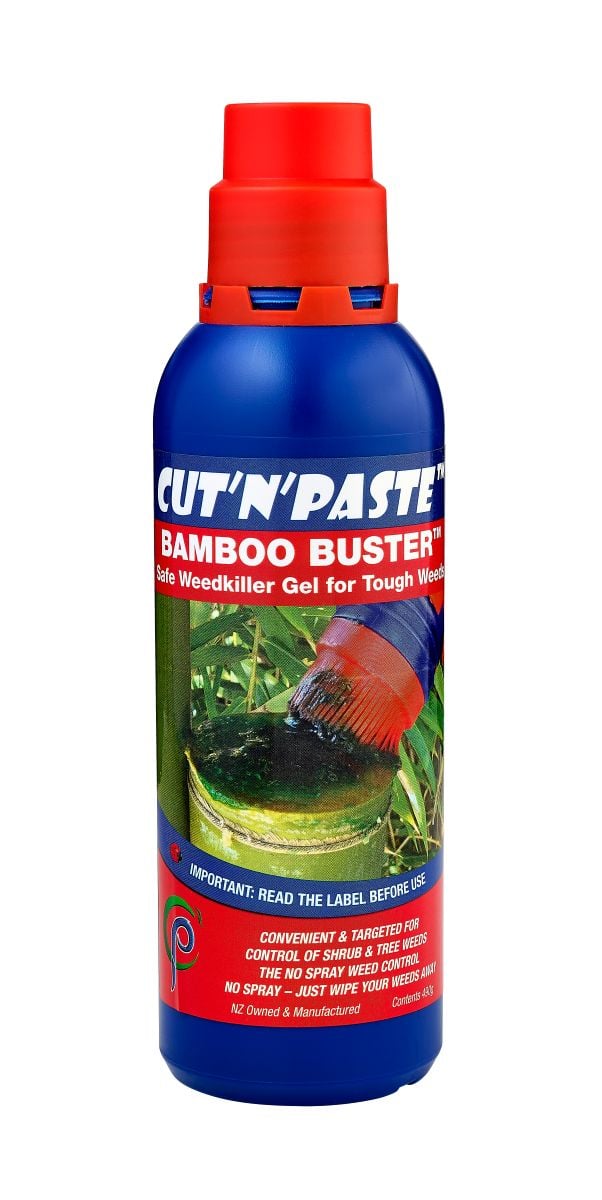
MetGel Weed Gel is our top pick for Japanese cherry, for both cut stumps and Drill and Fill methods. Our triple strength Glimax Professional is also effective. Near waterways or plants you want to keep, use double strength Bamboo Buster Weed Gel.
What the council says: Auckland Council recommends cutting Japanese cherry and pasting the fresh stump with a metsulfuron gel. This method needs no qualifications, and MetGel fits that guidance.
- Option 1: MetGel (Recommended)
The council-recommended choice for Japanese cherry, and very effective on cherries and their relatives.- Sucker Stopper: Moves down into the roots to stop the suckering Japanese cherry is known for.
- Soil Residual: Stays active in the soil for a while, helping to knock back root suckers around the treated tree.
- Option 2: Glimax Professional (Alternative)
A powerful glyphosate gel, well suited to Drill and Fill on larger standing trees.- Kills From Within: Moves through the treated tree into its roots, killing it standing.
- No Soil Residual: Breaks down in the soil once it’s done its job.
- Option 3: Bamboo Buster (Near waterways and prized plants you value)
The safest choice where Japanese cherry is growing in a garden, beside a stream, or near plants and trees you want to keep.- Targeted Kill: Works only on the treated tree and its roots, with no movement through the soil to neighbouring plants.
- Follow Up: Check for suckers over the following months and paste any that appear.
Important Notes
- ⚠️ MetGel Safety Warning: MetGel (metsulfuron) has residual soil activity and can move through ground moisture. It can stay active for up to two to four months, and longer in heavy clay soils. Japanese cherries are often planted in gardens, so never apply MetGel inside the drip line (canopy edge) of prized trees or broadleaf garden plants. On flat ground, keep a 3 to 5-metre safety buffer. On sloping ground where the cherry is uphill from desirable plants, extend that buffer to 5 to 10 metres. If in doubt, use Bamboo Buster instead.
- Waterways: Japanese cherry is often found in gardens, on stream banks and along bush edges. If you’re working near waterways or wetlands, use Bamboo Buster.
- Felling Safety: Trees killed standing become brittle and can drop limbs without warning. Don’t use Drill and Fill on large trees closer to paths, driveways or buildings than 1.5 times the tree’s height. Trees over 3 metres tall are best treated and then removed by a qualified arborist, especially near houses, fences, roads or powerlines. If in doubt seek professional help.
- Safety First: Wear gloves and protective clothing and observe all safety protocols, especially when using machinery, chainsaws and other tools.
- Follow the advice: When using any herbicide ensure you READ THE LABEL THOROUGHLY, and follow all instructions and directions for the purchase, use and storage of the product.
- Regional Rules: In the Auckland region, Japanese cherry can’t be sold, bred, distributed or planted, and the council can direct landowners to remove trees planted in breach of those rules. Three low-fertility varieties are exempt: ‘Kanzan’, ‘Shimidsu Sakura’ and ‘Kiku Shidare Sakura’. Outside Auckland it isn’t a declared pest, but it is recognised as an environmental weed, so check with your local council for current rules.
- Managing Regrowth: Go back to treated sites a few times a year and treat any suckers or seedlings while they’re small. Keep checking for at least two years.
- Replant Natives: Once the cherry is gone, replant with natives or let native regeneration fill the gap. A dense native canopy is much harder for cherries to re-invade.
- Plant Me Instead: If you love spring blossom, kōwhai is a great native alternative, and tūī love it too.
It’s also on DOC’s list of environmental weeds in New Zealand