Moth Plant Competition – Winners Announced :: Find Out


Broom – The Golden Invader
Home » Help » Weed Directory
Bright yellow flowers, but broom takes over fast
Broom (Cytisus scoparius) is a European shrub that early settlers planted for hedging, shelter and to hold eroding banks. It did the job a little too well. Today it carpets roadsides, river flats, farm margins and hill country across much of New Zealand, and every spring whole slopes turn yellow with it.
That colour comes at a cost. Broom grows quickly, flowers within a few years and builds up an enormous store of seed in the ground beneath it. Because it's a member of the pea family, it enriches poor soils with nitrogen, giving other weeds a leg-up and making it harder for native plants that are adapted to low-fertility ground. Dense stands also block access, shade out seedlings and add dry fuel in fire season.
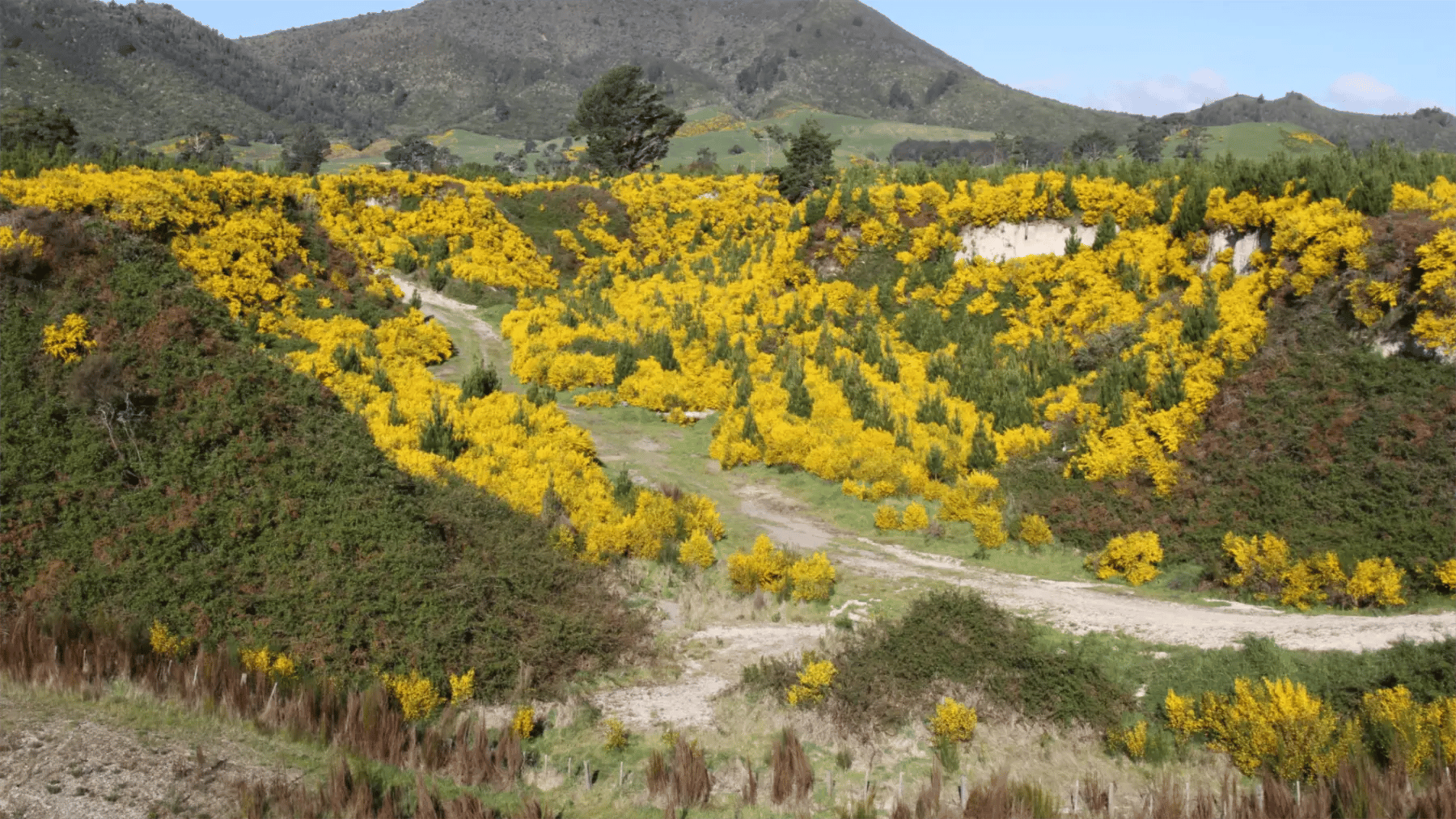
Broom is easiest to pick out from late winter to early summer, when it’s covered in flowers. Look out for these key features:
- The Shape: An upright, bushy shrub, usually 1–2.5 m tall, with many stiff branches growing from the base.
- The Stems: Bright to dark green, with five raised ridges running along them. The stems do most of the plant’s photosynthesis, so it often looks almost leafless.
- The Leaves: Small and short-lived – usually split into three little leaflets on the lower stems, or single near the tips. Many fall off by summer.
- The Flowers: Golden-yellow, pea-shaped flowers about 2 cm long, sometimes with a reddish blush, crowded along the stems from around September.
- The Pods: Flat pods 3–6 cm long, green at first with hairy edges, ripening to black. On hot days you can hear them crack open as they twist and fling out their seeds.
- Lookalikes: Gorse also has yellow pea flowers, but it is covered in sharp spines – broom has none. Native brooms (Carmichaelia species) have flattened, often leafless stems and much smaller flowers, and should be left alone. If in doubt, check before you cut.
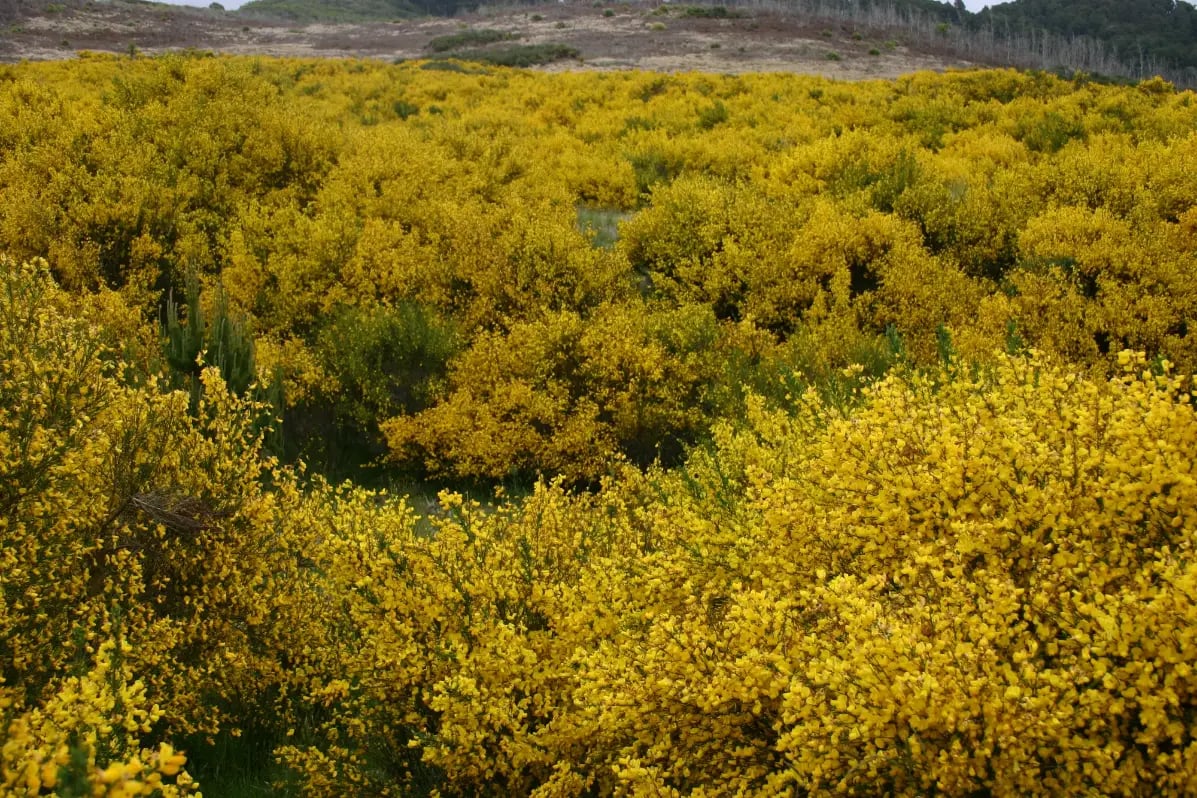
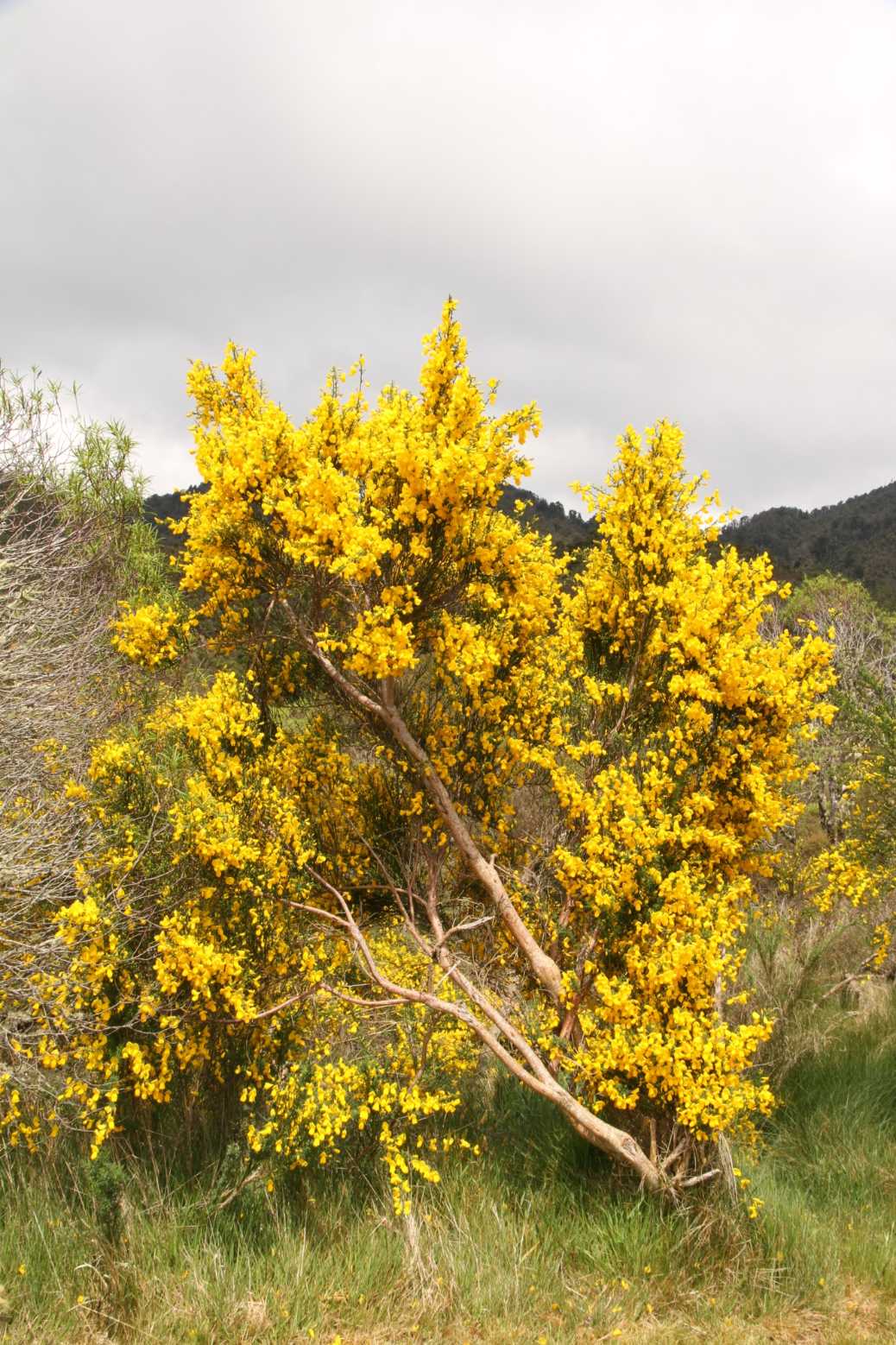
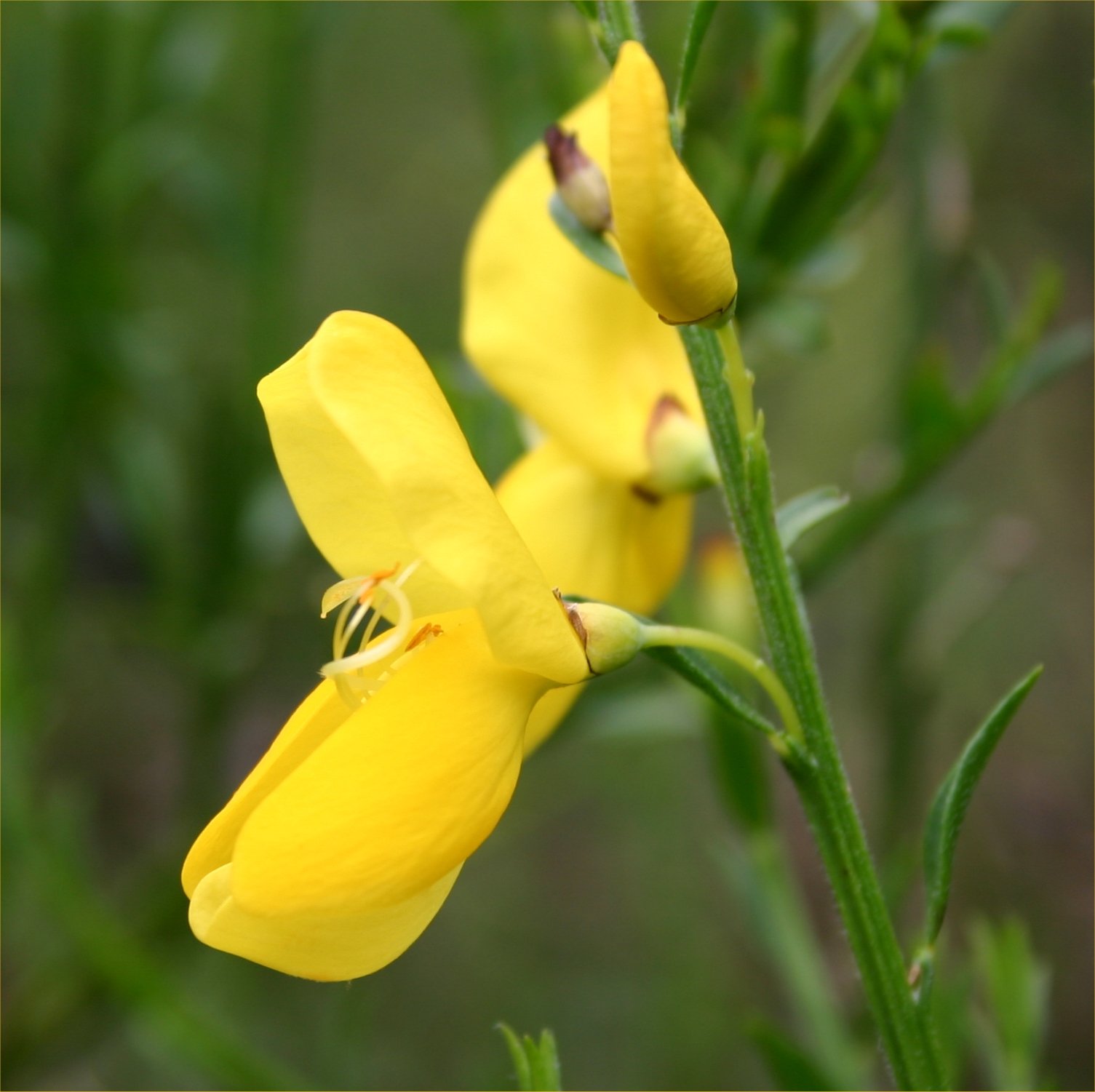
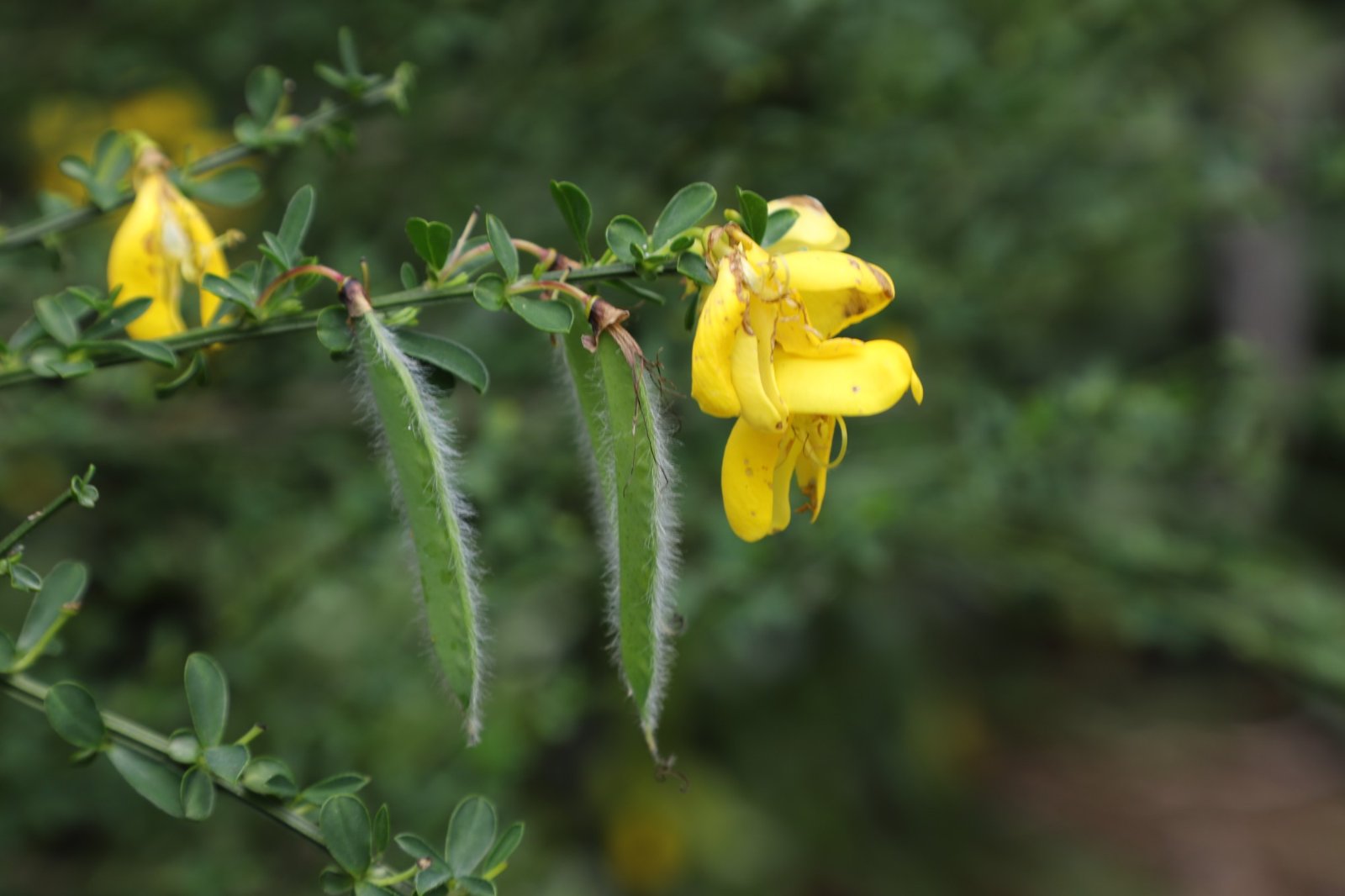
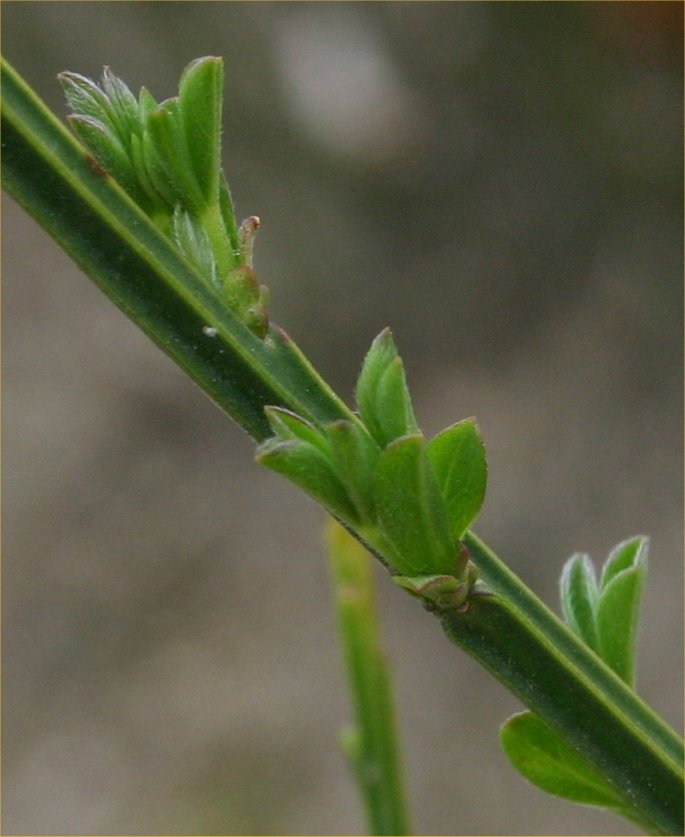
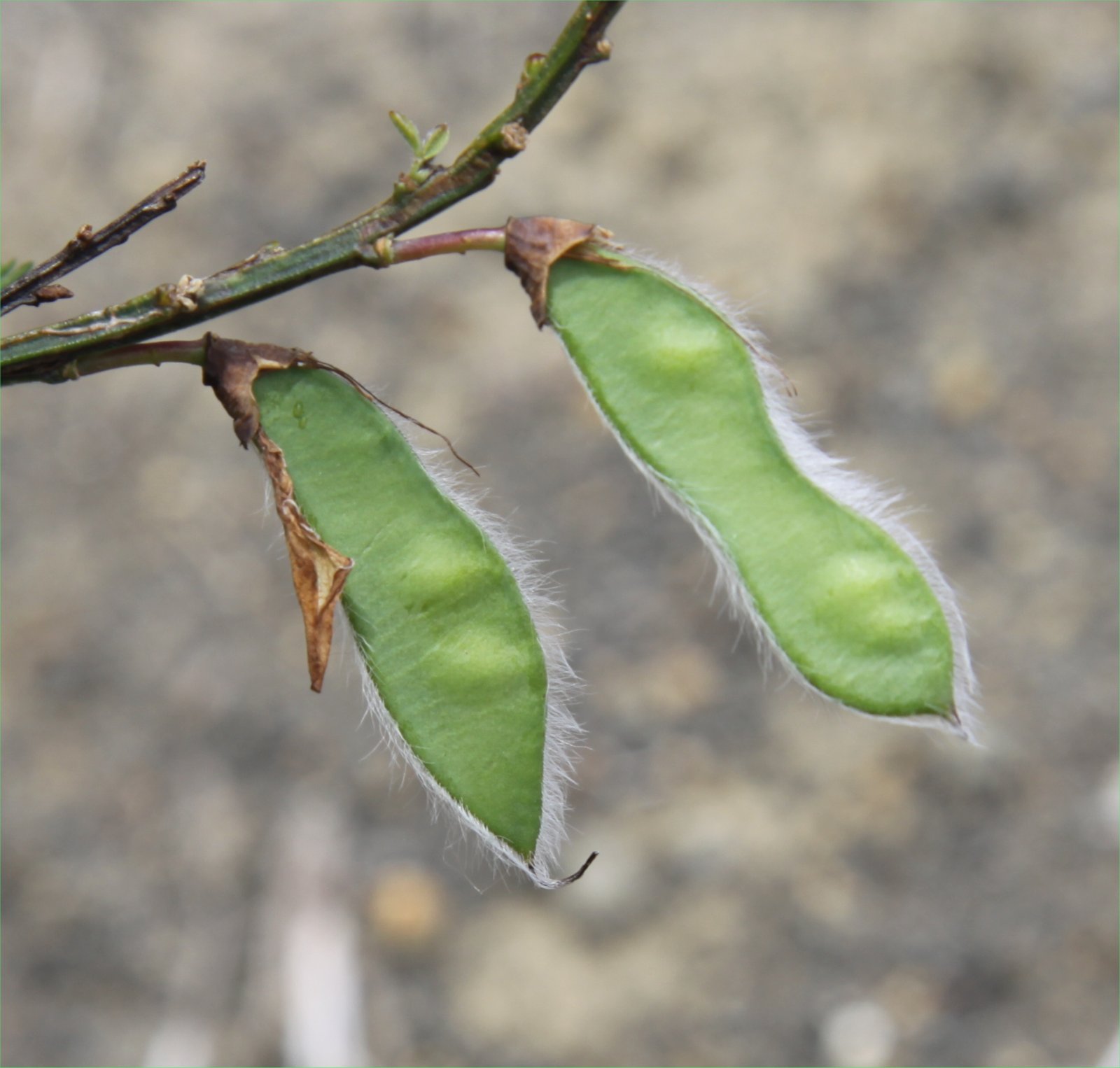
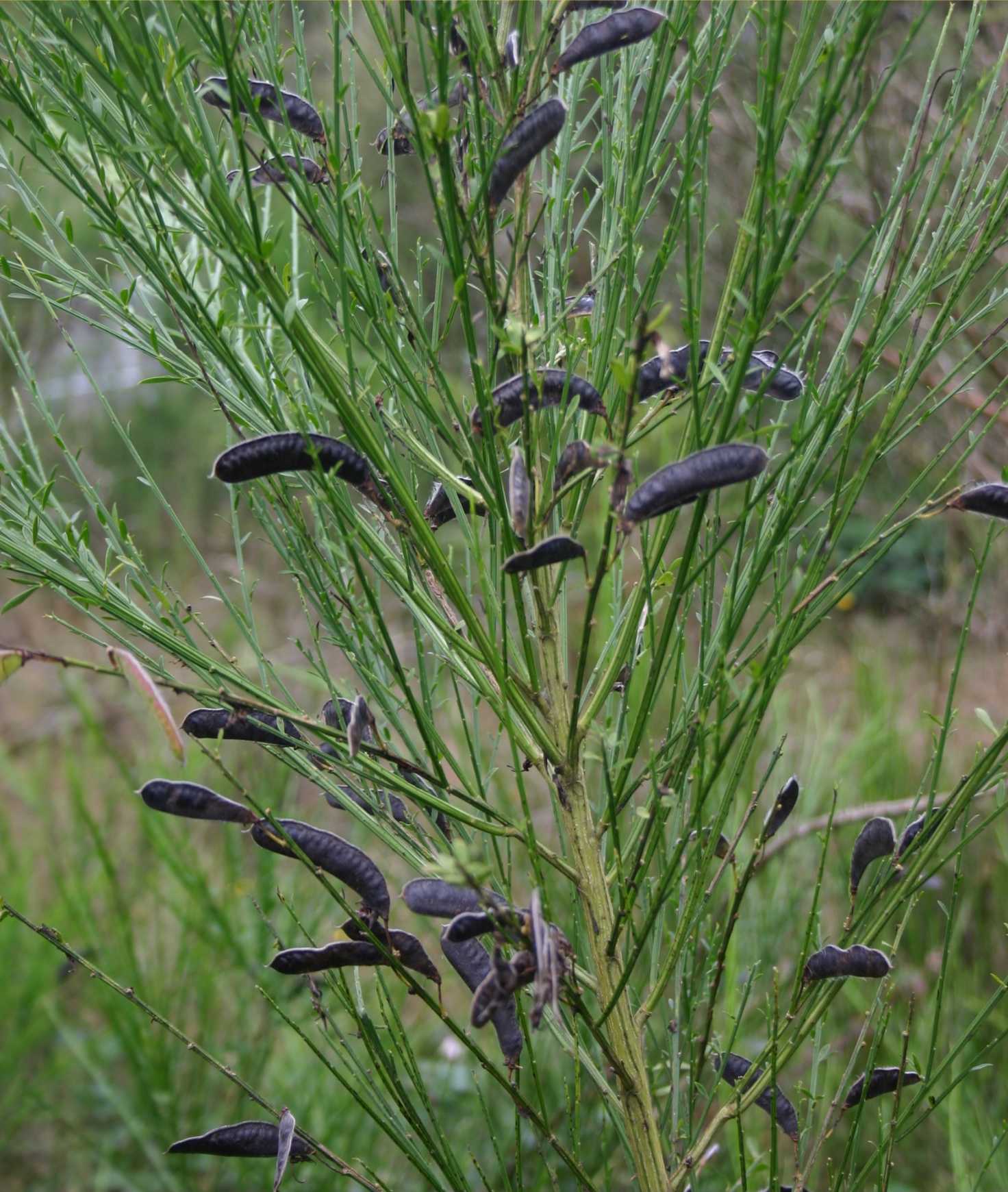
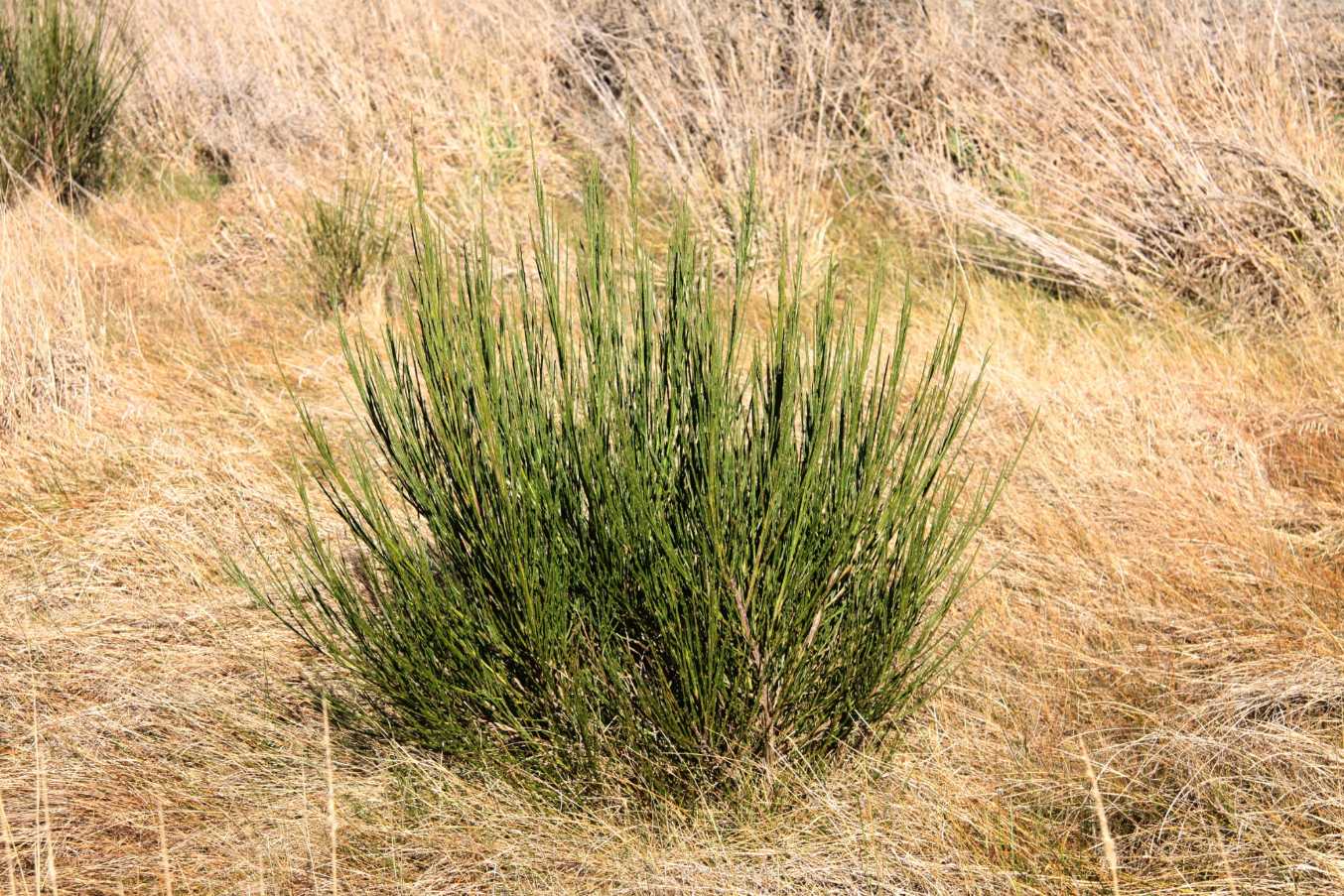
Photos courtesy and credit of Weedbusters – Trevor James
Slashing or mowing broom just prunes it – it bounces back from the stump, often thicker than before. The way to finish it off is to get a systemic gel into the stem so it’s carried down into the root crown, and cut-and-paste does that cleanly with no spray drift.
—
Method A: Cut n Paste the Stump – Recommended for Established Plants
- Get Ready: Put on your gloves and protective clothing, and have the gel open before you cut – timing matters.
- The Cut: Cut every stem as low to the ground as you can with loppers or a pruning saw. A flat cut holds the gel best.
- Paste: Within 15 seconds, cover the whole cut surface with a 3–5 mm layer of gel, paying special attention to the outer ring just inside the bark.
- Check Back: Return in 6–8 weeks and treat any shoots you missed.
—
Method B: Hand Pull – Best for Seedlings
Young plants up to knee height can usually be pulled out by hand or levered out with a spade when the ground is soft after rain. Get the whole root – snapped-off roots can resprout. Firm the soil back down afterwards so you don’t create a perfect seedbed for the next lot.
—
What Product To Use?
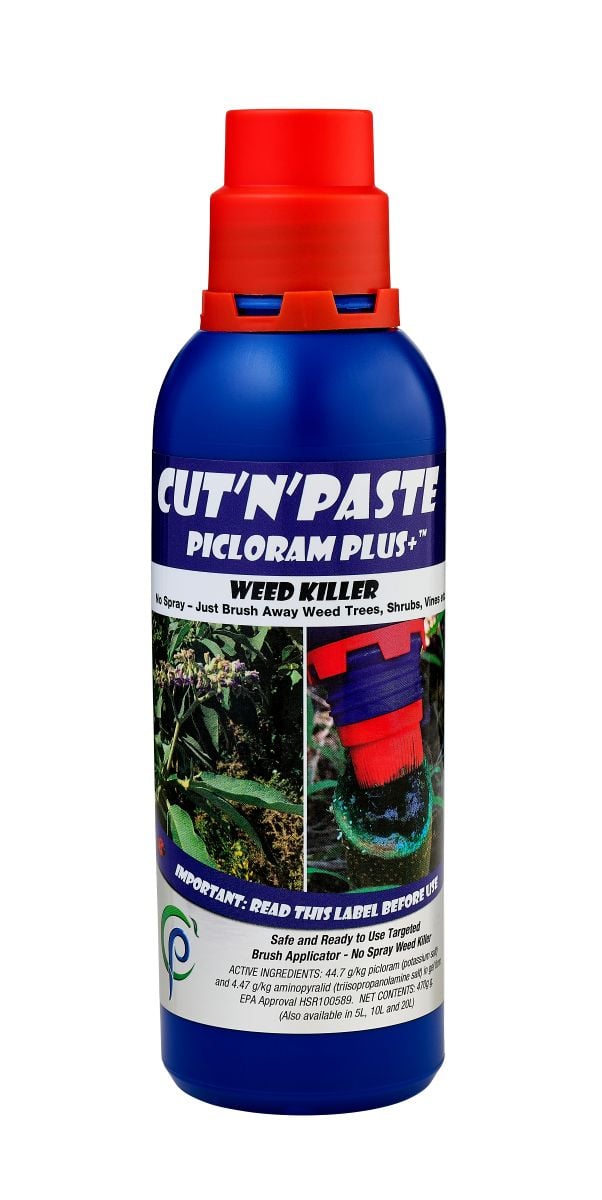
For established broom, we recommend Cut ‘N’ Paste Picloram Plus+. It combines picloram with aminopyralid for a strong root kill on woody shrubs and helps hold back regrowth. Cut ‘N’ Paste Picloram Weed Gel and MetGel are also effective on broom.
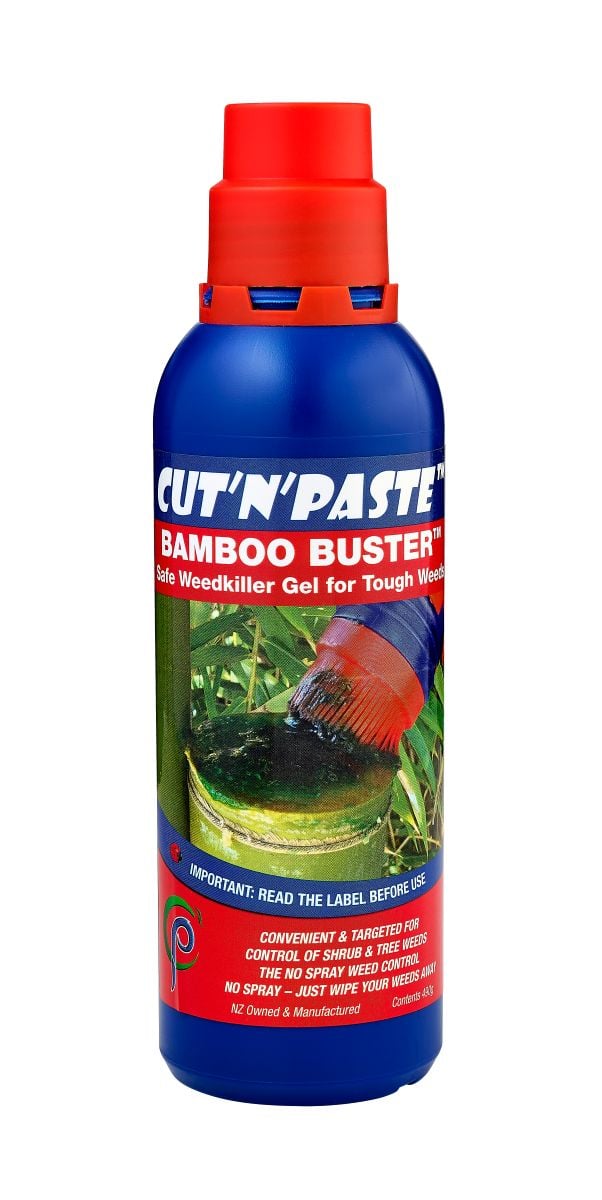
If you’re working near a stream, pond or wetland, or close to plants and trees you want to keep, use Cut ‘N’ Paste Bamboo Buster instead. Use only as directed on label.
—
Important Notes:
- MetGel & Picloram Safety Warning: Both MetGel (metsulfuron) and Picloram have significantly more residual soil activity than the glyphosate gels, and can move through ground moisture — MetGel’s soil half-life is roughly 30-90 days, Picloram’s half-life is 2–6 months – perhaps longer in clay soils. Do not use either near desirable non-target plants, within the root zone of prized trees, or around waterways and wetlands.
- When using MetGel or Picloram, never apply it inside the drip line (canopy edge) of prized trees or broadleaf garden plants. On flat ground, keep a 3 to 5-metre safety buffer. On sloping ground where the weed is uphill from desirable species, extend that buffer to 5 to 10 metres to account for soil water movement during heavy rain.
- If working near waterways, wetlands, or prized native root zones, use Cut ‘n’ Paste double-strength Bamboo Buster or Glimax Professional – both glyphosate formulas seal the stump and prevent any lower foliage from keeping the root system alive.
- Safety First: Wear gloves and protective clothing and observe all safety protocols, especially when using machinery, chainsaws and other tools.
- When using any herbicide ensure you READ THE LABEL THOROUGHLY, follow all instructions and directions for the purchase, use and storage of the product.
- If in doubt, seek professional advice.
- Catch It in Flower: From September to December broom is impossible to miss. Treating it now means this season’s pods never ripen.
- Expect Seedlings: Broom seed can survive in the ground for many years, and the exploding pods scatter it several metres from the parent plant. Plan to come back each spring for a few years.
- Don’t Leave Bare Ground: Broom loves open, sunny ground. Replanting with fast-growing natives that create shade helps stop it returning.
- Clean Your Gear: Seeds hitch rides on boots, tyres and machinery. Brush down before leaving an infested site.
Plant This Instead – Best for fenced or non-grazed areas such as banks, gullies, roadsides and gardens:
- Native broom / mākaka (Carmichaelia australis) is broom’s native cousin. It has green, near-leafless stems and small white flowers with purple veins in spring and summer. It loves full sun and dry, free-draining ground.
- Koromiko (Veronica stricta in the North Island, V. salicifolia in the South Island) is a fast-growing, leafy native shrub with long spikes of white to pale lila