
When Kiwifruit Goes Wild: The Hidden Cost of Wild Kiwifruit & Cut’n’Paste Control Guide
It’s hard to think of a more ‘Kiwi’ fruit than, well, the good old kiwifruit! It has an interesting naming history, with seeds first arriving in New Zealand from their origin – China, where the fruit is known as míhóutáo (macaque peach). It was initially named the “Chinese Gooseberry”, but a local export company wanted to break into the US market, so for political and tariff reasons, they came up with the new “kiwifruit” name, which has stuck ever since. Export contracts grew, large-scale commercial growing exploded into a massive boom by the 1970s, and today it’s one of NZs most valuable exports. Great news for our economy!
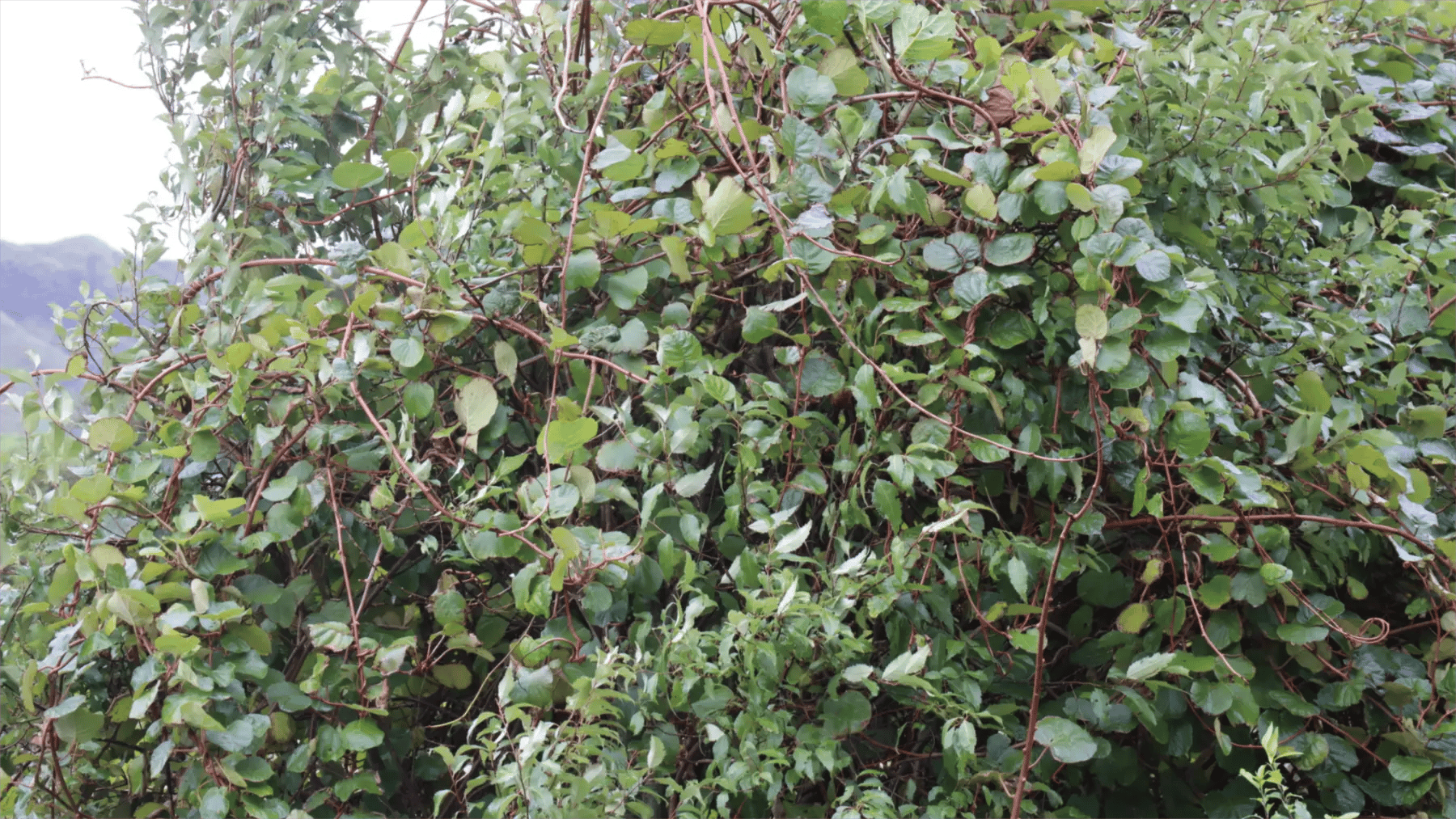
Unfortunately however, with such a boom in growth, a new problem has arisen – the vines have ‘gone rogue’ and have become a worrying pest threatening the industry. Not many people would refer to a kiwifruit as a weed, but “wilding kiwifruit” (Actinidia spp.) is just that! Spread by birds that feast on unpicked or dumped fruit, they grow wild and climb into native bush, shelterbelts and pine plantations, smothering everything beneath them. Worse, they can harbour kiwifruit pests and diseases, including Psa (Pseudomonas syringae pv. actinidiae) – a nasty bacterial disease that kills kiwifruit vines and a direct threat to the orchards that underpin the Bay of Plenty economy. It took around 50 years for kiwifruit to show up in the wild – and since the late 1970s, more and more wild plants have been recorded.
The good news? Wild kiwifruit can be stopped. Councils, the kiwifruit industry and landowners destroy thousands of vines every year, and research suggests local eradication is achievable with persistent follow-up. Here’s everything you need to know – the costs, the latest results, and how Cut’n’Paste can help you clear it for good.
In This Guide
- Key facts & figures
- Where wild kiwifruit comes from
- Why it matters
- How it’s being dealt with
- How to identify wild kiwifruit
- Choosing the right gel
- Step-by-step treatment
- What you can do
- Frequently asked questions
- References & further reading
The Wild Kiwifruit Threat: Key Facts & Figures
- Latest Results: In the 2025/26 year, 12,506 wild vines were destroyed on 91 properties – including 10,430 vines on 78 Bay of Plenty properties (NZ Herald, Sep 2026).
- The Scale: Known infestations are recorded on around 1,000 Bay of Plenty properties, and the Regional Council completed more than 180 inspections in 2025/26.
- The Hotspot: The worst infestations are around Te Puke, where kiwifruit was most intensively grown.
- Where It Invades: Native forest and scrub, and commercial pine plantations (ISHS).
- The Disease Risk: When Psa-V arrived in 2010, its long-term cost to the industry was estimated at up to $885 million.
- The Stakes: Zespri reported its global fruit sales revenue reached a record $5.9b in 2025/26, with $3.56 billion paid to New Zealand growers (Zespri). This is a large industry that is contributing enormous amounts of wealth, employment and growth into New Zealand.
Where Does Wild Kiwifruit Come From?
Almost every wild vine starts with a bird. Waxeyes and other birds feed on fruit left hanging on vines over winter, on reject fruit in bins, or on fruit spread on paddocks as stock feed – then drop the seeds in bush, forestry blocks and farmland. Infestations are generally found near orchards, or where reject fruit has been fed out to livestock in the past.
Research from the Bay of Plenty programme found the wild population is mostly green kiwifruit (Actinidia chinensis var. deliciosa, formerly A. deliciosa), and that it grew alongside the commercial success of the industry. New vines keep being recruited from commercial crops, mainly through birds feeding on reject fruit fed out to stock.
Abandoned or unmanaged orchards are another source, and KVH works with growers and councils to get those dealt with too.
The role of Kiwifruit Vine Health (KVH)
Kiwifruit Vine Health is the kiwifruit industry’s own biosecurity organisation, set up by the industry in late 2010. It works alongside many of the growers, helping to provide the industry with a clear leadership on matters such as how best to protect New Zealand’s orchards from pests and diseases, including the risk posed by wild and unmanaged vines.
Working alongside regional councils, landowners and industry partners, KVH supports surveillance and control of wild kiwifruit to stop vines spreading and to reduce the chance they harbour Psa and other kiwifruit pests and diseases. It also gives growers practical guidance on preventing new infestations, such as removing unpicked fruit and covering reject fruit so birds can’t spread the seed into bush and forestry.
Why Tackle Wild Kiwifruit?
1. It Smothers Our Bush
Wild kiwifruit vines are vigorous climbers. Left uncontrolled, they form dense, heavy blankets that strangle trees until they die or collapse. The vines thrive across a wide range of temperatures and habitats, which makes them particularly hard to control. Their environmental impact led to wild kiwifruit being listed as a “progressive containment species” and previously a “Total Control Pest” in the Bay of Plenty’s regional Pest Management Plan.
2. It’s a Biosecurity Risk
KVH says wild vines can act as a reservoir for pests and diseases, undermining eradication and control efforts on commercially productive vines. KVH’s long-serving operations officer has described wild vines as a real biosecurity risk because they can harbour Psa.
3. We Know What Disease Costs
When the vine disease Psa-V was found near Te Puke in November 2010, it spread to more than 1,100 orchards within 18 months, and three-quarters of all orchards by late 2013. A Lincoln University report for KVH estimated it would cost the industry up to $410 million over five years, and $740–885 million in the long term. The Crown and the industry each put $25 million into the response. Cutting out Psa-hit gold vines and replacing them with the more tolerant Gold3 variety was estimated at around $33,100 per hectare, including the licence.
Wild vines didn’t cause Psa – but they can give diseases like it somewhere to hide, right on the doorstep of the orchards we’re trying to protect.
4. It’s Our Responsibility
Under the Bay of Plenty Regional Pest Management Plan, landowners and occupiers – are responsible for “controlling” wild kiwifruit on their property. Other regions have rules too – see The Rules below.
How It’s Being Dealt With
Wild kiwifruit has been managed in the Bay of Plenty since 1998, through a partnership between the Regional Council, the kiwifruit industry and landowners. These days KVH runs the day-to-day control programme, while the council sets the rules landowners have to follow. KVH has also brought Zespri and the Kiwifruit Breeding Centre on board as partners. The timeline below pulls together figures from KVH, the Regional Council, published research, stats and news reports, derived from various sources, as stated.
| When | What Happened |
|---|---|
| 1904 | Kiwifruit seeds are first introduced to New Zealand. |
| 1970s | Large-scale commercial growing begins; wild plants are increasingly recorded from the late 1970s. |
| Late 1990s | A significant increase in wild kiwifruit is recorded in the Bay of Plenty. The industry partners with the Regional Council from 1998. |
| 2000 | A regional control programme begins. |
| 1998–2005 | $523,000 spent on control. More than 21,000 vines are killed over four seasons, with an estimated 67–96% of established wild vines removed. |
| 2004/05 | Control crews find almost 6,000 fewer vines than in 2001/02 – evidence the population is shrinking. |
| 2010 | Psa-V is found near Te Puke, and the wild-vine disease risk moves centre stage. |
| 2011 | The Regional Council, spending about $100,000 a year with growers and KVH, destroys around 7,000 wild vines – the most in a decade. |
| 2014/15 | Contractors control 4,988 vines around Pyes Pa, Omanawa and Te Puke east – most of them young plants from recent seed. |
| 2020 | KVH and the Regional Council launch a joint 10-year management plan for wild kiwifruit. |
| 2021 | KVH reports 13,400 vines destroyed on 103 properties in a year, and 4 ha of matted vines cleared. |
| 2025/26 | 12,506 vines destroyed on 91 properties. KVH warns wild kiwifruit has not been eradicated and vigilance is still needed. |
The Rules
Bay of Plenty: Wild kiwifruit is a progressive containment pest, and landowners or occupiers must control it on their property. KVH and the Regional Council run a subsidised control programme to help.
Waikato: Occupiers must control all wild, unmanaged or abandoned kiwifruit vines, anyone who spots an infestation must report it to the Regional Council within five working days, and no one may dispose of kiwifruit in a way that encourages wild vines.
Auckland: You must control wild kiwifruit if your land includes abandoned or former kiwifruit orchards, and you must not dispose of kiwifruit in a way that spreads it. Otherwise, Auckland Council asks you to report it rather than treat it yourself – email [email protected]. It’s also a Hauraki Gulf Controlled Area pest, so take extra care on the islands.
Northland: Wild kiwifruit is an eradication pest here, so report any sightings to Northland Regional Council.
Elsewhere: Check your own regional council’s pest management plan before you start.
Hope on the Horizon
A New Zealand study of buried seed found wild green kiwifruit forms only a short-lived seed bank – which strengthens confidence that local eradication is achievable, provided new seed stops arriving.
How to Identify Wild Kiwifruit
| Feature | Identification Details |
|---|---|
| Scientific Name | Actinidia spp. – mostly green kiwifruit (Actinidia chinensis var. deliciosa), with occasional gold kiwifruit and kiwiberry. |
| Growth Form | Long-lived, deciduous climbing vine that twines up and over trees, shelterbelts and fences, or forms tangled mounds on open ground. |
| Leaves | Large, rounded leaves, often heart-shaped at the base, with a soft, hairy underside. |
| Stems | New growth is usually covered in reddish-brown hairs. |
| Flowers | Creamy white, cup-shaped flowers from October to December – the best time to spot vines in the canopy. |
| Autumn Colour | The leaves turn yellow in autumn, which makes wild vines stand out against green bush – another good time to look for them. |
| Fruit & Seeds | The familiar brown, hairy fruit on female vines, packed with tiny black seeds. Some types have smooth skins. |
| Spread | Mainly by seed via birds, and also from stem fragments. |
For quick ID and treatment, check out our Weed Directory entry for wild kiwifruit.
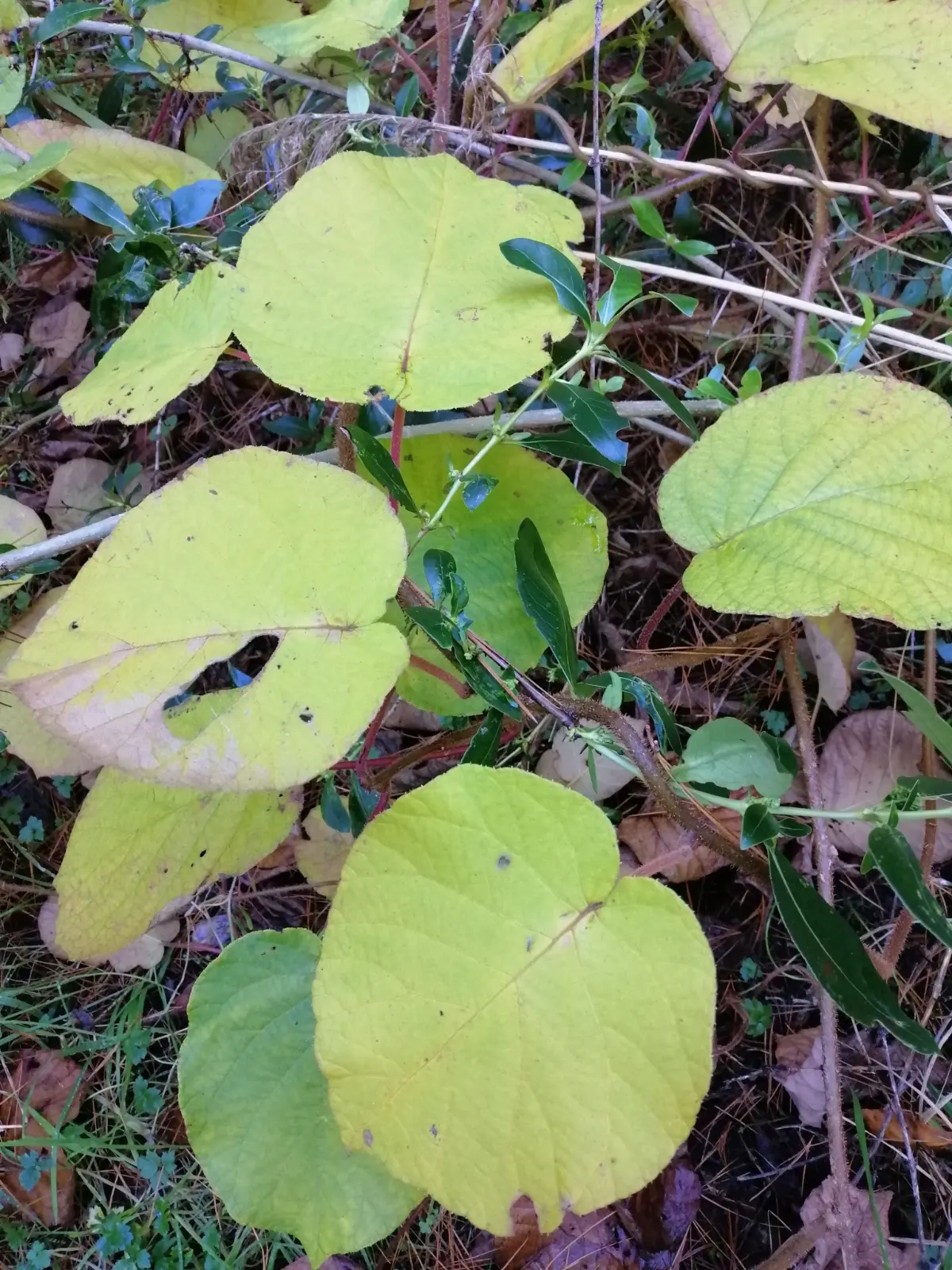
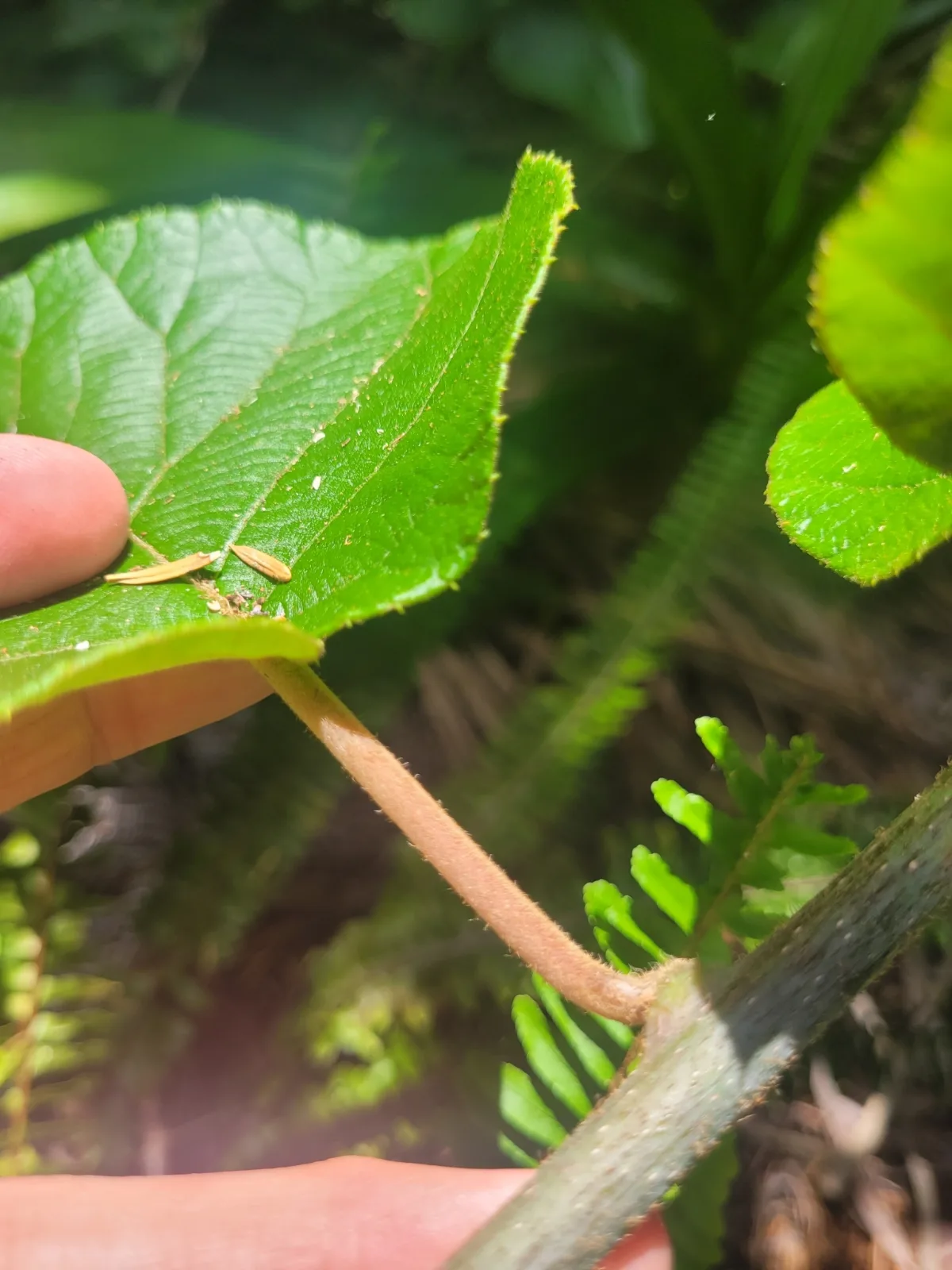
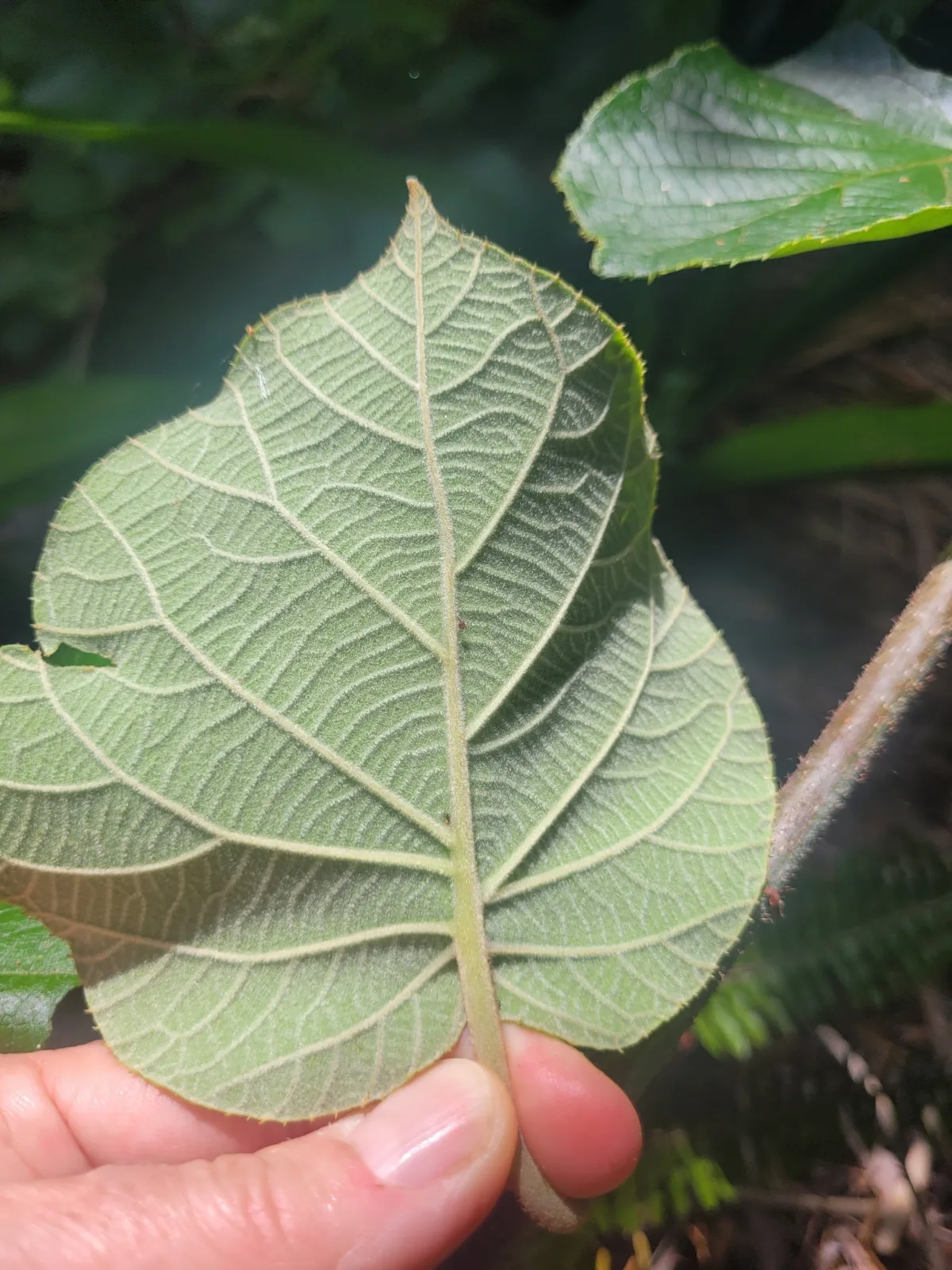
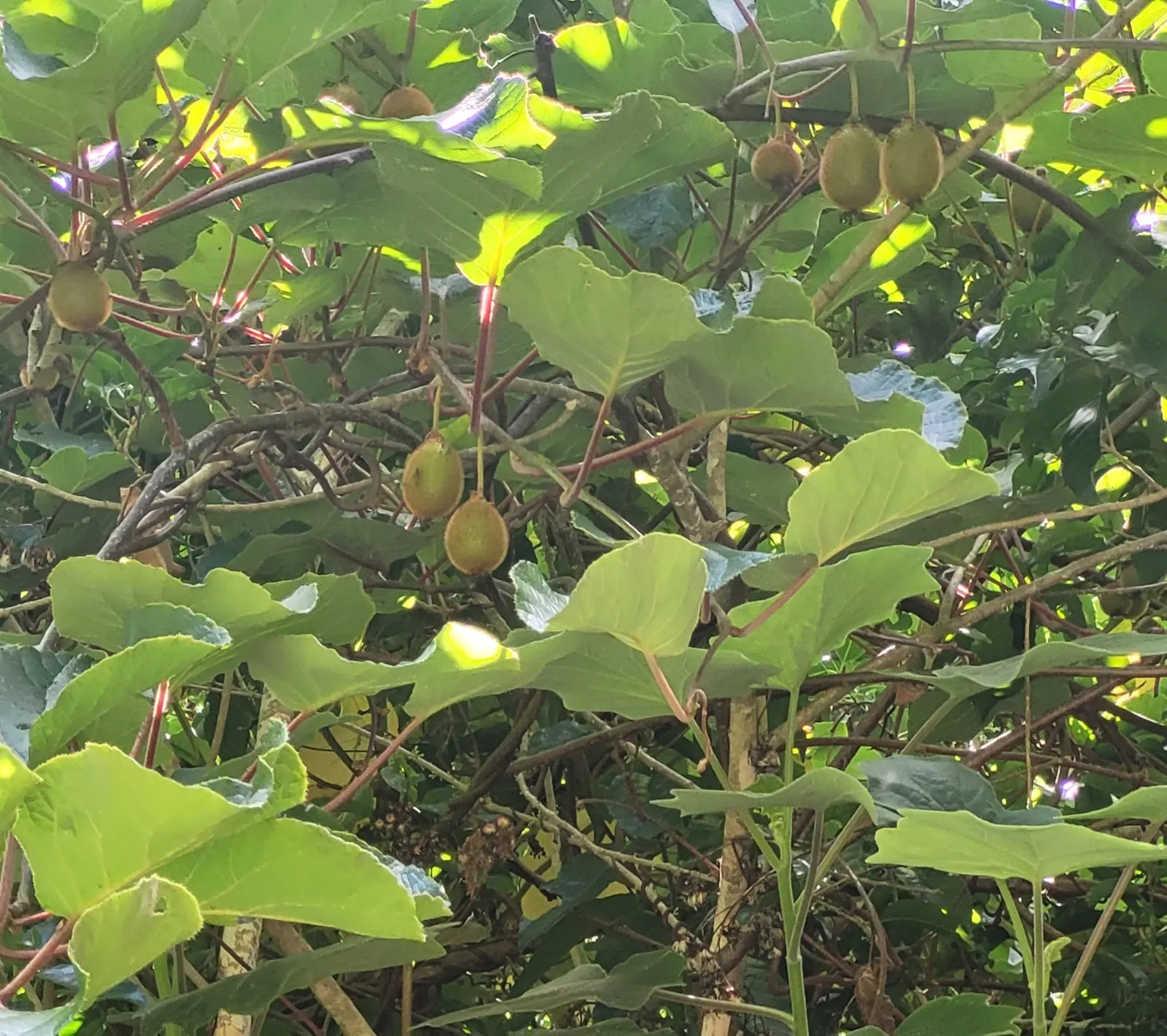
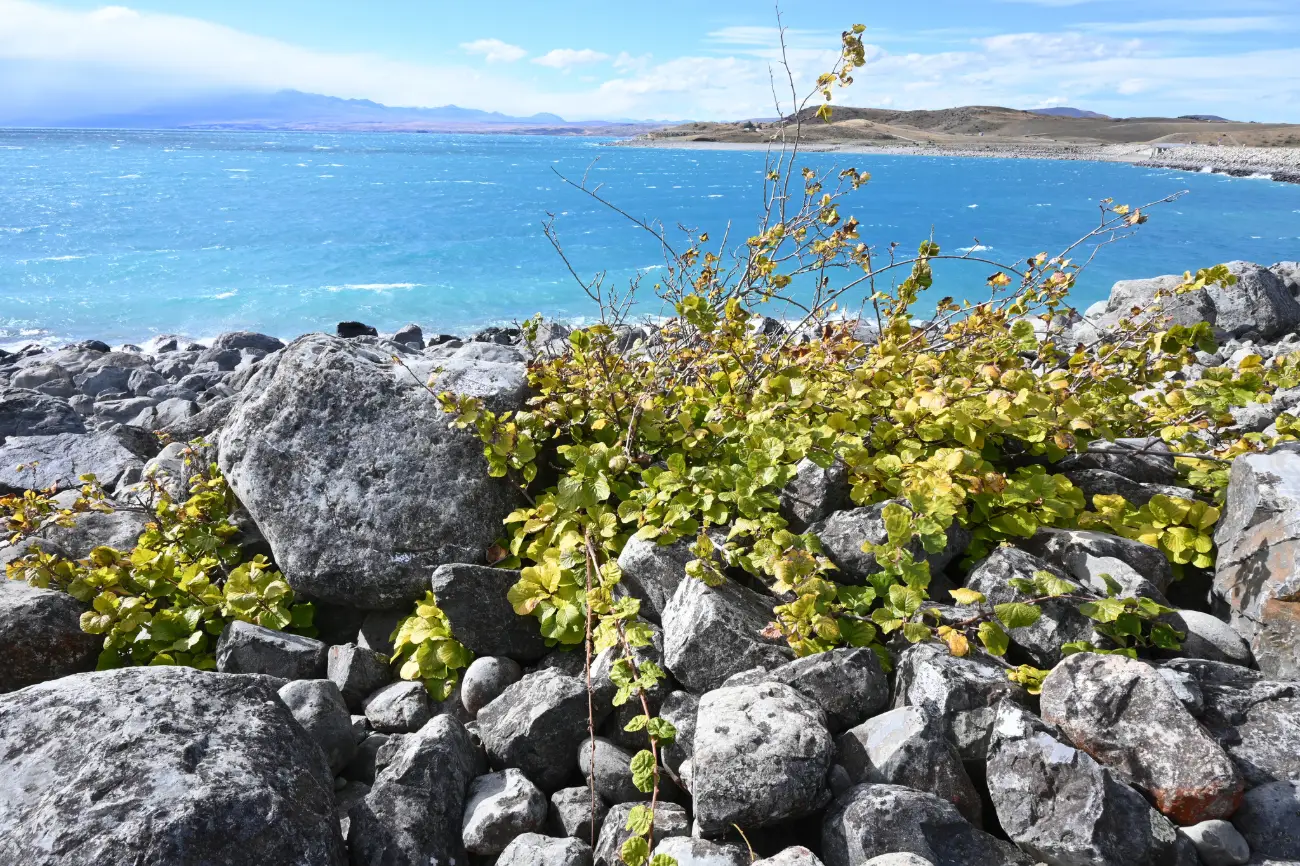
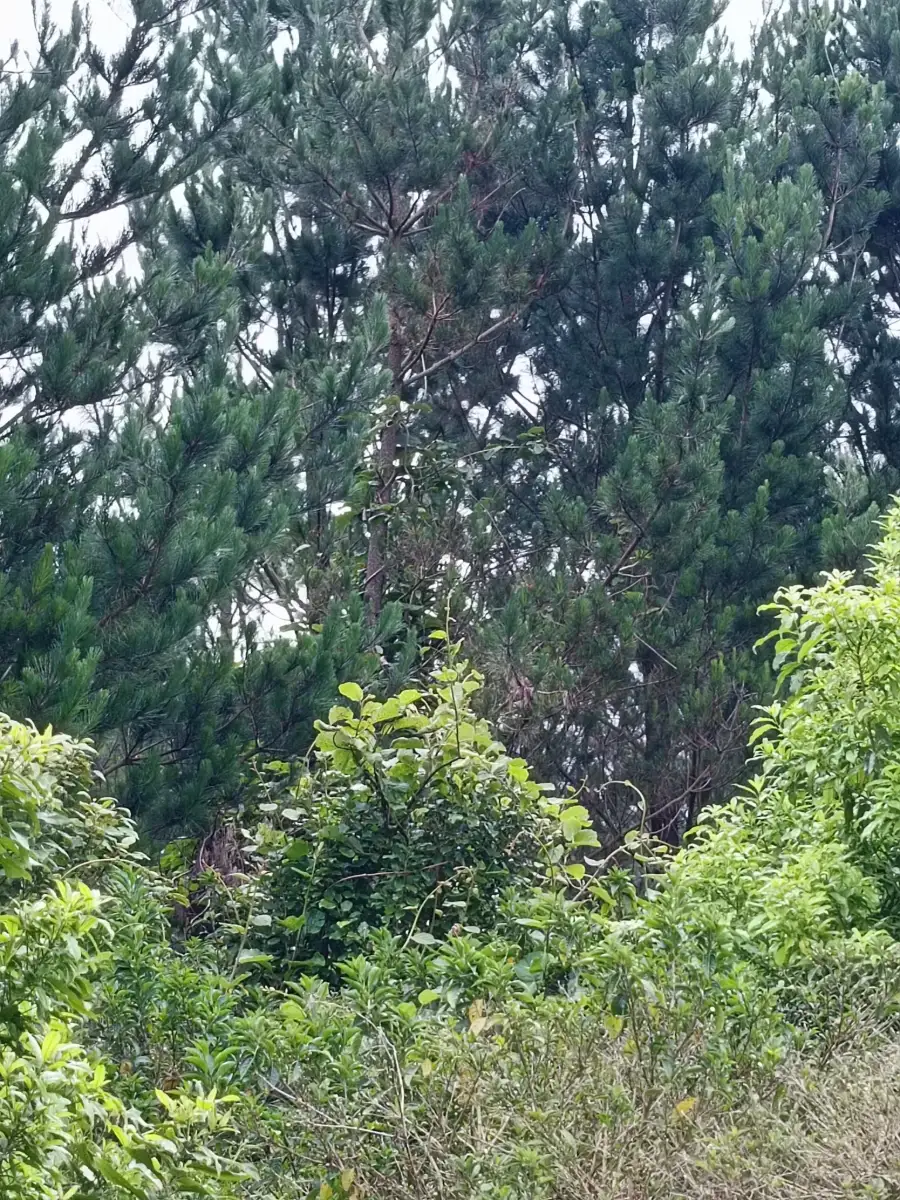
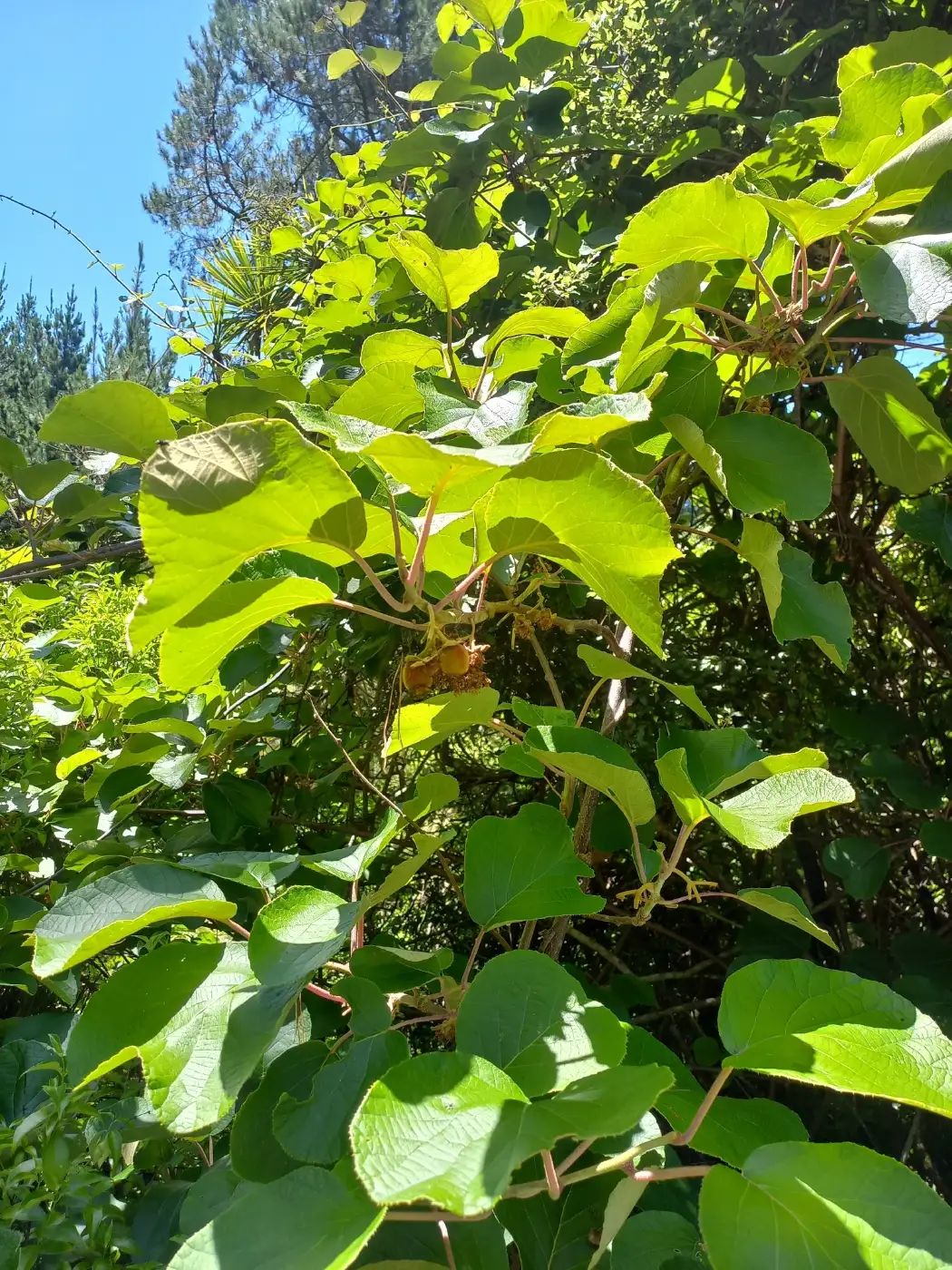
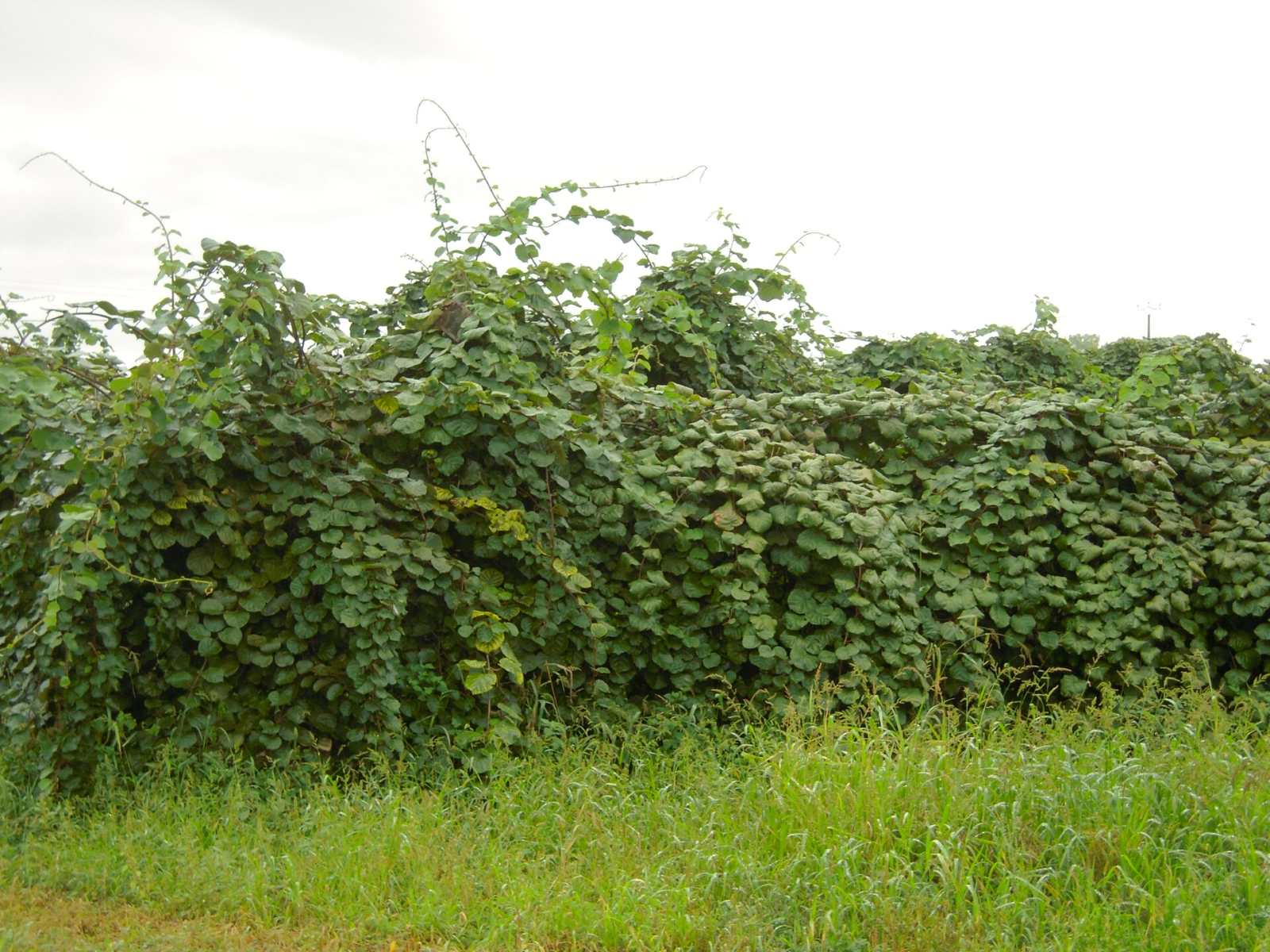
Photos: Halema J, Geoff, Jon Sullivan, Kate McAlpine and Andy McKay via iNaturalist NZ (CC BY 4.0); Phil via iNaturalist NZ (CC0); Rob Hille via Wikimedia Commons (public domain).
🛑 Cautionary Identification Note
Wild, not managed! Only treat wild, unmanaged or abandoned vines on your land, or where you have sought explicit permission. Kiwifruit growing on an orchard or a home pergola belongs to someone – if a wild vine is close to a neighbour’s orchard or boundary, talk to them first. Also take care around kiwiberry and other ornamental Actinidia grown in gardens.
Check your region first. In Auckland and Northland, the councils ask you to report wild kiwifruit rather than treat it yourself (see The Rules). The steps below are for places like the Bay of Plenty and Waikato, where landowners are expected to control it.
Choosing the Right Cut ‘n’ Paste Herbicide Gel
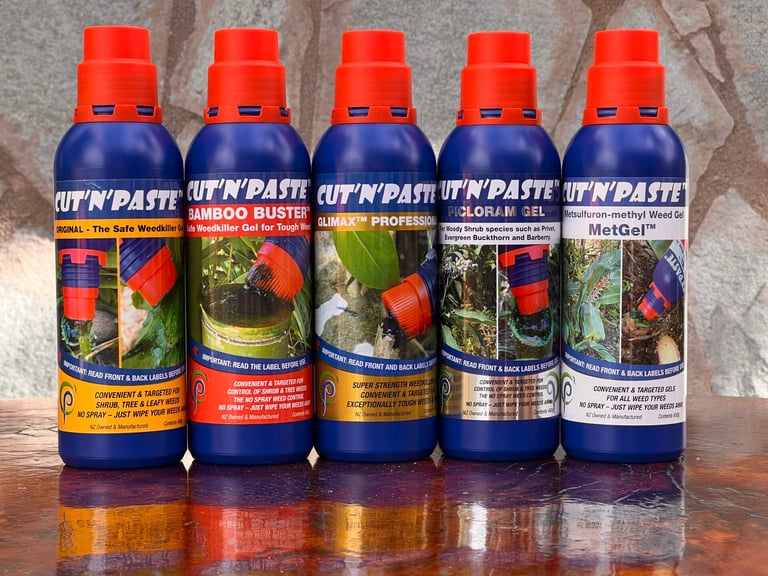
Research from the Bay of Plenty programme found wild vines can be reliably killed with stump treatment using picloram gel. Choose your gel based on vine size and how close you are to sensitive areas.
| Situation | Recommended Gel | Why It Works |
|---|---|---|
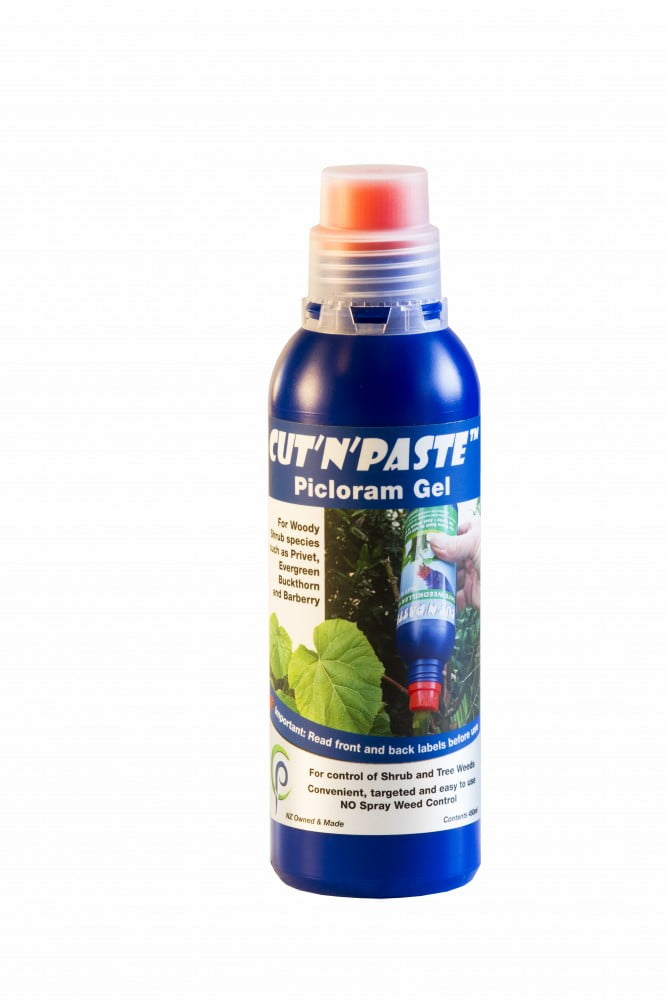
| Established vines on open ground | Cut’n’Paste: Picloram Weed Gel (Excellent) | Proven on wild kiwifruit, and the gel Project De-Vine uses. Travels deep into the root system. |
| Large, multi-stemmed vines | Cut’n’Paste: Picloram Plus+ (Excellent) | Picloram plus aminopyralid for a heavier root kill, while suppressing regrowth of surrounding woody weeds. |
| Near natives or prized trees or plants | Cut’n’Paste: Glimax | Triple-strength glyphosate that binds tightly to soil, with low risk of soil-residual movement. |
| Near waterways | Cut Stump: Bamboo Buster | Double-strength glyphosate that binds tightly to soil, with very low risk of soil-residual movement. |
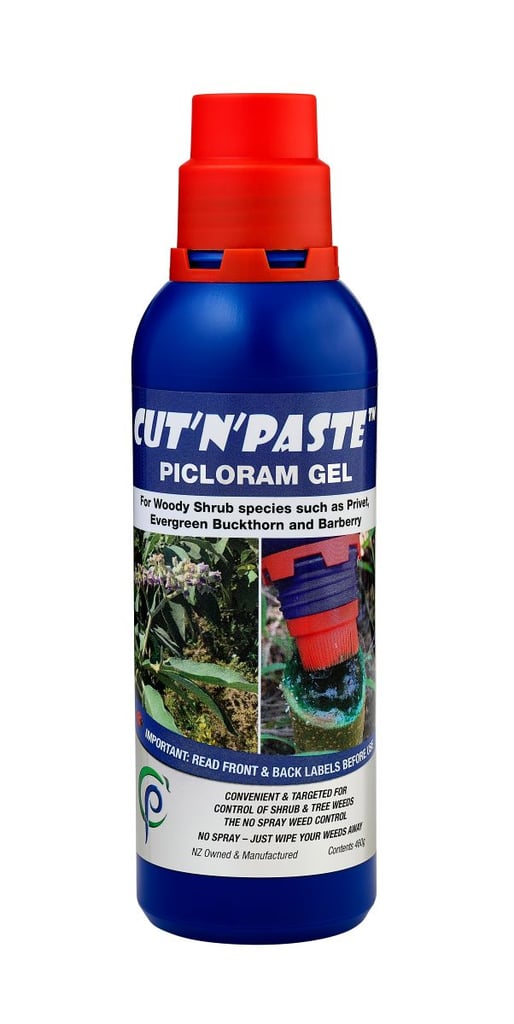
Picloram Weed Gel
From $33.55 ($29.17 ex GST)

Picloram Plus + Weed Gel
From $36.56 ($31.79 ex GST)
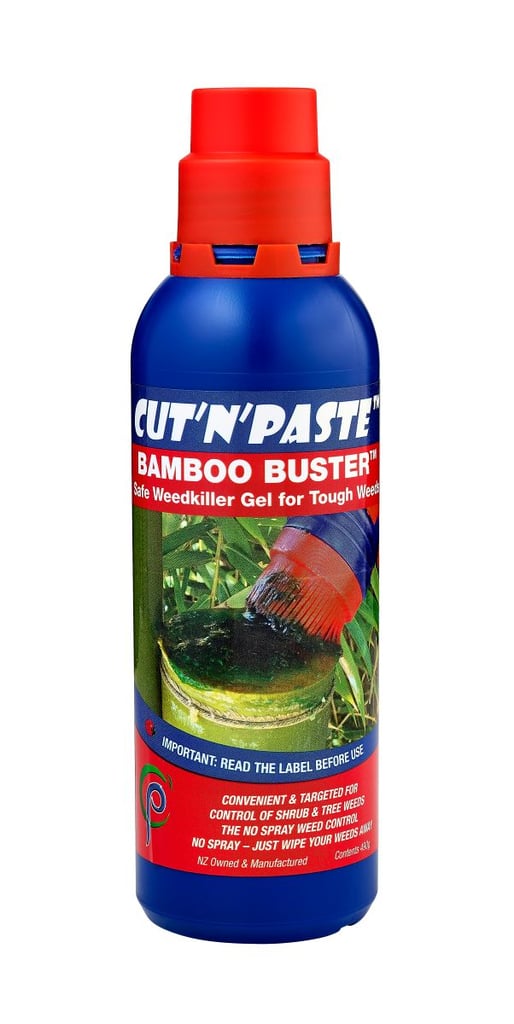
Bamboo Buster Weed Gel
From $35.12 ($30.54 ex GST)
Action & Application Techniques: Step-by-Step
Before you start, walk the site and identify sensitive risks such as nearby waterways, orchards, livestock and native plants. Wear gloves, long sleeves and eye protection.
Method 1: Hand Pull Seedlings
In control work, most vines found are small plants grown from recently germinated seed. Pull seedlings out by the roots when the soil is damp, and look carefully for a larger parent vine nearby.
Method 2: Cut’n’Paste (Cut Stump) with a “Window” (Established Vines)
- Find Every Stem: Follow the vine down to the ground. Older vines often have several stems, plus stems that have rooted where they touch the soil.
- Cut a Window: Cut each stem low to the ground, then make a second cut higher up to remove a short section. The gap shows you at a glance which stems are done.
- Paste Immediately: This is the ‘paste’ in Cut’n’Paste. Within 15 seconds, cover the entire lower cut stump with a thick 3–5 mm layer of gel.
- Leave the Top: Leave the upper vine to die in the canopy. Pulling it down can damage or topple the host tree.
Long-Term Management & Follow-Up
- Cut Off the Seed Supply: Remove all fruit from home vines, and never dump reject fruit where birds can reach it. Growers are asked to remove unpicked fruit from vines and mulch it as soon as possible.
- 3 to 6 Months Post-Treatment: Check treated vines for wilting and leaf drop. Re-treat any stems that were missed or are regrowing.
- Annual Spring Sweep: Walk the site every October–December while vines are flowering, and pull or paste new seedlings.
- Keep Going: Because the seed bank is short-lived, a few years of persistent follow-up can clear a site for good.
Important General Notes:
- MetGel & Picloram Safety Warning: Both MetGel (metsulfuron) and Picloram / Picloram Plus+ have significantly more residual soil activity than the glyphosate gels, and can move through ground moisture – MetGel’s soil half-life is roughly 30–90 days, Picloram’s is 2–6 months – and more in specific hard soils like clay. Do not use either near desirable non-target plants, within the root zone of prized trees, or around waterways and wetlands.
- When using MetGel or Picloram, never apply it inside the drip line (canopy edge) of prized trees or broadleaf garden plants. On flat ground, keep a 3 to 5-metre safety buffer. On sloping ground where the weed is uphill from desirable species, extend that buffer to 5 to 10 metres to account for soil water movement during heavy rain.
- If working near waterways, wetlands, or prized native root zones, we advise switching to Cut ‘n’ Paste double-strength Bamboo Buster – the glyphosate formula quickly seals the stump and prevent any lower foliage from keeping the root system alive.
- Safety First: Wear gloves and protective clothing and observe all safety protocols, especially when using machinery, chainsaws and other tools.
- When using any herbicide ensure you READ THE LABEL THOROUGHLY, follow all instructions and directions for the purchase, use and storage of the product.
- If in doubt, seek professional advice.
Picloram Plus+ aminopyralid Safety Notices: For additional safety notes on Picloram Plus+, please see this article.
Boundary & Environmental Safety: Always ensure you are working within safe boundaries and that any herbicide application will not affect neighbouring orchards, non-target root zones, or shared waterways and wetlands. Check whether you need to consult your local authority or meet GROWSAFE requirements when applying herbicides commercially.
The information provided in this article is for general guidance only. If you have any specific questions please contact us, or seek expert / professional advice.
What You Can Do
- Home Growers: Pick every fruit off your vines before winter, and never plant seedlings that sprout from kitchen scraps or compost.
- Orchardists & Farmers: Handle reject fruit carefully, mulch unpicked fruit promptly, and keep stock-feed fruit away from bush edges.
- Landowners: Walk your bush blocks and shelterbelts in spring while vines are flowering, and treat any wild vines you find.
- Trampers & Hunters: Take your kiwifruit skins home – don’t toss them in the bush.
- Everyone: Report wild vines you spot (see below).
Frequently Asked Questions
Is wild kiwifruit only a Bay of Plenty problem?
No. The Bay of Plenty has the biggest population, but KVH also works with councils throughout New Zealand to destroy wild vines, and the Waikato has its own rules.
Why not just pull the vine down?
Pulling leaves the roots alive to regrow, and the weight of the vine can bring down branches or the whole host tree. Cutting at the base and pasting the stump (the cut-stump, or Cut’n’Paste, method) kills the roots and lets the top die in place.
When is the best time to treat it?
Spring is ideal for finding vines because they flower from October to December, and actively growing plants draw gel down into their roots. Cut-and-paste works year-round, though – don’t wait if you find one.
Can I compost kiwifruit?
Only where birds can’t get to it. In the Waikato, disposing of kiwifruit in a way that encourages wild vines is against the rules.
Why remove wild kiwifruit – isn’t it just harmless fruit?
Kiwifruit belongs in orchards and gardens, not native bush. Wild vines smother the trees that native birds and insects depend on, and they can harbour vine diseases like Psa. Picking the wilding fruit is fine – it actually helps – but the vine itself needs controlling. Cut’n’Paste targets only the vine, with no spraying, so the surrounding bush is left untouched.
Reasons Not To Eat Wilding Kiwifruit
- The quality is hit and miss. Orchard vines are clones of selected varieties like Hayward, but wild vines grow from seed, so every plant is different. The fruit is often smaller, hairier and more variable in taste.
- Not every vine fruits. Kiwifruit plants are either male or female, and only the females produce fruit.
- Never eat fruit from a treated vine. If a vine has been cut and pasted or sprayed, or is growing on a roadside or in forestry that may have been sprayed, leave the fruit alone. Of course, it’s often hard to know – so it’s probably better to leave it alone.
- Allergies still apply. Anyone allergic to kiwifruit should avoid wild fruit too.
- If you choose to eat wilding kiwifruit. Eat it at home and put the skins and leftovers in the rubbish, not in the bush or open compost, otherwise you could start new vines. That’s fine if you want to do so from home, but keep them in pots, away from birds who can spread them – causing more wildings!
Seen a Wild Vine?
In the Bay of Plenty, report wild kiwifruit to the Regional Council on 0800 884 880 and ask for a biosecurity or land management officer, or to KVH on 0800 665 825. In the Waikato, call the Regional Council on 0800 800 401. In Auckland, email [email protected]. Elsewhere, contact your regional council’s biosecurity team.
More Information
For quick identification and treatment, check out our Weed Directory.
References, Credits & Further Reading
Facts and figures in this article are drawn from the sources below. Charts were compiled by Cut’n’Paste from these sources.
- Kiwifruit Vine Health (KVH) – Wild Kiwifruit Report – Control results, landowner responsibilities and how to report wild vines.
- KVH – Council and kiwifruit industry collaborate to control pest plant – Where wild vines come from and the Psa risk.
- Bay of Plenty Regional Council – Wild Kiwifruit – Official pest information and reporting.
- Waikato Regional Council – Wild Kiwifruit Factsheet – Rules and control advice for the Waikato.
- Control of Wild Kiwifruit in Bay of Plenty (ISHS) – Research behind the early control programme, 1998–2005.
- Wild Kiwifruit Seed Longevity (NZ Plant Protection) – Why local eradication is achievable.
- DOC Smart Weed Alert Tool – Kiwifruit – Species description, flowering and spread.
- Te Ara – Kiwifruit – History of kiwifruit in New Zealand.
- Te Ara – Wild kiwifruit – When kiwifruit first appeared in the wild.
- NZ Herald – Bay of Plenty wild kiwifruit: 12,506 vines destroyed (Sep 2026) – The latest control results.
- Newstalk ZB – Wild kiwifruit control ramps up (Sep 2026) – Infested properties, inspections and the 10-year joint plan.
- NZ Herald – Wild kiwifruit warning for growers – Reject fruit handling and who manages what.
- SunLive – Taming wild kiwifruit (2021) – KVH control work and the Psa risk.
- RNZ – Wild kiwifruit spreading (2012) – The 2011 control figures and autumn spotting tip.
- RNZ – The cost of Psa – Lincoln University estimates of the Psa outbreak’s cost.
- SunLive – Psa-V three years on – Replanting costs after Psa.
- MPI – Psa-V Regulatory Impact Statement (2013) – Crown and industry response funding.
- Zespri – 2025/26 Financial Results – The value of New Zealand’s kiwifruit industry.