
Wipe Away Your Weeds: Three August Targets
The last month of Winter is here! As you might already know, winter in New Zealand is actually an ideal time to take a close look around your property boundary fences, backyard edges and the more hidden parts that perhaps you don’t visit so often – to check for any sneaky weeds you might have missed.
In many places it’s been quite dry this winter and while the days are crisp, the soil is damp and above ground plant growth has stalled, you won’t be surprised to hear that beneath the surface, plants and the invasive weeds are still active! Can you guess why? Yes – spring is just around the corner – they are all preparing for a big spring growth spurt!
Plants might be largely dormant above ground during winter, but they are still drawing nutrient reserves down into their root networks. This seasonal habit makes late winter a great time of year to use targeted cut and paste weedgel treatments.
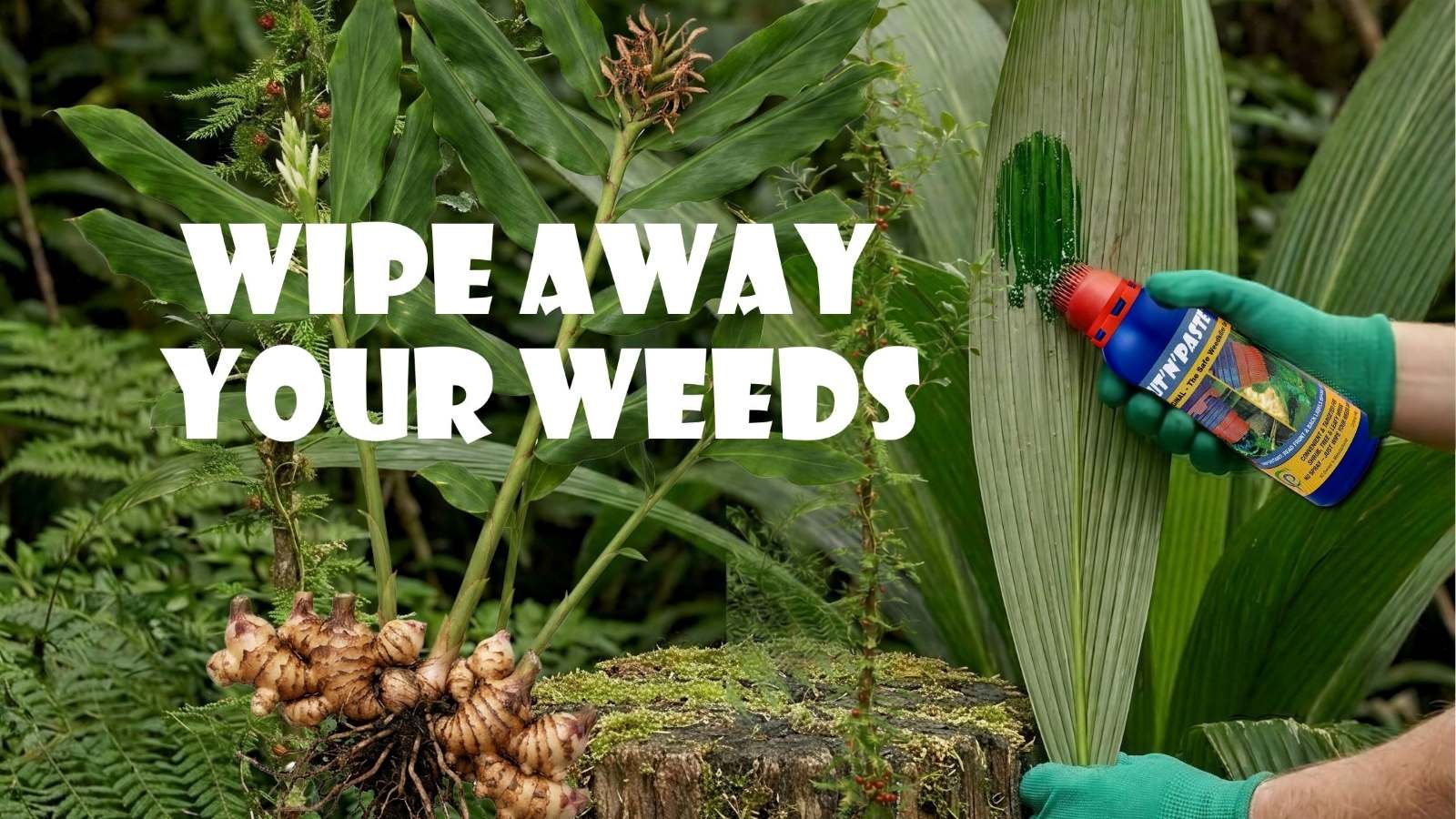
Instead of spraying – you can simply wipe away your weeds – with targeted precision. No spray drift, no accidental runoff, and no overspray onto your prized garden plants or native wildlife, neighbours or otherwise.
August Backyard Weed Watch
In this month’s Backyard Weed Watch, we’re matching three purpose-built gels to three of the most aggressive ground-dwelling invaders creeping through NZ gardens. Let’s get into it.
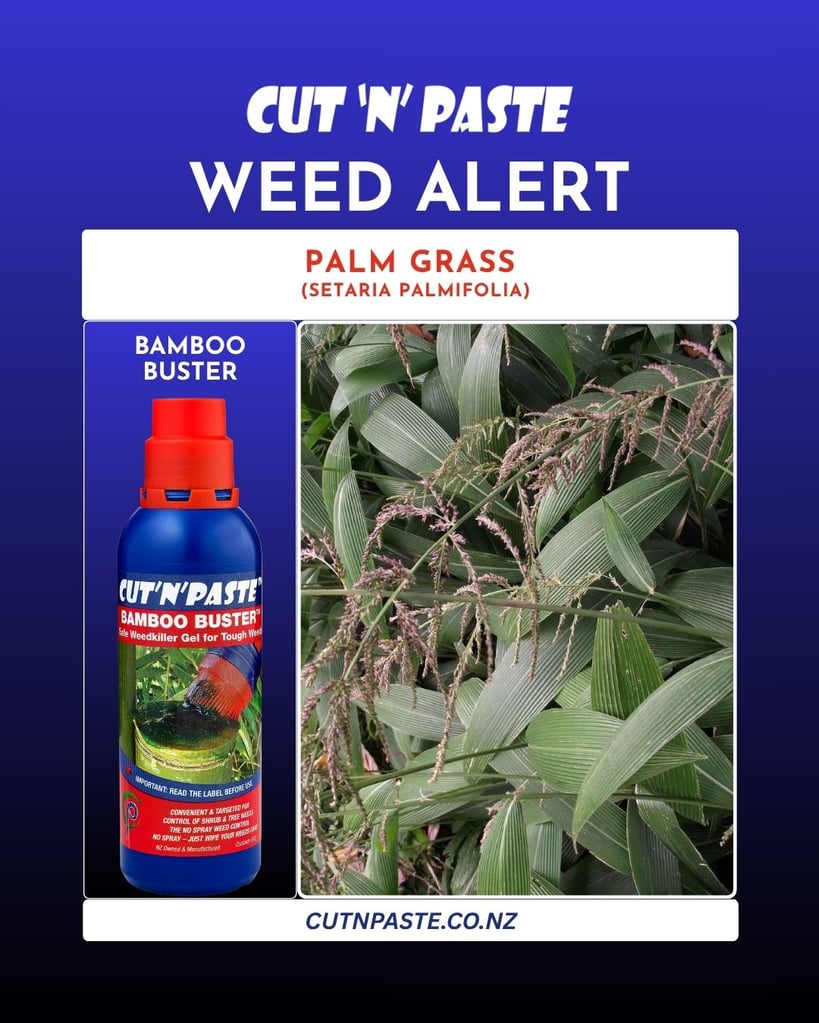
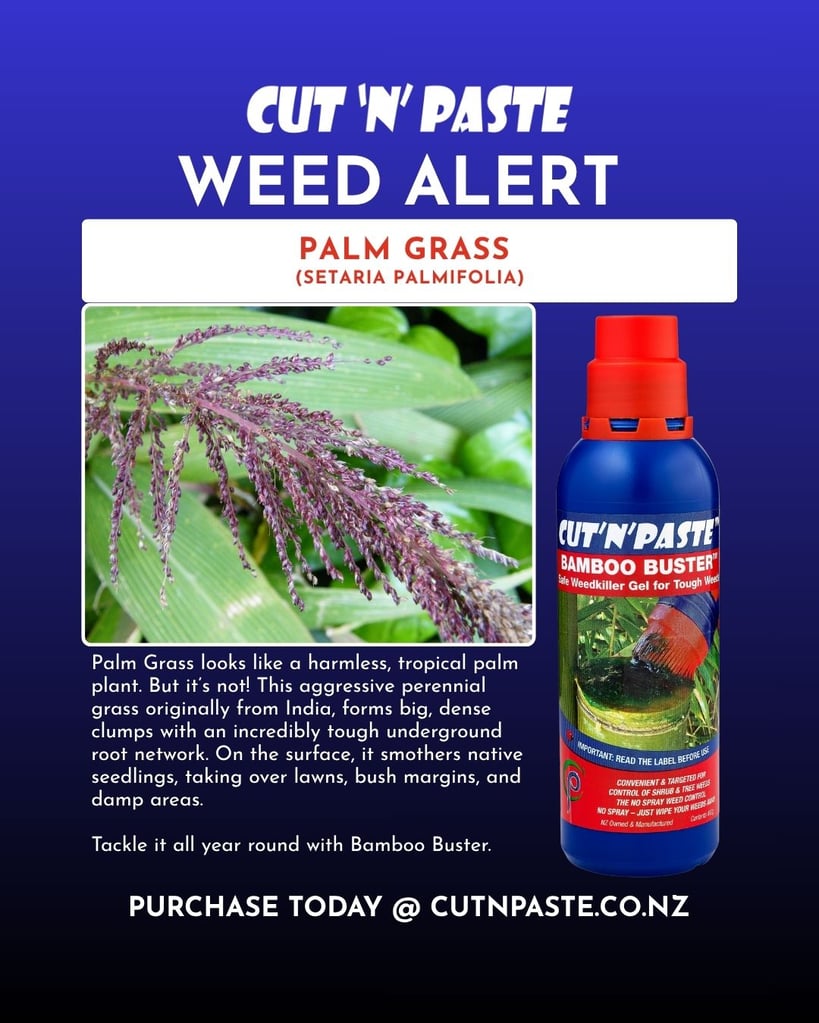
Palm Grass (Setaria palmifolia)
The Target: If you’ve noticed a clump of foliage that looks like a cross between a young palm tree and giant tussock grass invading your lawn edges, garden beds, or damp gullies, you’re likely dealing with Palm Grass.
- Why It’s a Problem: Palm Grass forms heavy, dense root crowns that rapidly choke out surrounding lawn grasses, native ground covers, and prized garden shrubs. As the clump expands, it produces tall seed heads that drop thousands of wind-blown seeds, easily invading neighbouring properties and bush margins. Trying to dig out mature clumps by hand is back-breaking work that severely disrupts garden soil, creating an open, exposed bed where fresh weed seeds can quickly germinate and take hold.
- Winter Identification: Look for dense tussock clumps featuring distinct, pleated leaf blades up to 10cm wide that resemble young palm fronds. In late winter, mature clumps retain their stiff, upright foliage and prominent seed heads, making them easy to spot against dormant lawn grass and thinning garden foliage.
- The Solution: Cut’n’Paste Bamboo Buster a double-strength formula (240g/L Glyphosate Gel) designed for systematic stem-by-stem clearance.
- The Pro Technique: Simply brush a layer of Bamboo Buster gel directly onto the underside of the active green leaf blades to allow the plant to absorb the formula through its foliage. If you have the time and can easily reach the base of the plant, you can also cut all central leaf stalks low near the root crown and within 30 seconds, apply a generous layer of gel.
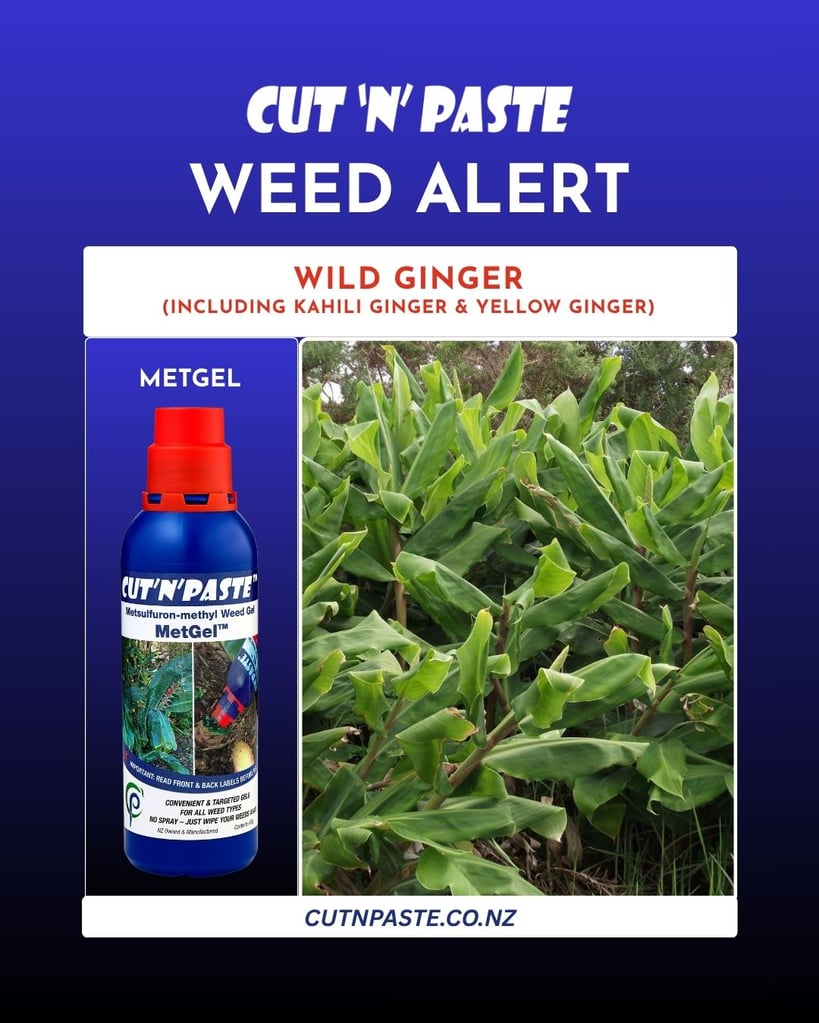
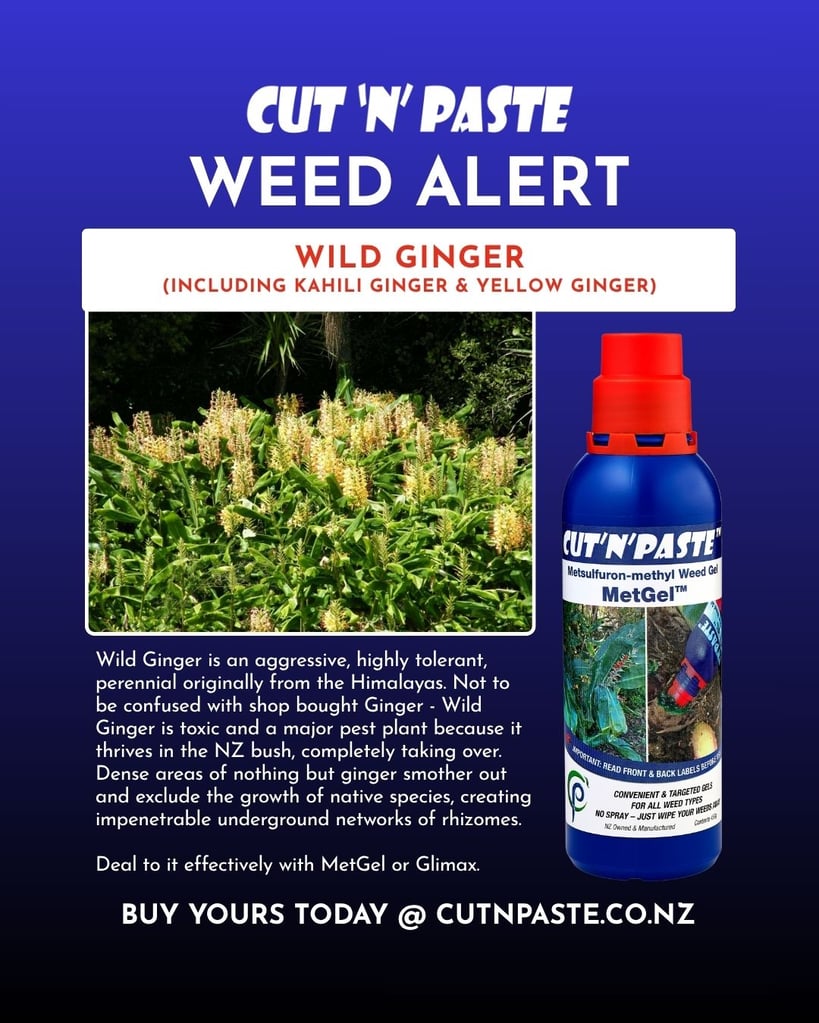
Wild Ginger (Hedychium gardnerianum)
The Target: An aggressive perennial with complex underground rhizome beds that form impenetrable thickets along back boundaries and shaded garden corners.
- Why It’s a Problem: Wild Ginger forms massive, overlapping beds of tuberous underground rhizomes that completely dominate. The dense rhizome mats starve surrounding soil of moisture and nutrients, smothering nearby plants and preventing native seedlings from establishing. In forests, it often grows into hectares of solid patches, preventing many native species from establishing. In Northland, it is estimated that more than 5,000 hectares of Wild Ginger has infested native forests.
- Winter Identification: Easily recognised by its towering, wax-like green leaves radiating from thick central stalks that rise from knobby, tuberous rhizomes sitting on or just beneath the soil surface. Even in late winter when upper growth slows, these massive rhizome mats remain fully exposed and ready to absorb targeted gel applications.
- The Solution: Cut’n’Paste MetGel * – formulated with Metsulfuron-methyl to conquer the rhizomes
- The Pro Technique: The preferred techniques is to saw the thick rhizome mass. Immediately smear a full-coverage layer of MetGel across the freshly cut stumps and any exposed tuber surfaces, allowing the active ingredient to translocate deep into the underground network without disturbing surrounding soil.
* Remember that Metgel can stay active in the soil for many months, potentially spreading to other plants you want to keep, or entering waterways. So if you have any doubt, use a less intense alternative gel, such as Bamboo Buster instead – and yes, it can also be applied to the underside of the leaves.
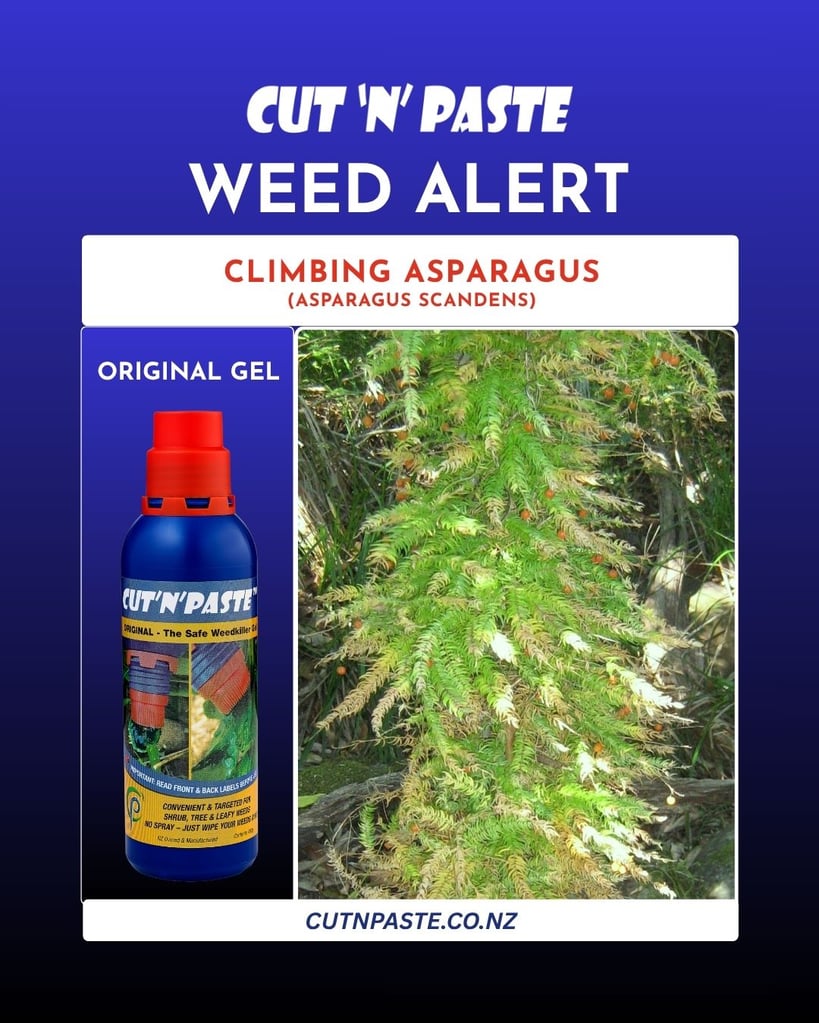
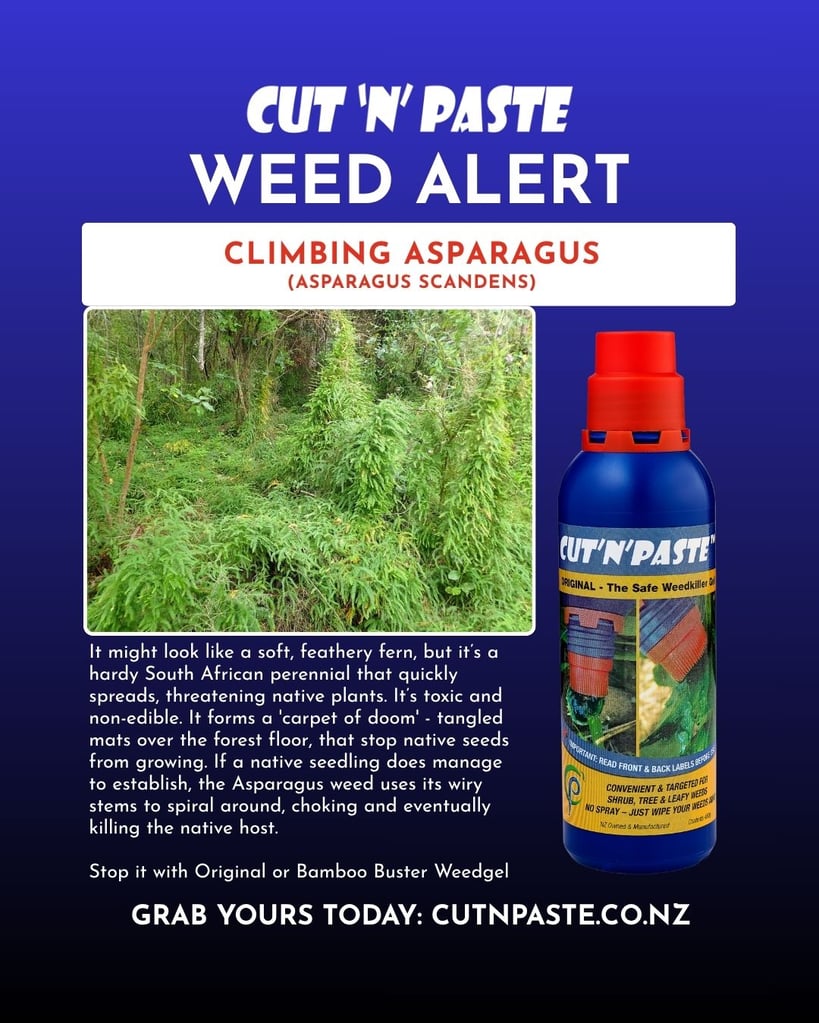
Climbing Asparagus (Asparagus scandens)
The Target: A slender, shade-tolerant climbing vine that forms dense mats over garden floors and smothers low-growing shrubs and native ferns and other trees by climbing up them in spirals, strangling the host.
- Why It’s a Problem: Climbing Asparagus forms thick, tangled carpets over garden beds and uses its slender stems to spiral up low trees, shrubs, and hedges up to three metres high. As it scrambles upwards, it blocks light from reaching lower foliage and smothers regenerating plants, eventually choking the host plant. To make matters worse, birds feed on its small orange-red berries and scatter the seeds across surrounding gardens and bush reserves, spreading the infestation far beyond your property line.
- Winter Identification: Look for light-green, feathery sprays made up of tiny, needle-like leaf structures twining through lower garden branches or creeping across the soil, or spiraling up around other trees, plants and shrubs. In late winter, the bright foliage and small, round orange-red berries stand out clearly against thinning undergrowth.
- The Solution: Cut’n’Paste Original WeedGel formulated with 120g/L Glyphosate IPA and only 0.5% APG surfactants. You can also use Cut’n’Paste Bamboo Buster (double-strength formula 240g/L Glyphosate Gel).
- The Pro Technique:
Put on a pair of plastic (nitrile is best) gloves to make it easier and safer to apply to leaves. - Gather together a handful of vines in one hand and simply wipe the weedgel onto the leaves and stems with the brush in the other hand.
- Pull the weedgel upwards along the weed plant leaves. That will go down into the roots and it won’t grow back.
- Repeat around the area, targeting as many handfuls and bunches as you can.
Your August Backyard Cheat Sheet
| Weed Species | Recommended Gel | Key Advantage |
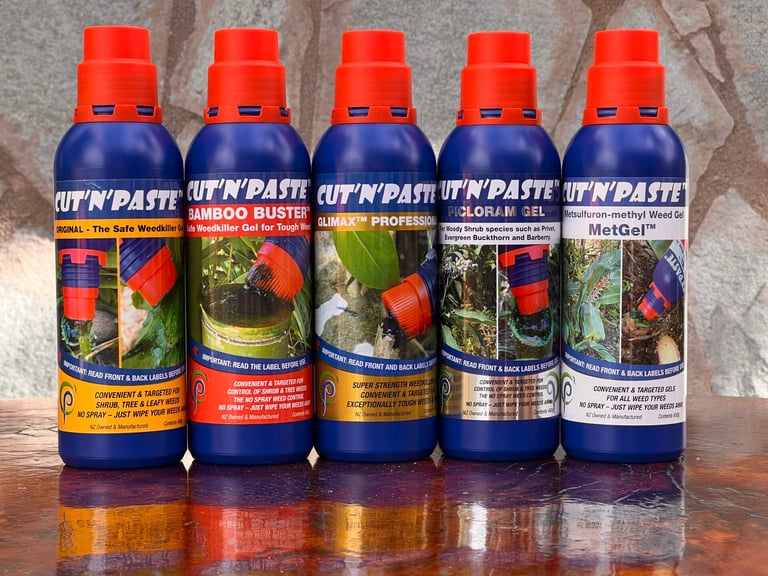
| Palm Grass | 🔴 Bamboo Buster | Double-strength glyphosate formula designed to penetrate dense, fibrous root crowns or be wiped directly onto leaf undersides. |
| Wild Ginger | 🟢 MetGel | Translocates deep into heavy underground rhizome networks that survive standard sprays. |
| Climbing Asparagus | 🔵 Original (or Bamboo Buster) | Convenient brush-on gel designed for wiping onto the underside of active growing leaders or pasting cut stems. |
Pro-Tips for Successful Winter Weed Gel Application
- Choose a clear sunny day or a spell of no rain so that the work you do won’t get washed away before the plant has had a chance to absorb the gel.
- The 30-Second Rule: Always apply your weed gel within 30 seconds of making a fresh cut. Cold air causes plant stems to seal off quickly; pasting immediately ensures the gel is drawn directly into the plant’s vascular system.
- Apply It Thick (3–4mm): Plant sap moves more slowly in winter. Applying a thick, generous layer provides a continuous reservoir of herbicide for the stem to absorb over time.
- Be Patient: Because plant metabolism slows down in winter, dieback may take 3 to 6 weeks to show full results. Rest assured, the chemical is working beneath the surface!
By taking an hour or two this August to address invasive plants on your property, you stop these weeds before they flower, set seed, and take over your garden come spring.
Grab your favorite bottle of Cut ‘n’ Paste, head out to the backyard, and let’s wipe away the weeds!
Need to Identify a Different Weed?
Not sure what’s growing in your garden or facing a particularly stubborn invader not listed above? We’ve got you covered. Our comprehensive Cut’n’Paste Weed Directory is your ultimate field guide to identifying and eliminating New Zealand’s most common (and uncommon) weeds.
Pro Tip: Keep our Cut’n’Paste Weed Directory bookmarked on your phone! It’s the easiest way to identify a weed on the spot, choose the perfect gel for the job, and find the exact “plan of attack” needed to clear it out for good.
Remember to wear gloves and follow the instructions on the label.