

How to use MetGel or Picloram Gel on Moth Plant !
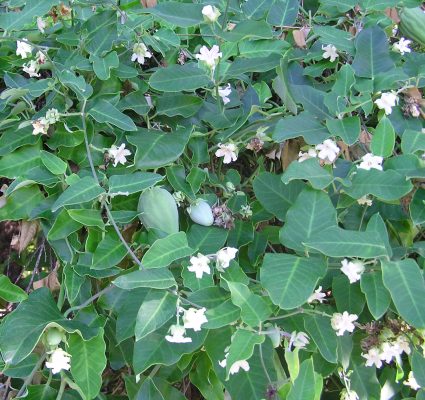
Some people in the community and councils are putting MetGel and Picloram gel to good use killing Moth Plant
And below we have Dave Grimmer from Bay of Plenty Regional Council. Thank you Dave for your excellent videos.
And then we have Richard Margeson on Waiheke.. Richard Margesson from “Free The Tree” explains weed control at the DOC Matietie Historic Reserve, Waiheke Island, with the Coastal Custodians Volunteers and Auckland Council Weed Team. And in his belt he is using our Cut’n’Paste in his belt whilst he deals with the moth plant. Thank you Richard.
Shop at Cut’n’Paste for MetGel
These are just some of the many videos out there giving advice on how to remove your moth plants problem using manual control of vines and pods and our Cut’n’Paste Weed Gels.
Moth Plant (Araujia sericifera), also known as the White Bladderflower, Cruel Vine, or Common Moth Vine, is a perennial climbing plant native to South America, particularly in Brazil, Paraguay, Argentina, and Uruguay.
It has been introduced to other parts of the world, including Australia, New Zealand, and parts of Europe, where it is considered invasive due to its ability to crowd out native species. The plant is known for its fast growth and vigorous nature. Its stems can climb over other vegetation, reaching a height of up to 7 meters.
The leaves are opposite, oval-shaped, and have a green glossy appearance. The leaf edges are entire and the leaf base is cordate (heart-shaped). The plant gets its common name from the moth-like appearance of its flowers. These are waxy white, sweetly scented, and typically bloom in the evening to attract moths for pollination. Following flowering, the plant produces large, bladder-like seed pods that contain numerous black seeds with silky tufts of hair that facilitate wind dispersal.
Despite its attractive flowers and fragrance, Moth Plant is considered a weed in many areas where it has been introduced. It can form dense infestations that smother and kill other plants, thereby reducing biodiversity. Its ability to produce a large number of seeds, combined with its robust climbing growth habit, allows it to spread quickly and over large areas.
Control can be challenging due to the plant’s ability to regrow from root fragments. Control methods for the Moth Plant can vary depending on the specific situation. Manual control methods can include hand-pulling or digging out the plant, including as much of the root system as possible. For larger infestations, chemical control might be necessary. it’s recommended to monitor the area for new growth and remove any seedlings immediately. It’s also advisable not to plant it due to its invasive potential, even if it’s not currently considered a problem in the local area.