Moth Plant Competition – Winners Announced :: Find Out


Sycamore (Acer pseudoplatanus)
Home » Help » Weed Directory
A handsome shade tree with a habit of taking over
Sycamore (Acer pseudoplatanus) was brought to New Zealand from Europe as a shelter and amenity tree, valued for its shade and autumn colour. It’s now one of our more troublesome woody weeds, particularly in Otago and Canterbury, though it pops up around the country. A single mature tree can release more than 10,000 winged seeds every year, and those seeds catch the wind and travel well beyond the parent tree.
Once established, sycamore forms dense stands that crowd out native plants and stop young natives from getting a foothold. It favours open, regenerating bush, forest edges, stream banks, roadsides and pine plantations. It copes with damp gullies, dry spells and hard frosts alike. Seedlings can also sit and wait in the shade under existing bush, ready to shoot up as soon as a gap opens in the canopy.
The good news is that sycamore can be killed with Cut’n’Paste Weed Gels, as long as you choose the right method for the size of the tree.
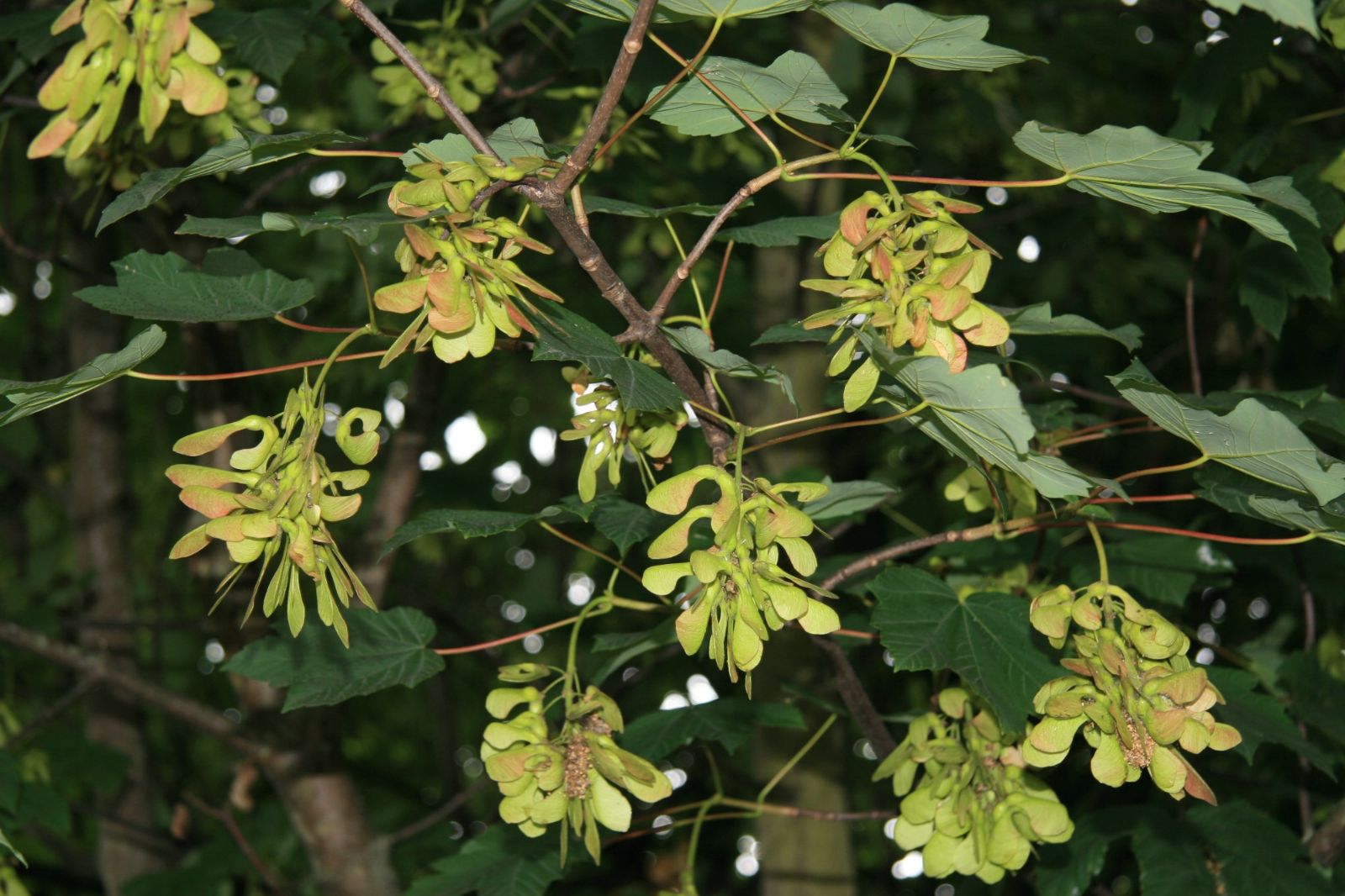
Sycamore is easiest to spot in spring, when its hanging flower clusters appear, and in late summer, when the branches fill with paired winged seeds.
- The Tree: A large deciduous tree, commonly 20 metres tall but capable of reaching 35 metres. The bark is smooth and grey on younger trees, becoming rougher and flakier with age.
- The Leaves: Big, leathery, five-lobed leaves up to 20cm long, with toothed edges. They sit in opposite pairs on long, distinctly reddish leaf stalks.
- The Flowers: Small yellow-green flowers in long, drooping clusters through October and November.
- The Seeds: Joined in pairs, each seed with a papery wing up to 4cm long. They spin to the ground like helicopters from late summer into autumn.
- The Roots: Mostly shallow, but older trees also develop a deep taproot that sends out further roots.
- Lookalikes: Overseas, “sycamore” sometimes means plane trees. You can tell them apart by their leaves, which are alternate rather than paired, and their round, bobbly seed balls instead of winged seeds.
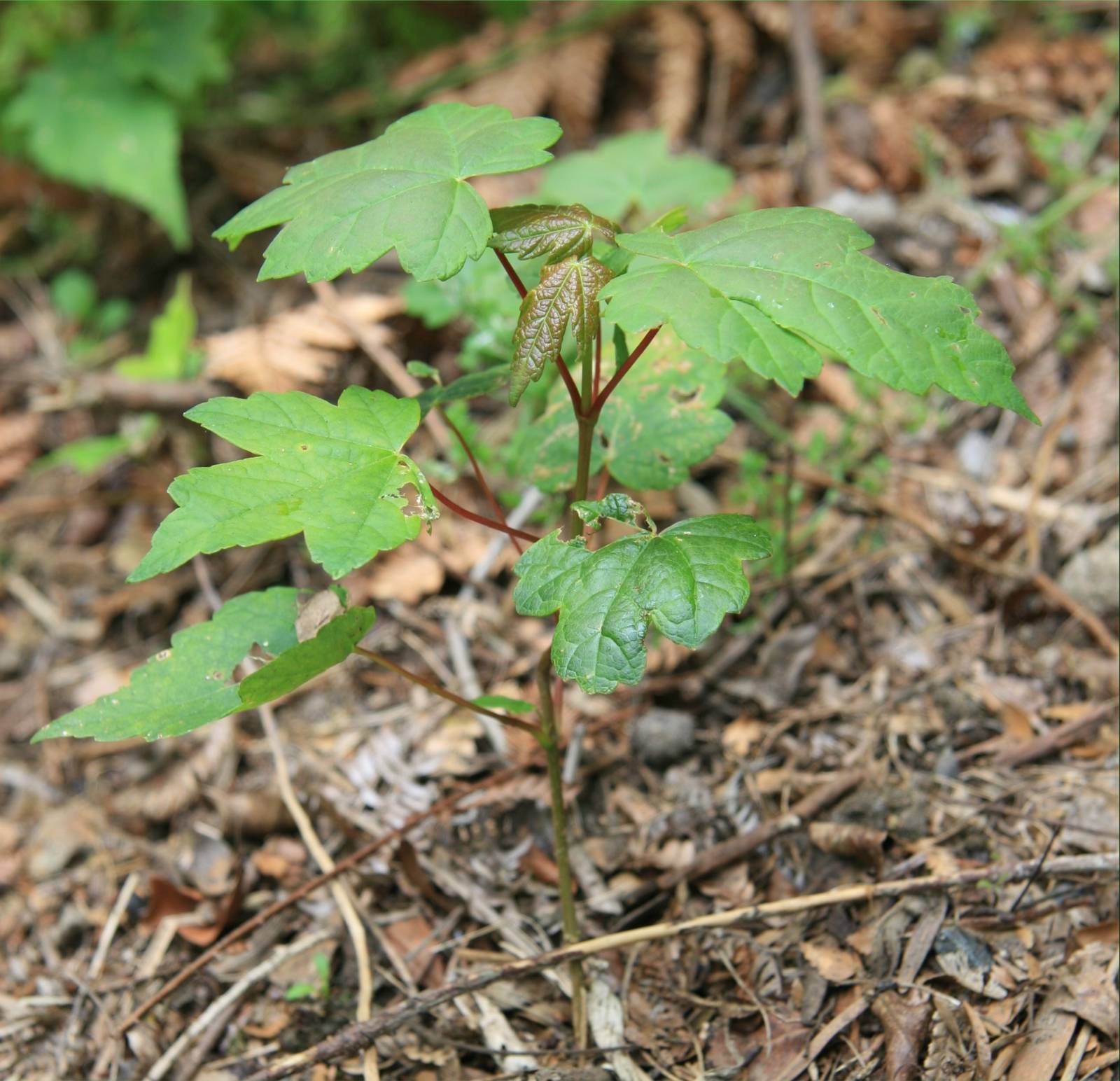
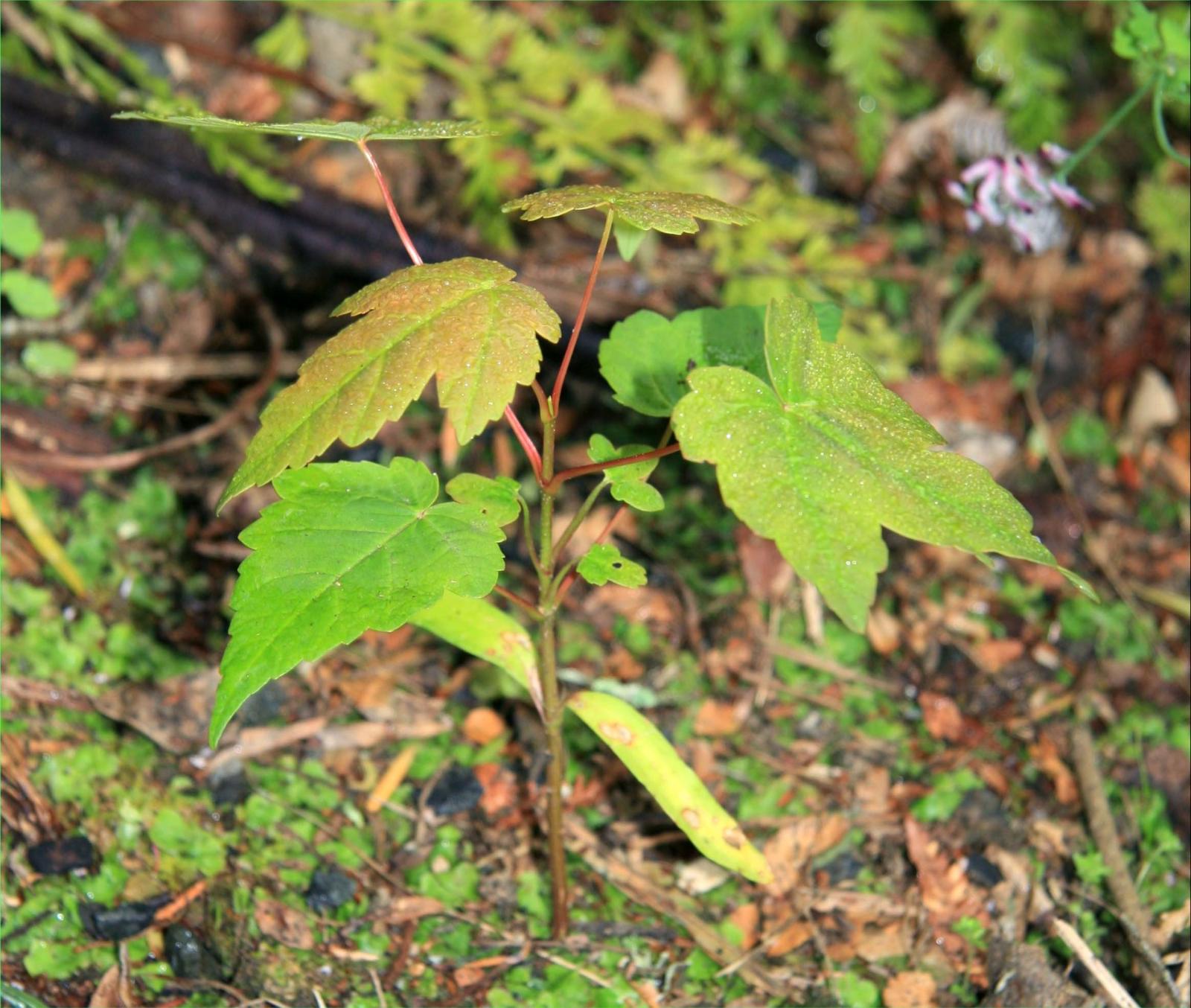
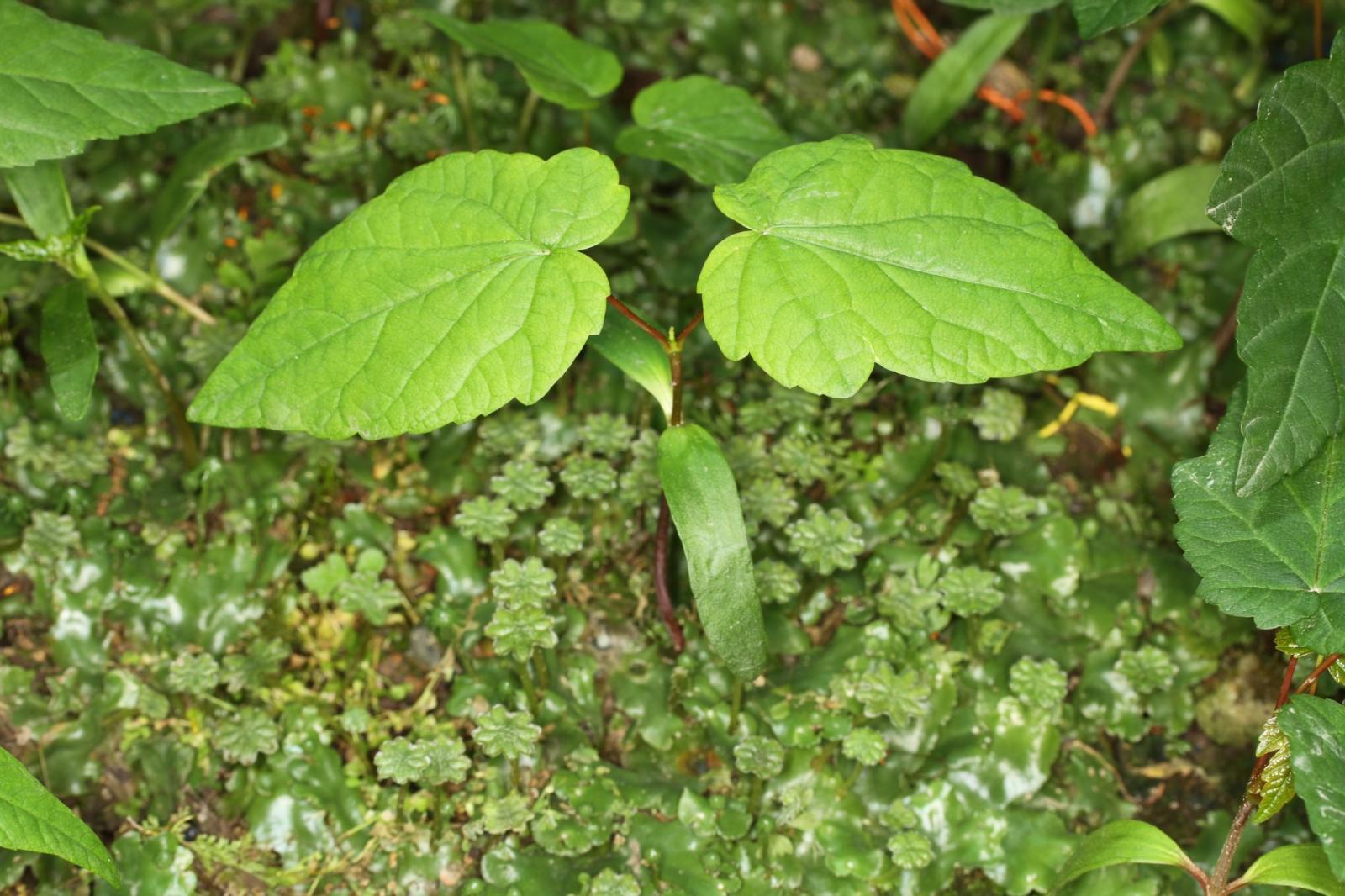
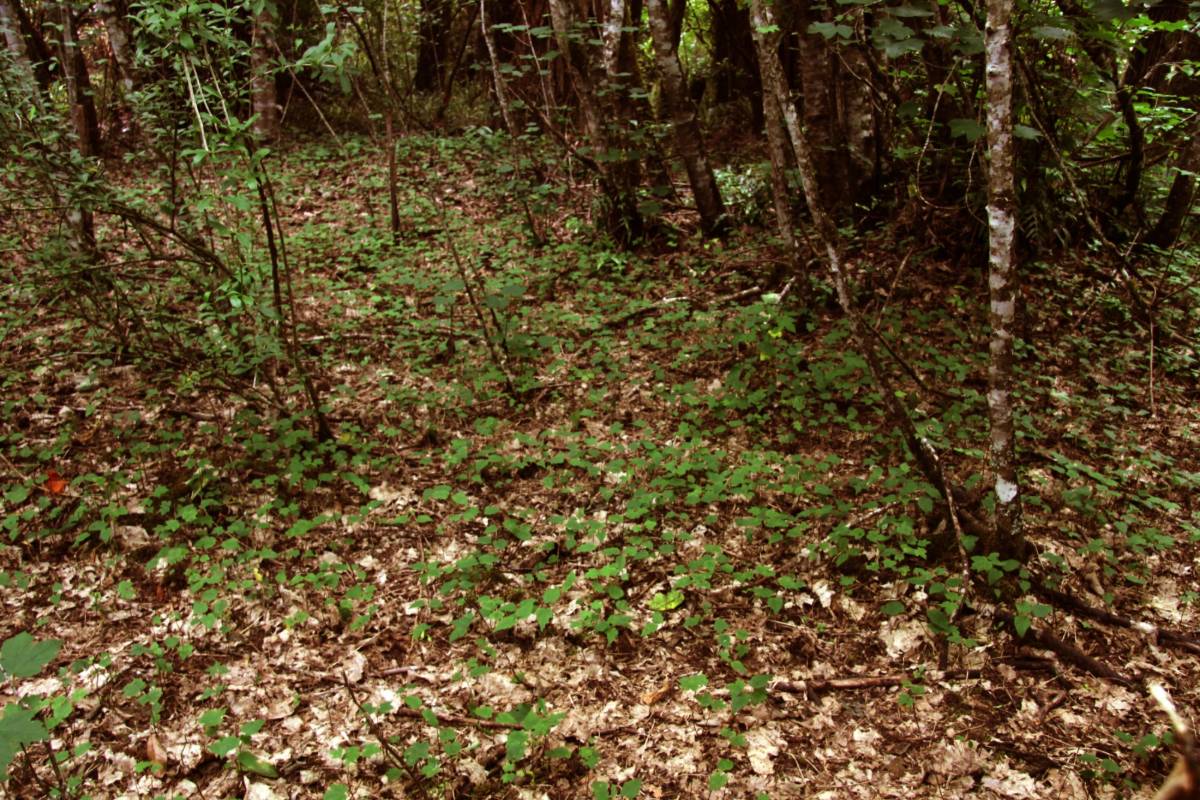
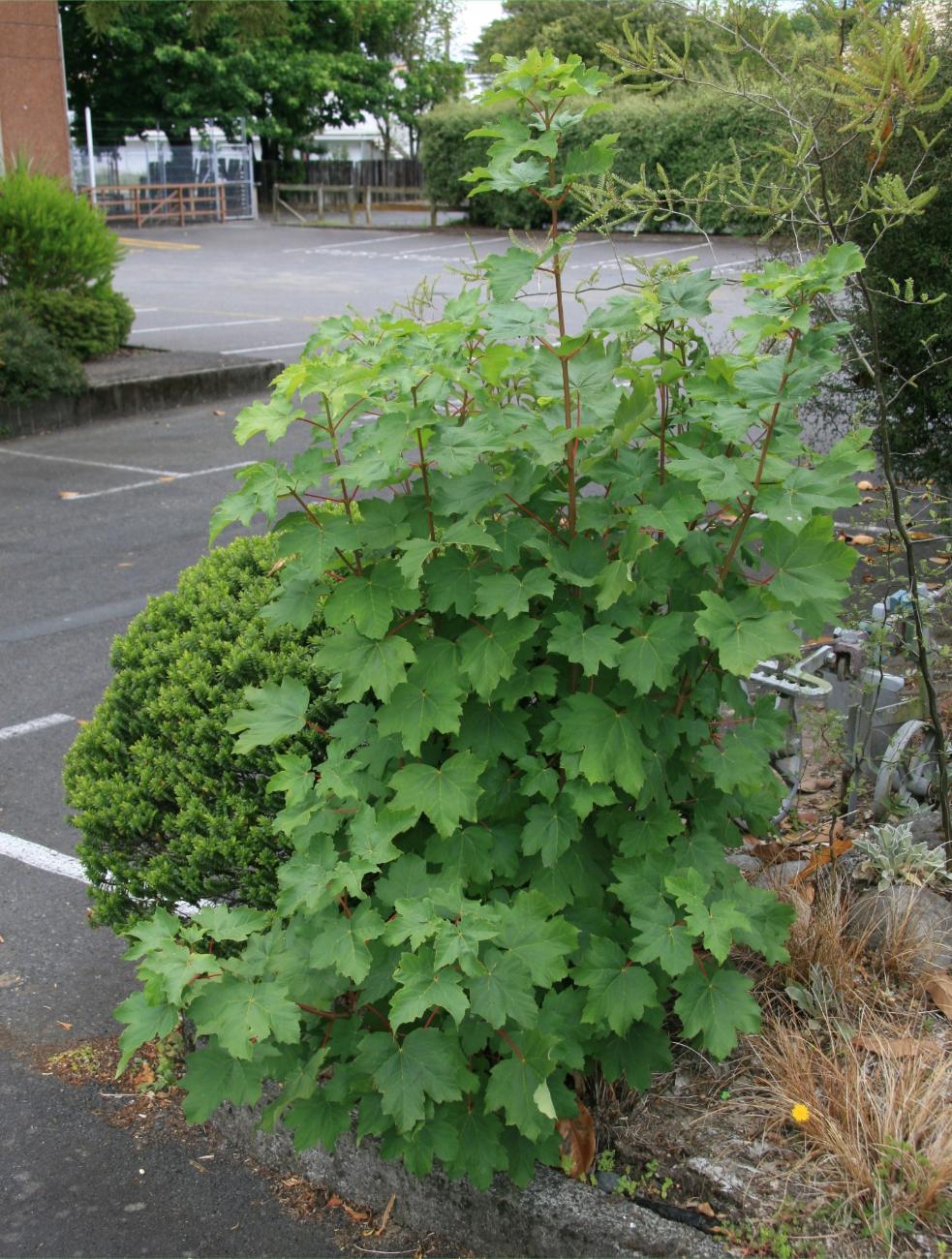
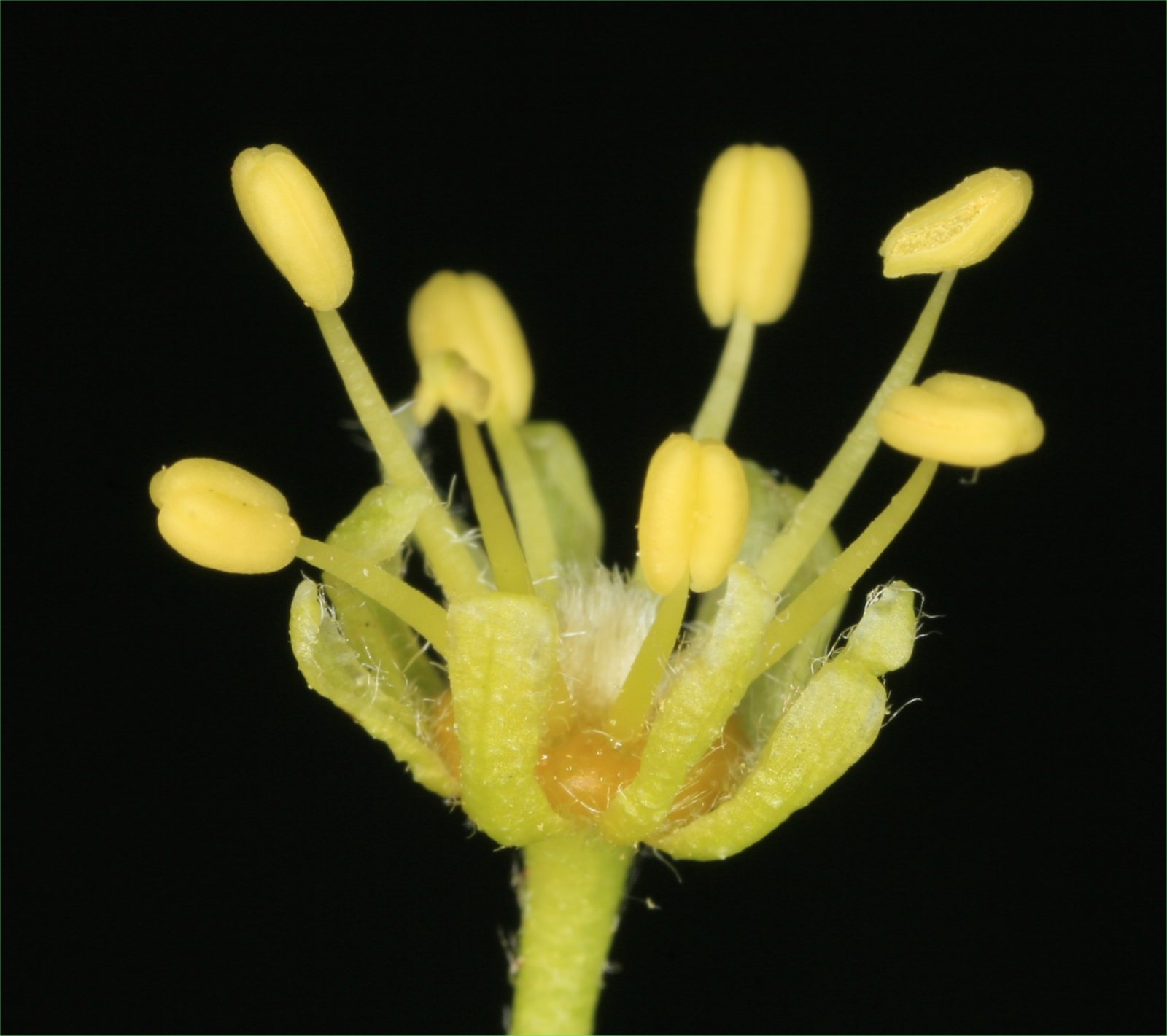
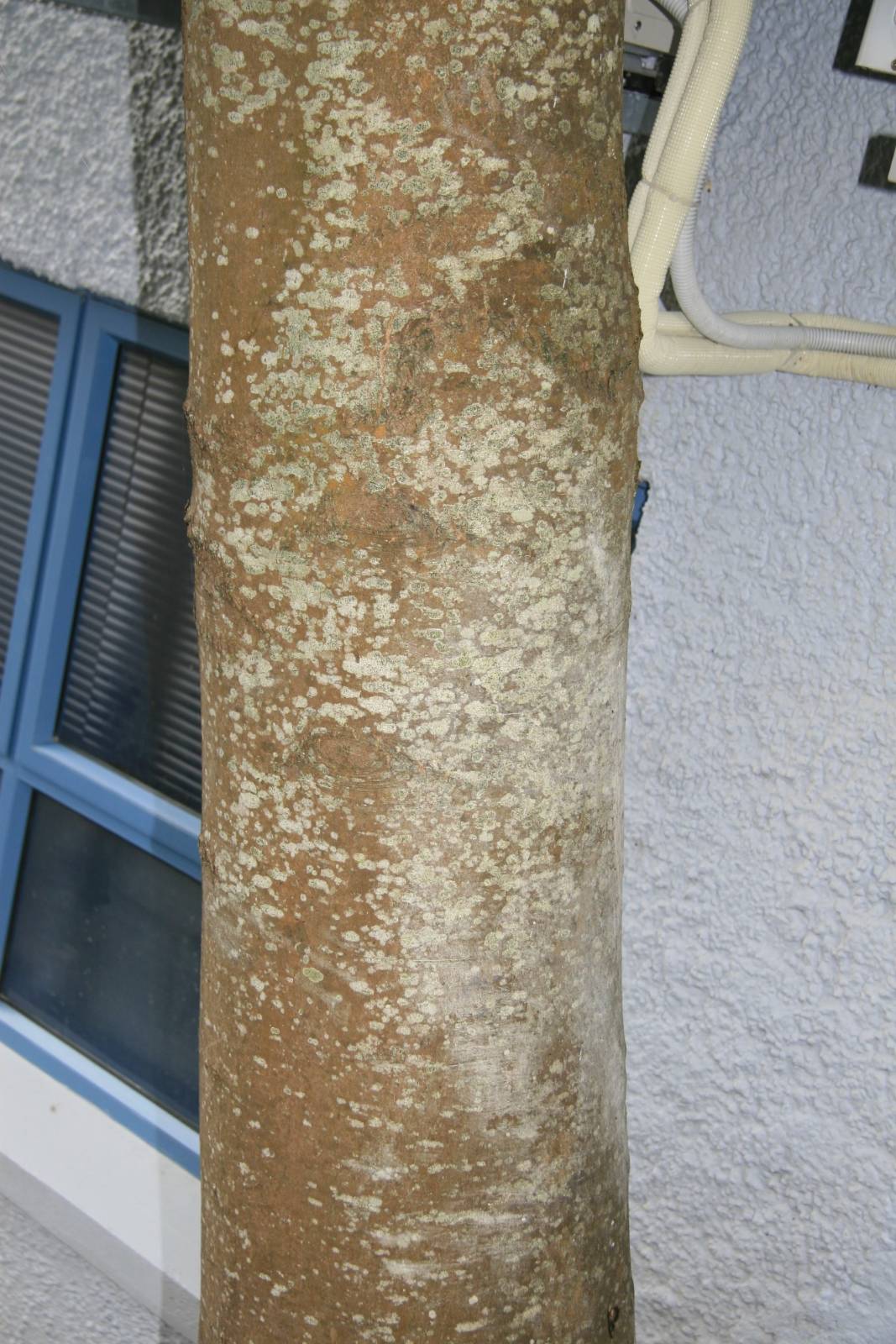
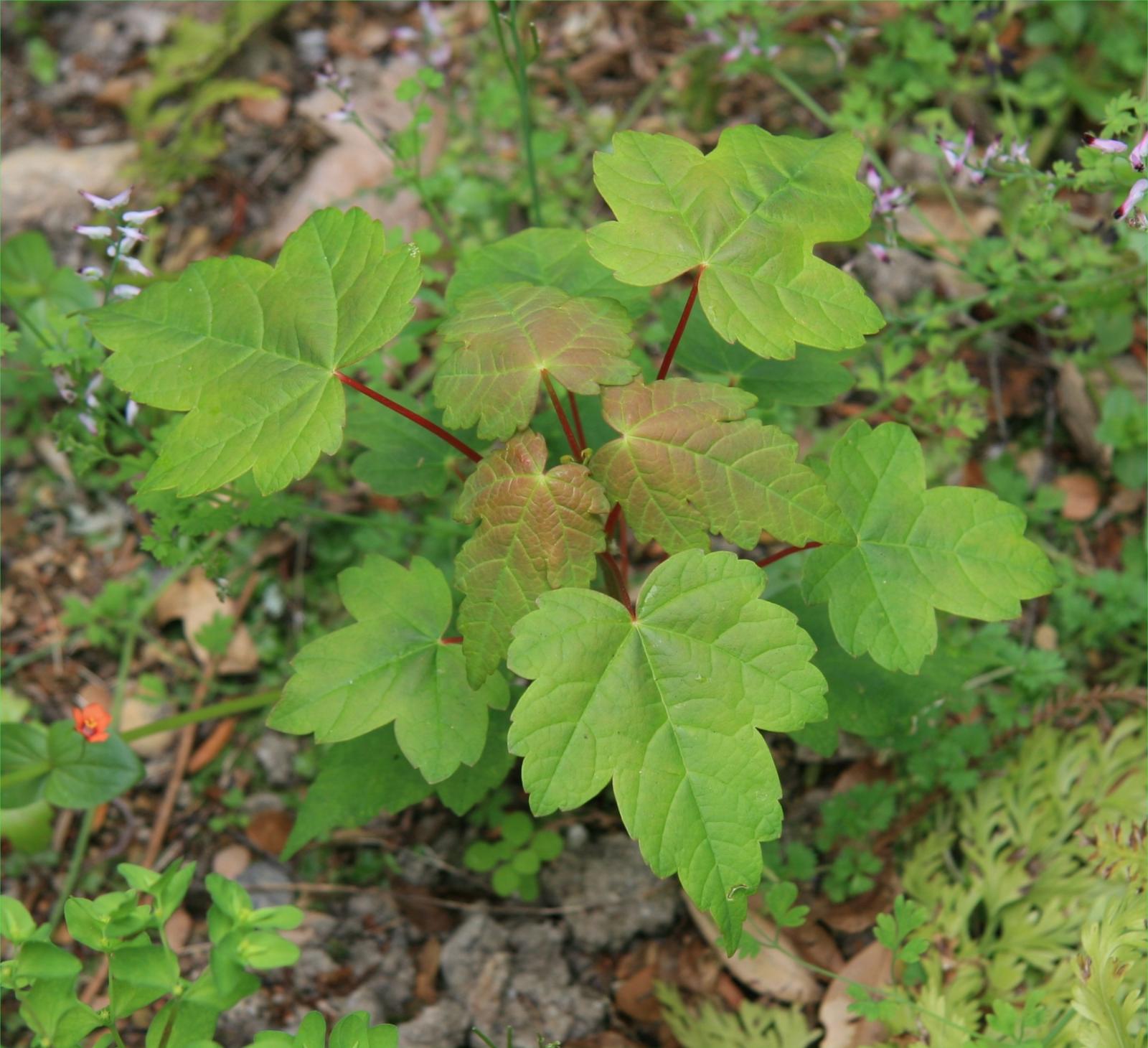
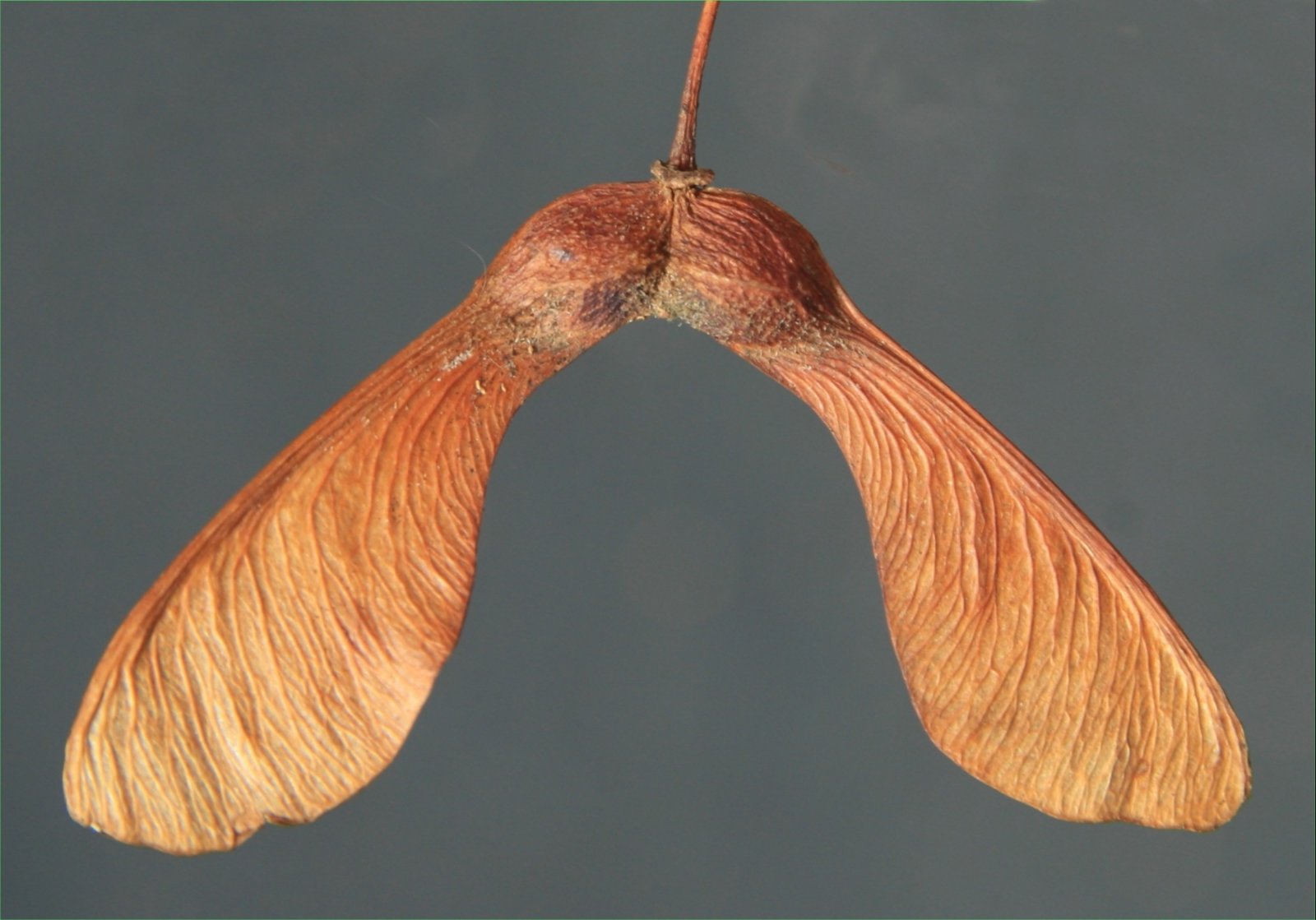
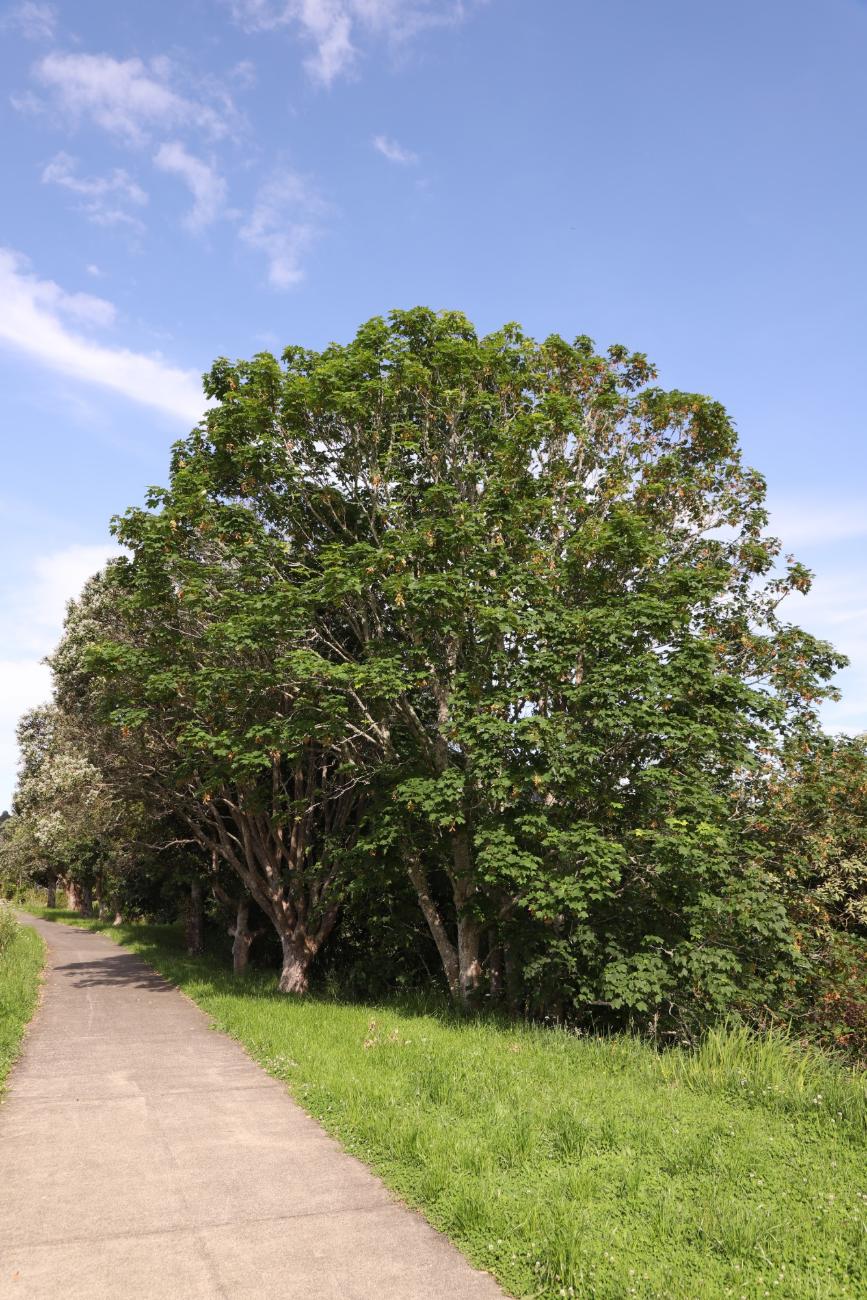
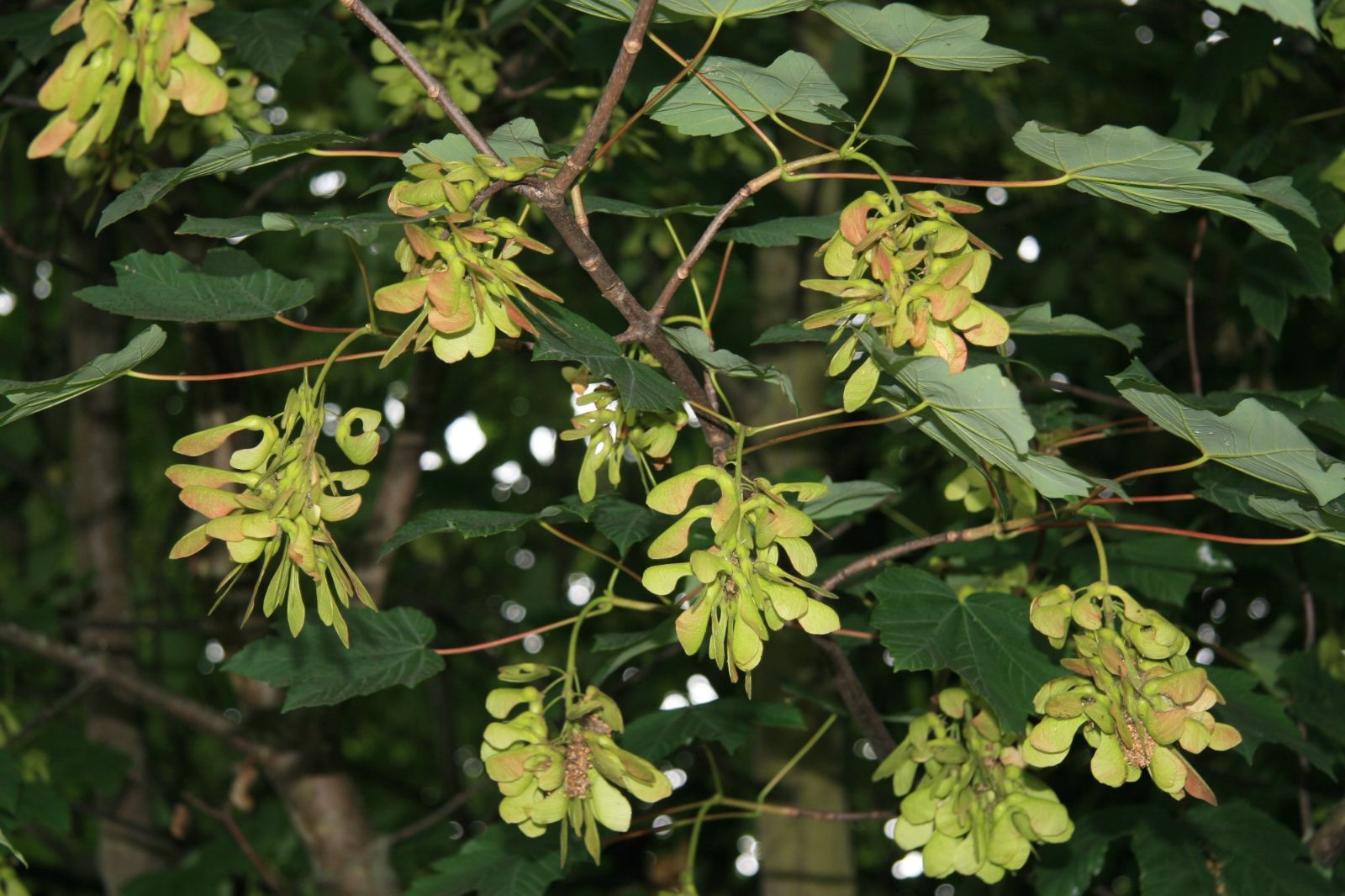
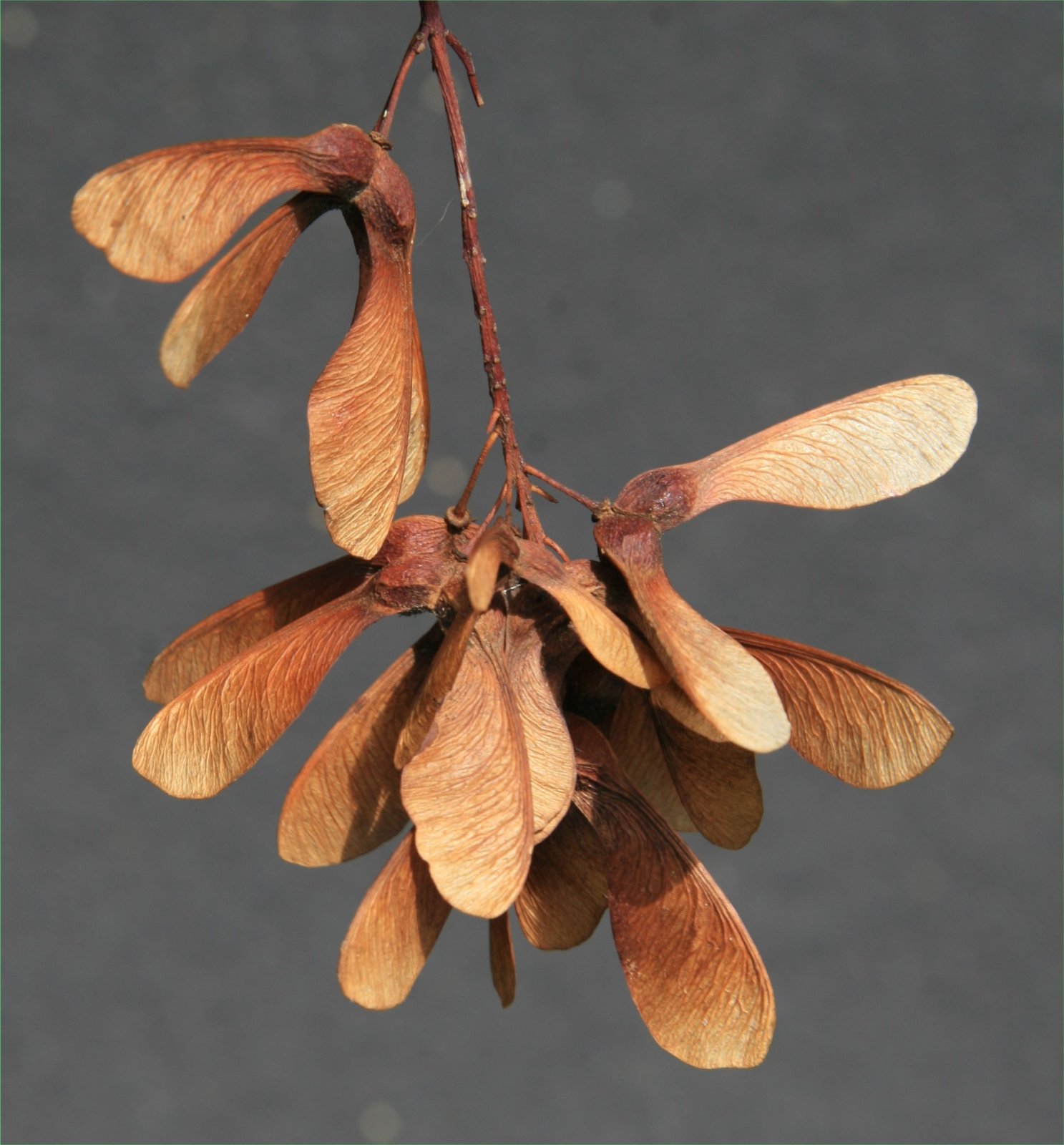
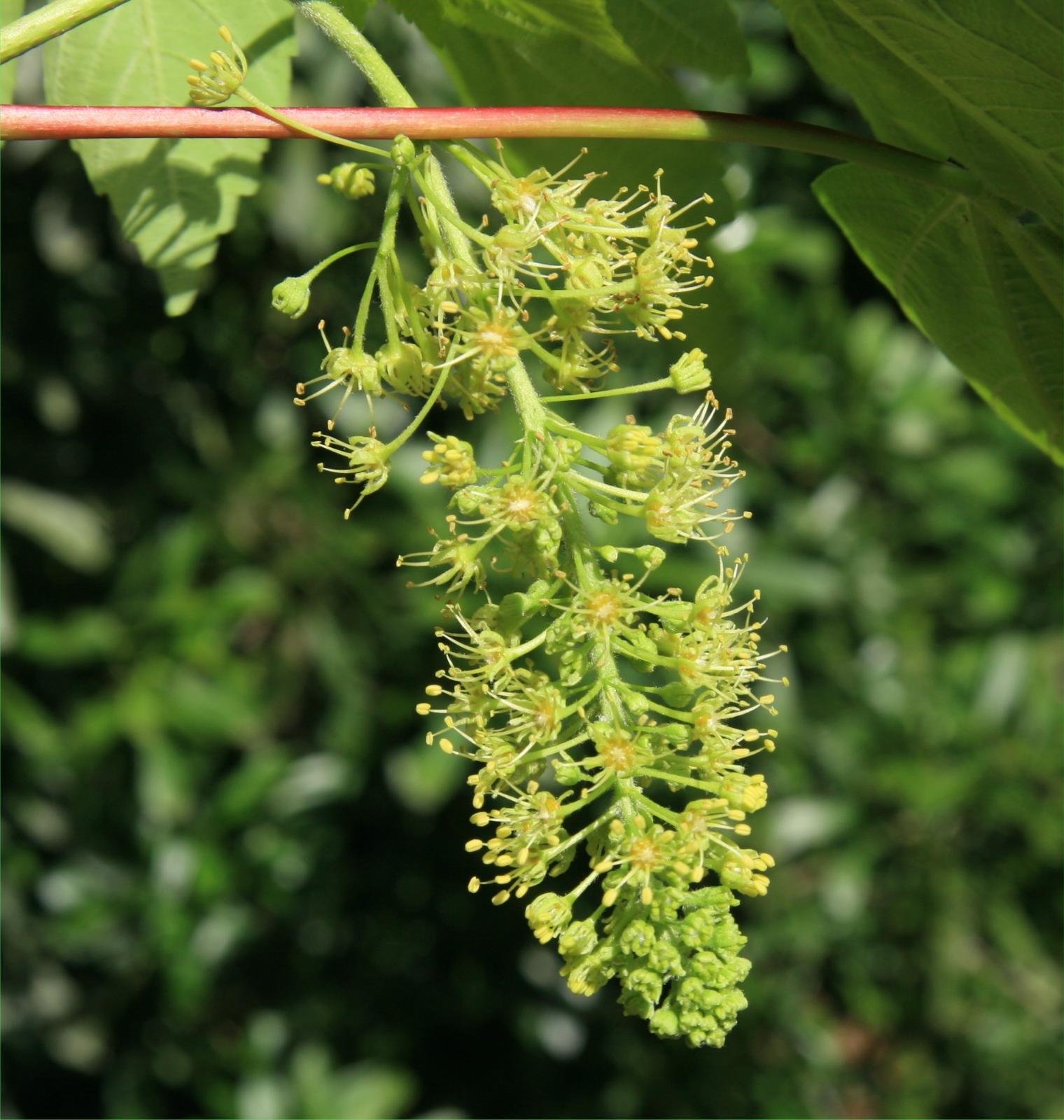
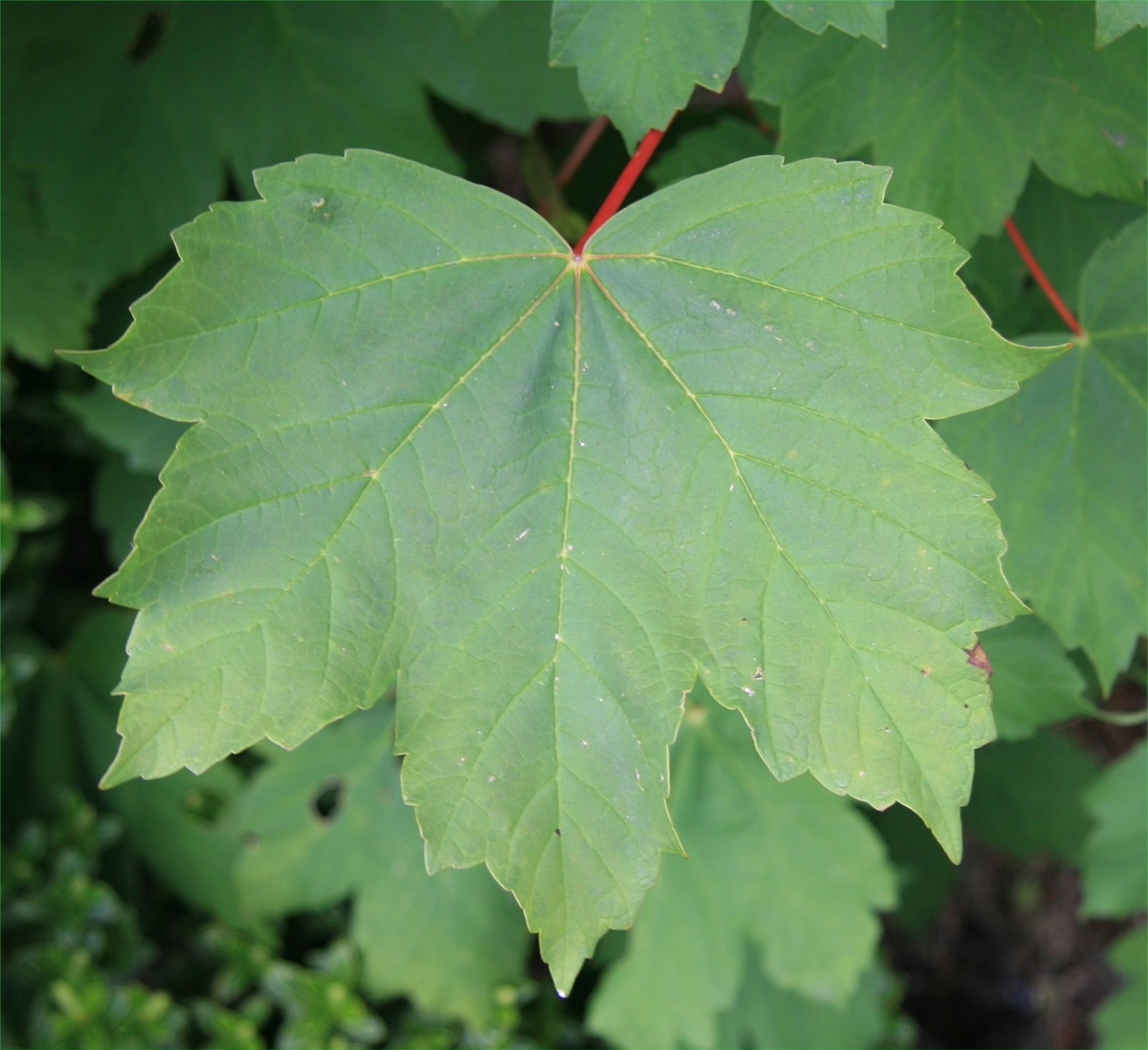
Images courtesy of weedbusters.org.nz and photographer Trevor James.
For more on sycamore in your region, visit Otago Regional Council or Environment Canterbury.
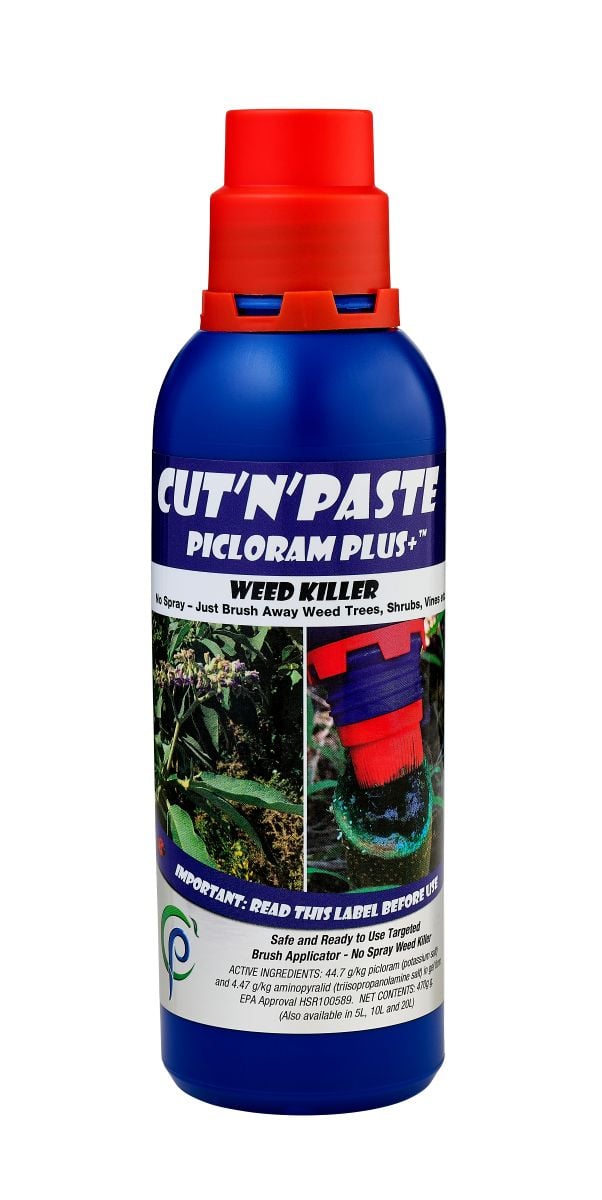
Sycamore is a vigorous resprouter. If you fell a tree without treating it, the stump will throw up a mass of new shoots and you’ll end up with more stems than you started with. Kill the tree first, then remove it once it’s completely dead. For best results, treat sycamore in summer or autumn, when the tree is drawing sap down into its roots. Product Suggestions: Picloram Plus+, Glimax Professional, Bamboo Buster – see below.
Dealing With Sycamore
Method 1: Drill and Fill or Stem-Frilling (Best for Medium to Large Trees)
- Drill and Fill: Using a 10mm drill bit, drill holes angled downwards into the sapwood every 10cm around the base of the trunk. Squeeze gel generously into each hole straight away, before the wood starts to seal.
- Alternatively, Stem-Frilling: Use an axe or chisel to cut downward frills through the bark and into the sapwood, spaced evenly around the base of the trunk, but don’t join the frills into a full ring. Fill each frill with gel straight away.
- Leave It Standing: Let the tree die off completely before you fell it. This can take a full season, and leaving it standing gives the gel time to work right down into the roots.
Method 2: Cut and Paste (Best for Saplings and Small Trees)
- The Level Base Cut: Using loppers or a pruning saw, cut each stem flat and level, as close to the ground as practical, so the gel sits on the wood rather than running off.
- Paste Immediately: Within 15 seconds of cutting, apply a thick 3–5mm layer of gel across the whole cut surface. Pay extra attention to the outer ring just inside the bark, which carries sap down to the roots.
Method 3: Hand Pulling (Seedlings)
Young seedlings can be pulled out by hand, roots and all, especially after rain when the soil is soft.
Recommended Products for Sycamore
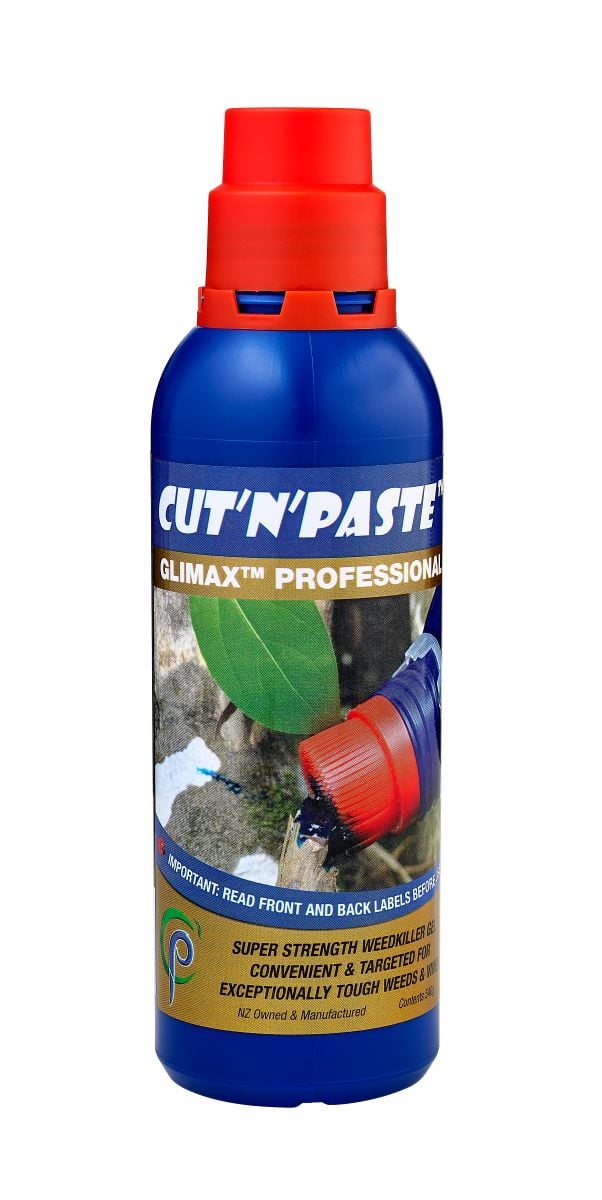
Picloram Plus+ Weed Gel is our top pick for sycamore, for both Drill and Fill™ and Cut and Paste on stumps. Alternatively, our triple strength Glimax Professional is also very effective. If you’re working near (but not in) waterways, or have prized plants or other valuable foliage nearby that you want to keep, we recommend our glyphosate-based, double strength Bamboo Buster Weed Gel.
- Option 1: Picloram Plus+ (Recommended)
The strongest choice for sycamore in paddocks, along fence lines, on roadsides or in open ground.- Stump Stopper: Drives deep into the root system to stop the vigorous resprouting sycamore is known for.
- Soil Residual: Stays active in the surrounding soil to knock back root suckers and nearby seedlings.
- Option 2: Glimax Professional (Alternative)
A powerful glyphosate gel that’s well suited to Drill and Fill™ on larger standing trees.- Kills From Within: Moves through the treated tree into its roots, killing it standing without triggering a flush of regrowth.
- No Soil Residual: Breaks down in the soil once it’s done its job.
- Option 3: Bamboo Buster (Near waterways and plants you value)
The safest choice where sycamore is growing beside streams, in native bush, or near garden plants and trees you want to keep.- Targeted Kill: Works only on the treated tree and its roots, with no movement through the soil to neighbouring plants.
- Gentle on Surroundings: Breaks down cleanly in the soil, so nearby natives and garden plants are left unharmed.
What the councils say: Both Environment Canterbury and Otago Regional Council list gels based on picloram, glyphosate or metsulfuron-methyl for drilling standing sycamore trees, and picloram or metsulfuron-methyl for painting cut stumps. Our recommended gels fit that guidance. If you’d rather use a metsulfuron gel, MetGel is a suitable alternative.
Important Notes:
- ⚠️ Picloram/Picloram Plus+ & MetGel Safety Warning: Picloram/Picloram Plus+ and MetGel (metsulfuron) all have significantly more residual soil activity than the glyphosate gels, and can move through ground moisture. Picloram can stay active in the soil for six to 12 months, sometimes longer in cool or dry conditions. Metsulfuron can stay active for up to two to four months, and longer in heavy clay soils. Do not use either near desirable non-target plants, within the root zone of prized trees, or around waterways and wetlands.
- When using MetGel or Picloram, never apply it inside the drip line (canopy edge) of prized trees or broadleaf garden plants. On flat ground, keep a 3 to 5-metre safety buffer. On sloping ground where the weed is uphill from desirable species, extend that buffer to 5 to 10 metres.
- Weeds often grow along streams and in gullies. If you’re working near waterways, wetlands or prized native root zones, use Glimax Professional or Bamboo Buster.
- Felling Safety: Dead trees can drop limbs without warning. Take care around treated trees, and get an arborist in for large trees near houses, fences, roads or powerlines.
- Safety First: Wear gloves and protective clothing and observe all safety protocols, especially when using machinery, chainsaws and other tools.
- When using any herbicide ensure you READ THE LABEL THOROUGHLY, and follow all instructions and directions for the purchase, use and storage of the product.
- Regional Rules: Sycamore isn’t a declared pest across most of New Zealand, but some councils target it in specific areas. Otago Regional Council, for example, is working to contain it around the Otago Peninsula and other Dunedin sites. Check with your local council for current rules and support in your area.
- Managing the Seedbank: Clearing sycamore lets light reach the ground, and that brings on a fresh wave of seedlings. Go back regularly, ideally a few times a year, and pull or treat seedlings while they’re small.
- Replant Natives: Once the sycamore is gone, replant with natives or let native regeneration fill the gap. A healthy native canopy is far harder for sycamore to re-invade.
- Don’t Plant It: If you’re choosing a shade or shelter tree, pick a native or a lower-risk alternative.