Moth Plant Competition – Winners Announced :: Find Out


Old Man’s Beard
Home » Help » Weed Directory
It may look pretty but it's going to kill trees
Old Man's Beard, Clematis vitalba, is a serious weed of native forests in New Zealand. It grows rapidly, forming dense, heavy, masses that dominate native canopies, often strangling out and sometimes causing collapse due to overweight - it also prevents native plant seedlings from establishing.
Old Man's Beard (OMB) was made famous by David Bellamy - himself a famous British botanist who came over to New Zealand in the 1980s to make a series of adverts for TVNZ and Department of Conservation (DOC). He championed the protection of ancient podocarp forests and fronted the famous 1989 DOC campaign to eradicate the invasive weed, "Old Man's Beard". You can see many of his videos on YouTube if you do a search - we've included the Old Man's Beard video below (courtesy of nzonscreen).
Old Man's Beard (OMB) can climb over the top of huge Kahikatea trees and smother them completely. It has become one of the worst forest weeds in NZ for this reason. There are many websites dedicated to describing this weed and its dangers.
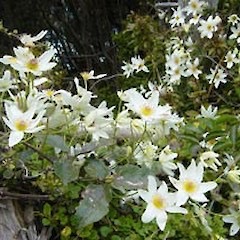
Also known as Clematis vitalba - it is an introduced plant from Europe - NOT to be confused with the NZ native of similar name: Clematis. The native Clematis paniculata is seen in many parts of NZ in early Spring, the harbinger of Spring that adds cascade of white to dress the forest.
All native clematis species are evergreen and flower from August to December. The exotic species that we wish to target are deciduous (flowers Dec-May), except the occasionally weedy, pink-flowered C. montana (flowers Oct-Dec).
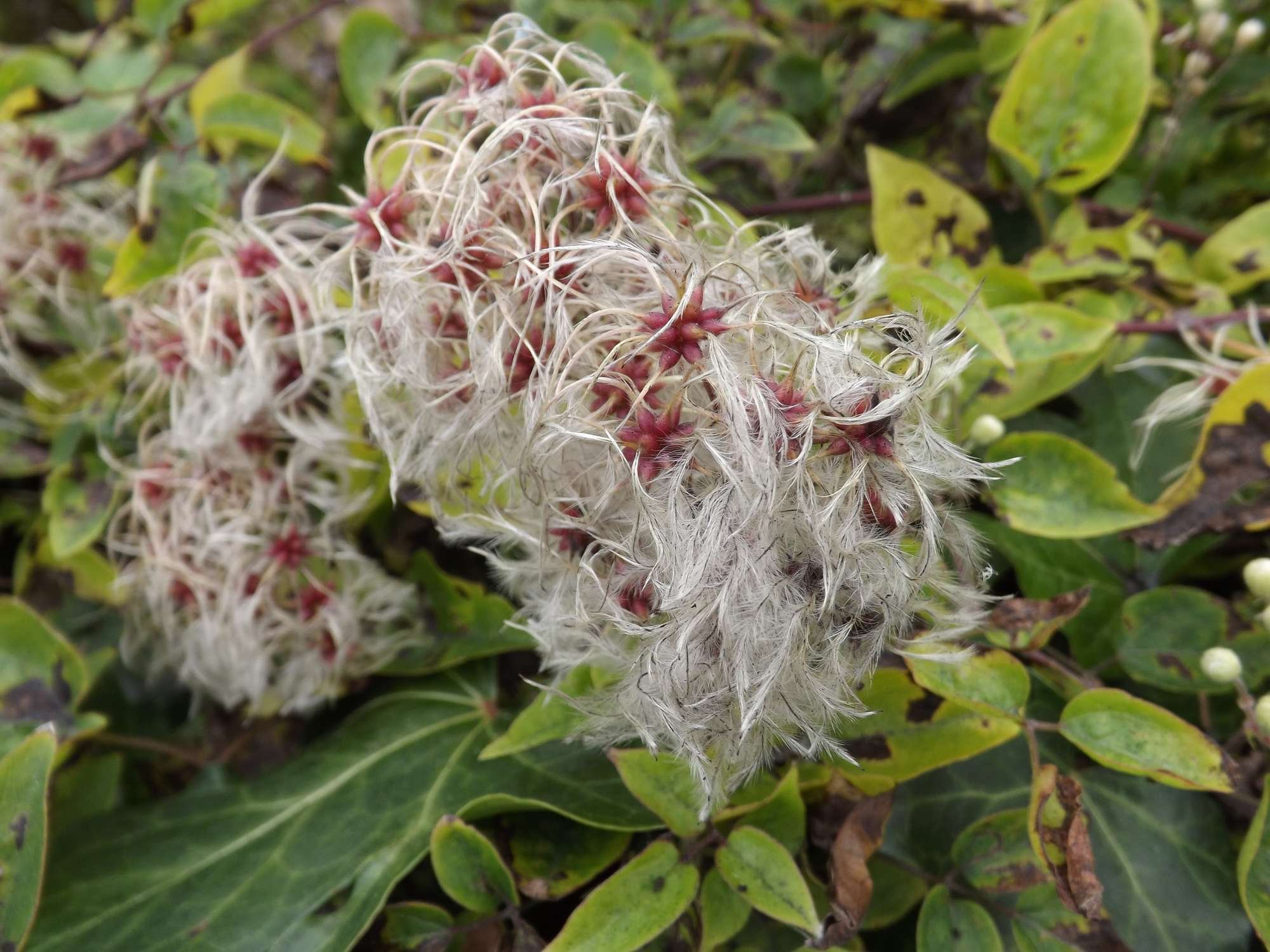
Old Man’s Beard is an aggressive, deciduous vine that can climb up to 20 metres into the canopy. It is easily identified by its long, woody stems featuring six prominent ridges and a pale, flaky bark that rubs off easily to the touch. In summer, it boasts fragrant, creamy-white flowers, but it’s during winter that it earns its name. Long after its thin, papery leaves drop in autumn, dense, fluffy clusters of grey seeds with long, feathery white plumes remain hanging from the bare vines. Winter is a great time to see these nasties and deal to them.
Identifying Old Man’s Beard in the winter is actually much easier than in the summer because the native canopy thins out, leaving this pest completely exposed. Plant ID is made easier with a visit to The NZ Plant Conservation Network or using the weed identification app from iNaturalist.
If in doubt seek professional help. You can also research more on the web. Weedbusters has additional descriptions and images. Here’s a selection of images courtesy of them, of Old Man’s Beard – the introduced weed from Europe:
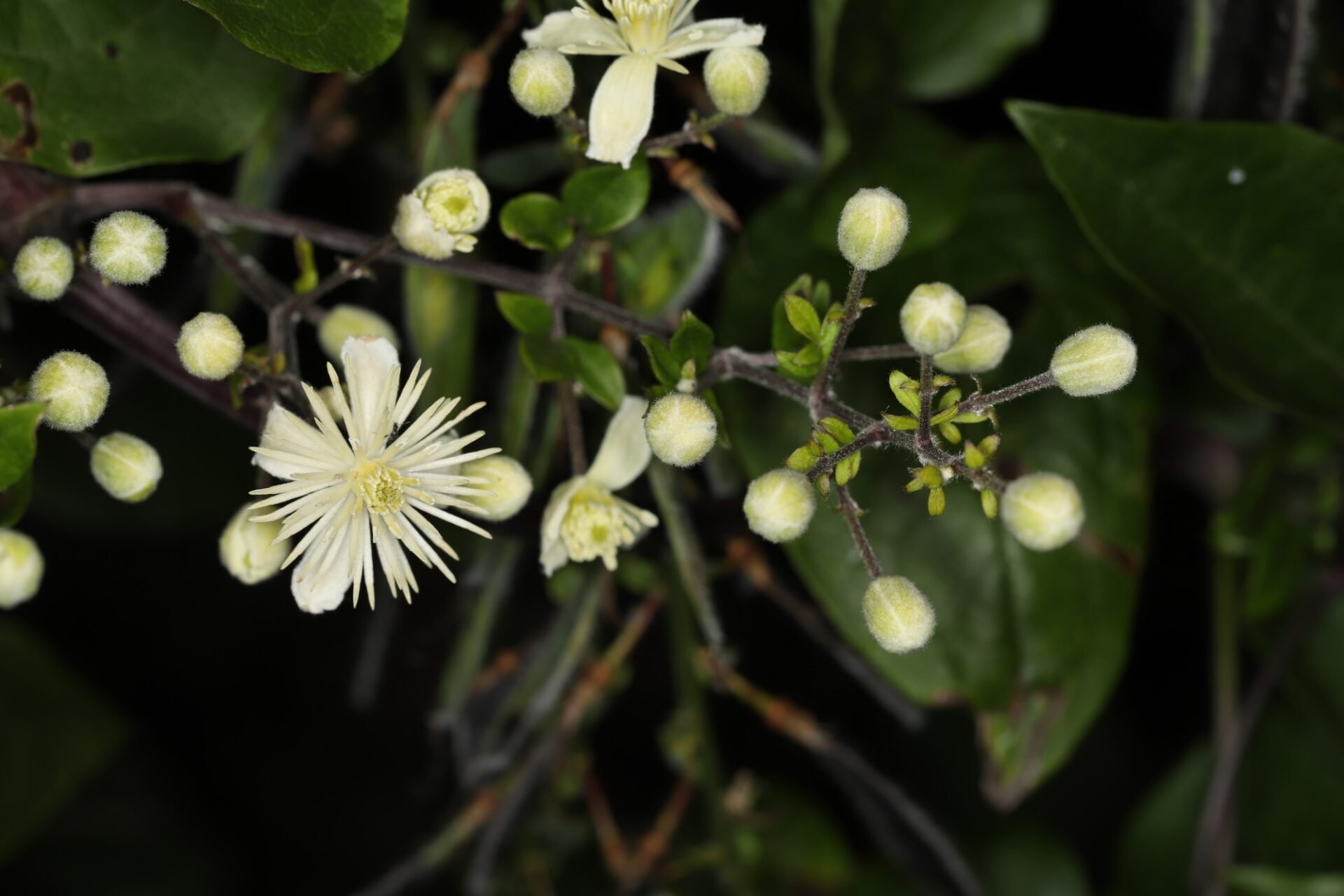
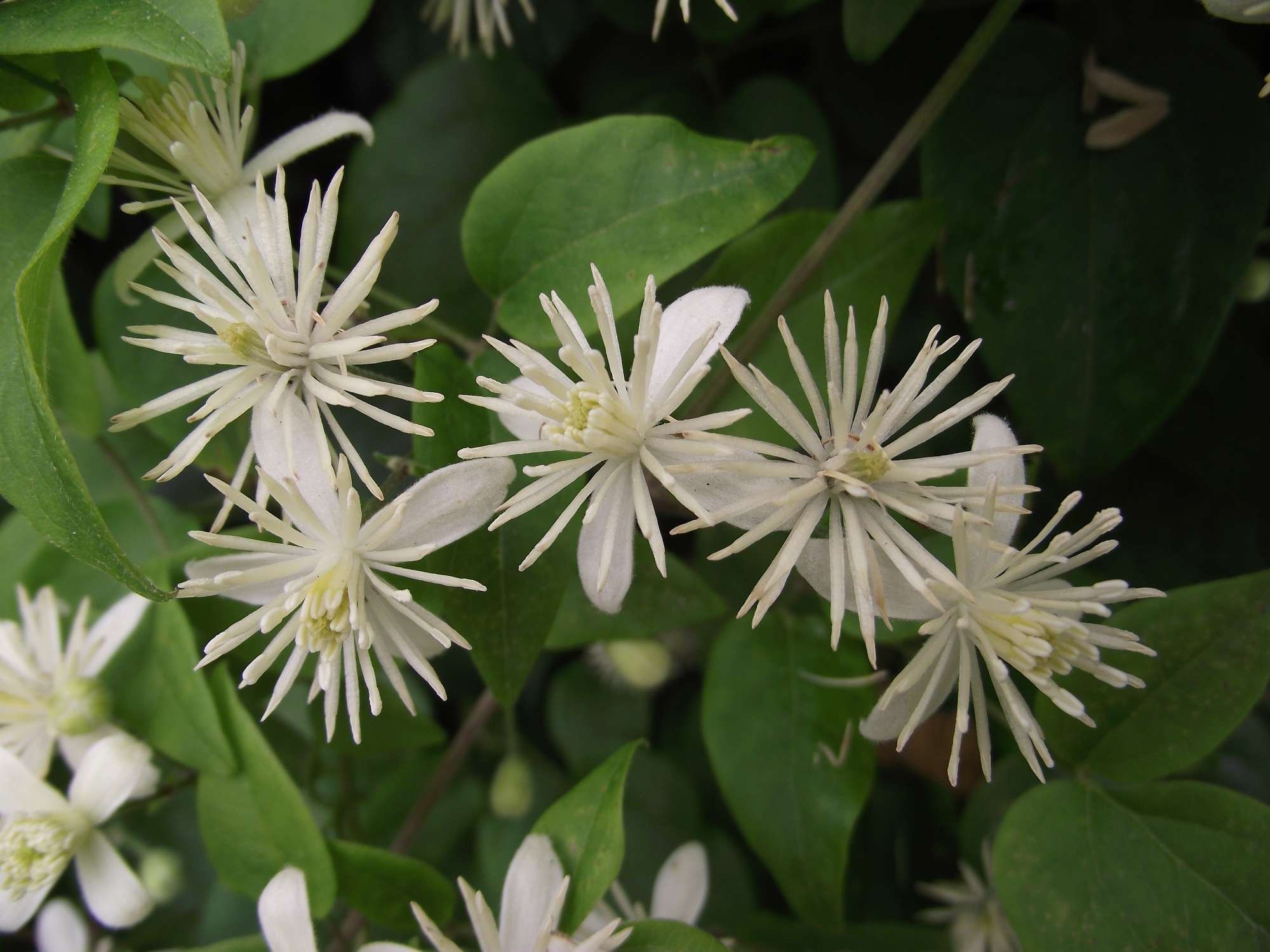
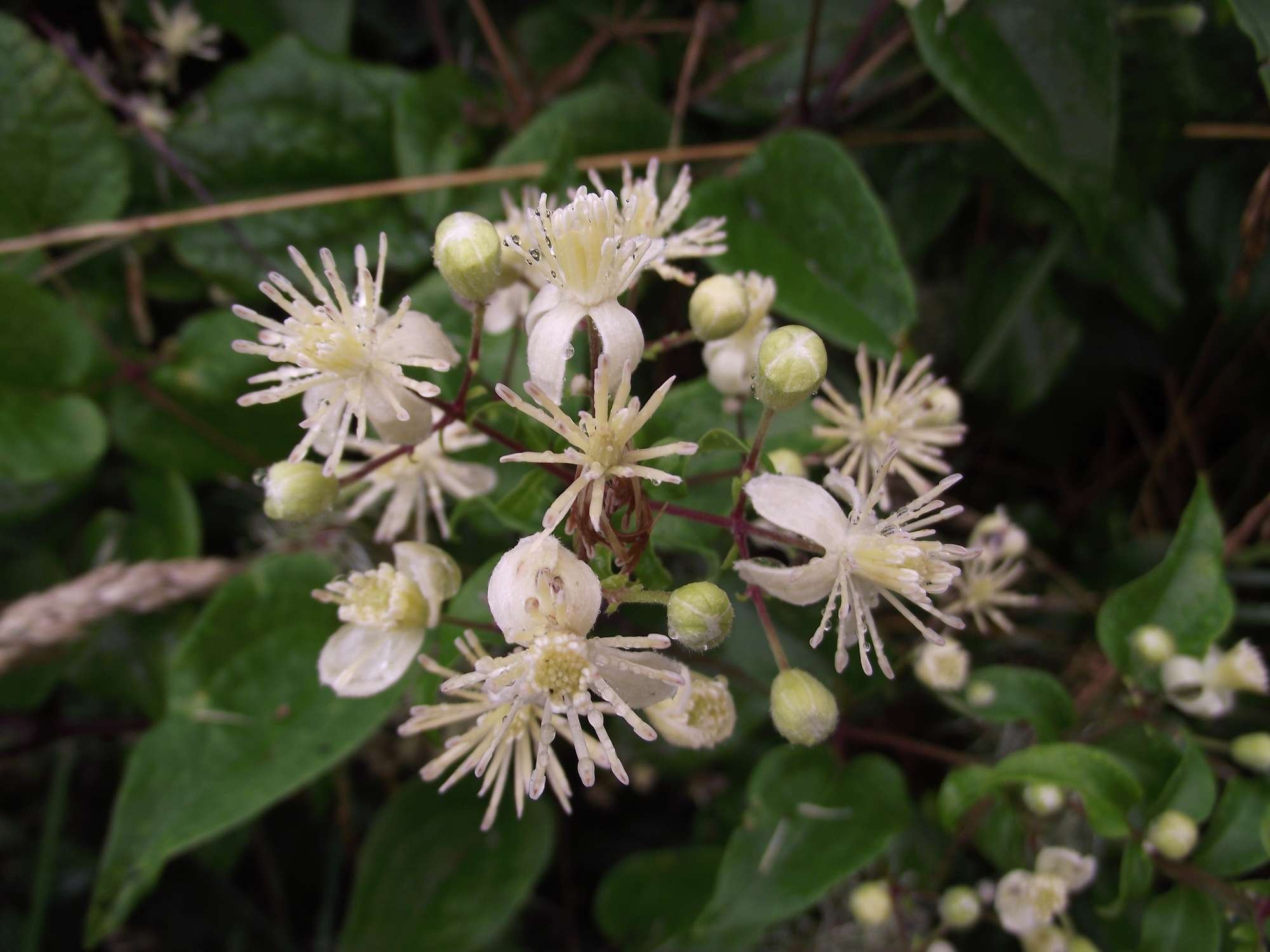
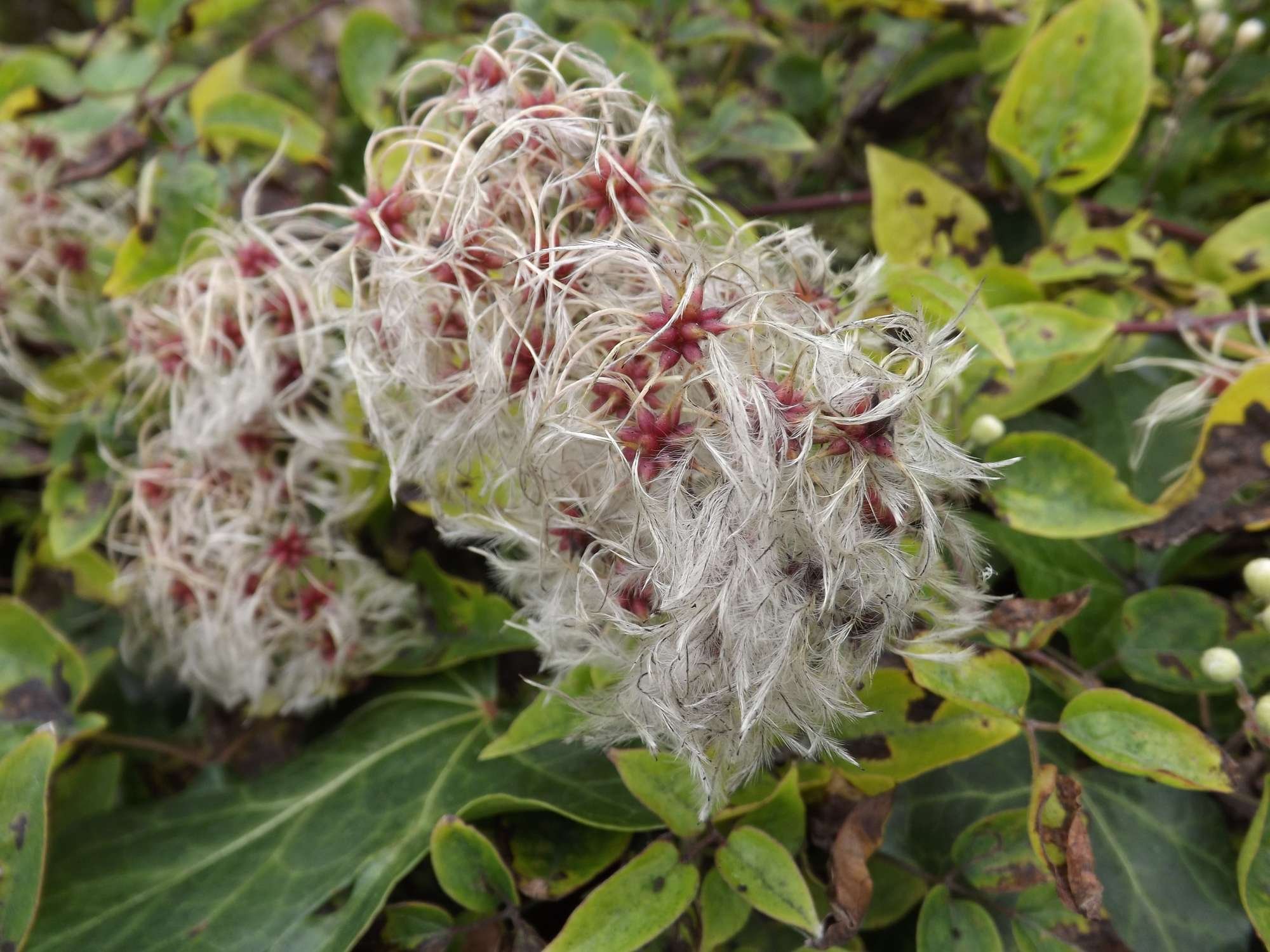
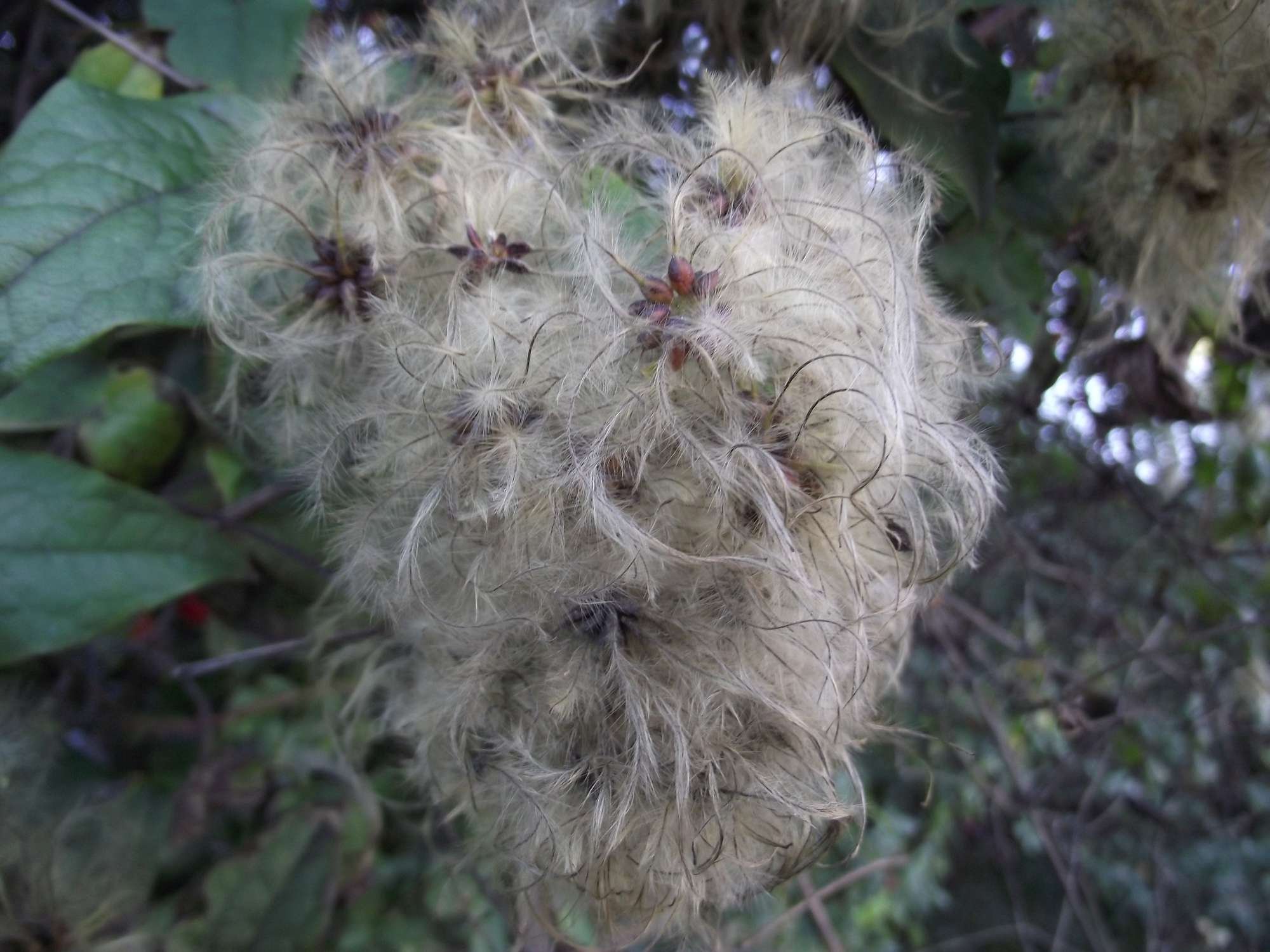
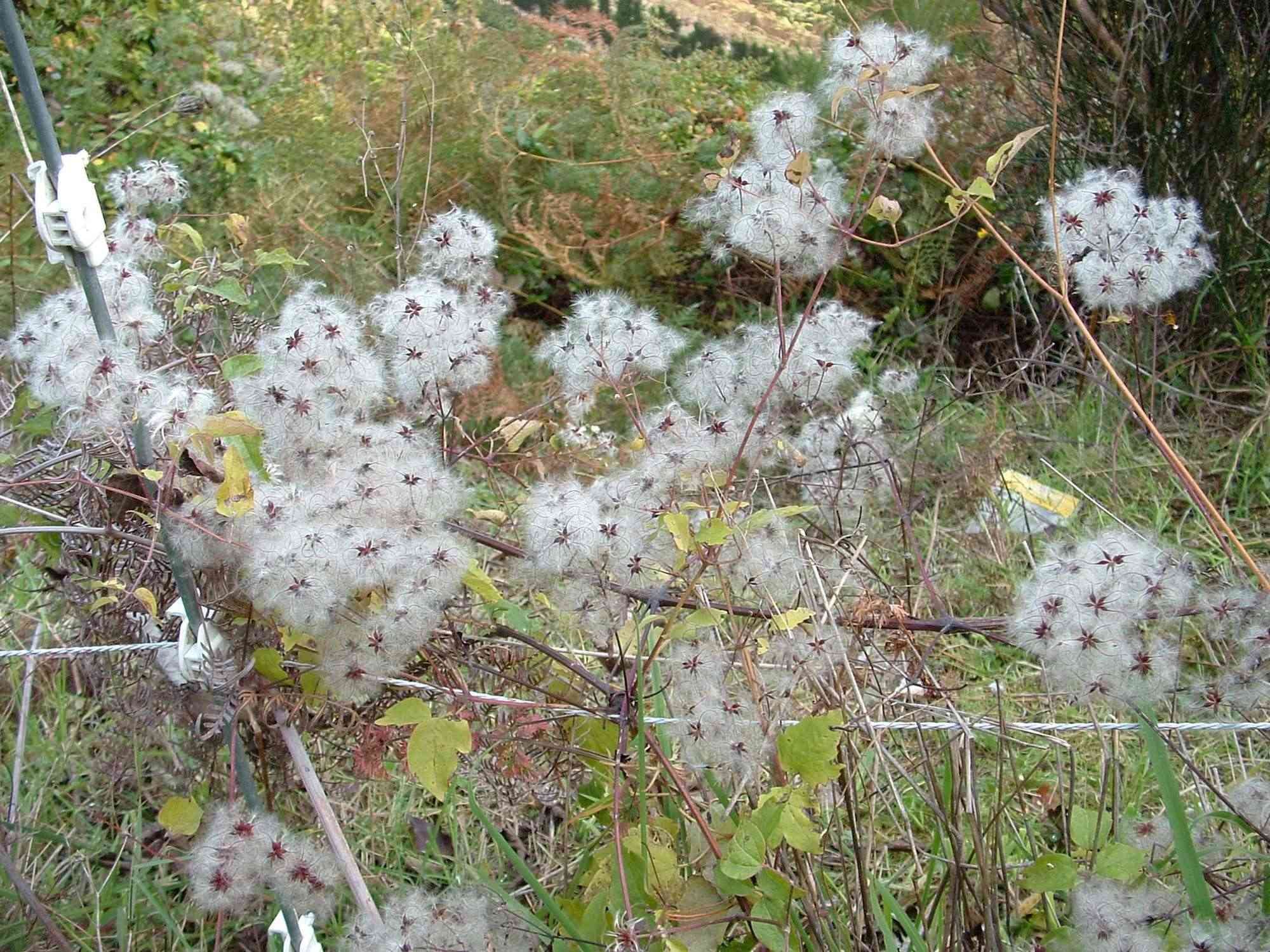
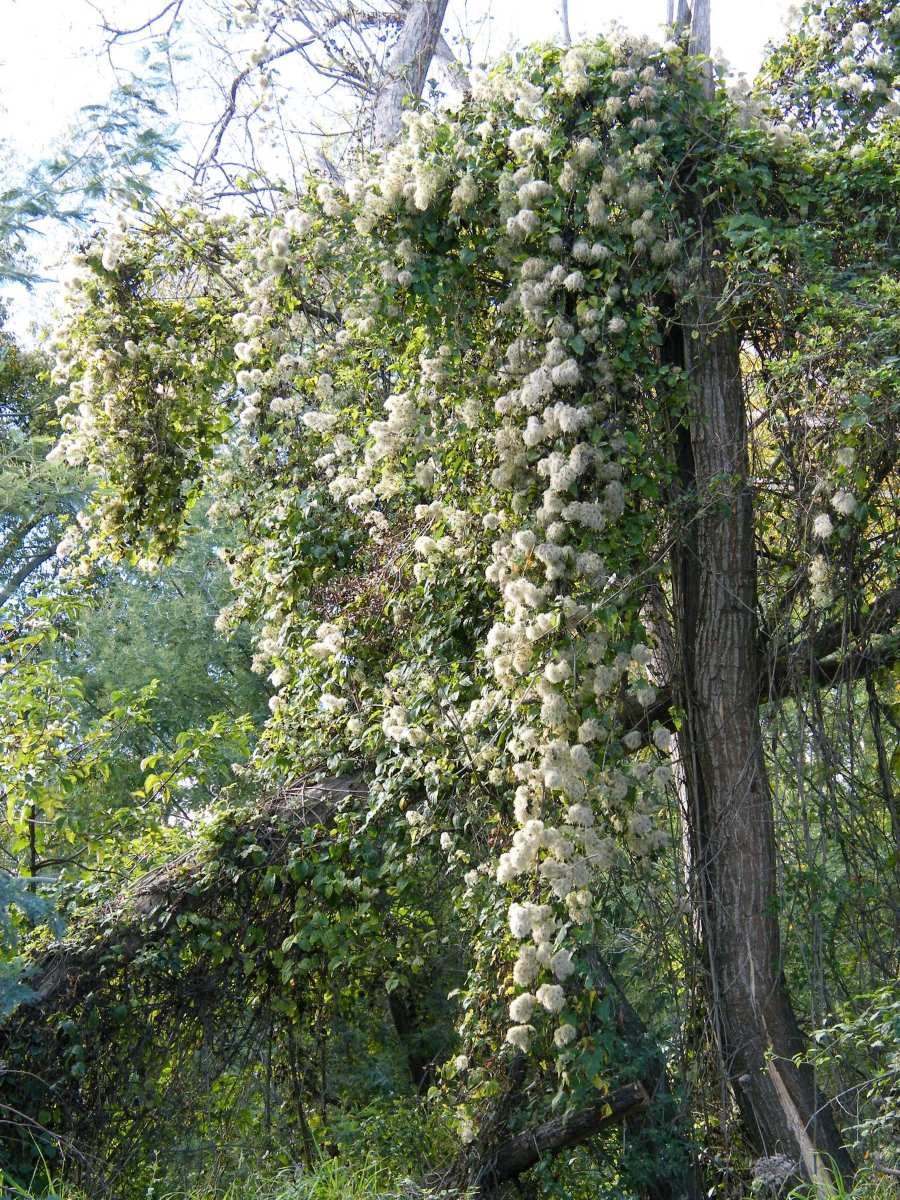
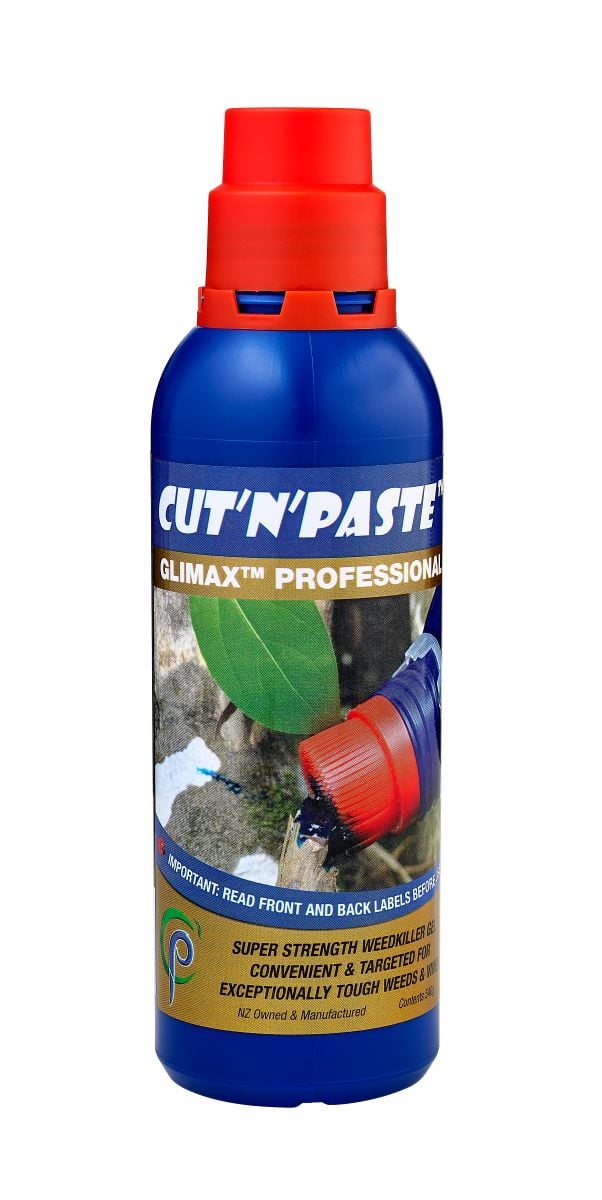
Treating OMB has been well researched and methods have been greatly refined using Cut’n’Paste by Project DeVine in Takaka. Please see their link for a full testimonial from them of using our products. Project DeVine have carried out the fullest testing of Cut’n’Paste for OMB and can warrant its success in their work. They have been using and highly recommend Glimax Professional of late and previously used Bamboo Buster.
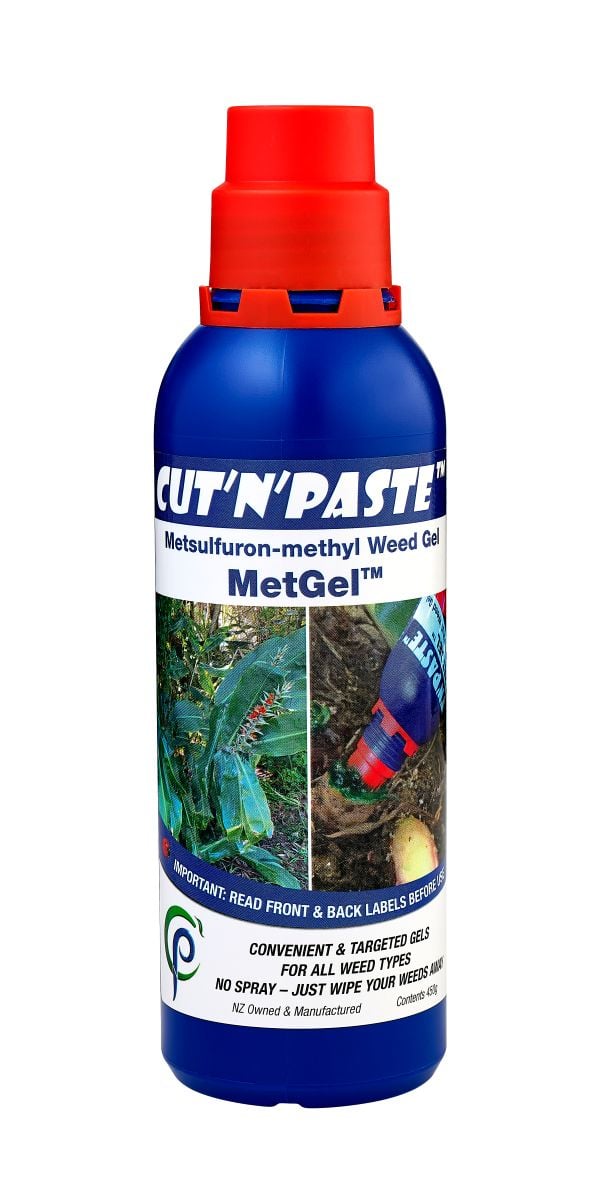
Some users have also had reported success with applying MetGel or Picloram gel . These gels must be used with care if there are nearby prized plants. Glimax is our overall recommendation for this reason.
Instructions:
- Option A: If you can access the roots easily: Cut the stem/trunk as close to the ground as possible and immediately paste the freshly cut stump with your chosen weedgel. Cut again above ground to prevent aerial roots attaching from hanging stems.
Option B: For smaller seedlings or reachable growth, paste the gel directly onto the underside of the leaves. The plant draws the formula straight through its breathing pores down to the roots.
- Dispose of cutaway segments to refuse transfer station or burn.
Important Notes:
- ⚠️ Safety Warning: MetGel and Picloram / Picloram Plus+ have significantly more residual soil activity than the glyphosate gels, and can move through ground moisture. MetGel has a soil half-life of roughly 30–90 days, and Picloram roughly 2–6 months, perhaps longer in clay soils. Do not use either near desirable non-target plants, within the root zone of prized trees, or around waterways and wetlands.
- When using MetGel or Picloram, never apply it inside the drip line (canopy edge) of prized trees or broadleaf garden plants. On flat ground, keep a 3 to 5-metre safety buffer. On sloping ground where the weed is uphill from desirable species, extend that buffer to 5 to 10 metres.
- Weeds often grow along streams and in gullies. If you’re working near waterways, use Bamboo Buster. Do not allow any weed gel to enter the water.
- Only treat weeds / target plants / trees that are on your property, or that you have permission to treat. Be aware that some species might have protection status or have a notable status, or be a designated scheduled tree under the district plan – if in doubt, check with your local council.
- Safety First: Wear gloves and protective clothing and observe all safety protocols, especially when using machinery, chainsaws and other tools.
- When using any herbicide ensure you READ THE LABEL THOROUGHLY, and follow all instructions and directions for the purchase, use and storage of the product.
- If in doubt, seek professional advice.
It may look pretty but it’s going to kill the huge tree it’s climbing up. Much easier to kill it whilst it’s young.
Stumps resprout very quickly and cut stems can re-root at nodes. Replant bared areas promptly to minimise seedling regrowth. Check for seedlings at least 6-monthly.
BE careful: DO NOT mistake the New Zealand Native: Clematis – for Old Man’s Beard. They can look similar – so be very careful not to kill the wrong plant!
Here is a picture of the NZ native Clematis paniculata (keep – do not kill!) – and a link to more photos here visit the NZPCN website