Moth Plant Competition – Winners Announced :: Find Out


Moth Plant Competition – Winners Announced :: Find Out
Home » Help » Weed Directory
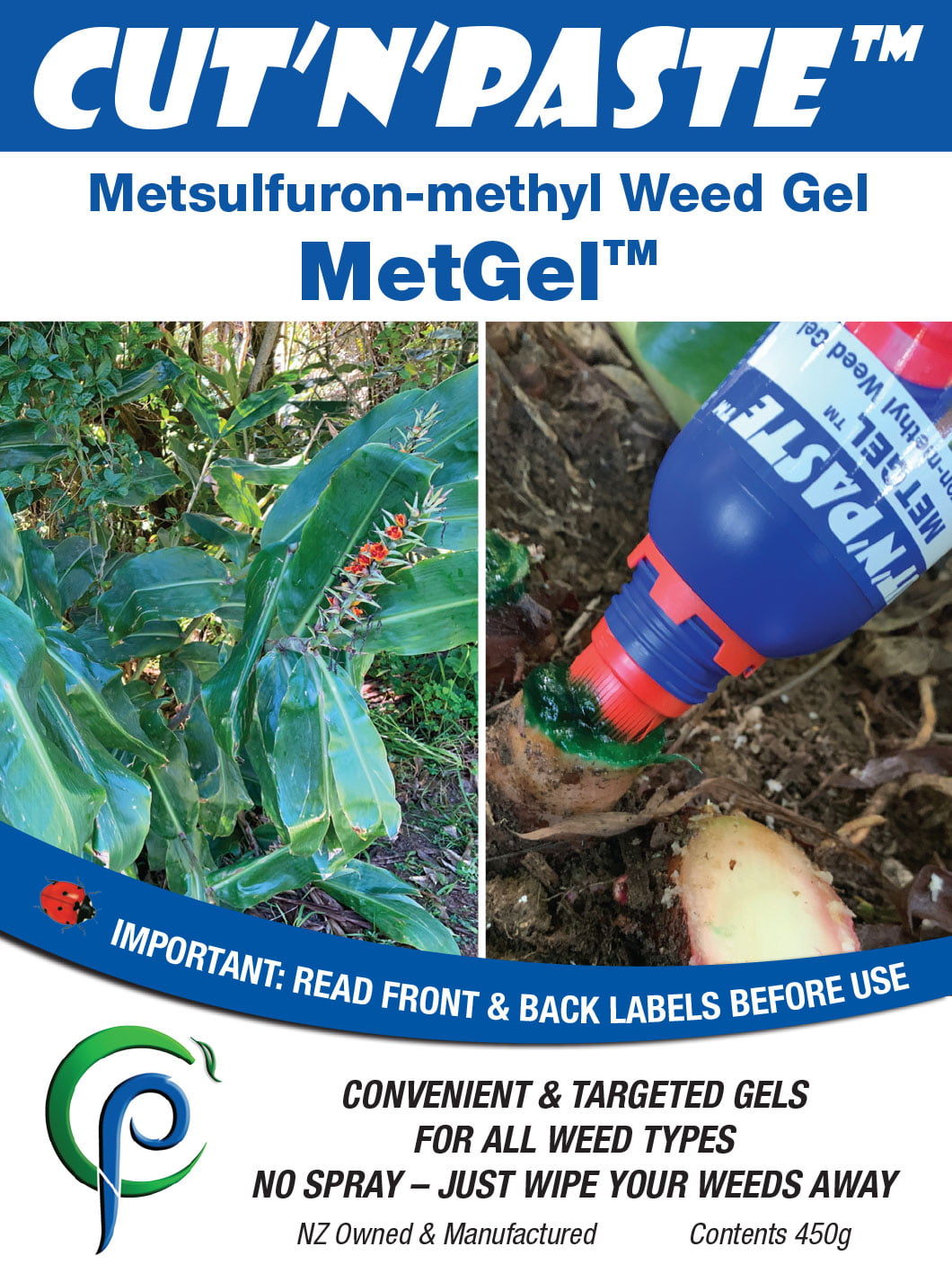
Bulb Weeds can be grouped together for treatment options like Watsonia, Montbretia, Oxalis, Onion Weed, Bear's Breeches and Arum Lillies. MetGel is the recommended Cut'n'Paste Weed Gel.
Montbretia and Watsonia are some of the worst bulbiferous weeds in NZ and they form very similar dense patches of gladiolus like leaves that exclude every other plant and take over large areas of ground. Plants with bulbs or corms spread mainly by the bulbs dividing in the soil and by explosive seeds. They are a good example of these type of weeds with bulbs or corms. Our MetGel product is what you want and you can also deal to plants with rhizomes too like ginger.

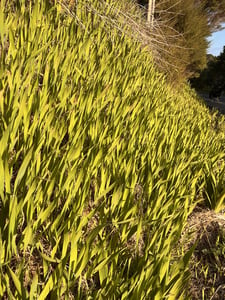
Watsonias (Watsonia spp.) are erect large perennial herbs forming clumps (similar to gladiolus), with leaves and flowering stems produced annually (dying back to ground level over summer and autumn, and re-growing each growing season). Clumps of strap-like leaves are produced before larger taller slender flowering stems to 2 m high are produced bearing showy flowers variously white to pink, orange, or red. Watsonia leaves are 20 to 80 cm long and 2 to 5 cm wide and are shaped like the blade of a sword. They are tough, fibrous, lack hairs, and have a prominent central midrib and numerous smaller parallel veins, and often arise fan-like from the top of the normally underground or emerging corm (swollen underground plant stems). Corms give rise to further clusters of smaller underground corms (known as cormels) that are a means of vegetative spread (propagation).
Flowers are produced on tall flowering stems that are sometimes branched or with side branches. Flowers are curved and trumpet-shaped, with 6 petals (perianth segments) forming a tube then opening into a wide funnel. Flowers are mostly 5 to 8 cm long and 3 to 4 cm in diameter and are arranged singly, 2.5 to 4 cm apart, in opposite rows along the upper part of the flowering-stem and on side branches.
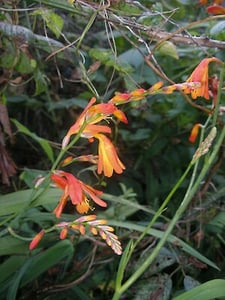
Montretia is another bulb weed that creates suffocating clumps Click the link to see a full description of the plants
Stiff, leafy, clump-forming, evergreen or summergreen perennial with underground rhizomes. Corms flattened, 35 x 15 mm, fibrous cover, light brown, in 3+ clusters at stem base. Leaves all arising from base, erect to curving above, 90 x 2 cm, firm, sword-shaped, mid-vein conspicuous. Flowerhead tall, zig-zag shaped. Flowers solitary, 6 petals, 3 cm long, orange to crimson, Jan-Feb. Seed capsule 3-sided, 5 mm long; with reddish-brown, flat-triangular, 3 mm seeds.
Similar to several other monocot herbs with orange flowers. Tends to have a droopy habit and has flowers arranged in a single plane. Lacks the Bulbils of Watsonia bulbilifera. Chasmanthe floribunda is also similar but leaves and stems are more robust. Has Orange, Red/Pink flowers in January, February
Perennial; produces strap-like leaves in winter which die down in the summer months (Fromont and King, 1992). Reproduces by two means: produces small cormils on the flower head and sends out creeping rhizomes to extend the colony (Fromont and King, 1992). New cormils are also produced on the original corms which are able to be transported by any soil disturbance (ibid.). Produces no seed, dispersed by soil movement (road graders, fill), vegetation dumping, water movement (ibid).

Simply wipe some MetGel on the underside of the leaves, either using the brush on the bottle or with a nitrile glove to help to spread the gel up the leaves. Grasp the leaves near the base and apply a wipe of gel and spread this up with leaves with the nitrile glove on your other hand.
The plants may take several months to die back, but the advantage of MetGel in these situations is its ability to spread through the soil particularly in wet conditions meaning that a patch of bulbs or corms will all be killed at the same time.
This applies to all bulb weeds including onion weed and oxalis.
If you are killing weeds with rhizomes like gingers or bear’s breeches you are best to cut into the base and paste this.
Working from the outside of the clump in towards the middle will achieve good results. Don’t try to do it all at once, work from the outside in, leave it for a month or so to see the dieback, and then go back for the next dose. You may need to come back a few times until all the corms/bulbs in the ground have been killed.
No products in the cart.