Moth Plant Competition – Winners Announced :: Find Out


Moth Plant – The Strangler and smotherer
Home » Help » Weed Directory
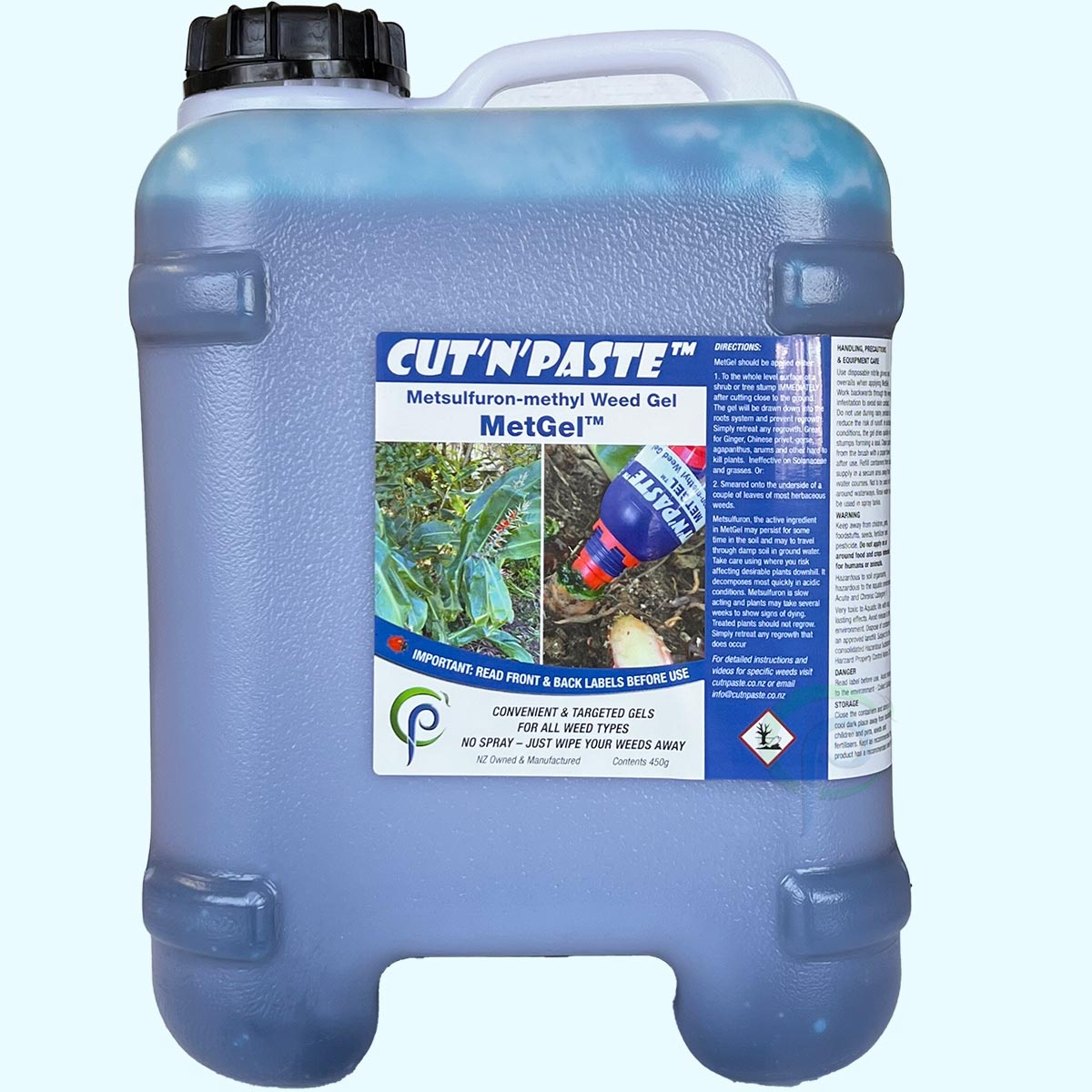
Moth Plant - The Strangler killed with Cut'n'Paste
Moth Plant - The Strangler and smotherer is quickly killed with Cut'n'Paste Weed Gels.
As a park ranger I had to deal with a huge area completely covered in moth plant so I know how horrible it is to deal with. Don't let it get away on you or you WILL regret it. Large areas of the country are suffering under this infestation.
It can be rolled up to get rid of the huge mass of vines but this is really not necessary. The vine can be cut off and left to die on the host plant or tree. But, you do need to pull up or cut and paste the stems.
The roots of small plants can be dug up by loosening the soil with a small fork.
But, when you can't get the roots out our Cut'n'Paste weed gels come to your aid. Scrape and paste the stems
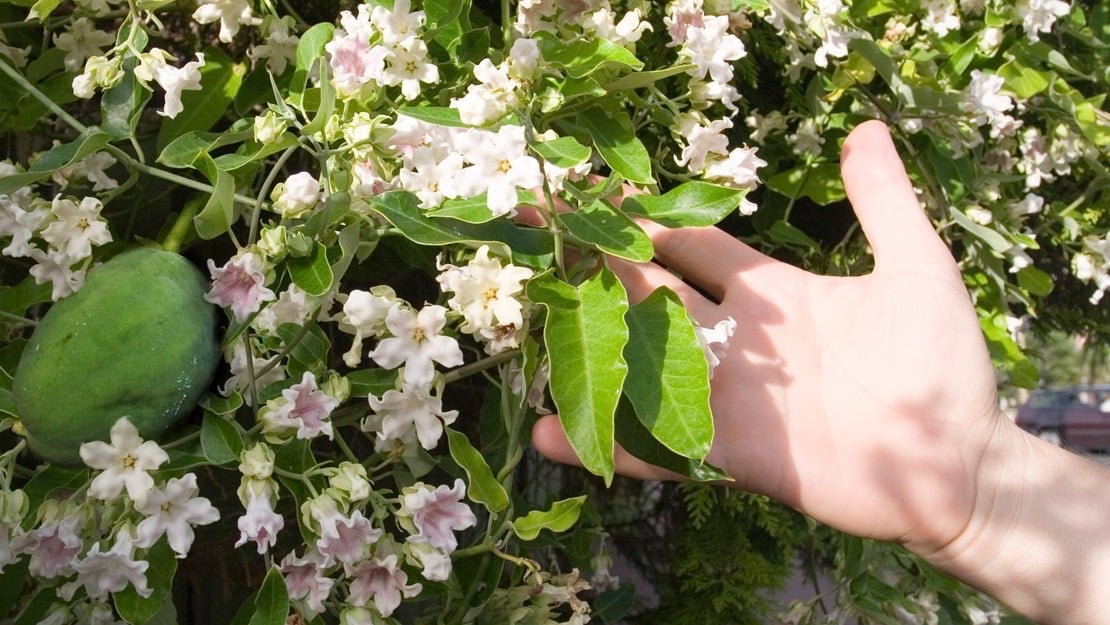
Araujia hortorum or moth plant is most easily identified in early summer when it flowers on the tree that it is using as ladder to climb to the light. Or else in late summer and autumn when is displays large hanging green pods like chokos. These pods then split in winter and shed hundreds of fluffy seeds that are wind dispersed to the four corners, spreading everywhere.
Go to this link to see more details of the description.


Scrape off a length of the bark of the vine and apply the gel directly onto the exposed stem where it can enter the plant and kill it. The advantage of this method is that the plant will die and any young pods that are developing will either shrivel up or the viability of the seed in the pod will be severely reduced. You can also cut off the top and simple paste the stumps. Apply MetGel, if there are no natives nearby or Glimax if it is wrapped up in other plants, to prevent damage to the native species. Picloram gel can also be effective.

Important Notes:
- ⚠️ Safety Warning: MetGel and Picloram / Picloram Plus+ have significantly more residual soil activity than the glyphosate gels, and can move through ground moisture. MetGel has a soil half-life of roughly 30–90 days, and Picloram roughly 2–6 months, perhaps longer in clay soils. Do not use either near desirable non-target plants, within the root zone of prized trees, or around waterways and wetlands.
- When using MetGel or Picloram, never apply it inside the drip line (canopy edge) of prized trees or broadleaf garden plants. On flat ground, keep a 3 to 5-metre safety buffer. On sloping ground where the weed is uphill from desirable species, extend that buffer to 5 to 10 metres.
- Weeds often grow along streams and in gullies. If you’re working near waterways, use Bamboo Buster. Do not allow any weed gel to enter the water.
- Only treat weeds / target plants / trees that are on your property, or that you have permission to treat. Be aware that some species might have protection status or have a notable status, or be a designated scheduled tree under the district plan – if in doubt, check with your local council.
- Safety First: Wear gloves and protective clothing and observe all safety protocols, especially when using machinery, chainsaws and other tools.
- When using any herbicide ensure you READ THE LABEL THOROUGHLY, and follow all instructions and directions for the purchase, use and storage of the product.
- If in doubt, seek professional advice.
MetGel is recommended in general because if can reduce the viability of seeds in any developing pods, especially when they are younger.
Moth Plant or Cruel Plant was brought to NZ as a codling moth deterrent to catch and kill the moths. However if quickly showed itself to be prolific and a fantastic seeder and colonising of bush and slopes. It came from South America without any of its natural predators and diseases and doesn’t know how to stop.