Moth Plant Competition – Winners Announced :: Find Out


Agapanthus – The spreading menace
Home » Help » Weed Directory
Agapanthus look pretty, but exclude native plants
Agapanthus (Agapanthus praecox) - also known as 'Agapanthus orientalis' and 'Lily of the Nile' - is a spreading menace with thick strong rhizomes in the ground. Planted as a pretty edging plant for borders, it quickly forms dense clumps that take over and exclude other plants. Introduced from South Africa, it just loves NZ's warm wet climate and doesn't know how to stop. It has become a serious pest plant in areas of bush, spreading from people's gardens.
Family: Liliaceae (Lily)
Origin: South Africa
Habitats Invaded: Coastal cliffs, banks, gumland, consolidated sand, fernland, shrubland, roadsides, and native bush margins.
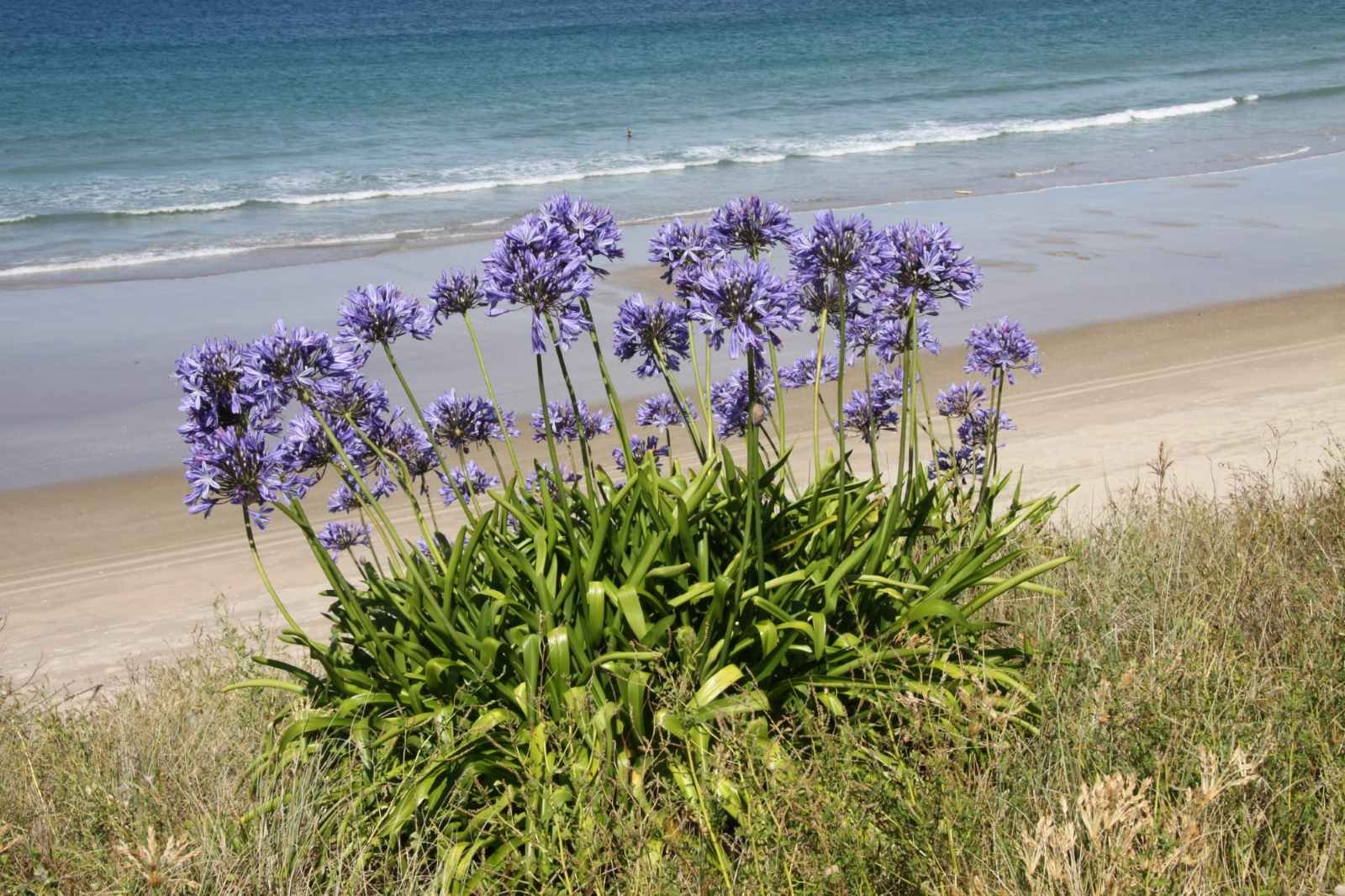
It’s quite easy to spot them with their distinctive thick grass like blades and bulbs. Dec-Feb flowers are purplish-blue or white, umbrella-shaped clusters 7 x 5 cm. Seeds thin, papery, black.
Appearance: Robust, clump-forming perennial with thick, leathery, arching leaves (20–70cm long) containing watery sap, growing in dense clumps of up to 20 leaves.
Flowers & Seeds: Produces umbrella-shaped clusters of purplish-blue or white flowers on tall stems from December to February, followed by thin, papery black seeds.
Roots: Massive, overlapping networks of long, thick, white tuberous rhizomes.
Lookalike Species: Native Rengarenga Lily (Arthropodium cirratum) has similar leaf shapes, but features softer, paler green leaves and star-shaped white flowers with distinctive purple and yellow stamens.
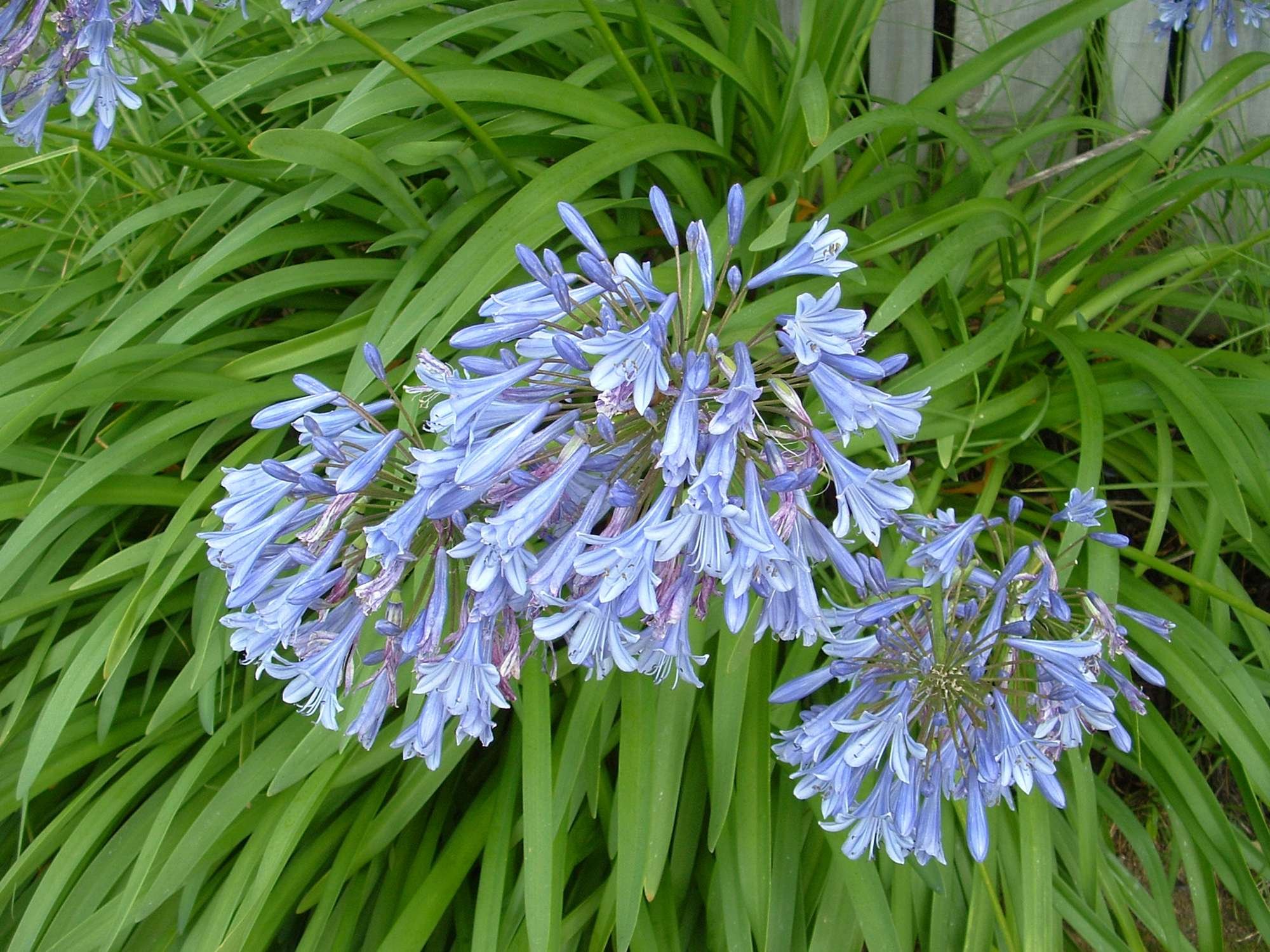
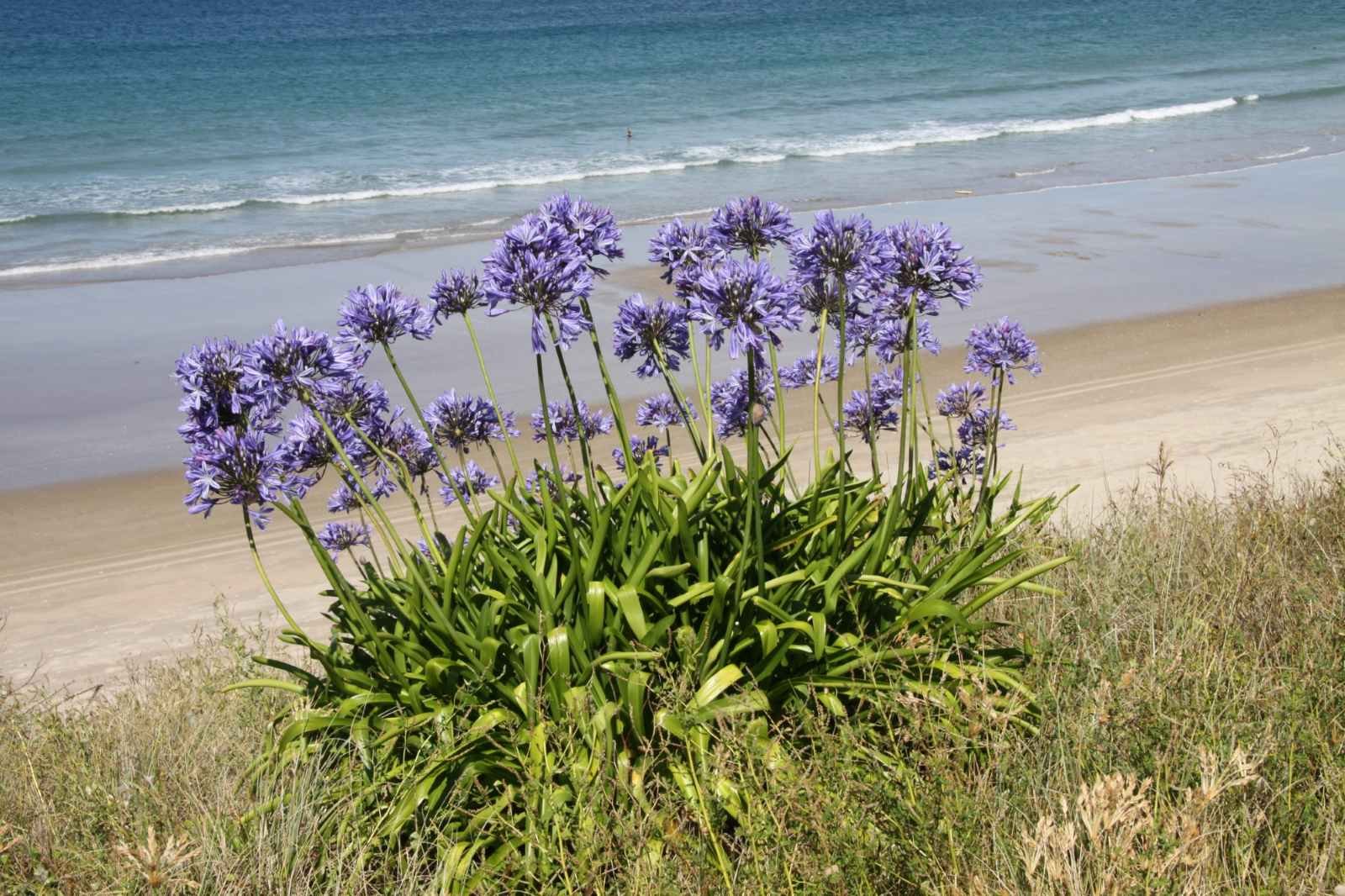
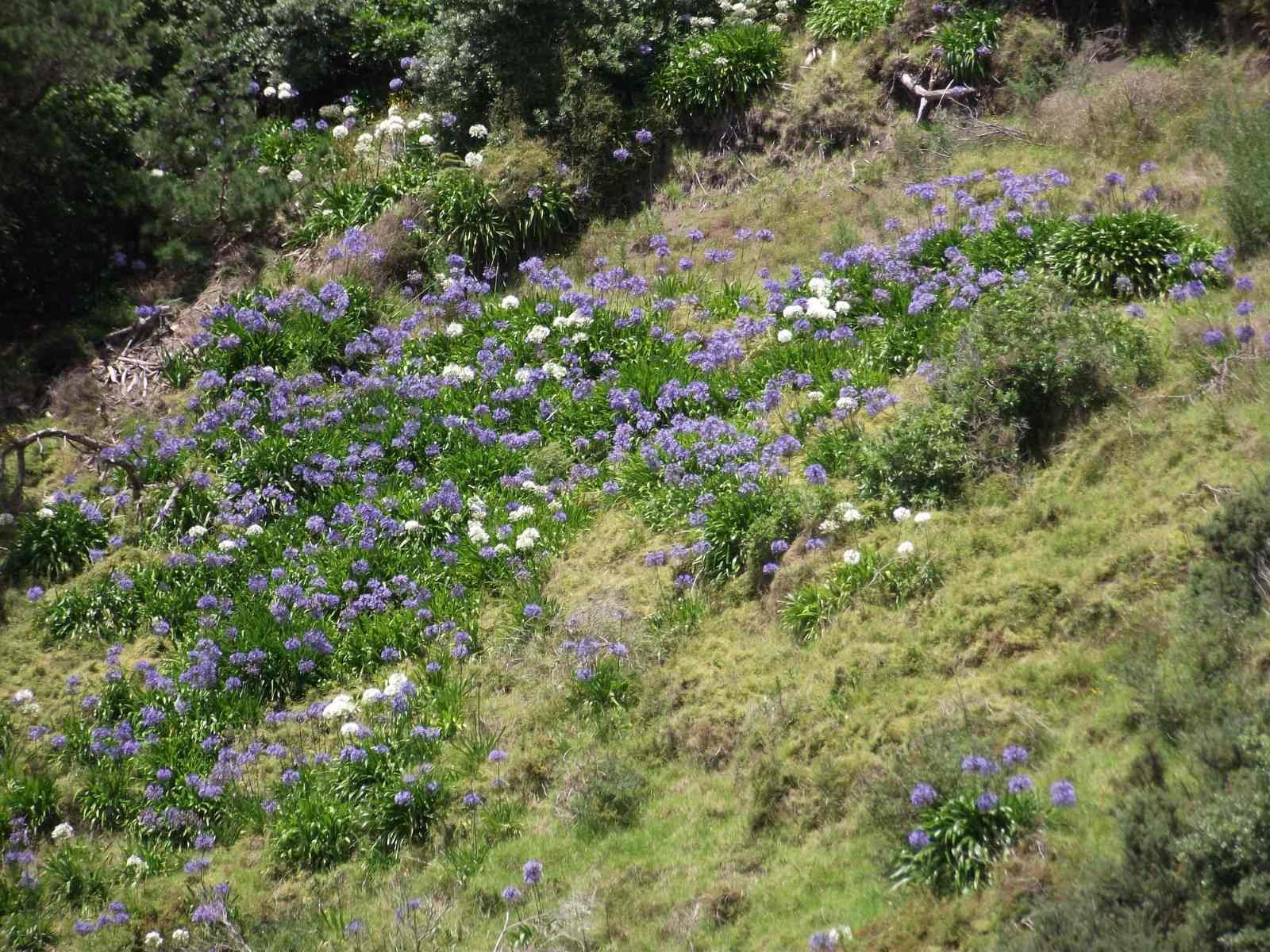
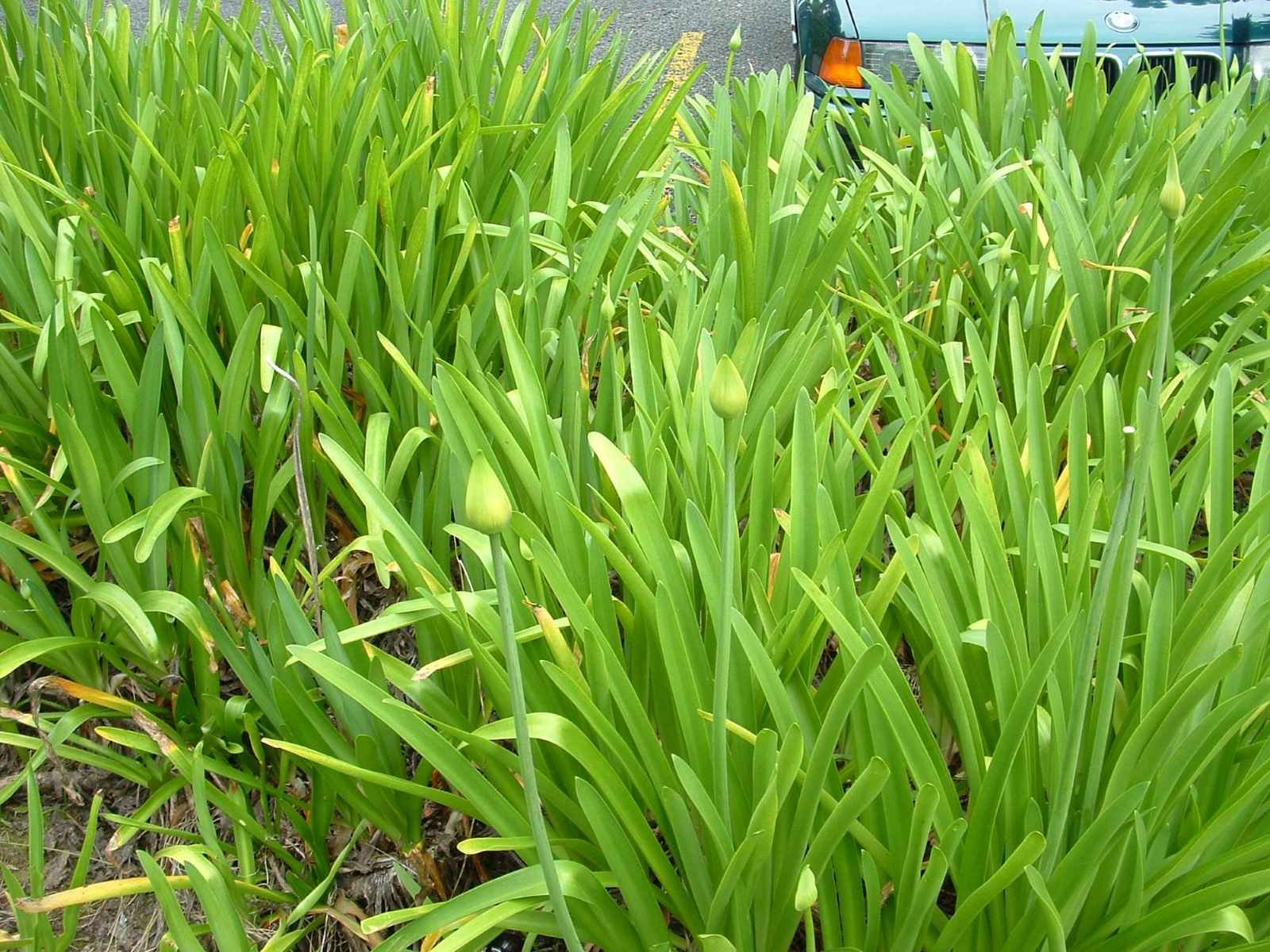
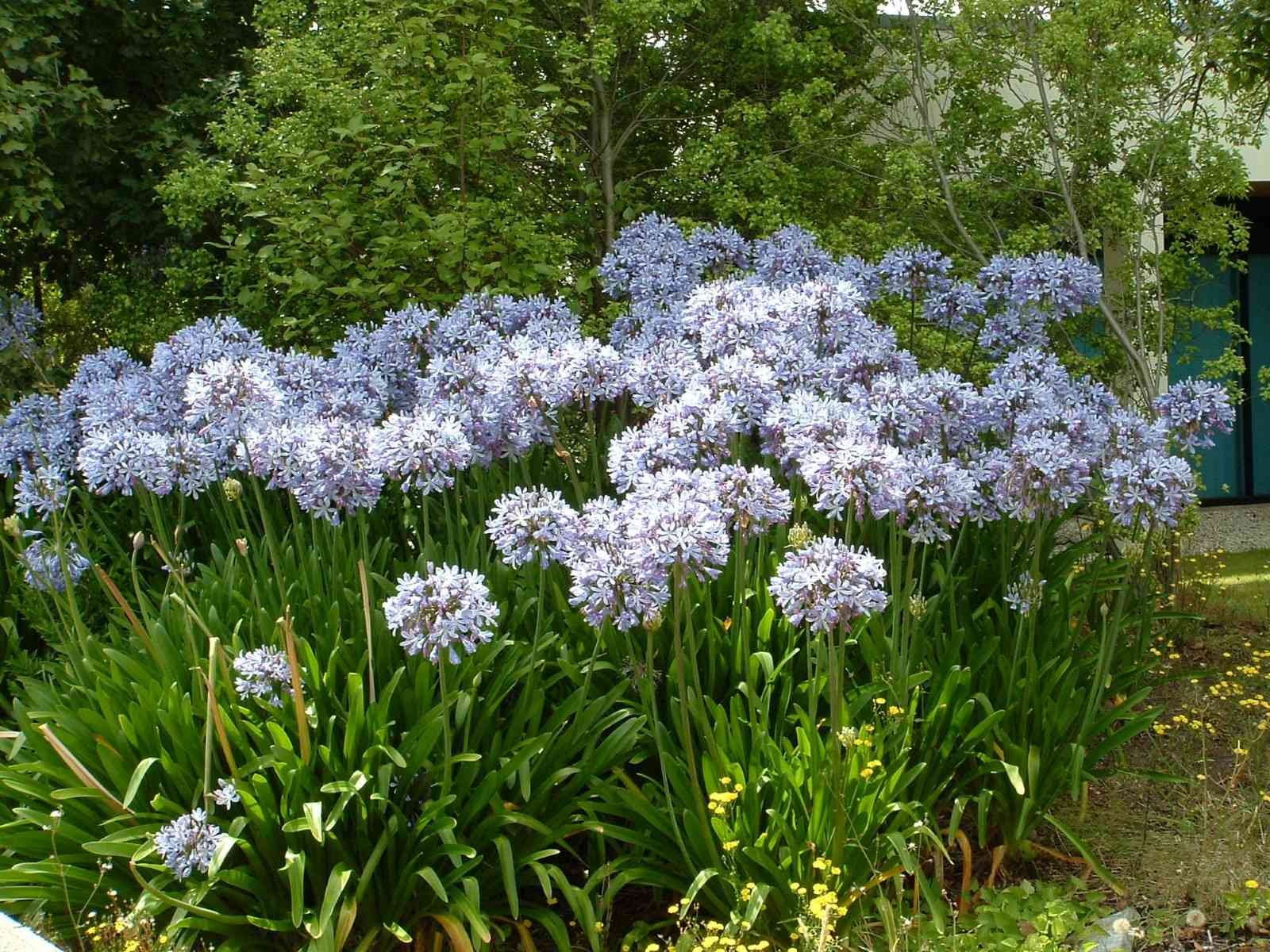
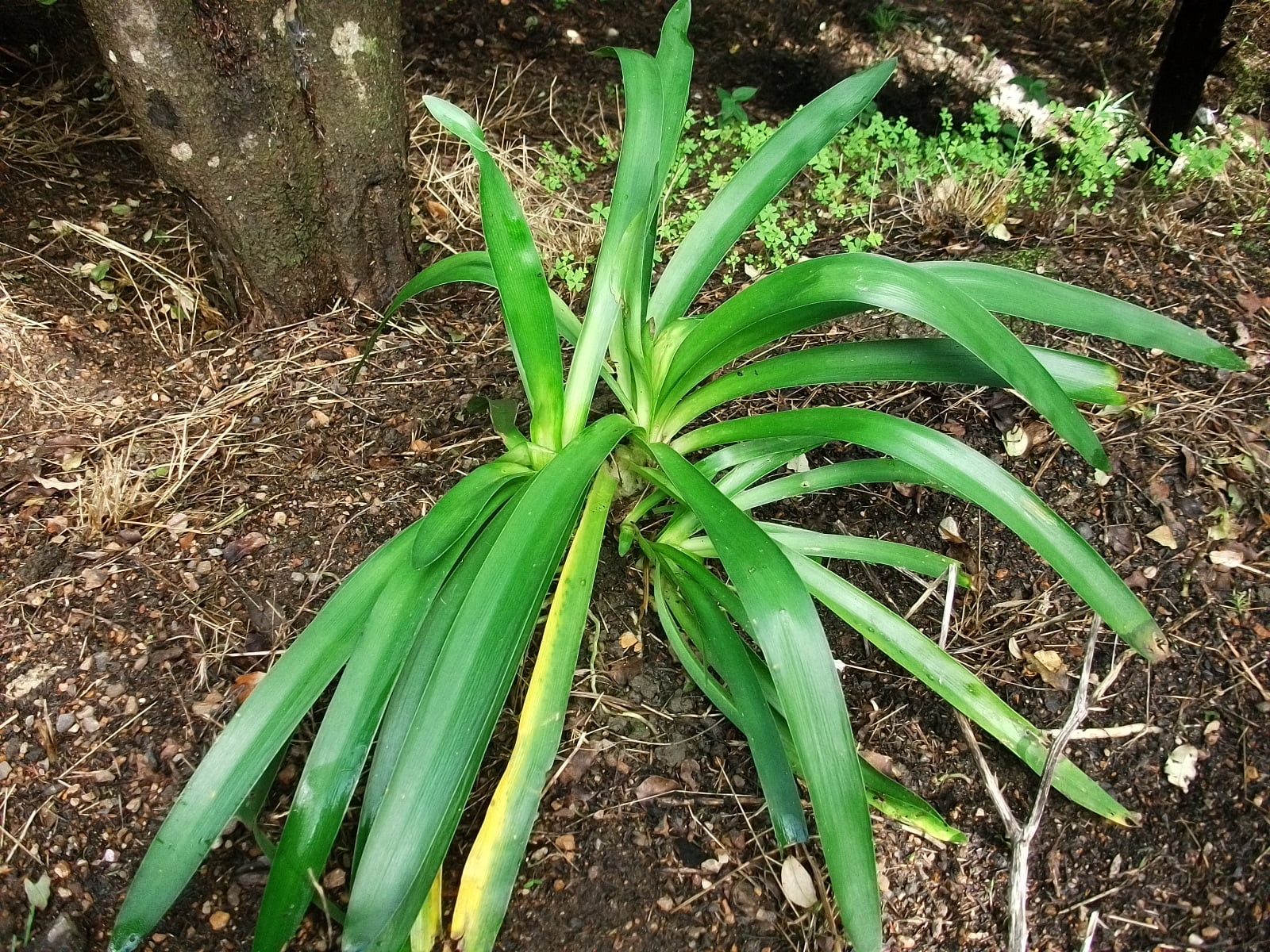
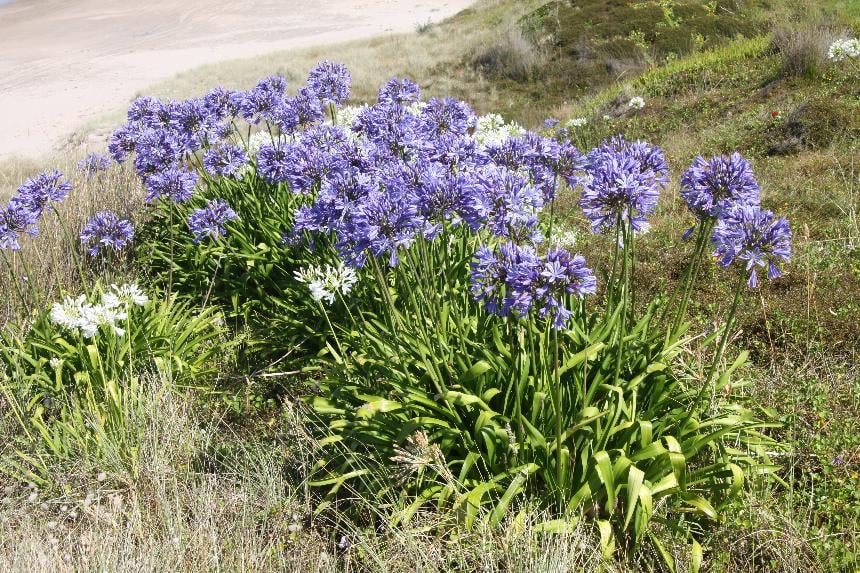
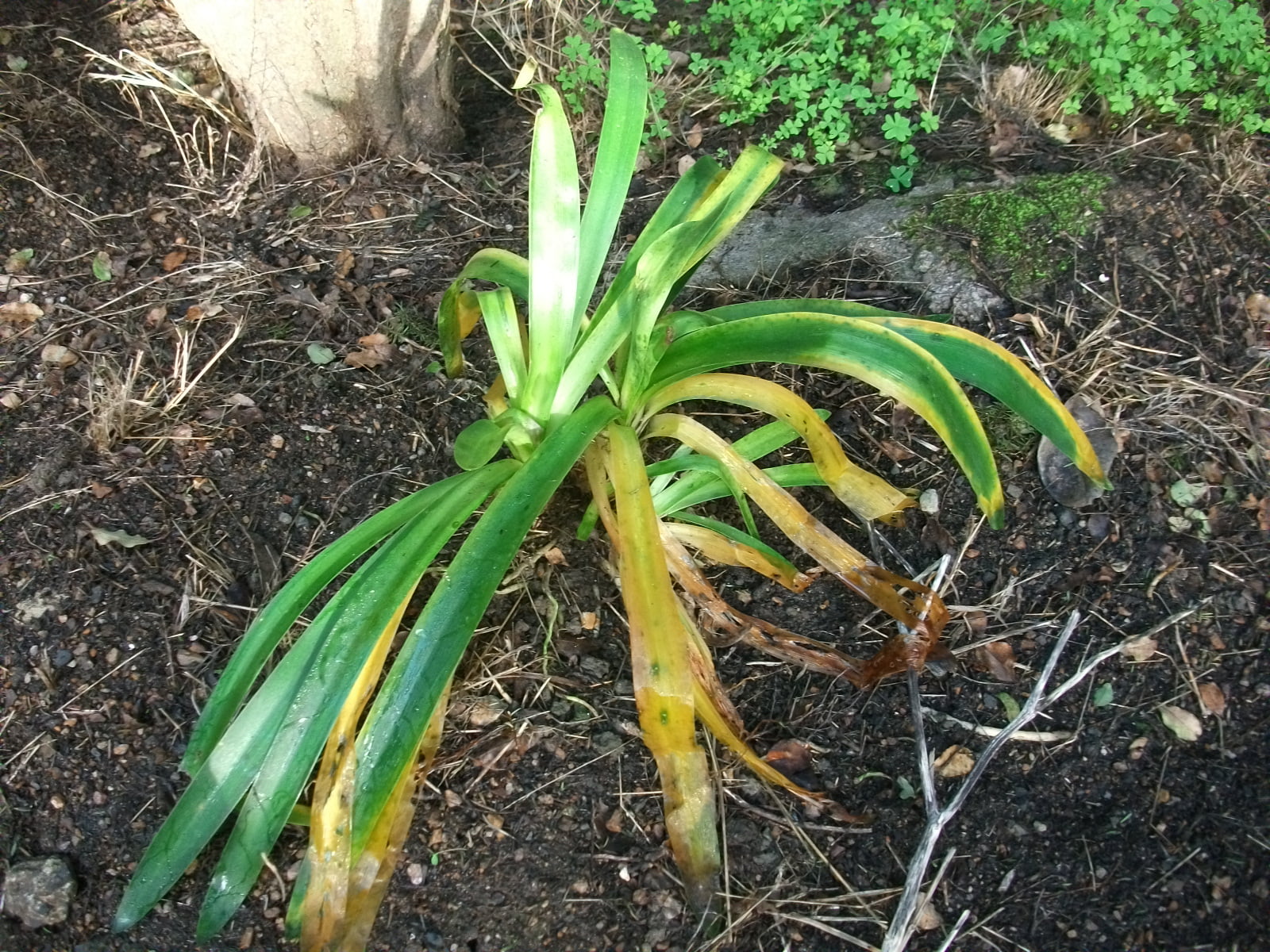
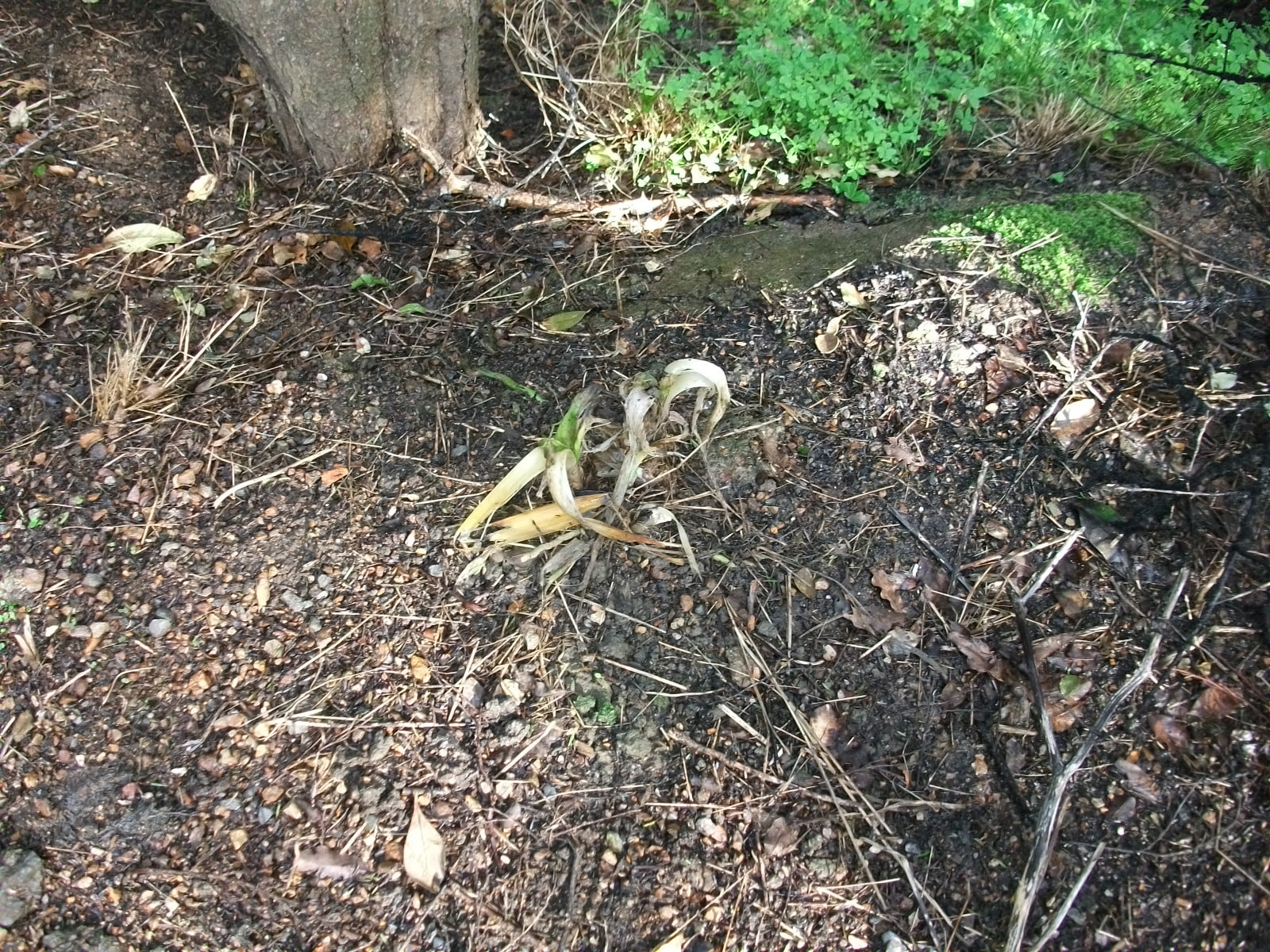
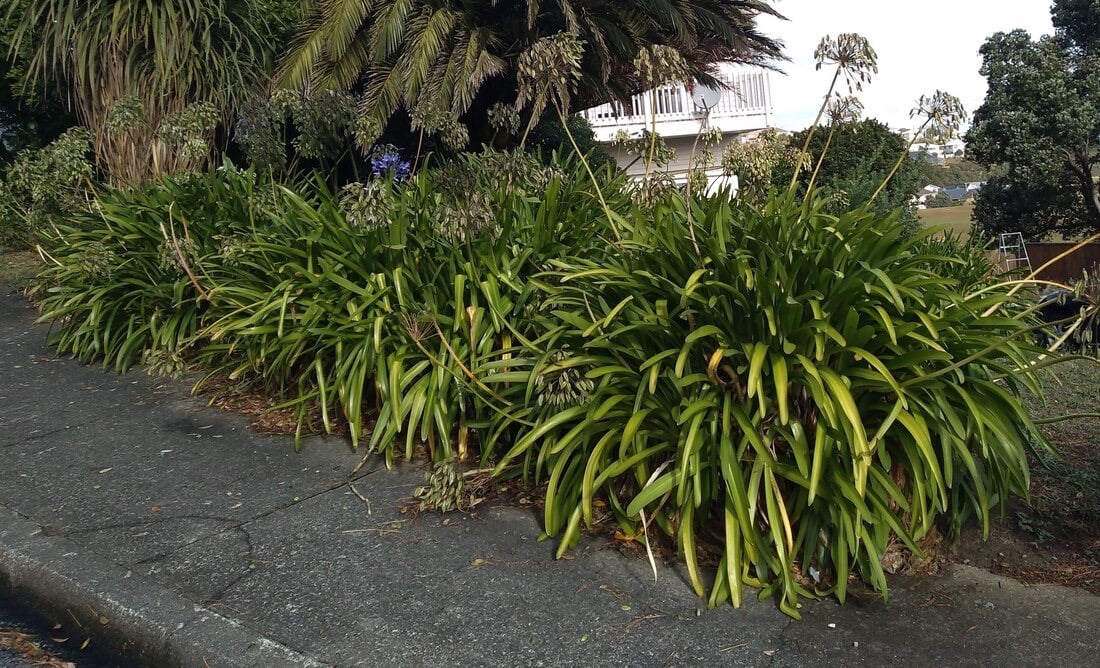
Photos courtesy of weedbusters
Go to this link to see and detailed description. It has thick strong rhizomes in the ground and is almost impossible to remove permanently by manual means.
Because they have thick strong rhizomes that spread everywhere in the ground, it is almost impossible to remove permanently by manual means – thus it is usually a waste of time to try to dig them out. Instead, you can treat with herbicide and then it’s job done. There are two main ways to treat Agapanthus:
Option 1: Cut & Paste Method (For Heavy Clumps & Rhizome Blocks)
Where you have a large infestation and can easily access the crown roots / rhizomes:
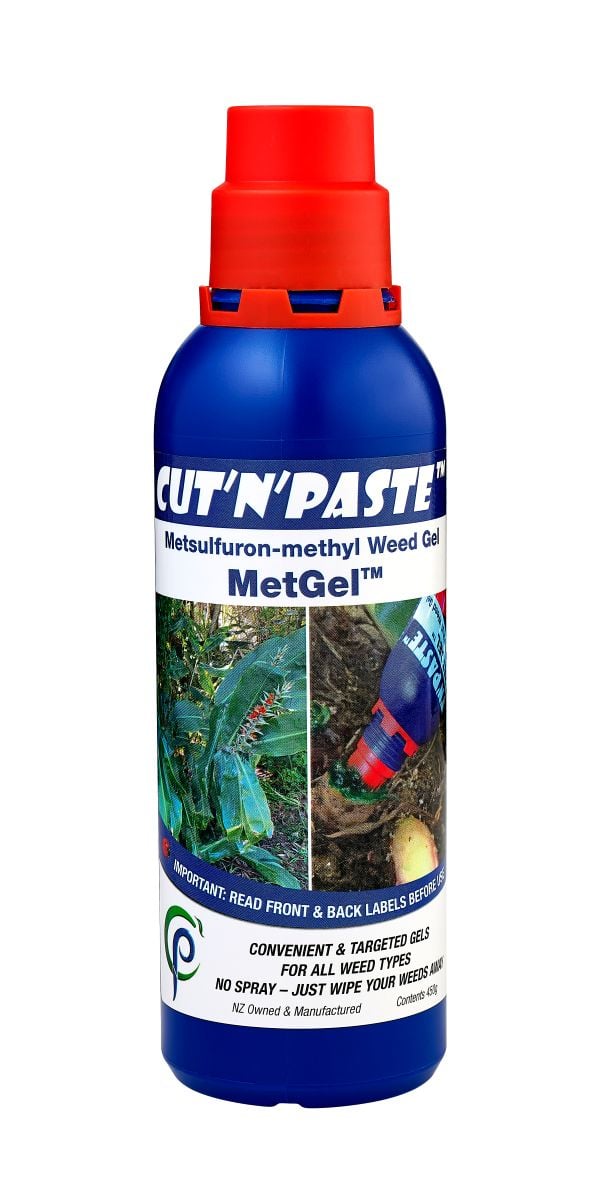
- Recommended Gel: Apply Cut ‘n’ Paste MetGel (Metsulfuron-methyl) directly to the freshly cut rhizomes.
- Cut all leaf stems as close to the root crown or rhizome mass as possible using a sharp spade, loppers, or silky saw.
- Immediately smear a full-coverage layer of gel across all freshly cut stumps and exposed rhizome surfaces (within 15 seconds) so the active ingredient translocates deep into the underground root architecture.
- MetGel translocates through connected underground rhizome networks for maximum kill on tough, established clumps.
Option 2: Leaf Wipe Method (For Standing Foliage / No Digging)
If you want to avoid cutting or digging, apply herbicide gel directly to the active green leaves while the plant is intact.
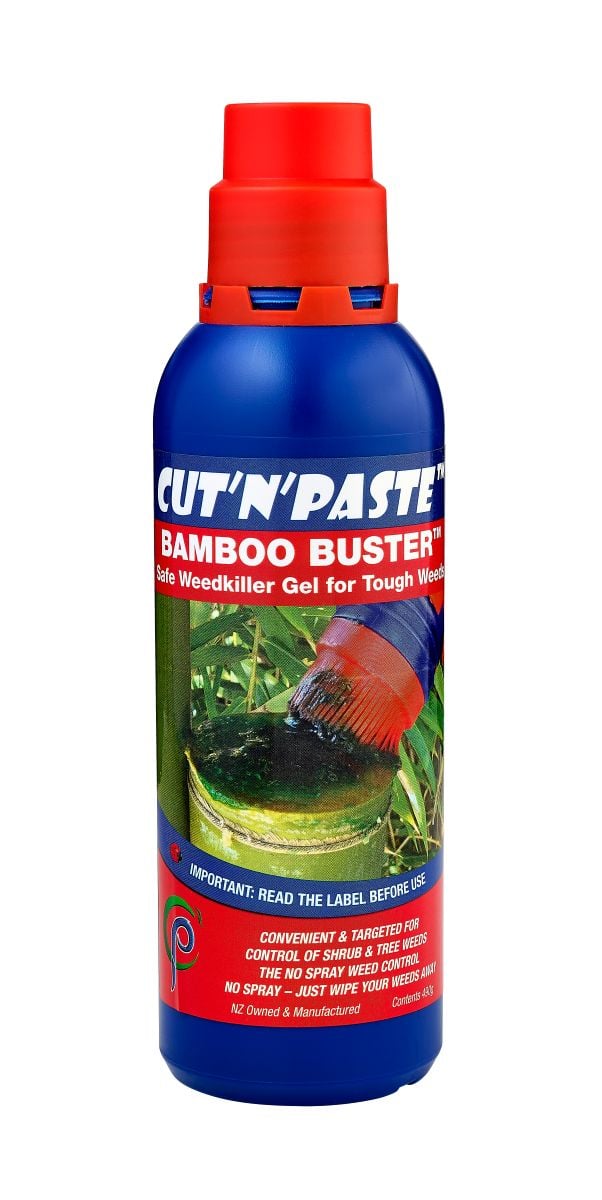
Recommended Gel: Apply Cut ‘n’ Paste Bamboo Buster (double-strength 240g/L Glyphosate).
Technique: Put on nitrile safety gloves. Brush or wipe a generous layer of Bamboo Buster directly onto the underside of the active green leaf blades (covering 30–50% of the foliage per clump). Wiping the underside ensures optimal absorption through the leaf surface down into the root system without rainfall washing the gel off easily.
Stopping Re-Infestation & Follow-Up Care
Persistent Follow-Up: Agapanthus frequently resprouts from overlooked / missed rhizome fragments, and dense seed banks will reinfest bare soil. Plan for at least 3 to 4 follow-up inspections over the following 12 months.
Work Top-Down: When clearing banks, cliffs, or slopes, always start eradication at the top and work downwards to prevent seeds and rhizome fragments from washing into cleared lower areas.
Delay Replanting: Do not plant native species into the cleared site until you have completed 2–3 successful follow-up treatments and no new regrowth appears.
Important Notes:
- ⚠️ Safety Warning: MetGel and Picloram / Picloram Plus+ have significantly more residual soil activity than the glyphosate gels, and can move through ground moisture. MetGel has a soil half-life of roughly 30–90 days, and Picloram roughly 2–6 months, perhaps longer in clay soils. Do not use either near desirable non-target plants, within the root zone of prized trees, or around waterways and wetlands.
- When using MetGel or Picloram, never apply it inside the drip line (canopy edge) of prized trees or broadleaf garden plants. On flat ground, keep a 3 to 5-metre safety buffer. On sloping ground where the weed is uphill from desirable species, extend that buffer to 5 to 10 metres.
- Weeds often grow along streams and in gullies. If you’re working near waterways, use Bamboo Buster. Do not allow any weed gel to enter the water.
- Only treat weeds / target plants / trees that are on your property, or that you have permission to treat. Be aware that some species might have protection status or have a notable status, or be a designated scheduled tree under the district plan – if in doubt, check with your local council.
- Safety First: Wear gloves and protective clothing and observe all safety protocols, especially when using machinery, chainsaws and other tools.
- When using any herbicide ensure you READ THE LABEL THOROUGHLY, and follow all instructions and directions for the purchase, use and storage of the product.
- If in doubt, seek professional advice.
Why It’s a Problem
Agapanthus is an extraordinarily hardy, long-lived invader. It tolerates extreme heat, frost, severe drought, salt spray, wind, deep shade, poor soils, and even sea water immersion of its rhizomes and seeds.
Massive Biodiversity Loss: Forms pure, impenetrable stands that choke out all other vegetation, preventing native seedlings from establishing. It is particularly destructive on fragile coastal cliffs and margins.
Aggressive Spread: Prolific seed production disperses via wind, gravity, and water. Rhizome and root fragments easily take root when moved in contaminated soil, dumped garden waste, or stream flows.
Do not dispose of the remains over the fence as it will simple take off again. Hanging the plants up by the roots will often simply create an aerial epiphyte.