Moth Plant Competition – Winners Announced :: Find Out


Woolly Nightshade or Tobacco Weed/Kerosene Plant
Home » Help » Weed Directory
Woolly Nightshade /Tobacco Weed Meets Cut'n'Paste
Woolly Nightshade (Solanum mauritianum), also known as Tobacco Weed or Kerosene Plant (and often mis-spelt wooly rather than woolly nightshade), is one of New Zealand's most aggressive and hated pest plants. Spreading rapidly across the North Island and parts of the South Island, this fast-growing shrub or small tree acts like an ecological bully. It invades pasture land, home gardens, forest margins, and urban reserves, quickly forming dense, absolute stands that crowd out every single native plant trying to grow beneath it. This Solanaceae family contains some of our most useful plants—potatoes, peppers, tobacco, tomatoes, aubergines, and tamarillos—as well as toxic relatives like datura and Sodom's apple.
The Solanaceae family consists mostly of herbaceous plants, but Tobacco Weed (so called because of the large leaves reminiscent of tobacco) is one that grows into sizeable trees in NZ and can form dense thickets of trunks which exclude other plants. You can aim to eradicate this toxic, fast-spreading invader safely and permanently.
Beyond its fast growth, Woolly Nightshade produces vast amounts of toxic berries all year round. Birds devour the fruit and scatter the seeds across massive distances. To make matters worse, brushing against or handling the plant without protection releases a pungent, kerosene-like odour and a fine dust that can cause severe respiratory irritation and skin rashes.
CRUCIAL CHEMICAL NOTE: Because it belongs to the Solanum genus, Woolly Nightshade is naturally unaffected by metsulfuron-methyl, the active ingredient in our MetGel. MetGel is completely ineffective on these plants. Do not use MetGel on Woolly Nightshade.
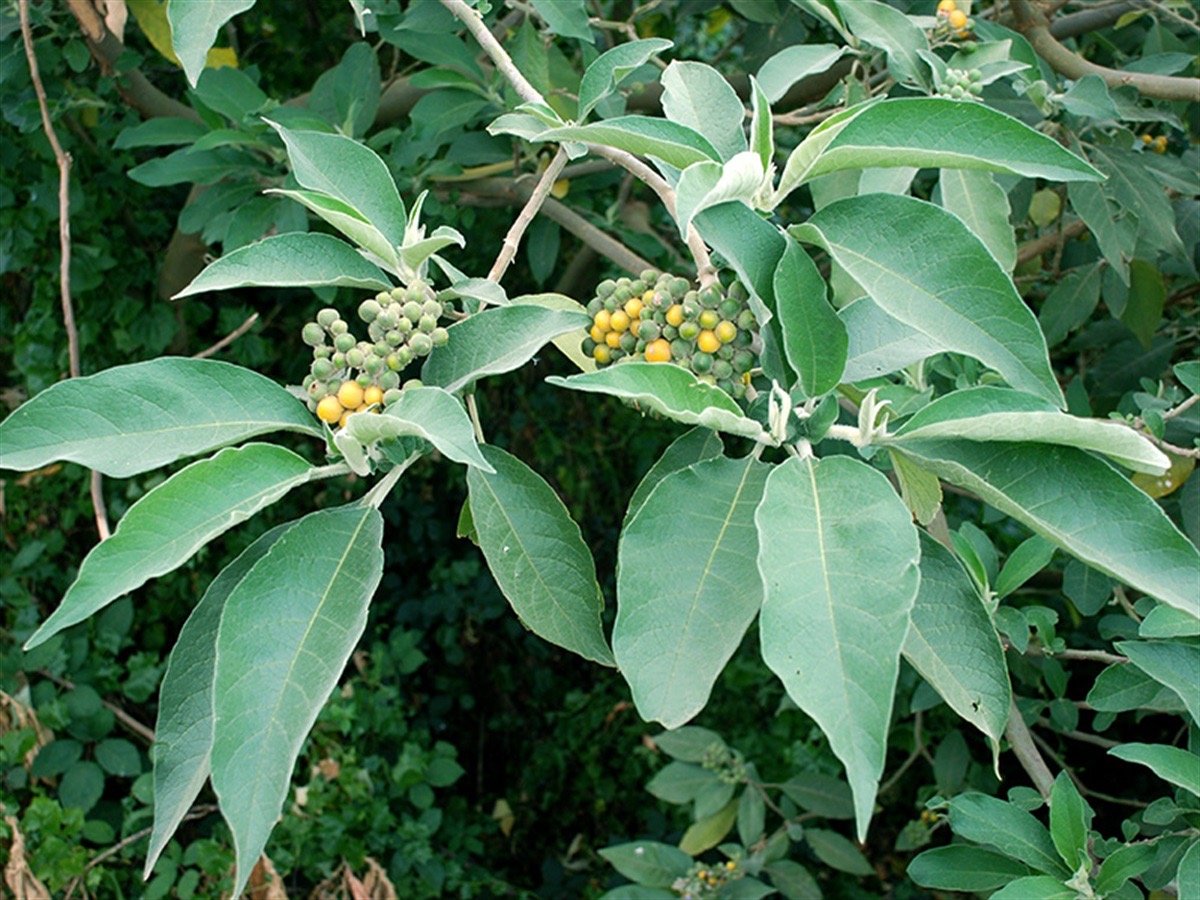
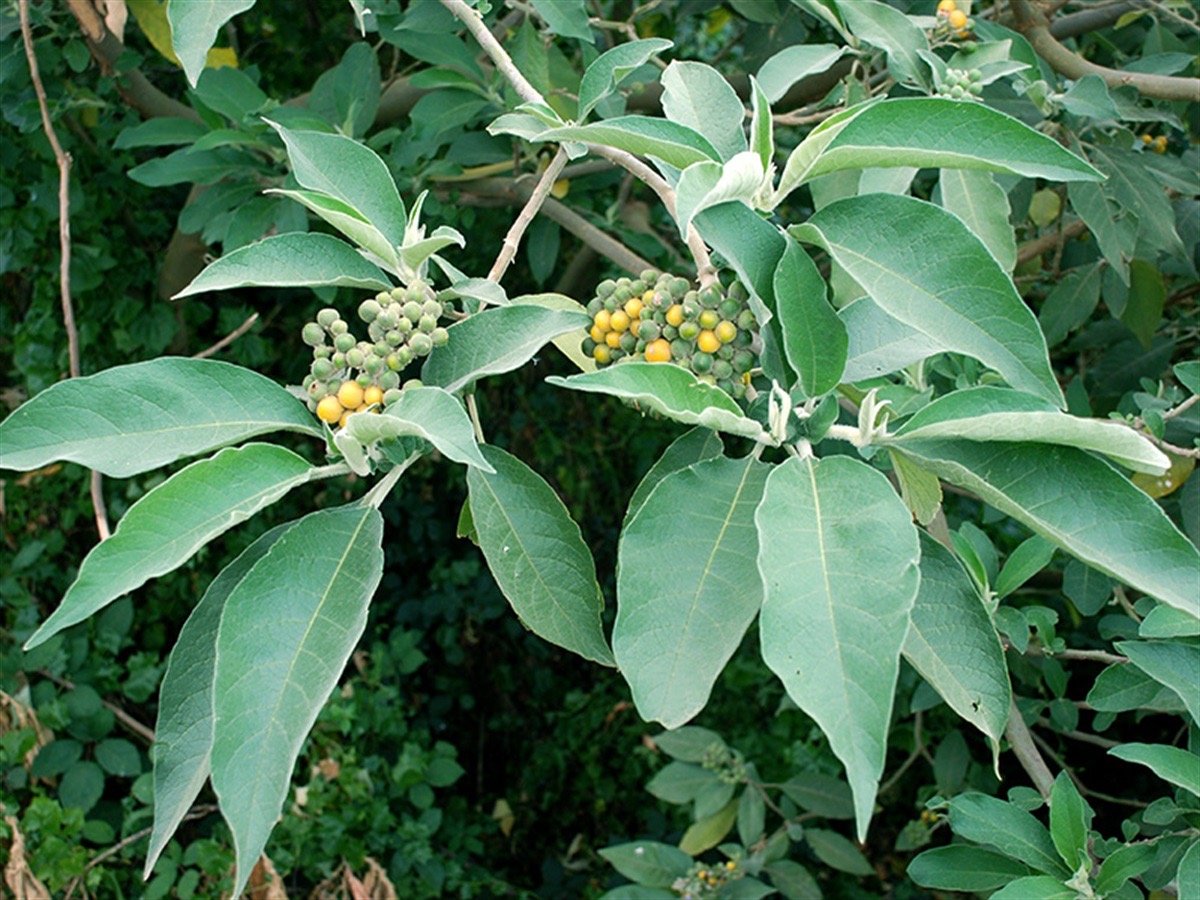
Tobacco Weed or Woolly Nightshade plants have long straight greyish green trunks and greyish green leaves reminiscent of tobacco. They also bear berries that are spread by birds far and wide. There are few places in NZ where you can’t find this weed. Cut’n’Paste Picloram Weed Gel is at the ready.
Recognising Woolly Nightshade is easy once you know what to look for, as its velvety texture and distinct smell set it apart from native trees:
The Leaves: Very large, oval-shaped leaves (up to 30cm long and 10cm wide) that are soft, thick, and velvety. The top of the leaf is a grey-green colour, while the underside is a pale, fuzzy yellowish-grey.
The Smell: When the leaves are crushed or disturbed, they release a powerful, unpleasant smell resembling kerosene or strong, raw tobacco.
The Flowers: Dense clusters of small, star-shaped purple flowers with prominent yellow centres, visible all year round.
The Berries: Round, grape-sized berries that grow in heavy clusters. They start off hard and green, then ripen into a bright, soft yellow.
Lookalikes: Young plants can occasionally be confused with native Flannel Leaf (Solanum aviculare or Poroporo), but Poroporo has deeply lobed, smooth, dark green leaves without the thick, fuzzy hairs or the strong chemical odour.
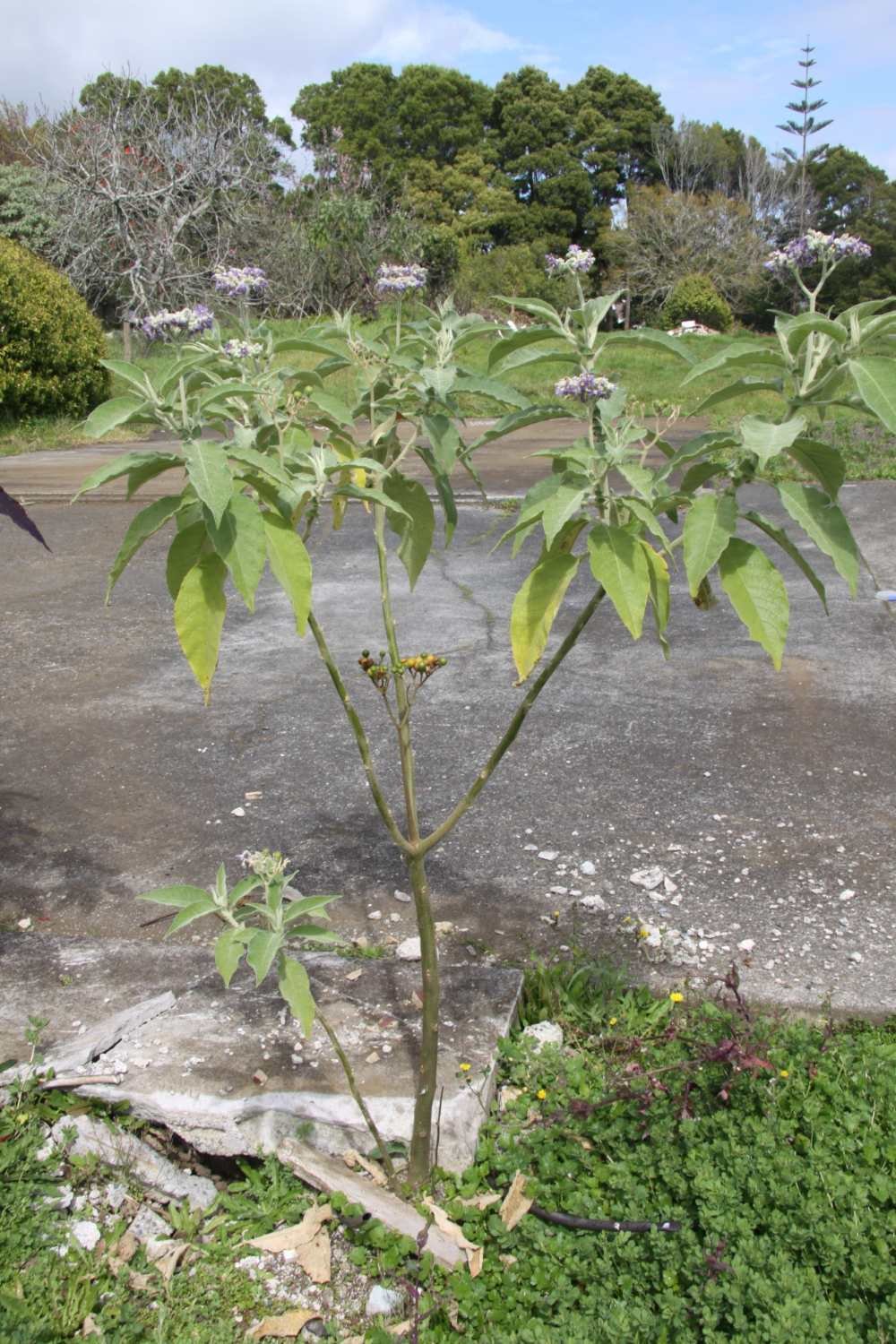
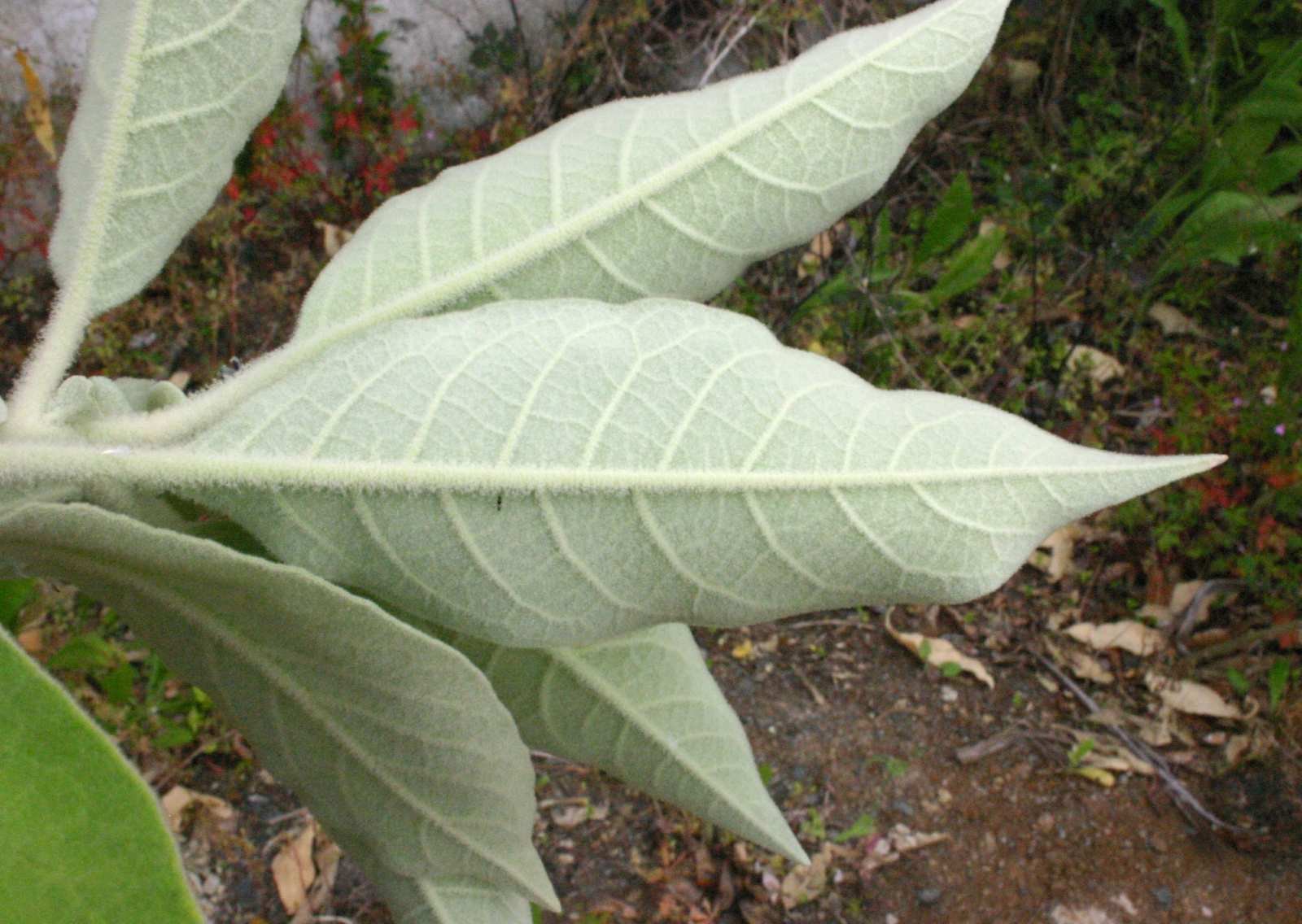
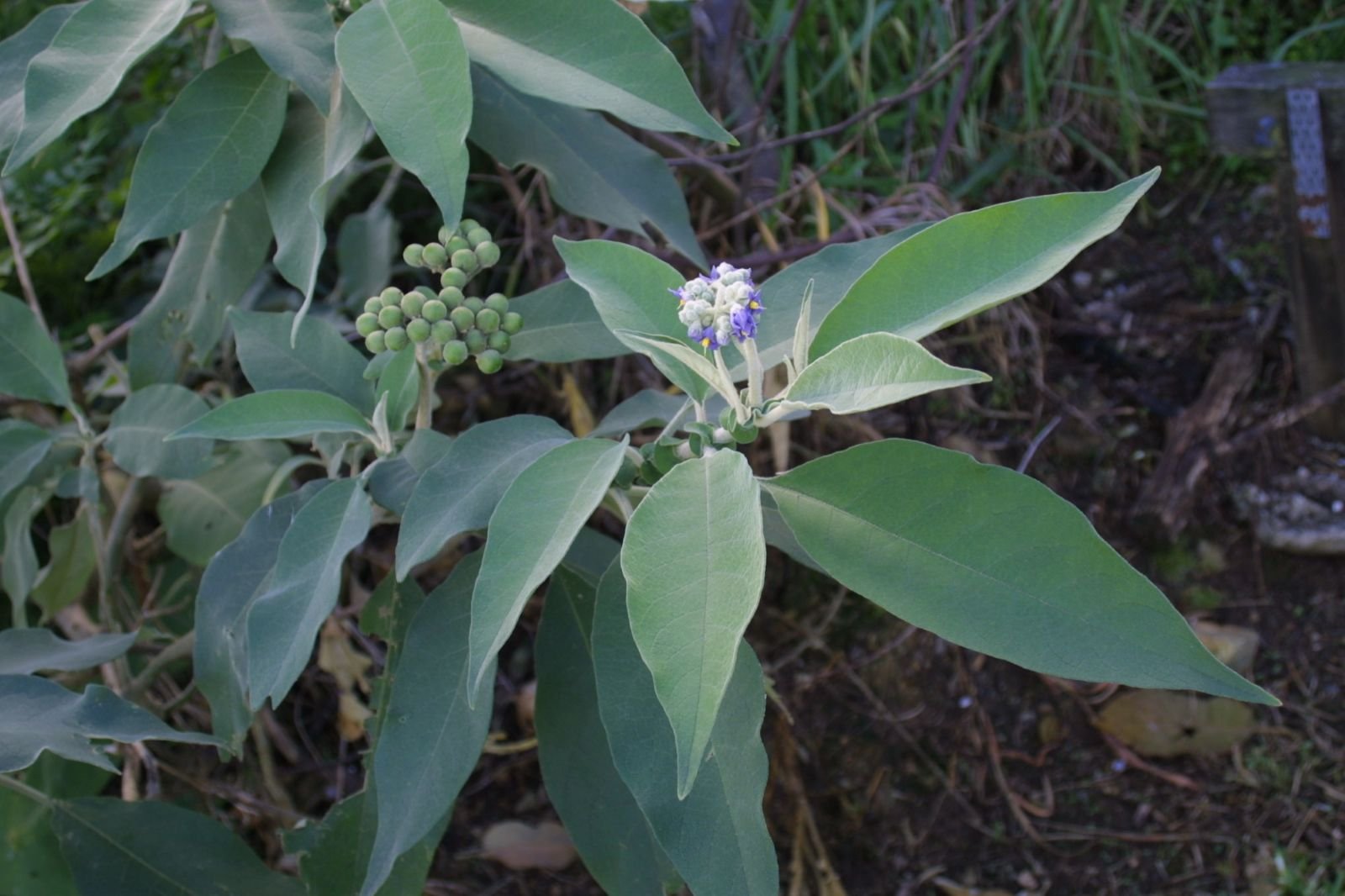
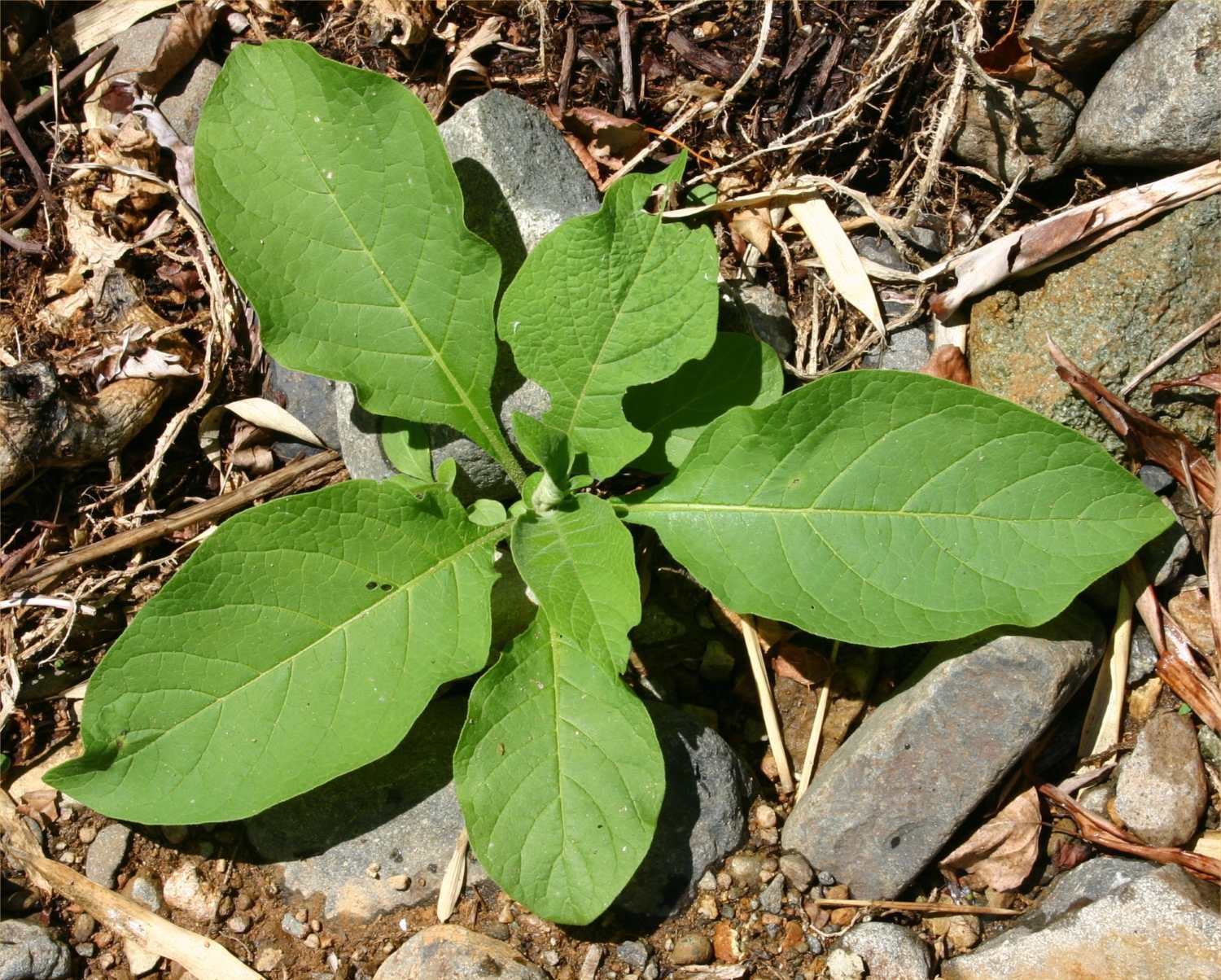
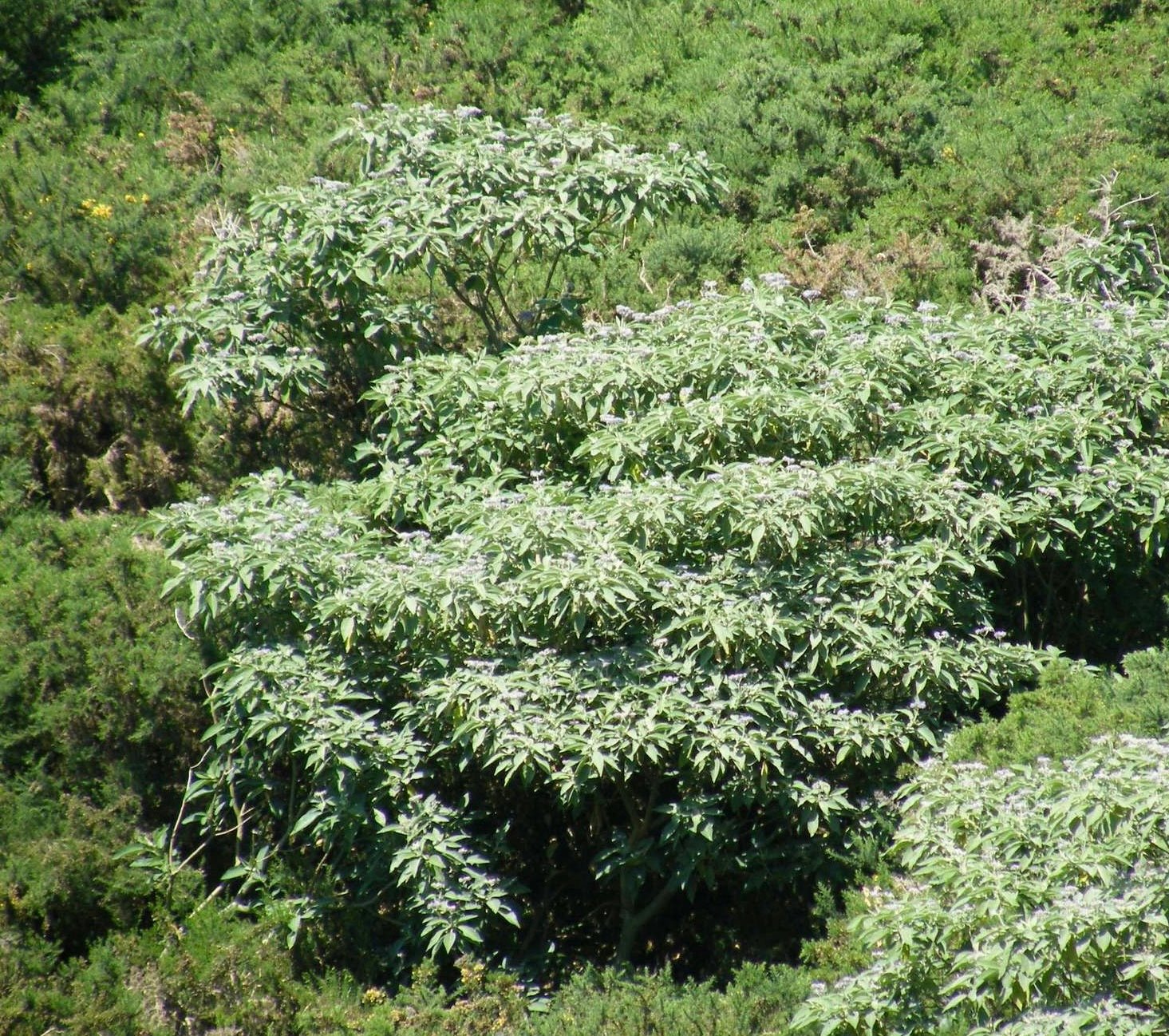
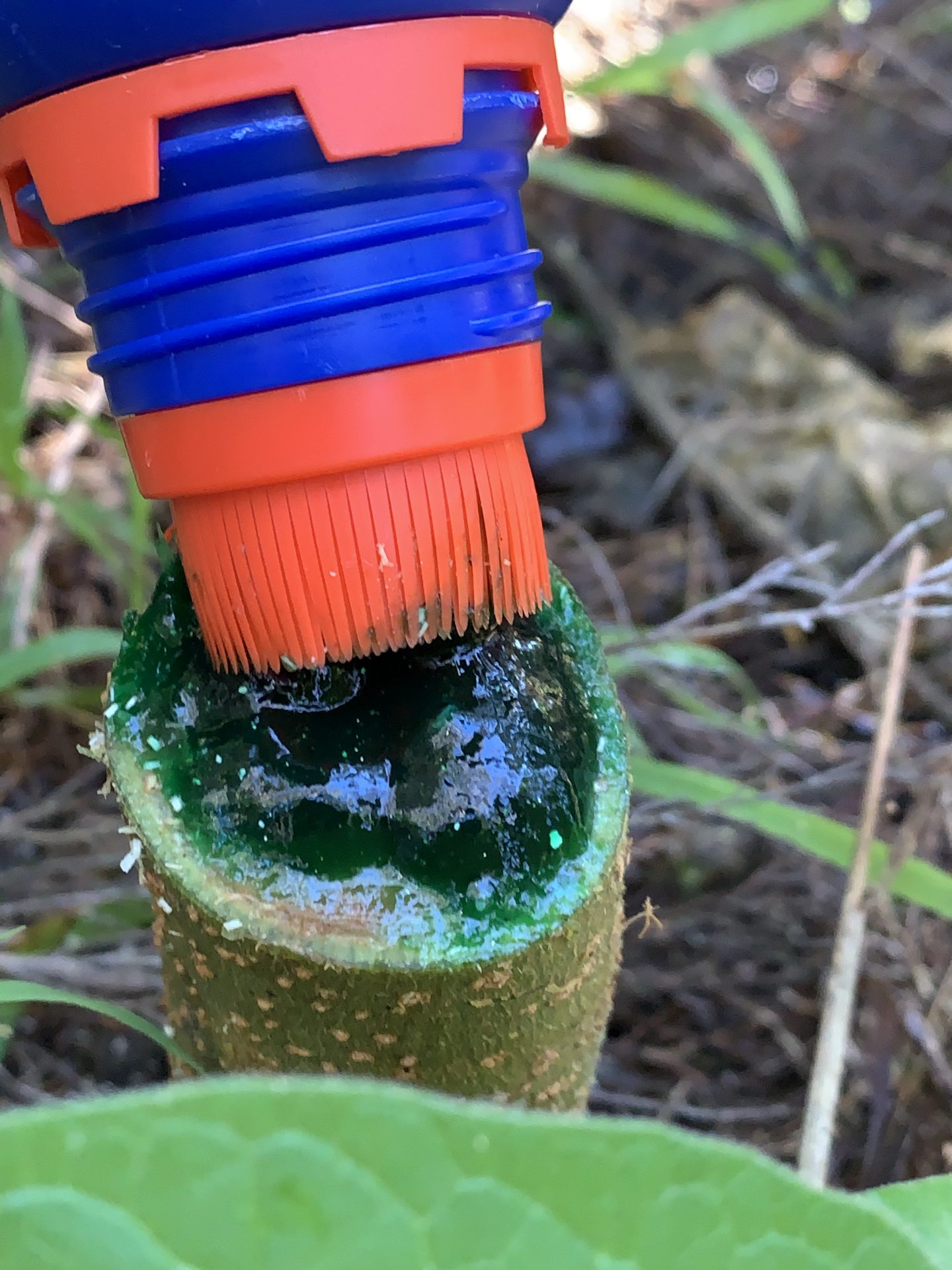
When plants are small just pull them out. Be careful with your back ! Larger plants must be Cut’n’Pasted. DoC recommends Picloram Weed Gel for this weed, although we recommend you do not use this where there are valued plants nearby as it does spread through the soil – in which case use Bamboo Buster Weed Gel. As always cut close to the ground with a horizontal level cut to hold a 3mm layer of the gel. The plant should not regrow. Do not use Metgel: All plants in the genus solanaceae are unaffected by metsulfuron methyl, the active ingredient in our MetGel – which is therefore ineffective on these plants.
Detailed Instructions
Because Woolly Nightshade grows so rapidly and readily resprouts from stumps, simply cutting the tree down will not kill it—the remaining root mass will quickly burst back into a multi-stemmed bush. To destroy it permanently, you must treat the base vascular tissue immediately using the cut-and-paste method.
Step 1: Suit Up for Protection Before approaching the plant, put on a mask, safety glasses, thick gloves, and long sleeves. Disturbed Woolly Nightshade drops a fine, powdery dust from its fuzzy leaves that causes intense coughing, throat irritation, and skin itching.
Step 2: The Level Base Cut Using a pruning saw, loppers, or a chainsaw for larger specimens, cut the main trunk completely through, level and horizontal, about 5cm to 10cm from the ground. Keep the cut flat so the herbicide gel sits on the stump without spilling off.
Step 3: Paste the Stump Immediately Within 15 seconds of making your cut, apply a thick, 4-5mm layer of herbicide gel across the entire raw surface of the freshly cut stump before the cells seal up. The tree will draw the gel deep into its root system, killing it permanently.
To kill Woolly Nightshade effectively, we highly recommend Cut ‘N’ Paste Glimax Professional or Cut ‘N’ Paste Original Weed Gel.
Both are high-strength glyphosate formulas designed to stick beautifully to the fresh cut. Because glyphosate targets the specific root system of the pasted plant, it breaks down cleanly in the soil with minimal effect to nearby plants. This makes it perfect for targeting Woolly Nightshade right next to prized native species or valuable home garden plants. However, because of the concentration of active ingredients in these gels, do not use next to waterways or open wetlands.
Important Notes:
- ⚠️ Safety Warning: MetGel and Picloram / Picloram Plus+ have significantly more residual soil activity than the glyphosate gels, and can move through ground moisture. MetGel has a soil half-life of roughly 30–90 days, and Picloram roughly 2–6 months, perhaps longer in clay soils. Do not use either near desirable non-target plants, within the root zone of prized trees, or around waterways and wetlands.
- When using MetGel or Picloram, never apply it inside the drip line (canopy edge) of prized trees or broadleaf garden plants. On flat ground, keep a 3 to 5-metre safety buffer. On sloping ground where the weed is uphill from desirable species, extend that buffer to 5 to 10 metres.
- Weeds often grow along streams and in gullies. If you’re working near waterways, use Bamboo Buster. Do not allow any weed gel to enter the water.
- Only treat weeds / target plants / trees that are on your property, or that you have permission to treat. Be aware that some species might have protection status or have a notable status, or be a designated scheduled tree under the district plan – if in doubt, check with your local council.
- Safety First: Wear gloves and protective clothing and observe all safety protocols, especially when using machinery, chainsaws and other tools.
- When using any herbicide ensure you READ THE LABEL THOROUGHLY, and follow all instructions and directions for the purchase, use and storage of the product.
- If in doubt, seek professional advice.
Health Warning (Alkaloid Dust): Beware, it produces a fine dust which contains an alkaloid that can be harmful for people with heart issues—you might want to wear a decent 3M mask when handling it. Never burn the wood or dried branches either, as this toxic sap and dust can enter the smoke and cause severe respiratory issues.
Manage Seedlings Efficiently: Revisit sites regularly as the small plants are easy to pull out and this is much more efficient. Woolly Nightshade seeds can sleep in the soil for years, and removing the main canopy triggers them to sprout, so keeping on top of them early saves a lot of hard work later.
Do Not Leave Roots Behind: Don’t leave the roots lying on the ground because they can resprout. Make sure pulled roots are kept well clear of damp soil, or bag them up along with any mature berry heads to be disposed of safely at a refuse transfer station.
See It In Action: For a bit of entertainment while you learn, here’s a humorous demo from this Taranaki Regional Council link showing the best way to handle this pest plant.