Moth Plant Competition – Winners Announced :: Find Out


Willows the Wetland Menace
Home » Help » Weed Directory
Willows – The Wetland Menace
Willows were brought to New Zealand from Europe and Asia for bank stabilisation, shelter and fast timber. They grow quickly in wet, difficult ground, and that same toughness has made them one of our most damaging wetland weeds. They form dense thickets that shade out native plants, choke streams and drains, and catch debris. When they collapse they block channels and cause flooding. A willow-choked wetland quickly loses its native birds, fish and plants.
Grey willow and crack willow are the two worst offenders. Both are listed on the National Pest Plant Accord, which means they can’t be sold, propagated or distributed anywhere in New Zealand.
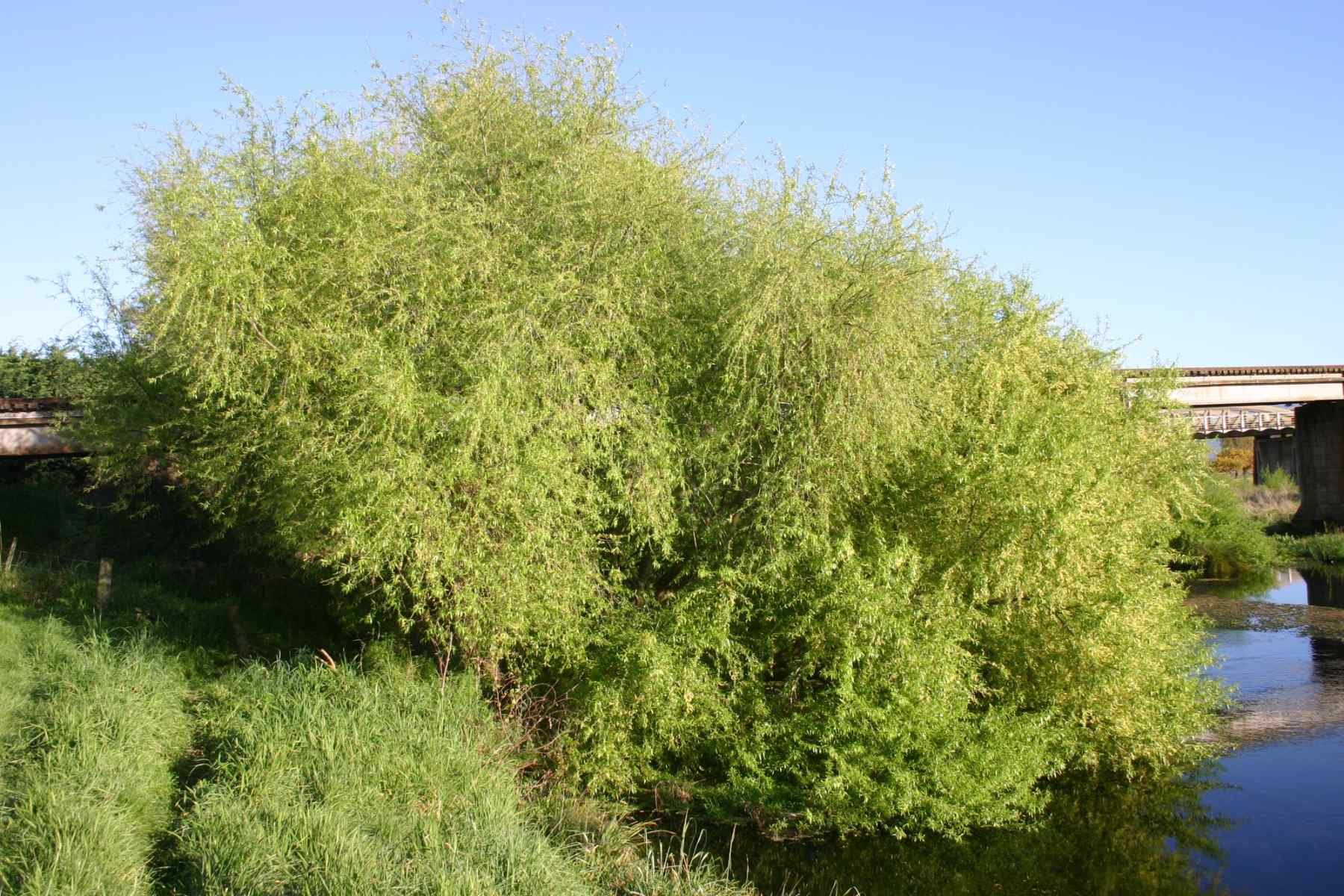
There are many willow species and hybrids in New Zealand, and telling them apart can be tricky. The good news is that they can all be controlled in much the same way. The two you’re most likely to meet are:
Grey willow (Salix cinerea) – a deciduous shrub or small tree, usually up to about 7 m tall. It forms dense stands in swamps, along riverbanks and in damp hollows behind coastal dunes. Its leaves are oval, shiny on top and grey-blue and softly hairy underneath. Its fluffy seed blows long distances on the wind, which is how it reaches remote wetlands.
Crack willow (Salix × fragilis) – a much larger tree, up to 25 m, with a broad spreading crown and often several trunks. Its leaves are long and narrow, and its twigs snap off with an audible “crack”. Those broken twigs are the problem: even small pieces will take root in wet mud, so crack willow spreads downstream every time there’s a flood.
For a full species list, see the NZ Plant Conservation Network. Manaaki Whenua – Landcare Research also has an illustrated key to willow species and hybrids.
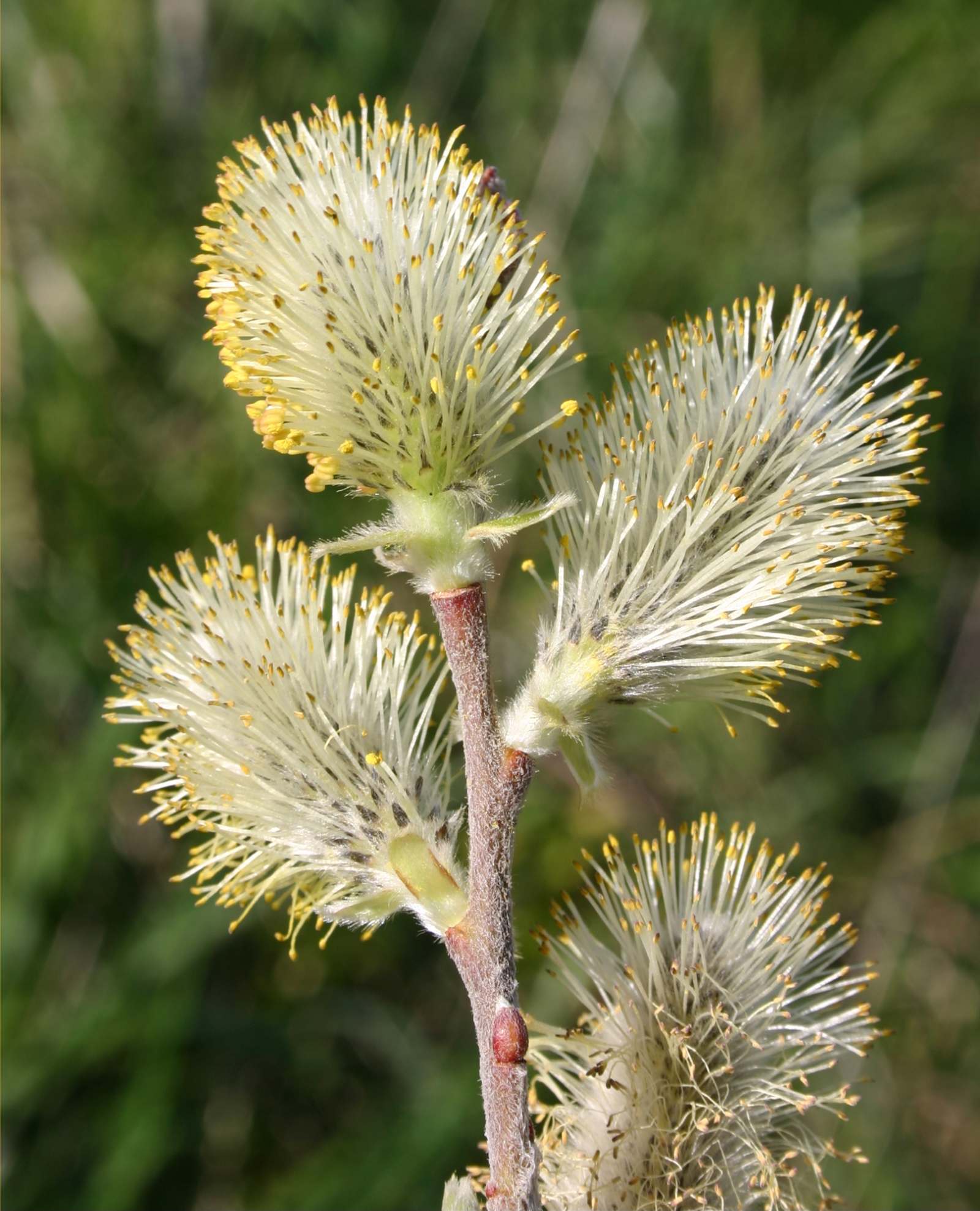
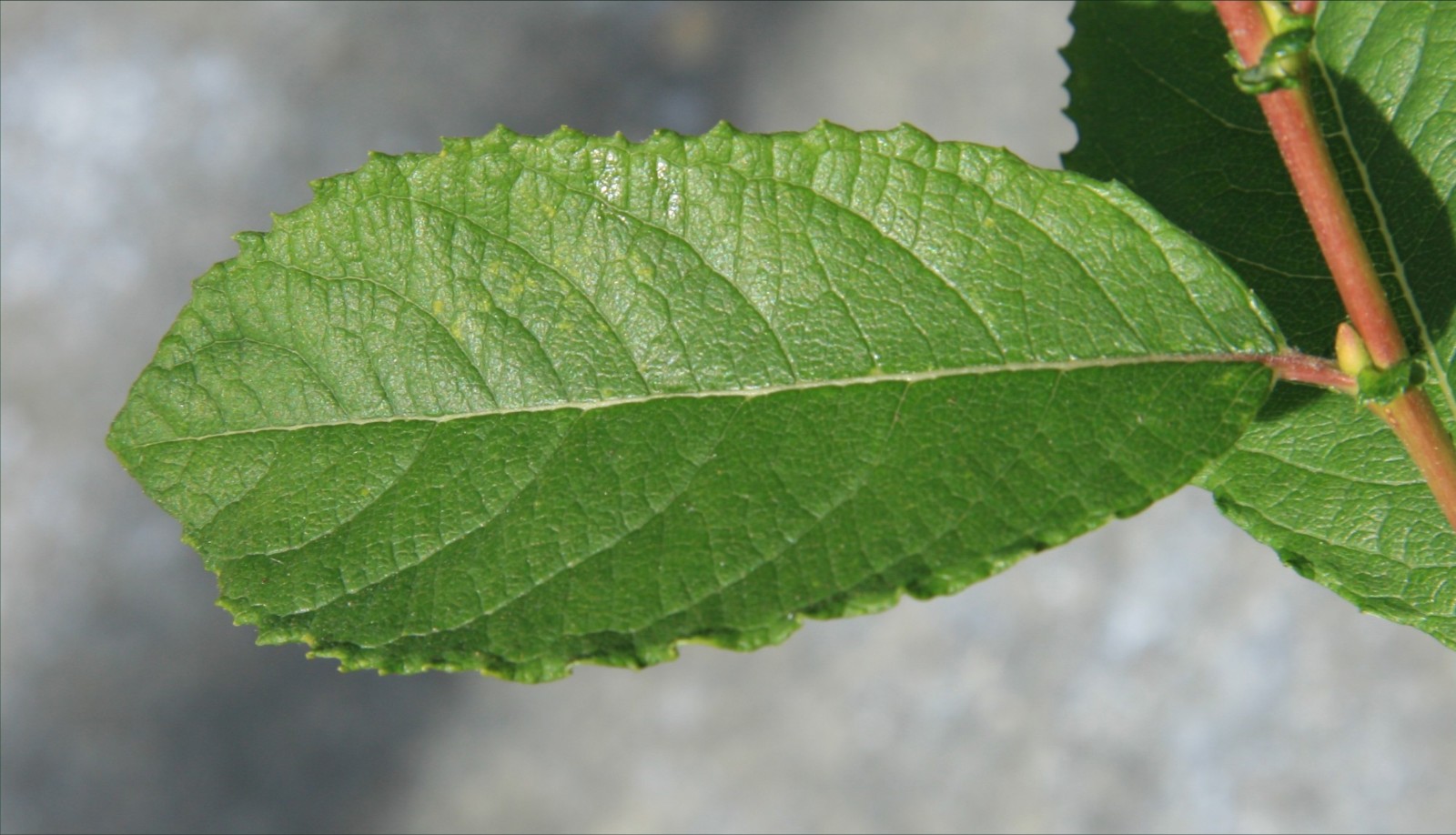
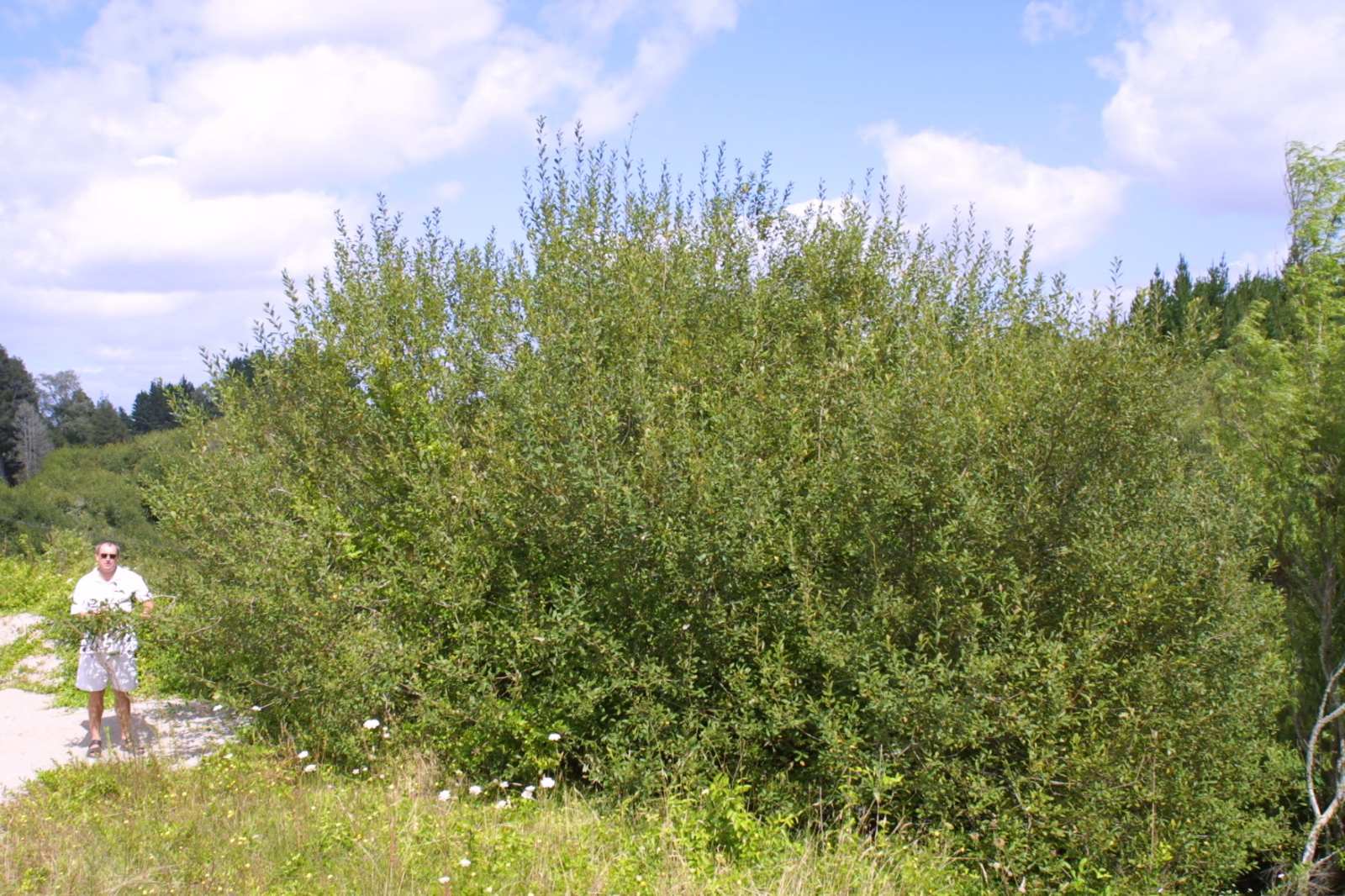
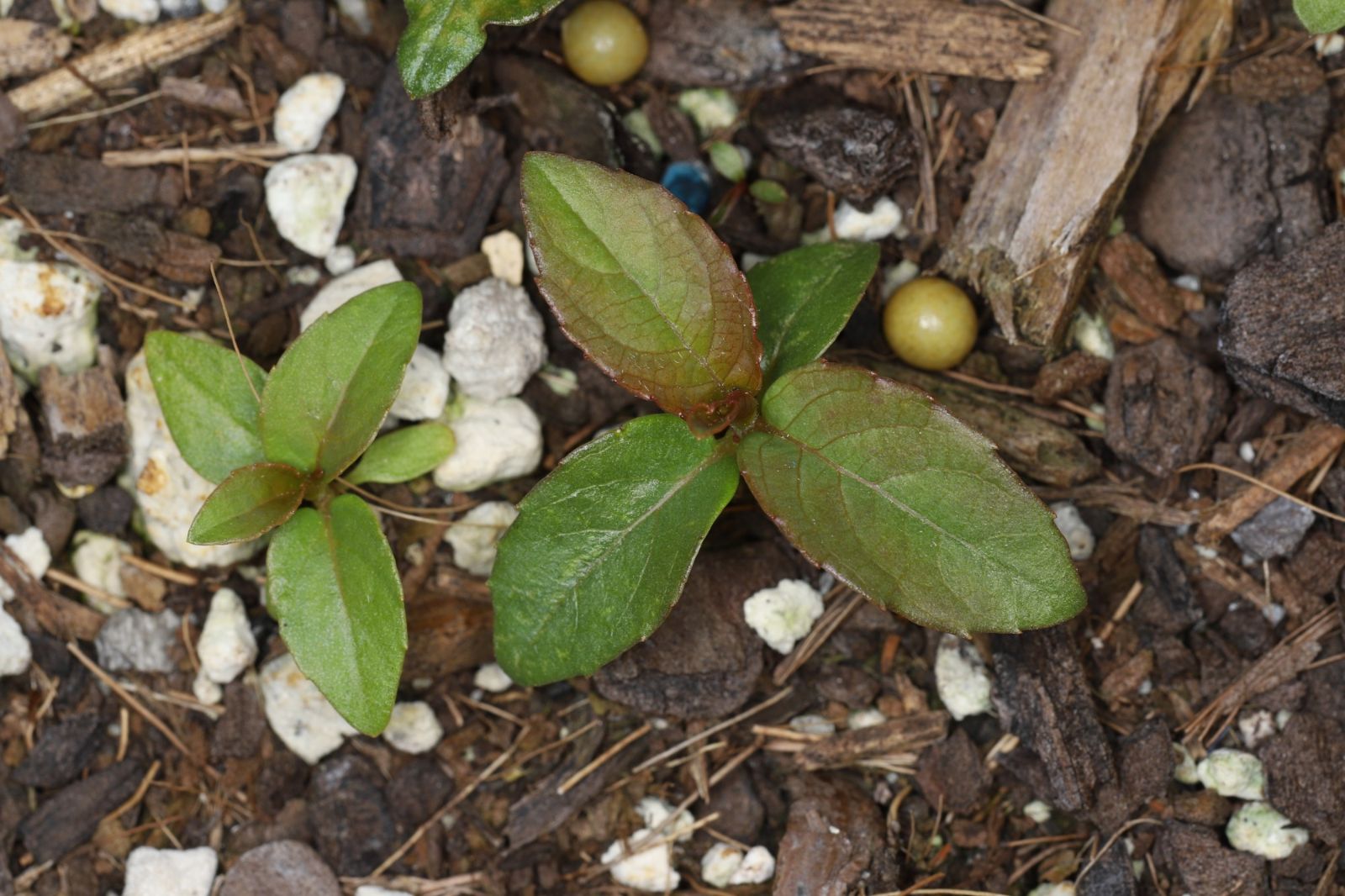
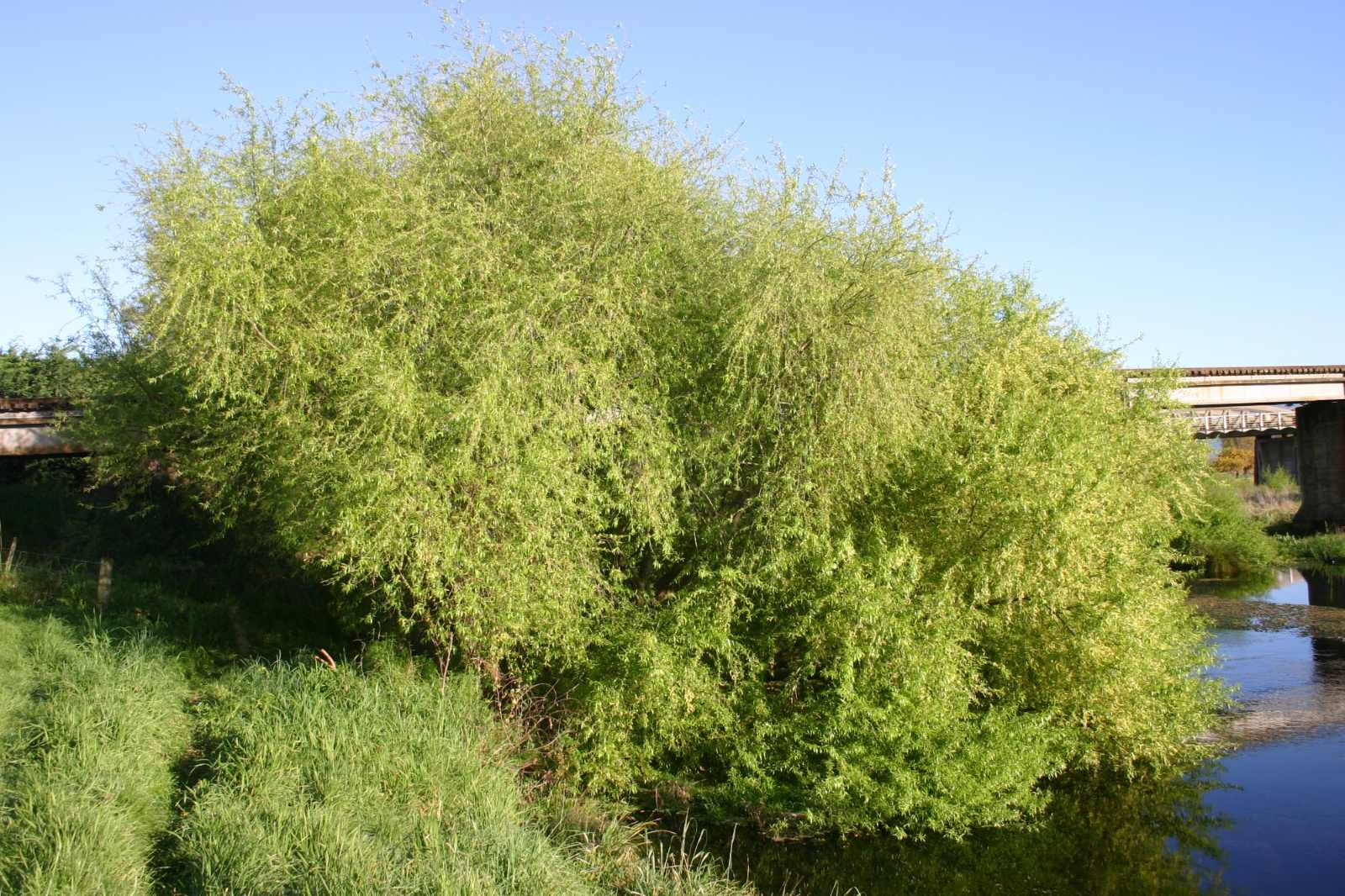
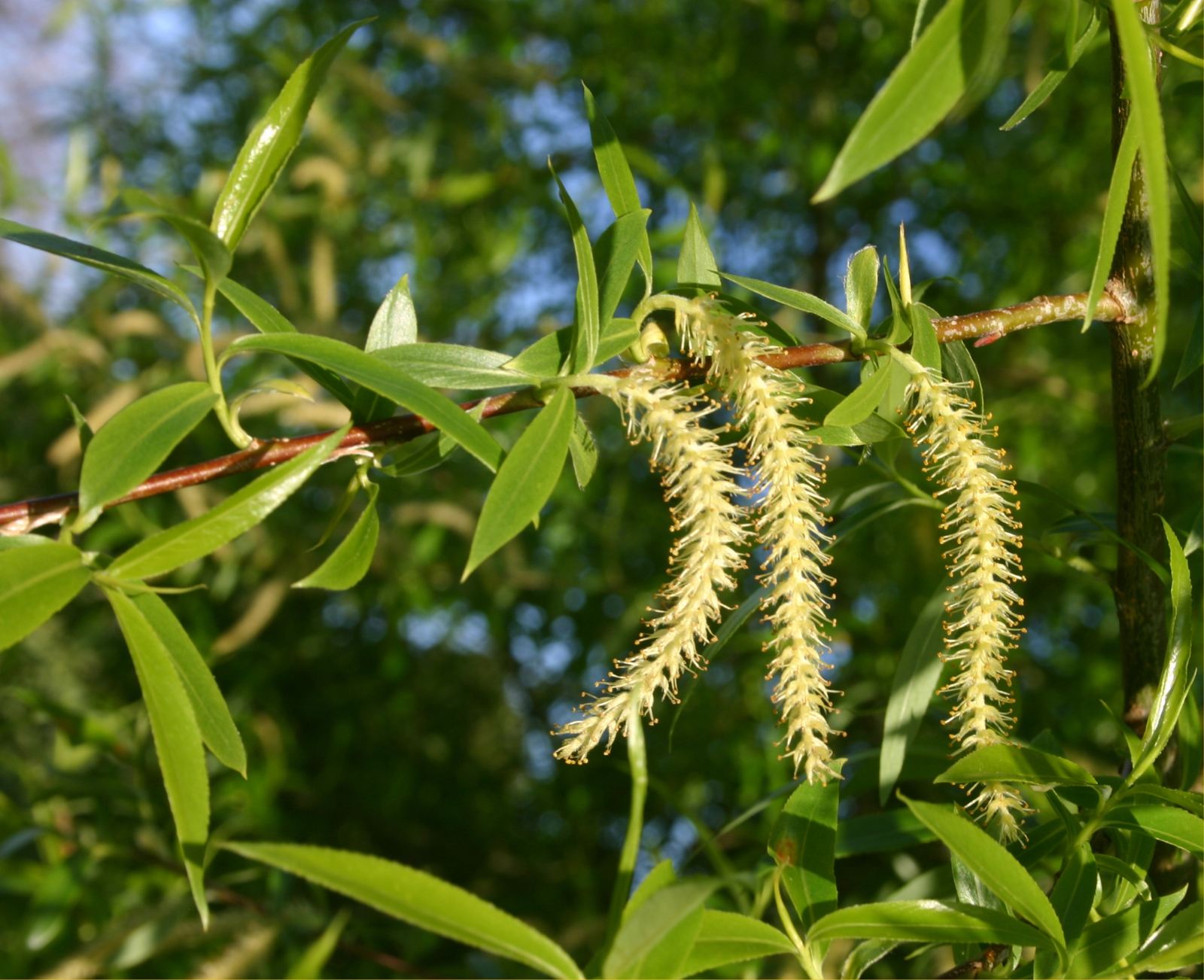
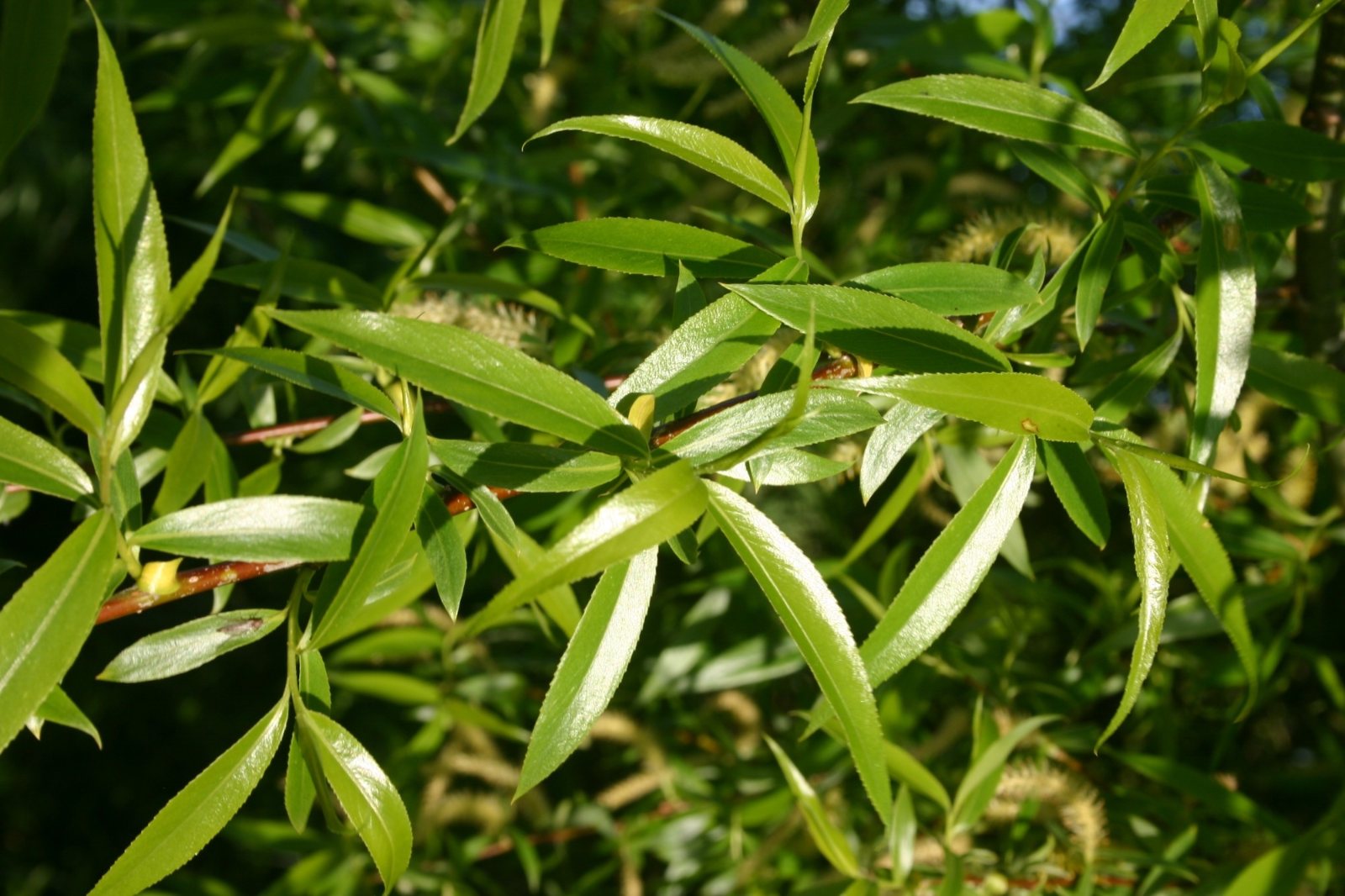
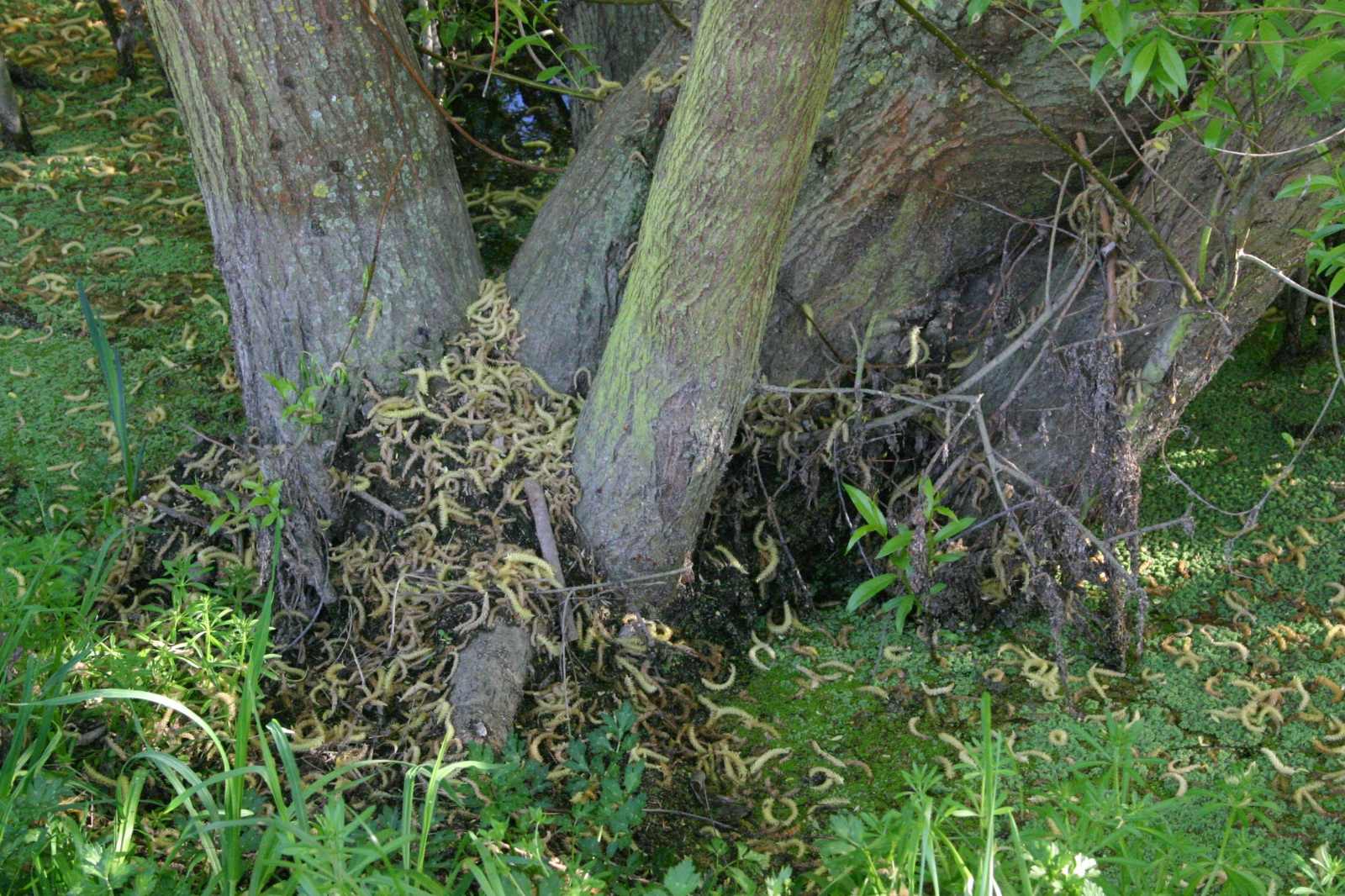
Photos courtesy and credit of Weedbusters (grey willow, crack willow) – Trevor James
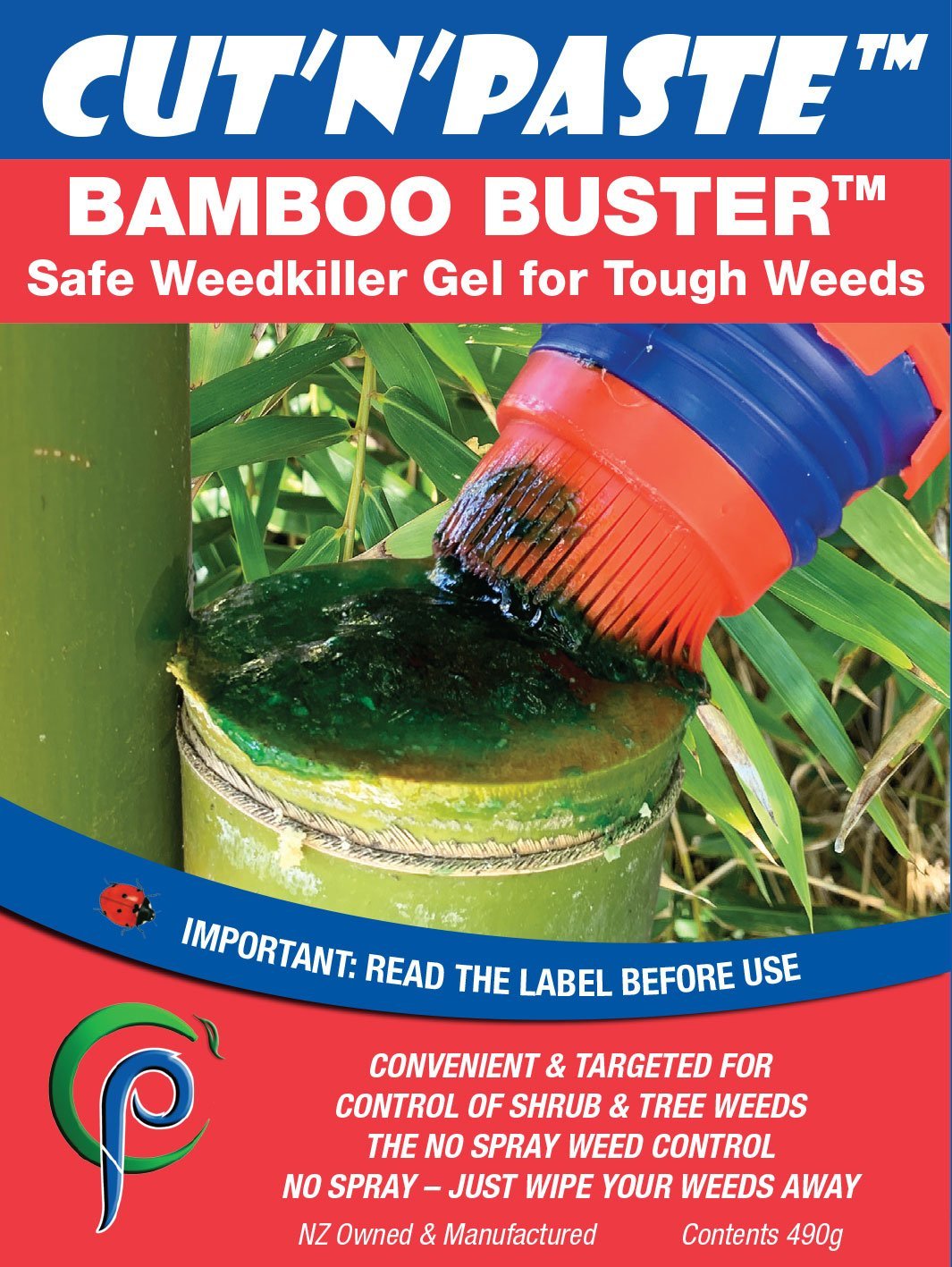
- Because Willows are typically in and around wetlands / water – ONLY use low strength herbicide. We recommend Bamboo Buster gel for an effective kill.
- Working beside water: Apply the gel carefully so none drips or runs into the water, don’t treat stumps that are standing in water, and avoid working when heavy rain is forecast.
When: Treat willows in late summer and autumn while they are still in leaf. At that time of year the tree is drawing sugars down into its roots, so the gel is carried down with them. Avoid early spring, when rising sap can push the gel back out of the cut.
Where to start: Along a stream, work from the top of the catchment downwards. That way, cut off fragments washed down from upstream aren’t re-seeding the areas you’ve already cleared.
Cut and paste (small to medium stems):
- Cut each stem low and flat, about 50 mm above the ground.
- Paste the whole cut surface with Bamboo Buster immediately, before the cut starts to seal. Include some of the surrounding bark.
- Treat every stem in the clump. Any stem you miss will resprout.
Drill and Fill (large trunks): On big crack willows, felling may not be practical. Drill angled holes about every 100 mm around the trunk, into the sapwood. Fill each hole with gel straight away, then leave the tree to die standing.
Deal with the off-cuts. This is VITAL. Willow branches and twigs will happily take root wherever they land. Never leave cut material in water or on wet ground. Paste both ends of larger pieces, and pile or hang off-cuts somewhere dry and off the ground, or remove them from the site.
Follow up: Check the site again the following season and treat any regrowth or new seedlings.
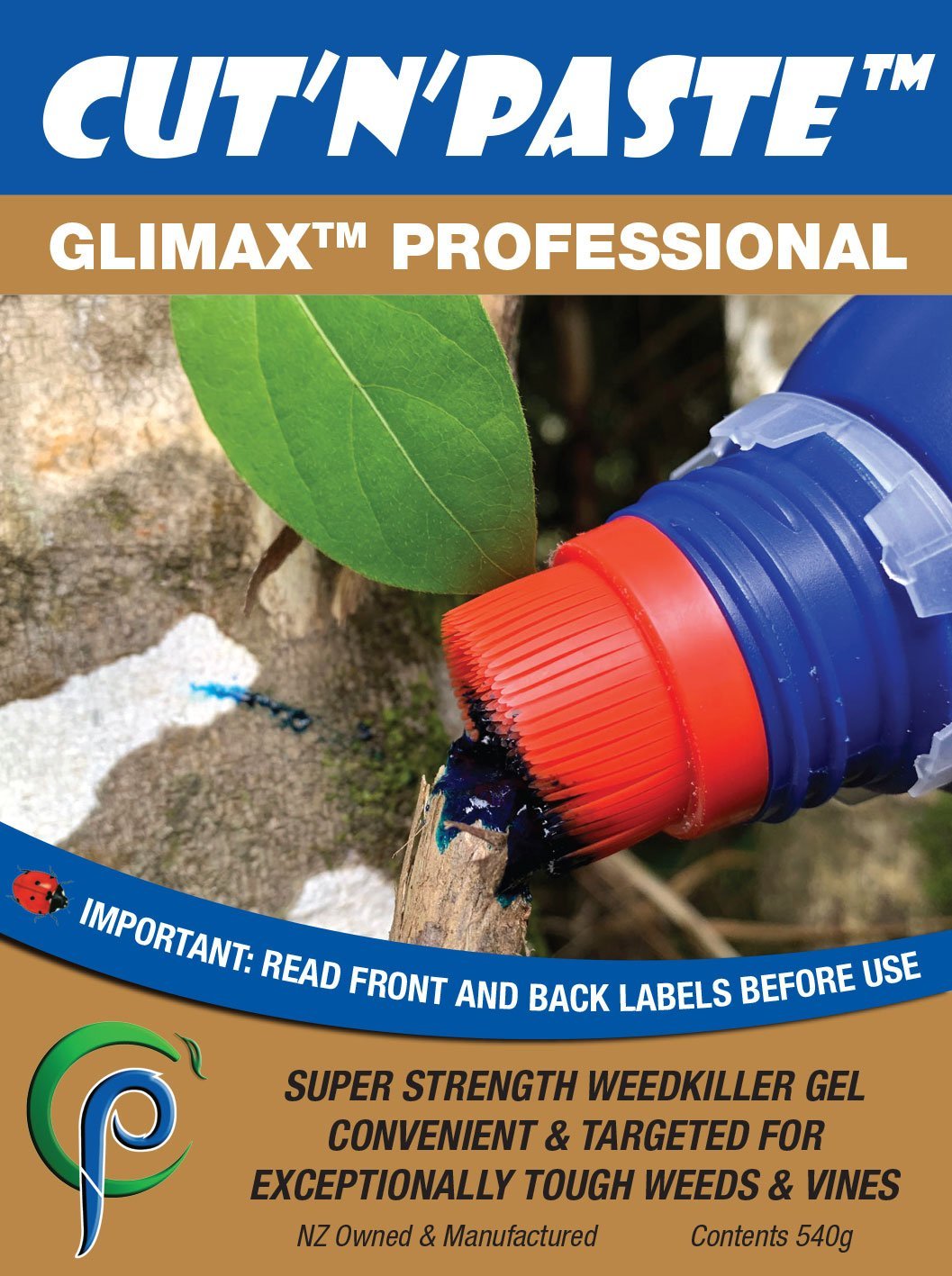
Glimax Professional can be used on stubborn willows growing on dry ground, but it is too concentrated to use beside water.
Important Notes:
- ⚠️ Safety Warning: MetGel and Picloram / Picloram Plus+ have significantly more residual soil activity than the glyphosate gels, and can move through ground moisture. MetGel has a soil half-life of roughly 30–90 days, and Picloram roughly 2–6 months, perhaps longer in clay soils. Do not use either near desirable non-target plants, within the root zone of prized trees, or around waterways and wetlands.
- When using MetGel or Picloram, never apply it inside the drip line (canopy edge) of prized trees or broadleaf garden plants. On flat ground, keep a 3 to 5-metre safety buffer. On sloping ground where the weed is uphill from desirable species, extend that buffer to 5 to 10 metres.
- Weeds often grow along streams and in gullies. If you’re working near waterways, use Bamboo Buster. Do not allow any weed gel to enter the water.
- Only treat weeds / target plants / trees that are on your property, or that you have permission to treat. Be aware that some species might have protection status or have a notable status, or be a designated scheduled tree under the district plan – if in doubt, check with your local council.
- Safety First: Wear gloves and protective clothing and observe all safety protocols, especially when using machinery, chainsaws and other tools.
- When using any herbicide ensure you READ THE LABEL THOROUGHLY, and follow all instructions and directions for the purchase, use and storage of the product.
- If in doubt, seek professional advice.
Never underestimate how much work a willow infestation is. Large stands usually take several seasons of treatment and follow-up. Alders are closely related and can be treated the same way. If your willows are in a regionally significant wetland or on a riverbank that is part of a flood scheme, check with your regional council before you start. Removing large trees from a bank can affect its stability, and some sites need consent.
Plant This Instead
Once the willows are gone, replant the bank so weeds don’t move straight back in. Harakeke (NZ flax) and tī kōuka (cabbage tree) both handle wet ground well, hold banks together, and attract native birds.
References & Further Reading
- Waikato River Authority – Willow and Alder Control Guidelines
- Tiaki Tāmaki Makaurau (Auckland Council) – grey willow and crack willow
- Bay of Plenty Regional Council – willow management factsheet